Artwork
Houses Beside a Mountain
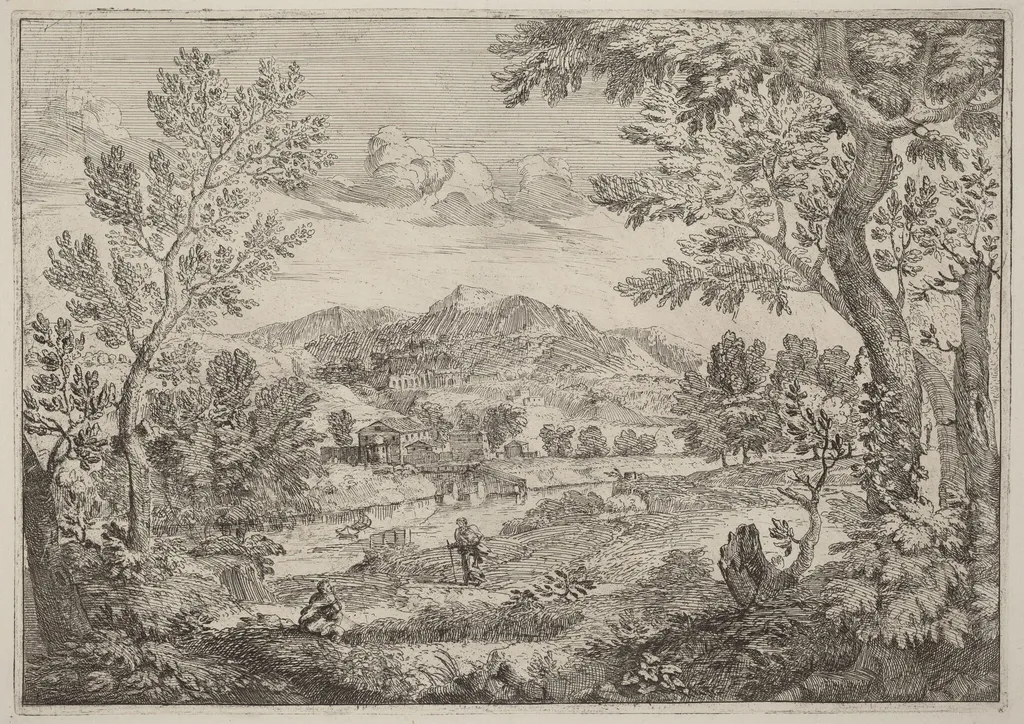
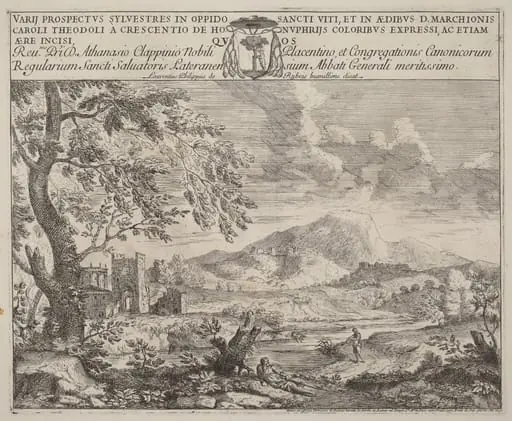
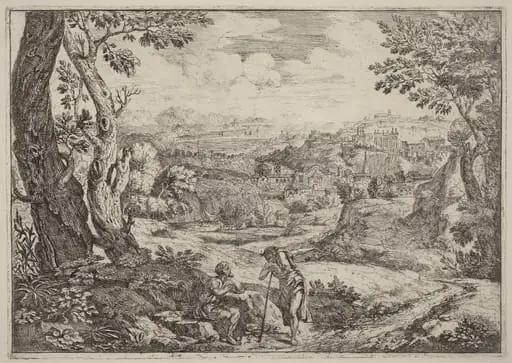
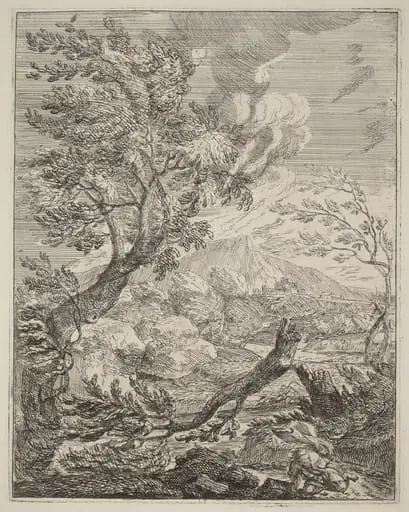
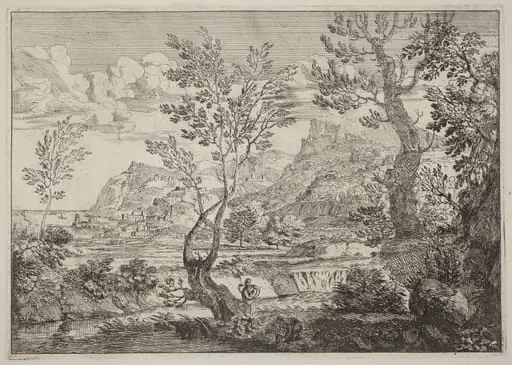
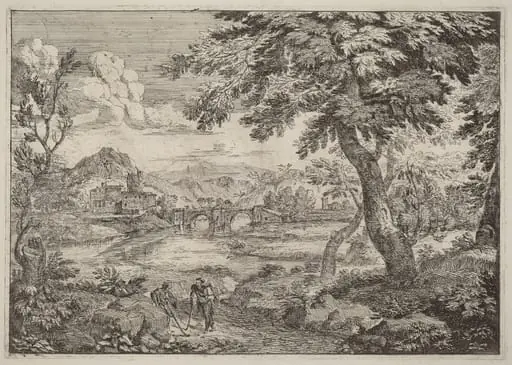
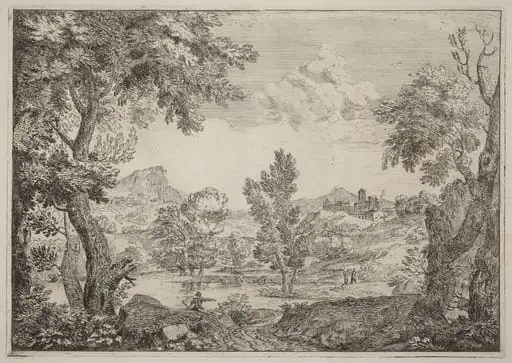
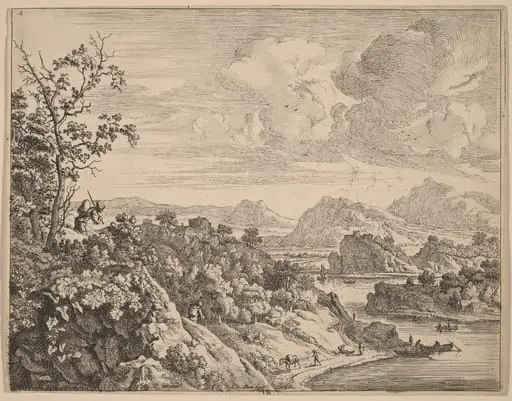
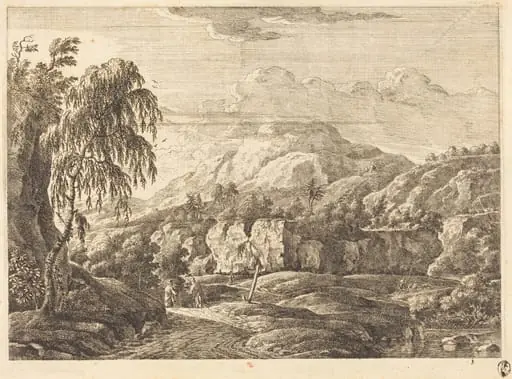
Houses Beside a Mountain is an ink print by the Baroque artist Crescenzio Onofri. It dates from 1696 and is held in the collection of the National Gallery of Art.
About this work
Overview
Created in 1696 by Crescenzio Onofri, this etching depicts a tranquil rural scene nestled against a gentle mountain slope.
Created in 1696 by Crescenzio Onofri, this etching depicts a tranquil rural scene nestled against a gentle mountain slope. The composition centers on a cluster of modest dwellings along a winding river, framed by bare trees and rolling terrain. The work exemplifies the precision of etching, where fine lines incised into a metal plate capture subtle shifts in light and form, conveying quiet stillness rather than dramatic action.
Subject & Meaning
The scene portrays a modest settlement integrated into the natural landscape, with no indication of grandeur or human intervention beyond basic habitation. A solitary figure near the water suggests contemplative solitude, perhaps engaged in daily labor or rest. The absence of movement or narrative emphasis invites quiet observation, reflecting a preference for harmony between human presence and the enduring rhythms of nature.
Technique & Style
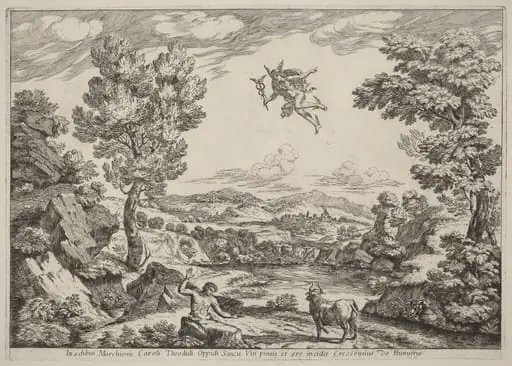
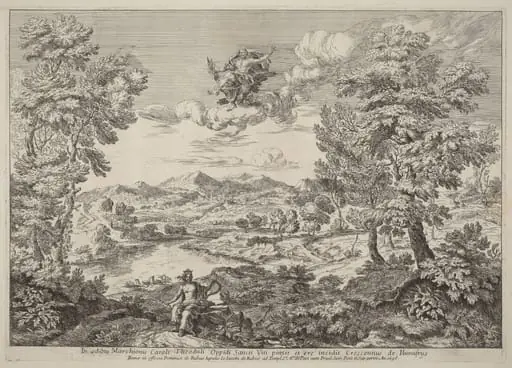
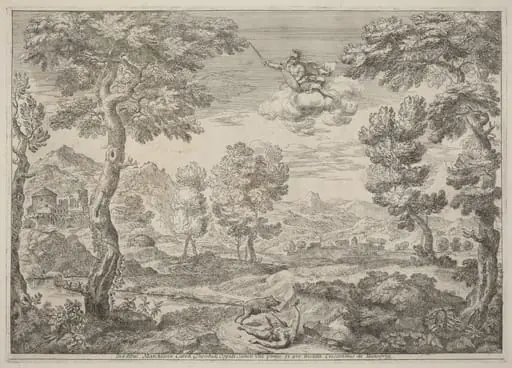
Onofri employed etching to render texture and depth through controlled acid corrosion of a metal plate. Fine, deliberate lines define the contours of hills, the skeletal branches of trees, and the facades of buildings, creating a sense of atmospheric perspective. The tonal gradations emerge from the density of incised lines rather than shading, characteristic of 17th-century Italian printmaking that valued clarity and restraint.
History & Provenance
The work dates from the late 17th century, a period when Italian artists increasingly turned to landscape as an independent subject. Onofri, active in Rome, contributed to a tradition of topographical prints that documented regional scenery with observational accuracy. While specific early ownership records are scarce, the piece aligns with collections of scholarly and aristocratic patrons interested in naturalistic imagery.
Context
During Onofri’s time, etching was favored by artists seeking to explore landscape beyond idealized classical settings. Unlike grand Baroque compositions, this work reflects a growing interest in intimate, unembellished views of the Italian countryside. It resonates with contemporary developments in Dutch and Roman print culture, where everyday scenery gained artistic legitimacy through careful observation and technical finesse.
Legacy
Houses Beside a Mountain exemplifies a quiet shift in 17th-century printmaking toward naturalism and personal observation. Though Onofri is not widely known today, this work contributes to the broader recognition of etching as a medium capable of conveying subtle emotional and spatial nuance. It remains a representative example of how landscape was reimagined as a subject worthy of quiet, deliberate study.
Own this work as a print
Artist & collection