Artwork
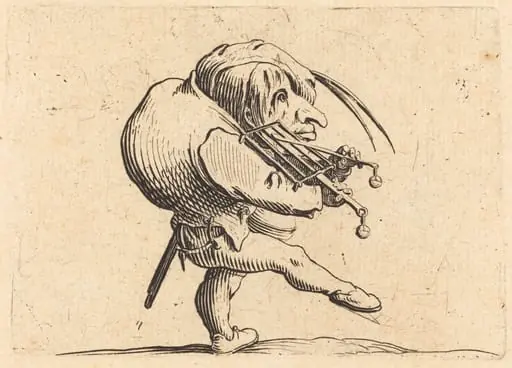
The Lute Player
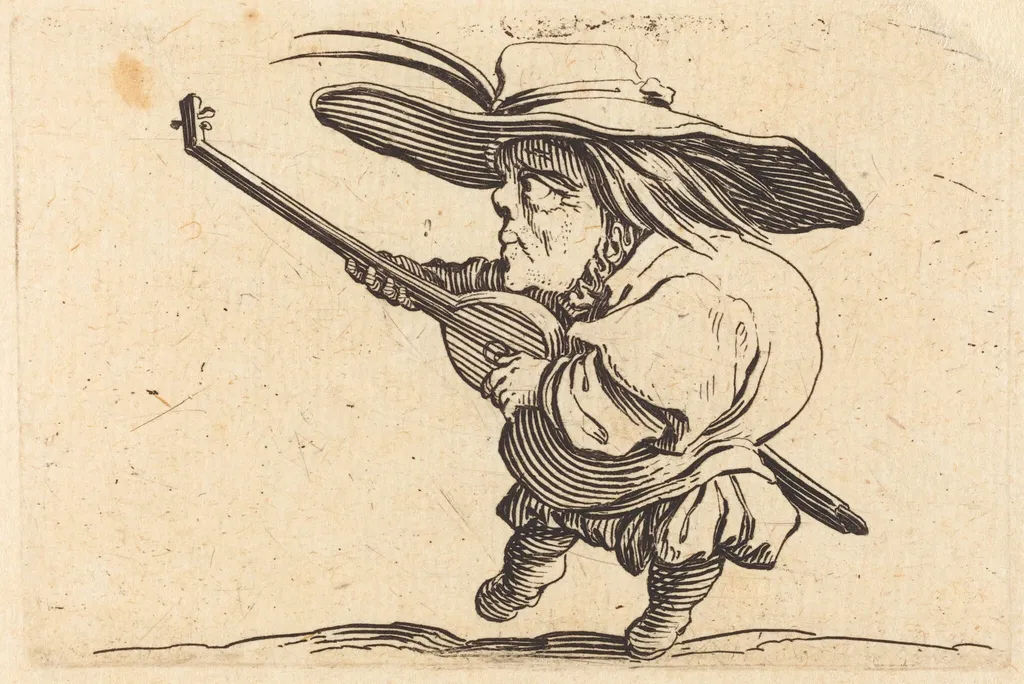
The Lute Player is an ink print by the Baroque artist Jacques Callot. It dates from 1622 and is held in the collection of the National Gallery of Art.
About this work
Overview
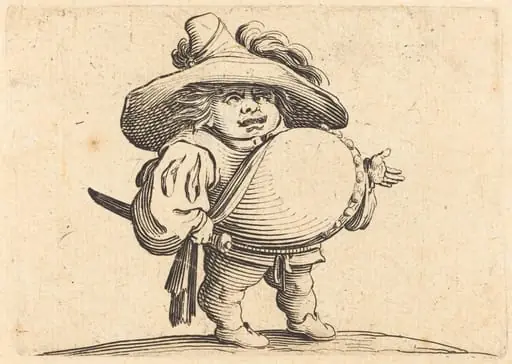
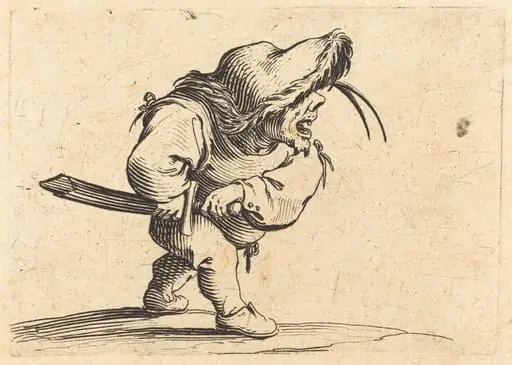
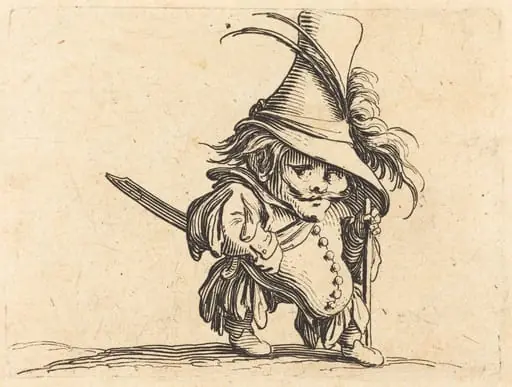
The Lute Player is a 1622 etching and engraving by Jacques Callot, a prolific French Baroque printmaker from the Duchy of Lorraine. It is one of four prints on an uncut sheet of Lorrainese paper (1949.5.253.a-d).
Subject & Meaning
The print depicts a man intently playing a lute, characterized by a wide-brimmed hat and a forward-leaning posture. His hands are engaged in playing the instrument, with one on the neck and the other strumming. The subject reflects Callot's interest in documenting various aspects of contemporary life.
Technique & Style
Callot employed etching and engraving techniques to create The Lute Player. The work features thick, bold lines and significant shading, particularly around the figure's clothing and hat. The etching process allowed for the deep, dark lines that define the composition.
History & Provenance
Created circa 1622, the print is part of a larger body of over 1,400 works by Callot. It remains on its original uncut sheet with three other prints (1949.5.253.a-d), indicating its state of preservation.
Context
The Lute Player sits within Callot's broader oeuvre of prints that captured the diversity of 17th-century life, from military and impoverished figures to courtly subjects, often against detailed backdrops.
Legacy
As part of Callot's extensive output, The Lute Player contributes to the artist's legacy as a foremost Baroque printmaker, known for his technical skill and observational depictions of his time.
Artist & collection
Artist
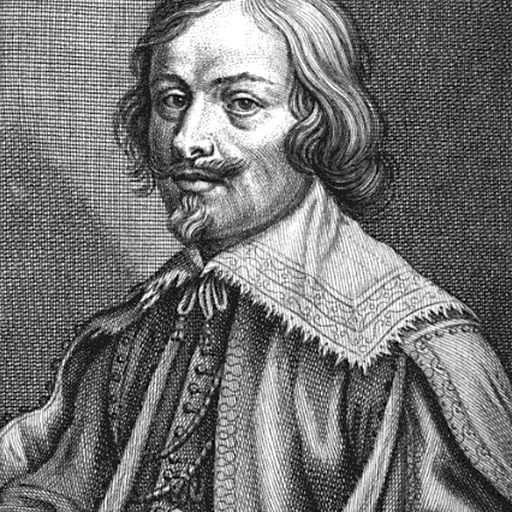
Jacques Callot was a baroque printmaker and draftsman from the Duchy of Lorraine.

 Holy Family at supper
 Restoration of the Aqueduct at Pisa
 Restoration of the Aqueduct at Pisa
 Square in Paris with Many Figures
 Square in Paris with Many Figures
 Horsemen Attacked by Robbers
 HOW WILL A COVERED PART BE CORRECTED?HOW WIKA A COVERED HEART DEED CORRECTED?
![Christ Walking on the Water [second plate], by Jacques Callot](https://artifactworldgallery.com/img/jacques-callot--christ-walking-on-the-water-second-plate--2069f3bfe4cb2126-w320.webp) Christ Walking on the Water [second plate]
Christ Walking on the Water [second plate]