Artwork
The Presentation of the Virgin
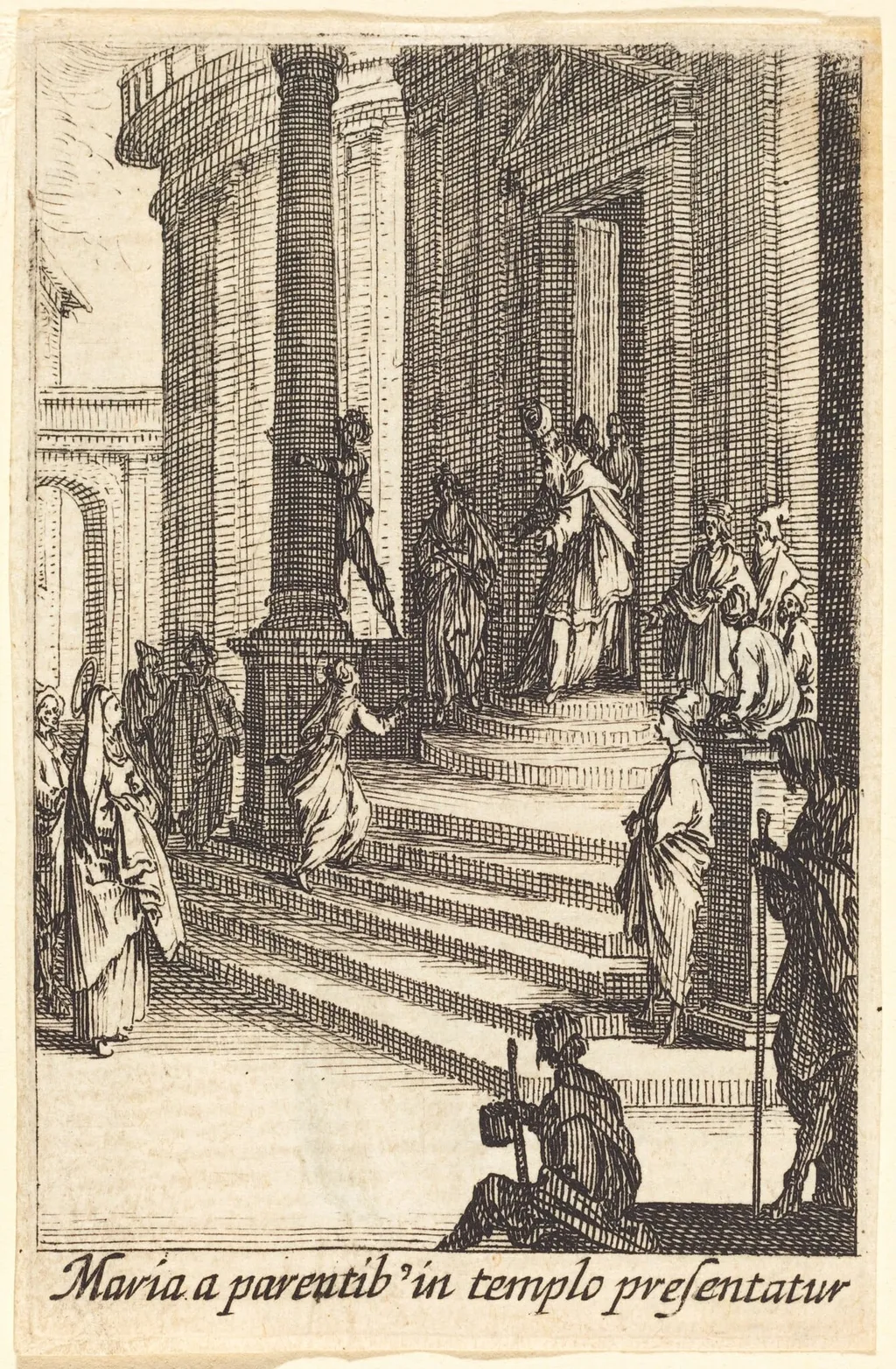
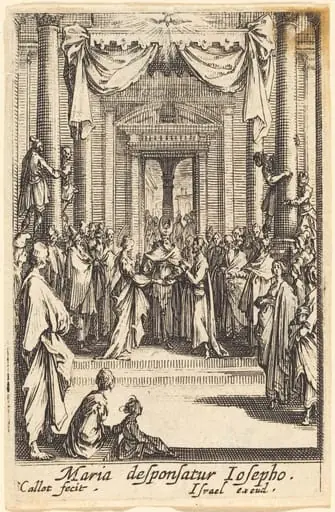
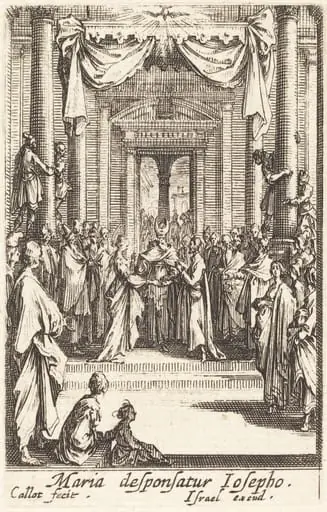
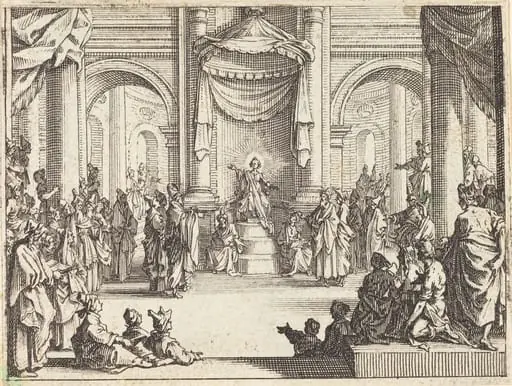
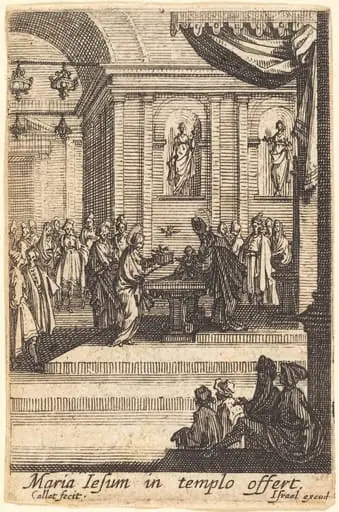
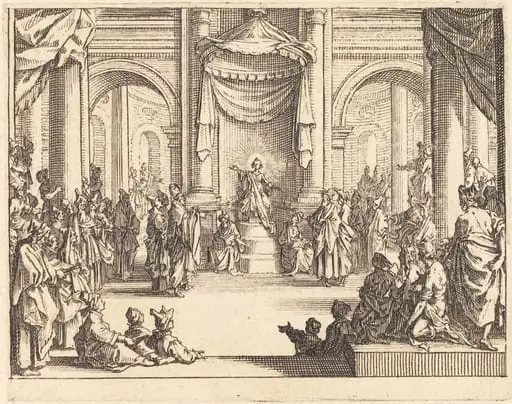
The Presentation of the Virgin is an ink print by the Baroque artist Jacques Callot. It dates from 1634 and is held in the collection of the National Gallery of Art.
About this work
Overview
Created circa 1634, *The Presentation of the Virgin* is an etching on laid paper by Jacques Callot, a French printmaker active in the Duchy of Lorraine. The work belongs to Callot’s extensive output of more than a thousand prints that range from military subjects to religious narratives, and it exemplifies his meticulous approach to composition and detail.
Subject & Meaning
The image portrays a ceremonial moment from the life of the Virgin Mary, likely the presentation of the infant Mary to a temple or a similar rite. A woman and a young girl in white robes ascend a stepped platform before a grand colonnaded building, while a crowd of robed figures watches, suggesting a communal act of devotion and reverence.
Technique & Style
Callot employed a fine, densely worked etching technique, using the texture of laid paper to enhance line quality. The print is distinguished by intricate hatching that renders architectural elements, drapery, and crowd density with a high degree of realism. The careful modulation of light and shadow through line work creates depth and a sense of spatial order typical of Baroque printmaking.
History & Provenance
The etching emerged during Callot’s mature period, when he was establishing a reputation beyond Lorraine for his sophisticated prints. It was likely produced for the European market of devotional images and may have circulated among collectors of religious prints. Surviving copies are held in several major museum collections, confirming its continued scholarly and curatorial interest.
Artist & collection
Artist
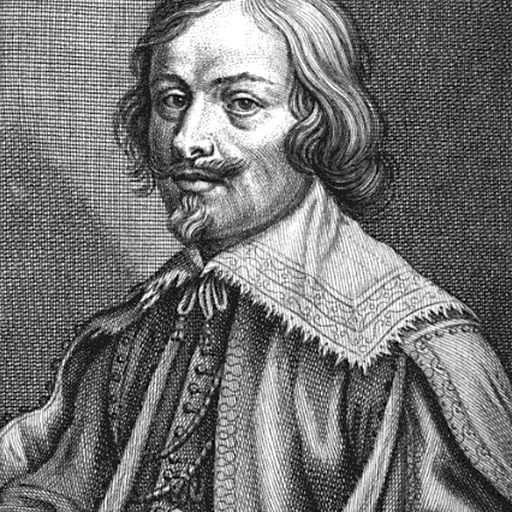
Jacques Callot was a baroque printmaker and draftsman from the Duchy of Lorraine.

 Holy Family at supper
 Restoration of the Aqueduct at Pisa
 Restoration of the Aqueduct at Pisa
 Square in Paris with Many Figures
 Square in Paris with Many Figures
 Horsemen Attacked by Robbers
 HOW WILL A COVERED PART BE CORRECTED?HOW WIKA A COVERED HEART DEED CORRECTED?
![Christ Walking on the Water [second plate], by Jacques Callot](https://artifactworldgallery.com/img/jacques-callot--christ-walking-on-the-water-second-plate--2069f3bfe4cb2126-w320.webp) Christ Walking on the Water [second plate]
Christ Walking on the Water [second plate]