Artwork
Portrait of Paul Cézanne
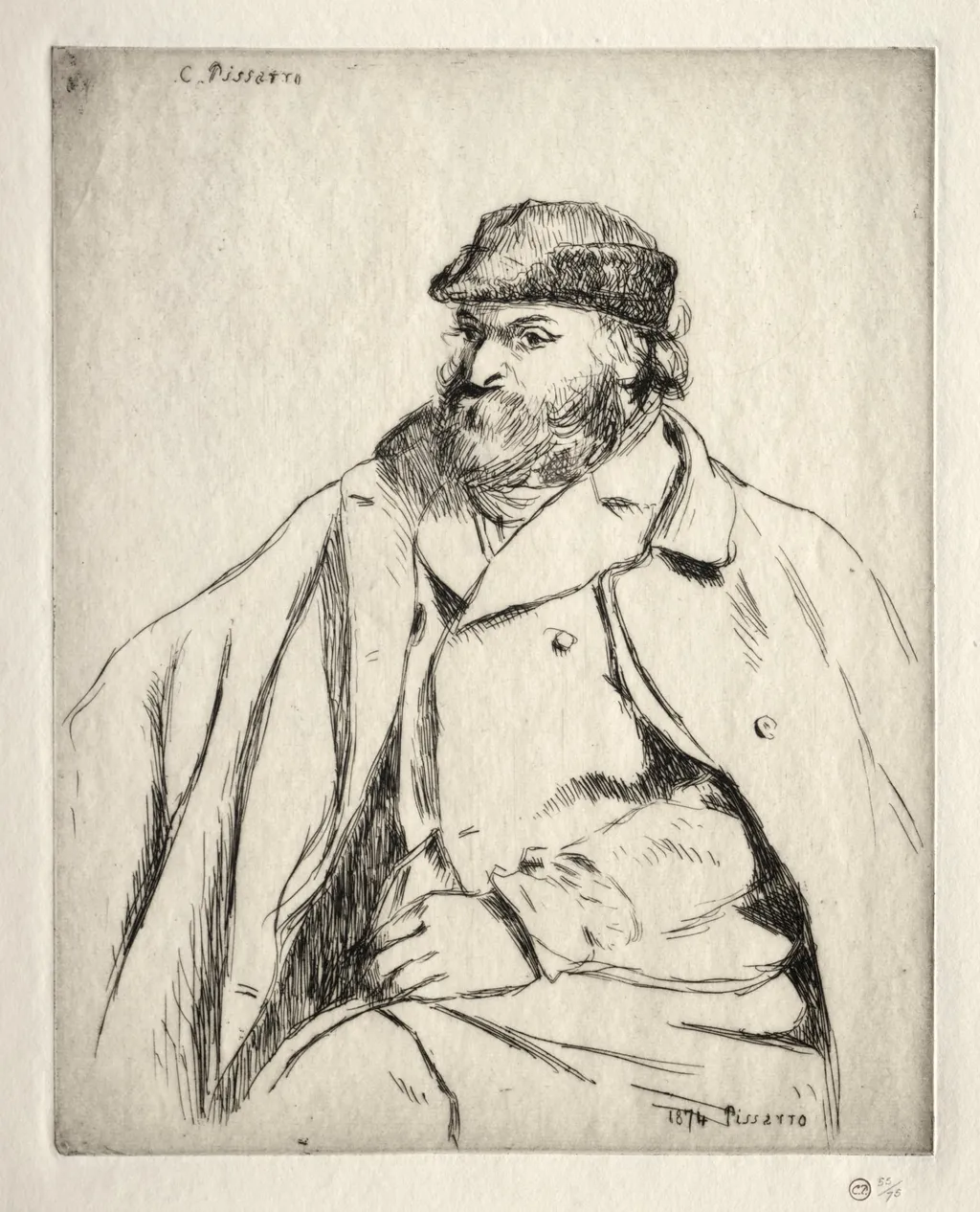
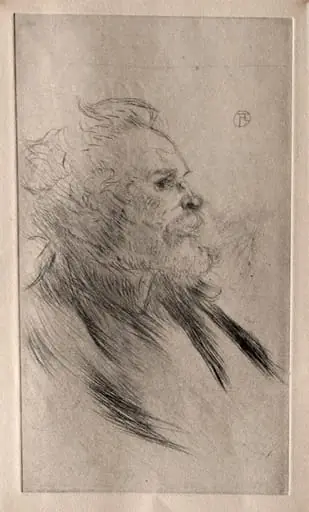
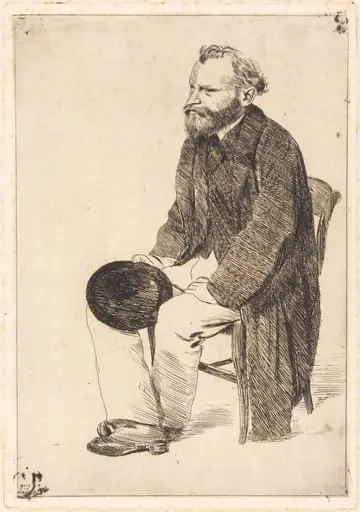
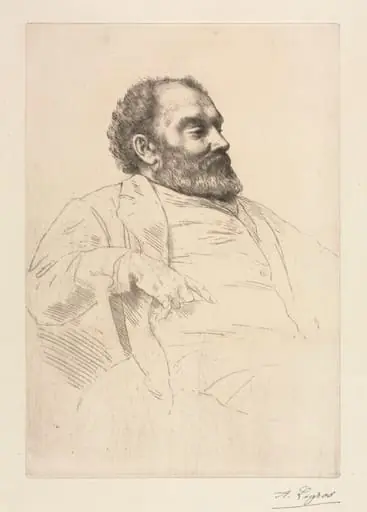
Portrait of Paul Cézanne is a print by the Impressionist artist Camille Pissarro. It dates from 1874 and is held in the collection of the Cleveland Museum of Art.
About this work
Overview
Camille Pissarro painted this portrait of Paul Cézanne in 1874, capturing his fellow artist during a period of mutual artistic exchange.
Camille Pissarro painted this portrait of Paul Cézanne in 1874, capturing his fellow artist during a period of mutual artistic exchange. Though Pissarro is often associated with Impressionism, this work reflects a more restrained, tonal approach. The image is a quiet, focused study, emphasizing character over atmosphere. It resides in the collection of The Cleveland Museum of Art, where it serves as a document of personal and artistic connection between two pivotal figures in 19th-century painting.
Subject & Meaning
Paul Cézanne, seated and bearded, is rendered with stillness and inward focus. His posture—arm resting on the lap, hand near the chest—suggests contemplation rather than performance. The gaze, directed beyond the frame, implies a mind engaged in thought, perhaps reflecting the intensity of his artistic inquiries. Pissarro, who admired Cézanne’s resolve, presents him not as a celebrity but as a serious thinker, reinforcing their shared commitment to redefining painting’s purpose.
Technique & Style
Pissarro employs chiaroscuro to model Cézanne’s form with subtle gradations of light and shadow, avoiding the broken brushwork typical of Impressionist landscapes. The solid, unbroken background isolates the figure, heightening psychological presence. Brushwork is deliberate and controlled, with muted tones dominating the palette. The rendering of fabric and facial structure shows attention to volume, aligning the portrait with academic traditions even as it departs from their rigidity.
History & Provenance
Painted during Pissarro’s time in Pontoise, the portrait emerged from a close friendship between the two artists, who often worked side by side. Cézanne, then less recognized, was a frequent subject of Pissarro’s studies. The work remained in private hands until entering The Cleveland Museum of Art’s collection, where it has been preserved as a testament to their artistic dialogue. Its provenance reflects its role as a personal artifact rather than a public commission.
Context
In 1874, the Impressionist movement was gaining momentum, yet Cézanne’s style remained distinct—more structural, less concerned with light effects. Pissarro, supportive of Cézanne’s innovations, used this portrait to affirm his peer’s seriousness amid public skepticism. The image stands apart from the era’s festive outdoor scenes, offering instead a private moment that anticipates the introspective tone of later Post-Impressionist portraiture.
Legacy
This portrait endures as a quiet record of artistic solidarity. It captures Cézanne at a formative stage, before his radical contributions to modern art gained wider recognition. Pissarro’s restrained technique influenced later generations seeking emotional depth over surface brilliance. The work remains a touchstone for understanding the personal networks that sustained artistic innovation beyond the public exhibitions of the time.
Own this work as a print
Artist & collection
Artist
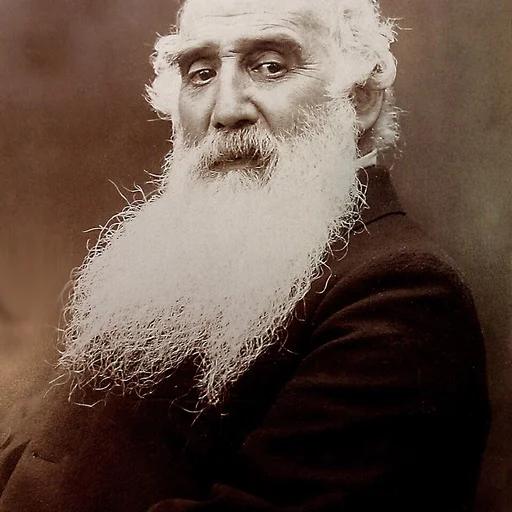
Jacob Abraham Camille Pissarro ( piss-AR-oh; French: ; 10 July 1830 – 13 November 1903) was a Danish-French Impressionist and Neo-Impressionist painter born on the island of Saint Thomas (now in the US Virgin Islands, but then in the…

![Self-Portrait [recto], by William E. Winner](https://artifactworldgallery.com/img/william-e-winner--self-portrait-recto--33f2127f07962012-w320.webp)