Artwork
Manet Seated, Turned to the Left (Manet assis, tourné à gauche)
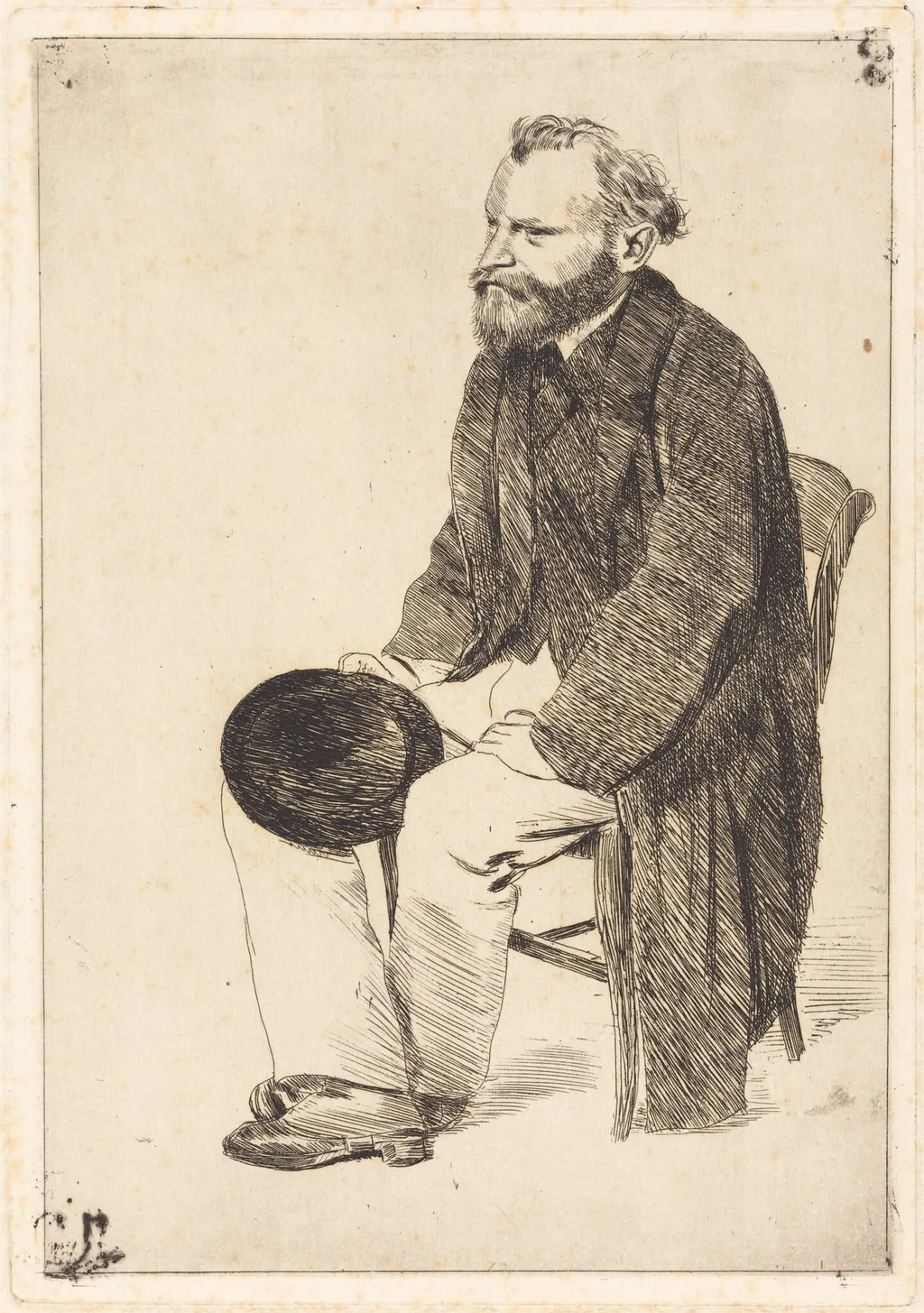
Manet Seated, Turned to the Left (Manet assis, tourné à gauche) is an ink print by the Impressionist artist Edgar Degas. It dates from 1861 and is held in the collection of the National Gallery of Art.
About this work
Overview
Created around 1861, this etching by Edgar Degas captures his contemporary Édouard Manet in a seated, three-quarter profile. Executed on wove paper, the work belongs to Degas’s lesser-known but significant body of printed graphics. Unlike his finished paintings, this piece conveys immediacy—its lines are loose and urgent, reflecting a spontaneous observation rather than a formal portrait.
Subject & Meaning
The subject is Édouard Manet, a pivotal figure in 19th-century French art, shown in quiet repose. Degas renders him turned left, hat resting in hand, beard and mustache rendered with dense, scratchy strokes. The pose suggests introspection or pause, not performance. The image functions as a personal record between peers, capturing Manet’s physical presence without idealization or narrative.
Technique & Style
Degas employed etching to incise lines into a metal plate, then inked and pressed the image onto paper. The resulting marks are uneven and tactile—hatched, crosshatched, and scraped—with no attempt at refinement. This raw, almost sketchlike quality aligns with Degas’s interest in process over polish, emphasizing the act of drawing as a direct encounter with the subject.
History & Provenance
The print was made during Degas’s early career, when he and Manet were part of the same Parisian artistic circle. It likely originated as a private study, not a commissioned work. Few impressions were pulled, and the piece remained within circles of artists and collectors until entering institutional collections in the 20th century.
Context
In the early 1860s, Parisian artists were redefining portraiture beyond academic conventions. Degas, though associated with Impressionism, favored realism and direct observation. This etching reflects a broader shift toward informal, intimate depictions of fellow artists—documents of camaraderie amid evolving artistic values.
Legacy
Though not widely exhibited, this etching exemplifies Degas’s commitment to printmaking as a medium for personal expression. It stands as a rare visual record of Manet’s appearance and demeanor, valued for its unvarnished honesty. The work contributes to understanding the informal networks that shaped modern art’s development.
Artist & collection
Artist
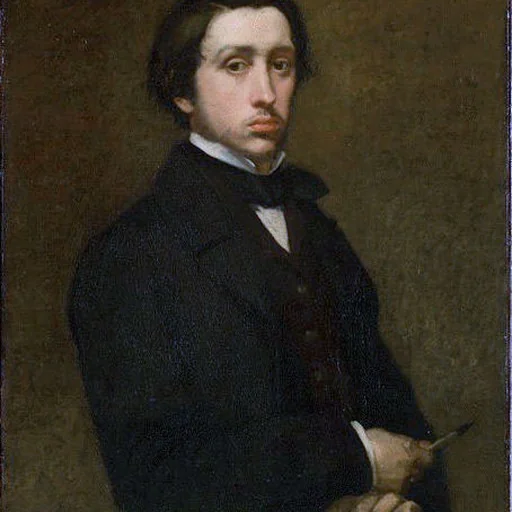
Born Hilaire-Germain-Edgar De Gas on 19 July 1834 in Paris, Edgar Degas came from an affluent banking family with aristocratic roots and spent his childhood among the cultivated circles of the French capital.