Artwork
The Big Pear Tree at Montfoucault
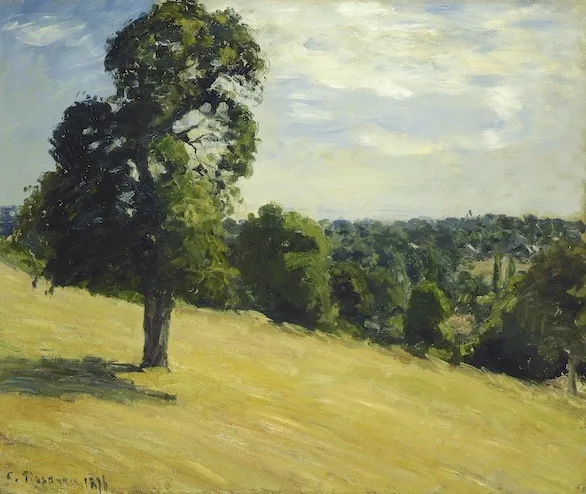
The Big Pear Tree at Montfoucault is an oil painting by the Impressionist artist Camille Pissarro. It dates from 1888 and is held in the collection of the Kunsthaus Zürich.
About this work
Overview
Painted in 1888, *The Big Pear Tree at Montfoucault* is an oil on canvas work by Camille Pissarro, capturing a solitary pear tree in a rural French landscape.
Painted in 1888, *The Big Pear Tree at Montfoucault* is an oil on canvas work by Camille Pissarro, capturing a solitary pear tree in a rural French landscape. The piece reflects his transition toward Neo-Impressionist methods while retaining the observational focus of Impressionism. It resides in the Kunsthaus Zürich collection, one of many landscape studies Pissarro produced during his time in Normandy and surrounding regions.
Subject & Meaning
The painting centers on a single, mature pear tree dominating the foreground, its gnarled branches spreading against a muted sky. Surrounding fields and distant trees frame the subject without distraction, emphasizing quiet solitude. Rather than depicting human activity, Pissarro isolates the tree as a quiet emblem of nature’s endurance, inviting contemplation through stillness rather than narrative.
Technique & Style
Pissarro applied oil paint with varied, deliberate brushwork—short, directional strokes that suggest wind through leaves and shifting light. He employed a nuanced palette of greens, from pale mint to rich olive, to convey depth and texture without relying on outline. The sky, rendered in soft grays, diffuses ambient light, enhancing the tree’s presence through atmospheric harmony rather than dramatic contrast.
History & Provenance
Created during Pissarro’s stay near Montfoucault in Normandy, the painting belongs to a series of works from the late 1880s where he explored rural motifs with renewed structural clarity. It entered the Kunsthaus Zürich collection in the 20th century, likely through acquisitions focused on Impressionist and Post-Impressionist works, preserving its connection to the artist’s later period.
Context
In 1888, Pissarro was experimenting with pointillist techniques under Seurat’s influence, yet retained his commitment to natural observation. This painting reflects a middle ground: structured brushwork without full divisionism, and a focus on the everyday rural scene that defined his career. It aligns with broader efforts by artists to find poetic weight in unremarkable landscapes.
Legacy
The work exemplifies Pissarro’s enduring interest in trees as subjects of both botanical and emotional significance. While less celebrated than his urban scenes, such intimate landscapes reveal his consistent dedication to recording nature’s rhythms. It remains a quiet reference point in studies of late 19th-century landscape painting and the evolution of Impressionist technique.
Artist & collection
Artist
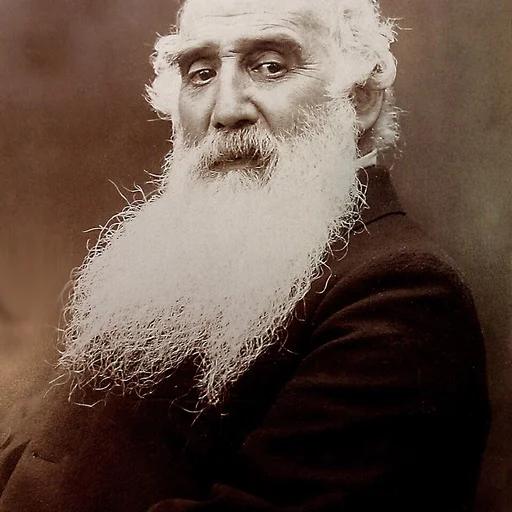
Jacob Abraham Camille Pissarro ( piss-AR-oh; French: ; 10 July 1830 – 13 November 1903) was a Danish-French Impressionist and Neo-Impressionist painter born on the island of Saint Thomas (now in the US Virgin Islands, but then in the…

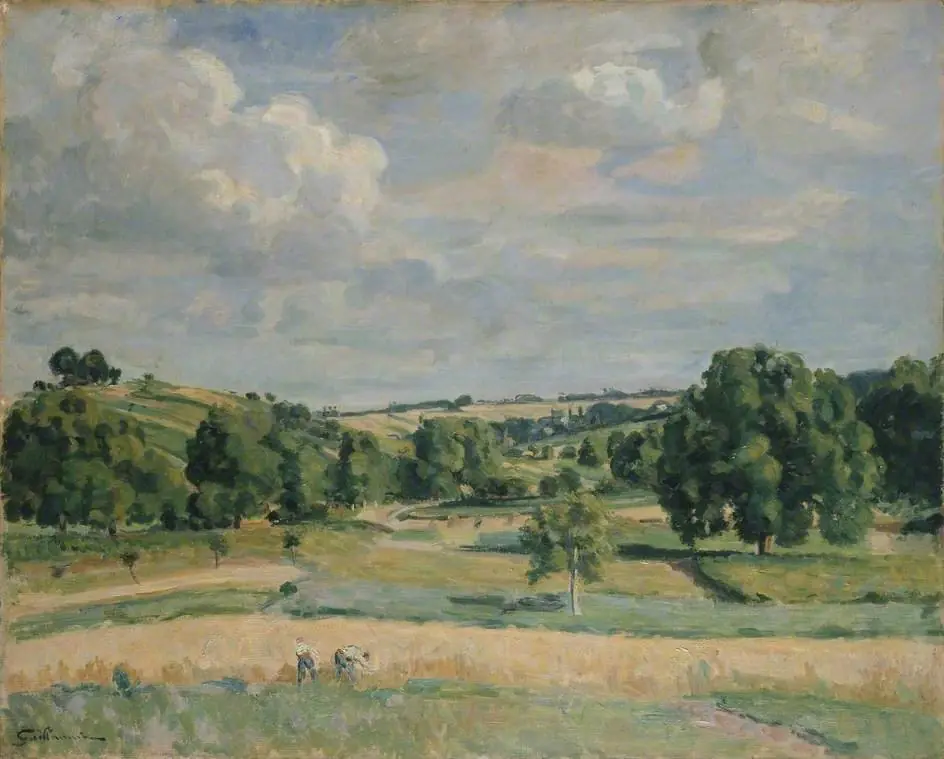 Landscape: Harvest-time in the Somme Valley
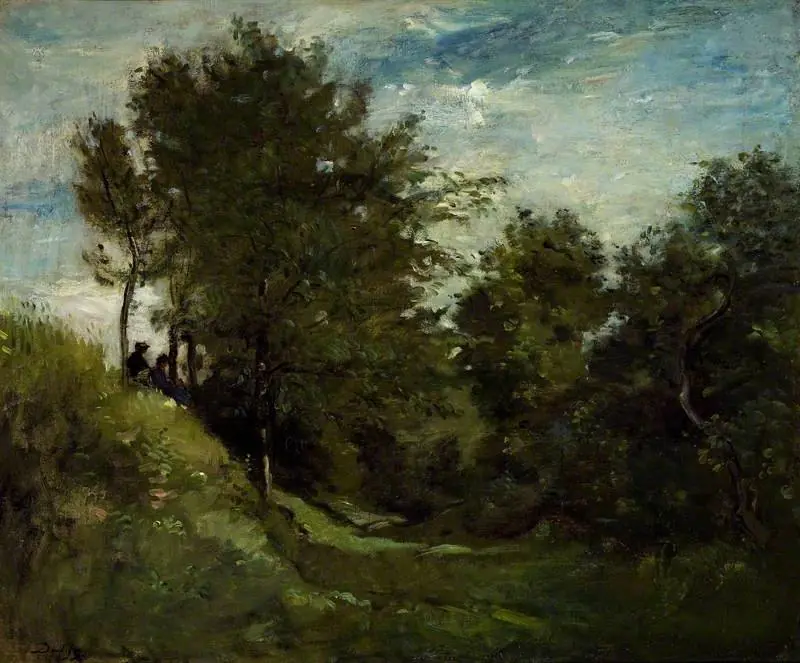 Landscape with Figures seated on a Bank
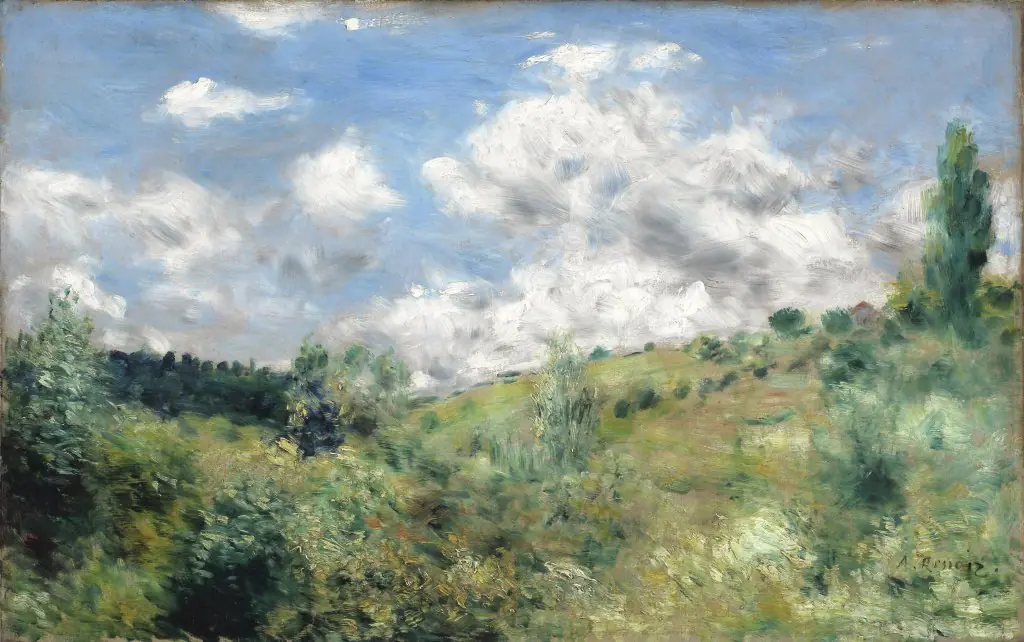 The Gust of Wind
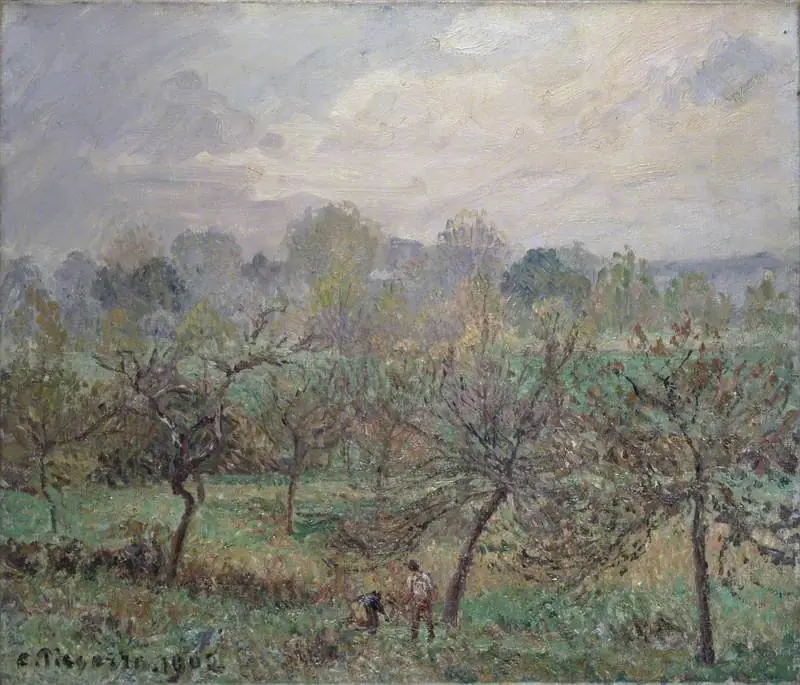 Autumn, Morning Mist, Éragny-sur-Epte
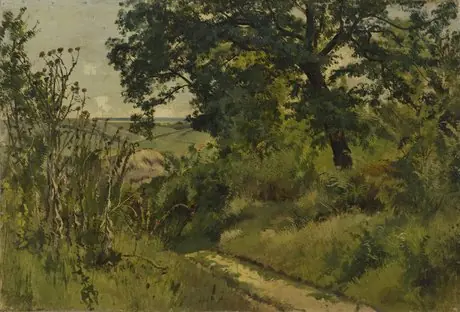 Landscape. Study
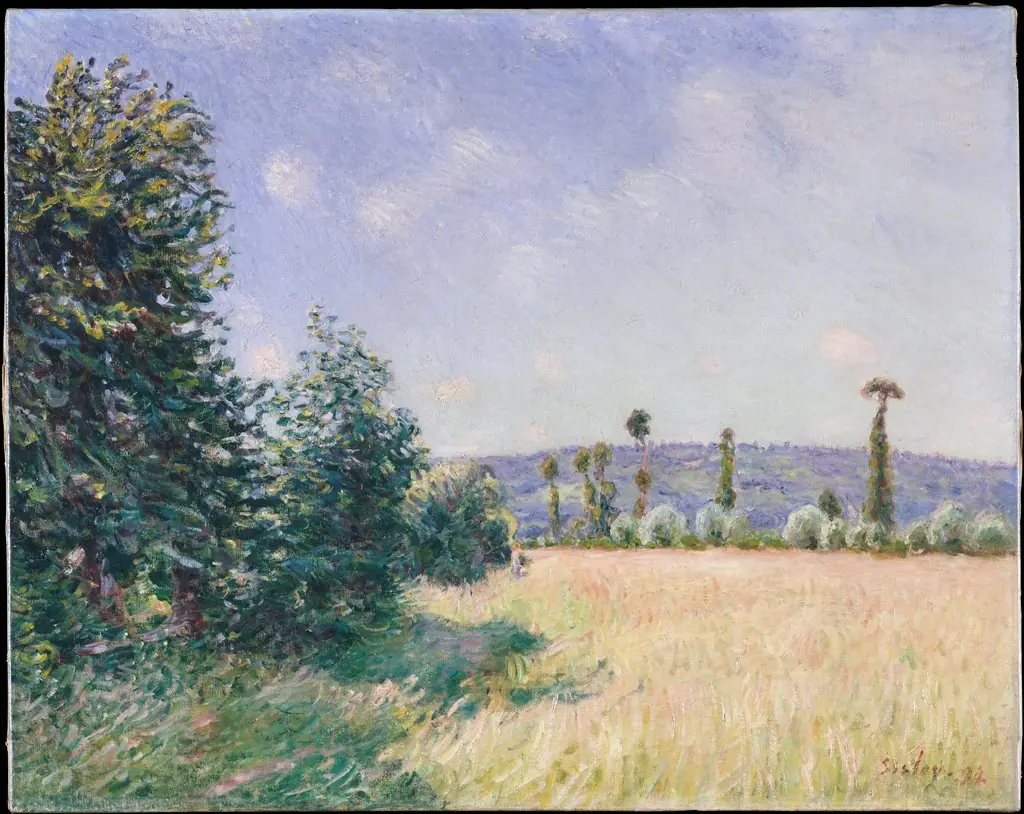 Sahurs Meadows in Morning Sun
 Vue de Marly-le-Roi, effet de soleil
 Autumn at Éragny
 View of Dedham from the Lane Leading from East Bergholt Church to Flatford
 Clouds (Landscape near Cornish)
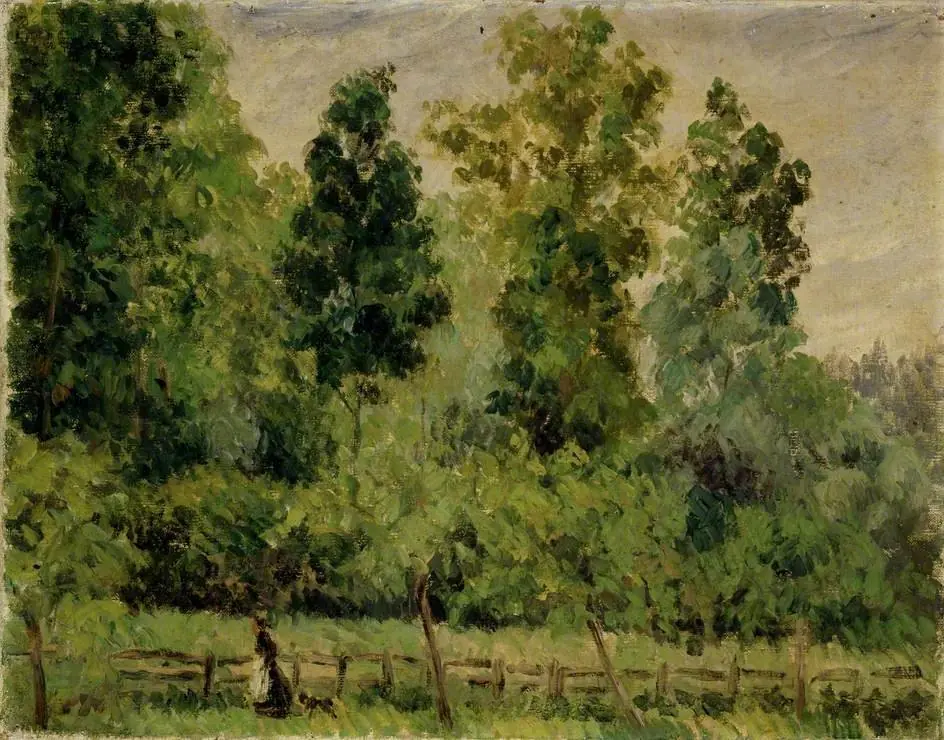 Wooded Landscape: A Woman walking with a Dog
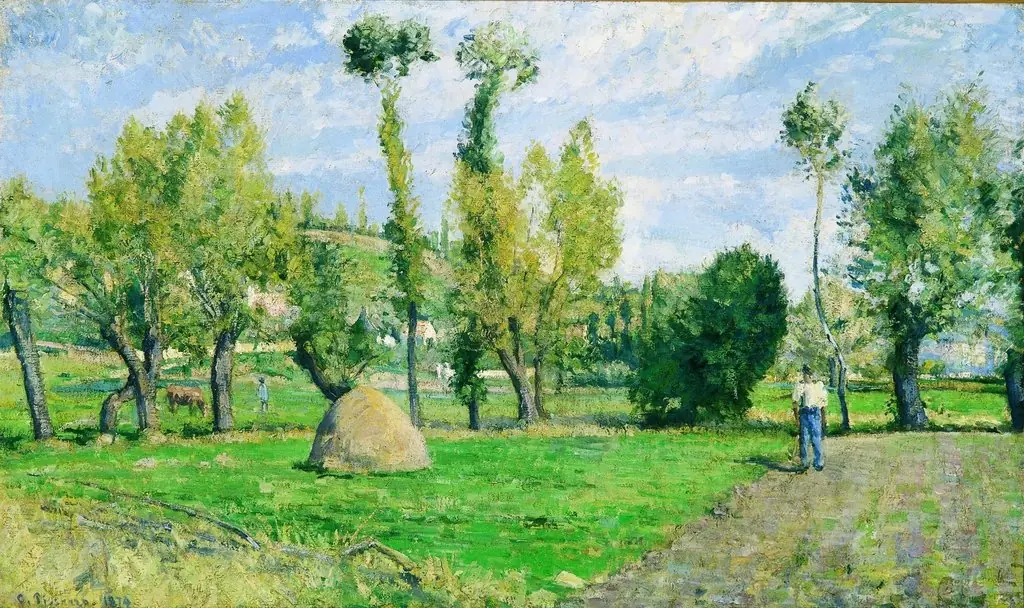 Meadows at Le Valhermeil, Auvers-sur-Oise