Artwork
The Goose Girl at Montfoucault (White Frost)
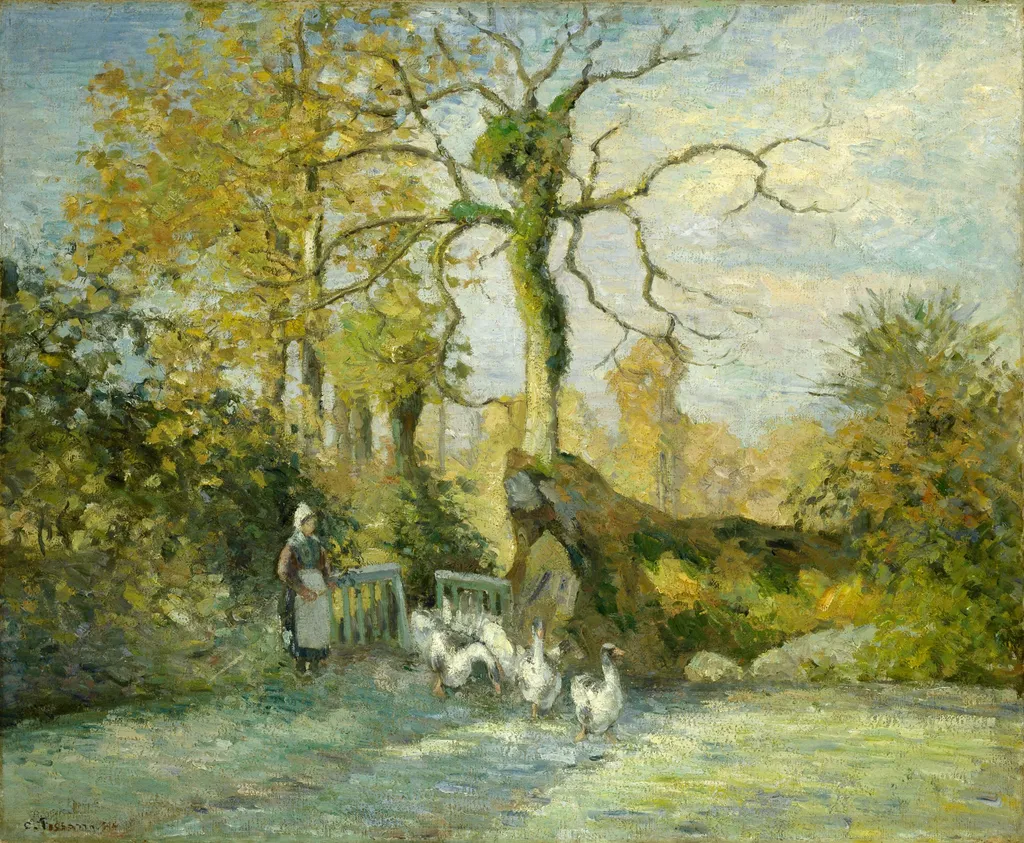
The Goose Girl at Montfoucault (White Frost) is an oil painting by the Impressionist artist Camille Pissarro. It dates from 1875 and is held in the collection of the Museum of Fine Arts, Houston.
About this work
Overview
Painted in 1875, *The Goose Girl at Montfoucault (White Frost)* is an oil on canvas work by Camille Pissarro, reflecting his early Impressionist phase.
Painted in 1875, *The Goose Girl at Montfoucault (White Frost)* is an oil on canvas work by Camille Pissarro, reflecting his early Impressionist phase. It captures a quiet rural moment in the French countryside, emphasizing seasonal stillness and everyday labor. The painting is part of the permanent collection at the Museum of Fine Arts, Houston, and exemplifies Pissarro’s commitment to depicting ordinary life with observational honesty.
Subject & Meaning
A young girl, bundled against the cold, stands in a frost-covered field with a small group of geese. Her posture suggests quiet vigilance, not activity, reinforcing the scene’s stillness. The absence of narrative drama shifts focus to the dignity of rural routine and the subtle interplay between human presence and the winter landscape, evoking a sense of quiet endurance rather than sentimentality.
Technique & Style
Pissarro employs loose, deliberate brushwork to suggest texture without overt detail—frost on the ground, the roughness of tree bark, and the soft contours of the girl’s coat are rendered with muted tones of gray, brown, and pale green. The composition avoids dramatic perspective, favoring a flattened space that aligns with Impressionist priorities: light, atmosphere, and immediate visual impression over idealized form.
History & Provenance
Created during Pissarro’s most active Impressionist years, the painting emerged from his practice of painting en plein air in the villages near Paris. It remained in private hands until entering the Museum of Fine Arts, Houston’s collection, where it has been publicly accessible since the mid-20th century. Its provenance reflects its status as a representative work of Pissarro’s rural studies from the 1870s.
Context
In 1875, Pissarro was deeply engaged with the Impressionist exhibitions and the movement’s rejection of academic conventions. This work aligns with contemporaneous efforts by artists like Millet and Daubigny to elevate rural labor as worthy subject matter. Unlike urban scenes favored by some peers, Pissarro turned to the countryside, capturing the rhythms of agricultural life with unembellished clarity.
Legacy
Though less known than his later Neo-Impressionist works, this painting illustrates Pissarro’s foundational role in shaping Impressionist landscape painting. Its quiet realism influenced later generations of artists interested in everyday rural life. The work endures as a testament to his consistent focus on authenticity, light, and the dignity of the land and its keepers.
Own this work as a print
Artist & collection
Artist
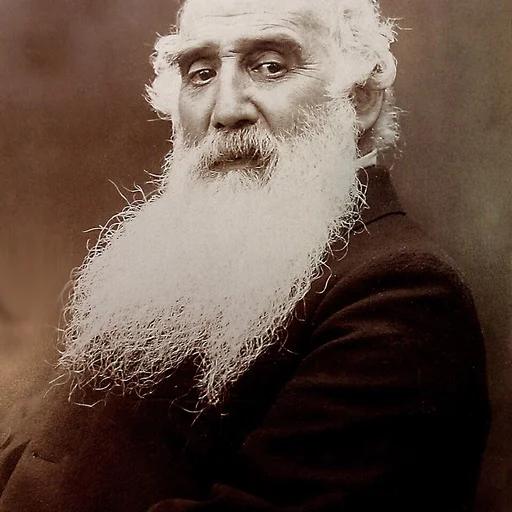
Jacob Abraham Camille Pissarro ( piss-AR-oh; French: ; 10 July 1830 – 13 November 1903) was a Danish-French Impressionist and Neo-Impressionist painter born on the island of Saint Thomas (now in the US Virgin Islands, but then in the…

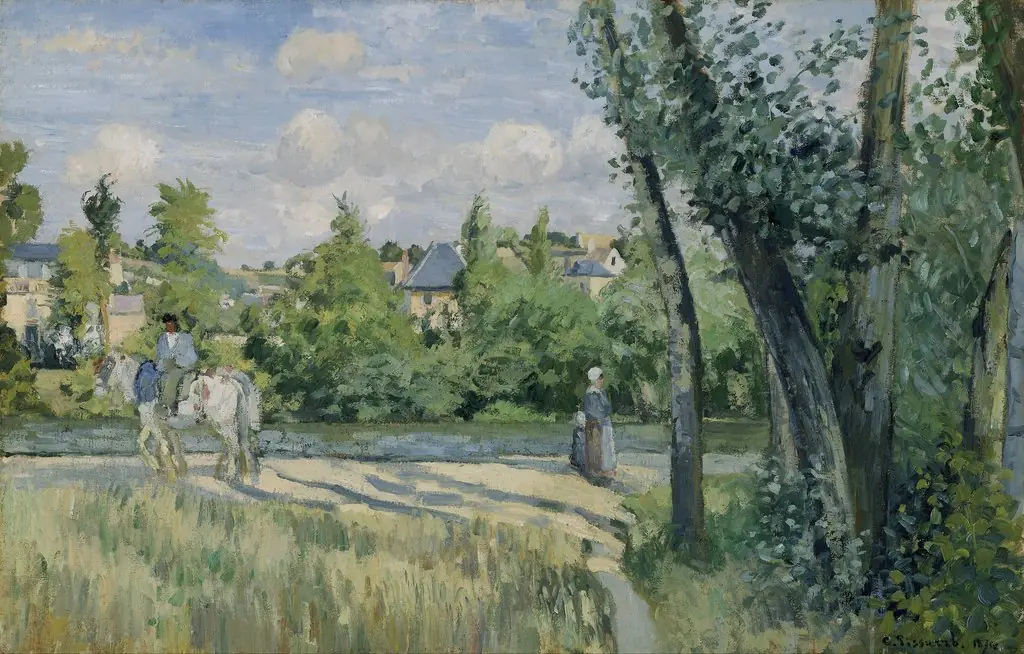 Sunlight on the Road, Pontoise
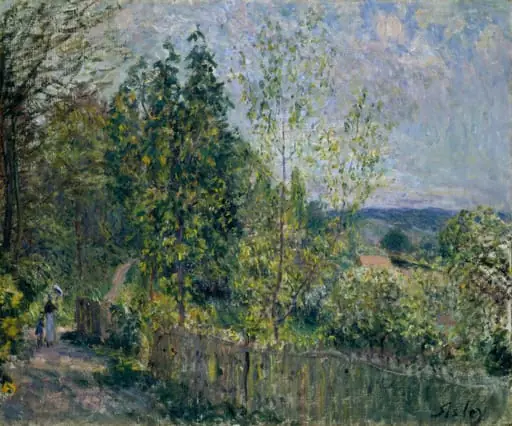 The Road in the Woods
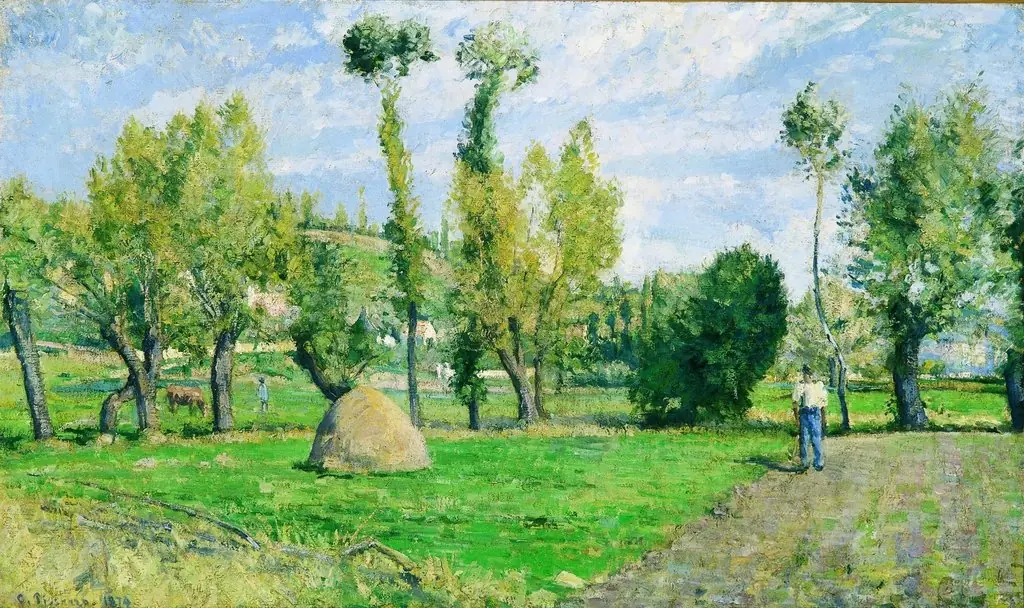 Meadows at Le Valhermeil, Auvers-sur-Oise
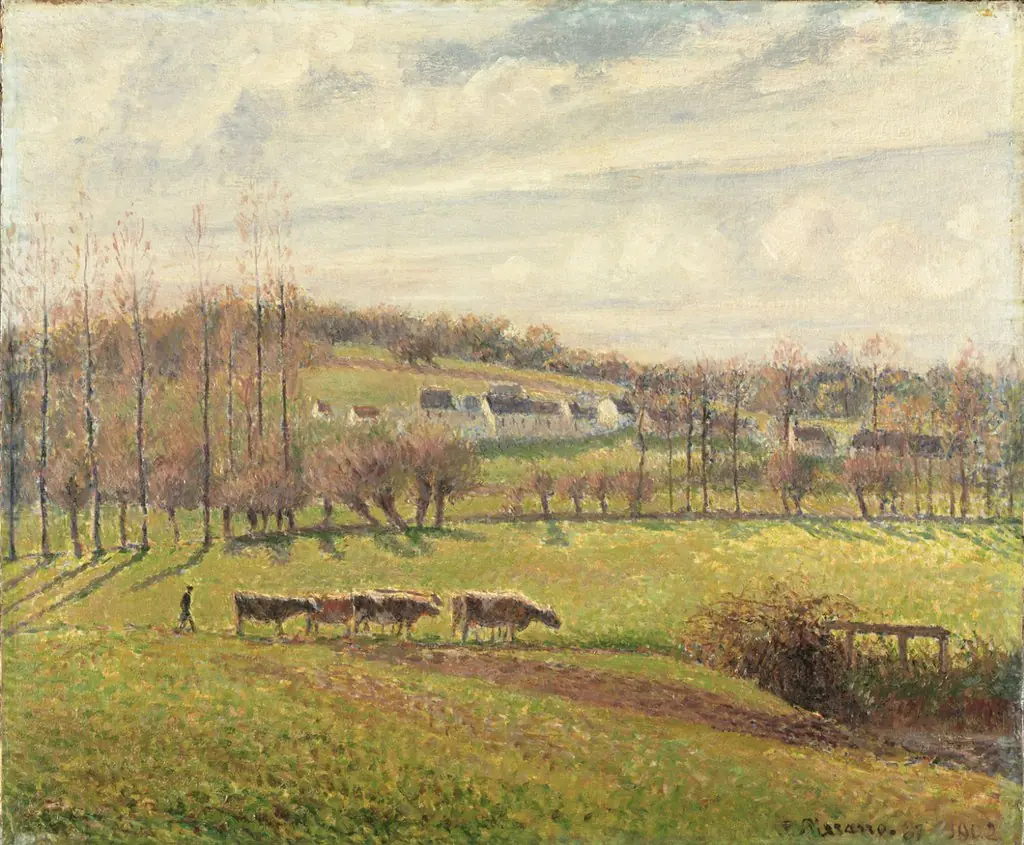 Summer Landscape, Eragny
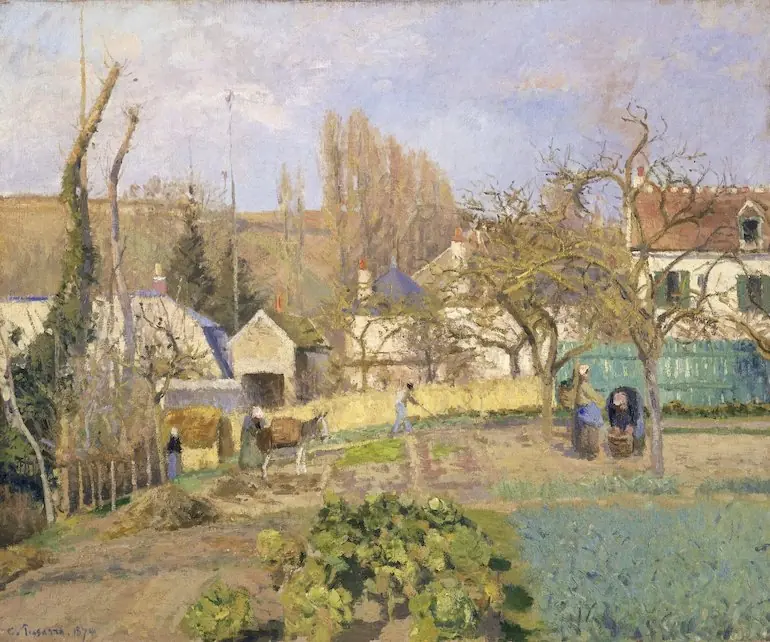 Kitchen Gardens at L'Hermitage, Pontoise
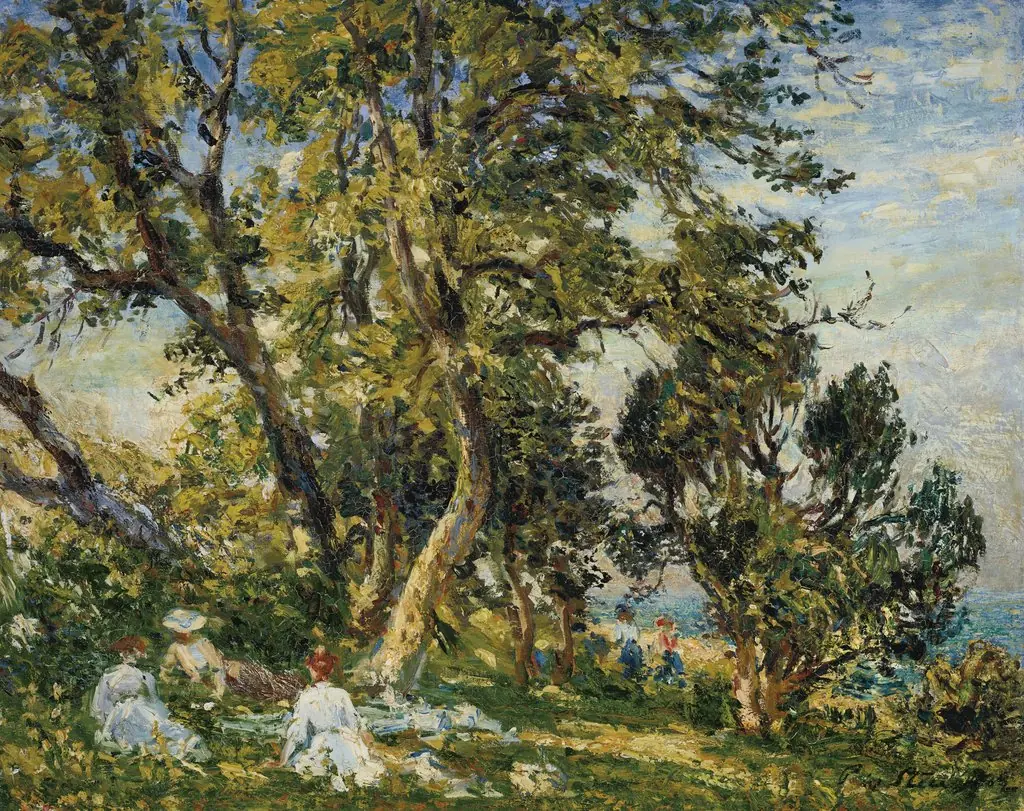 Under the Trees
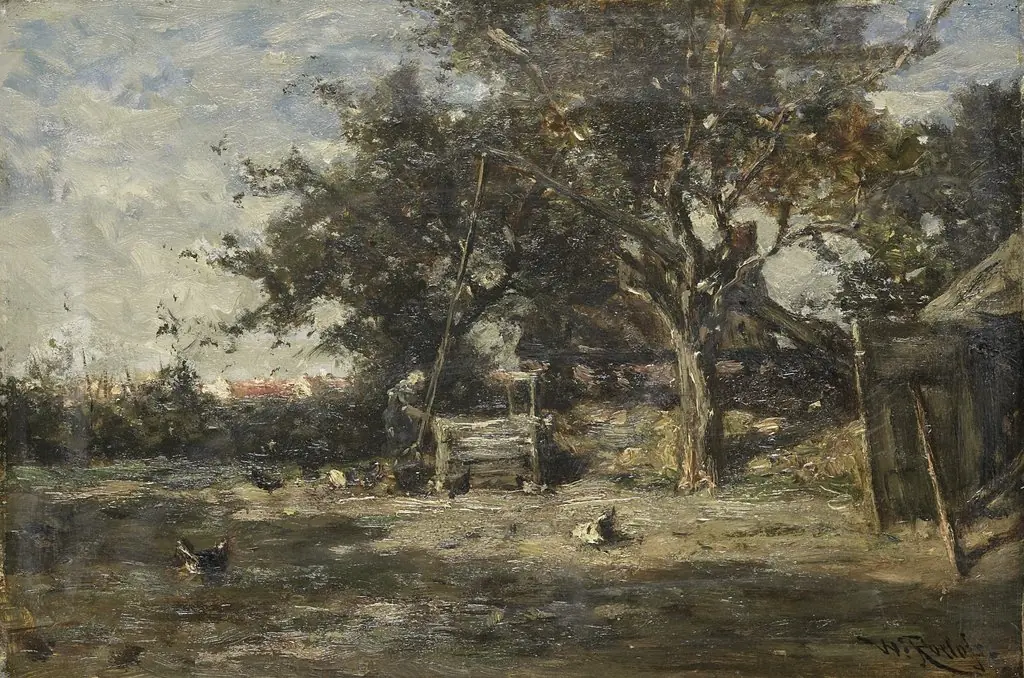 Boerenerf bij Noorden
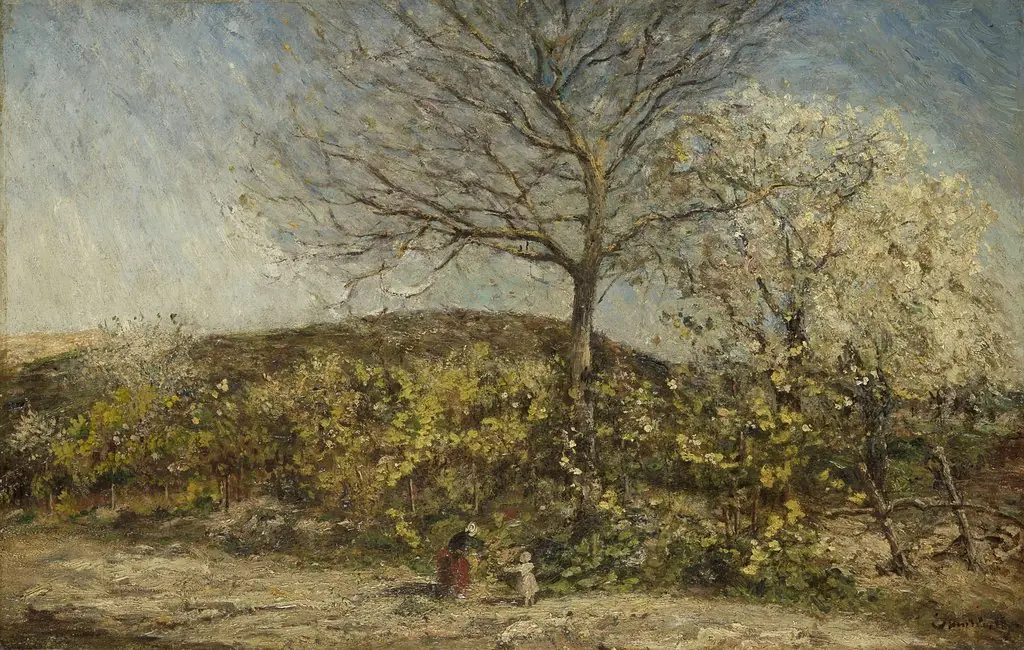 Landschap met bloeiende boomgaard
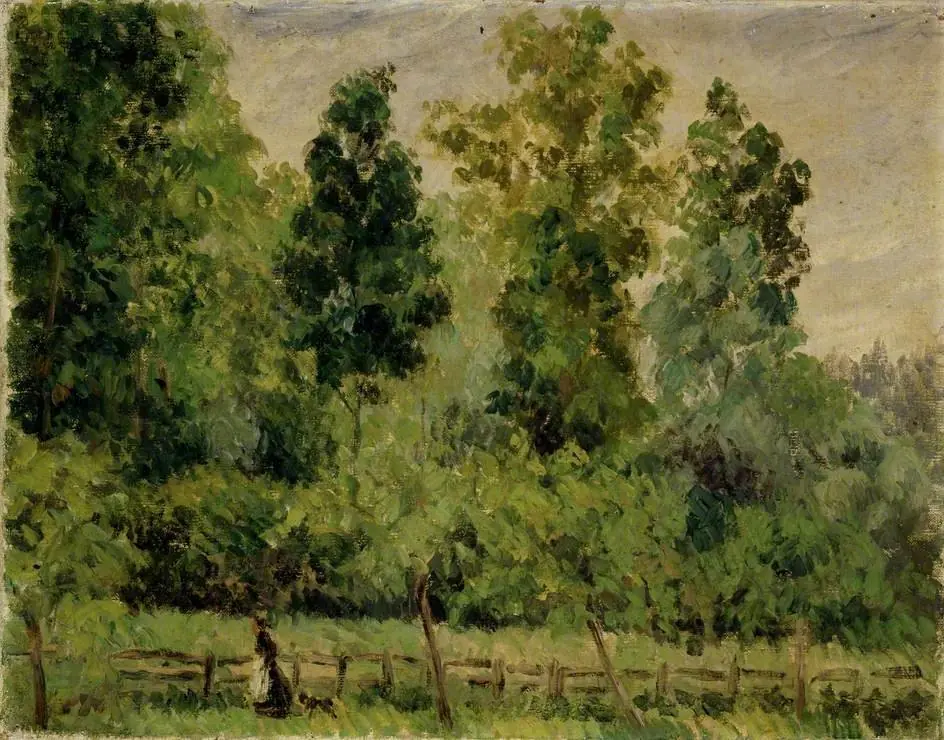 Wooded Landscape: A Woman walking with a Dog
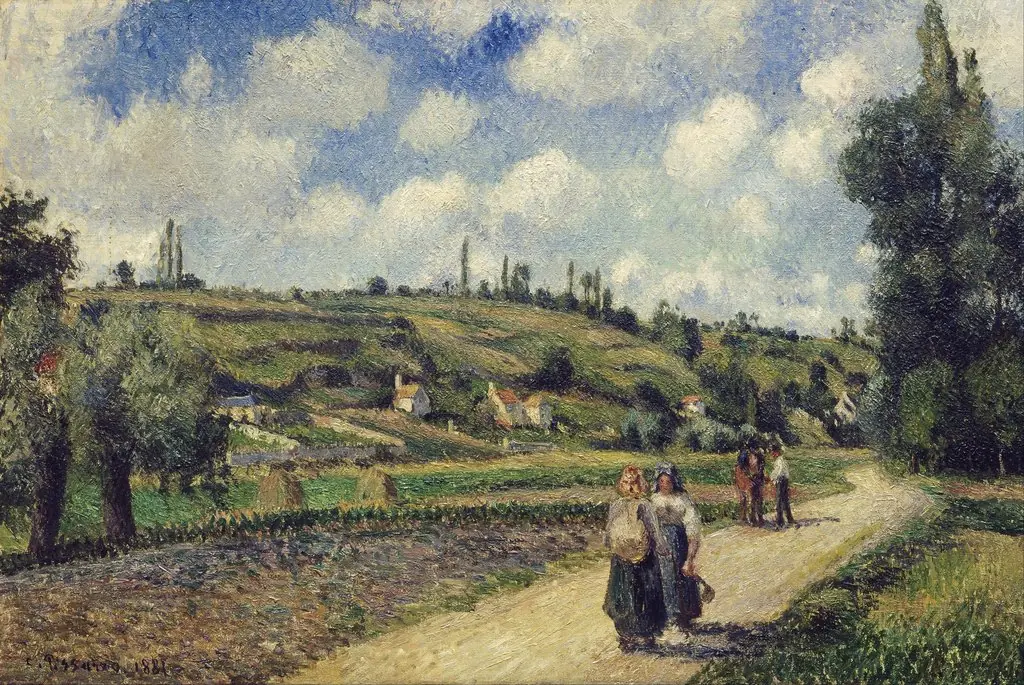 Côte du Valhermeil, Auvers-sur-Oise