Artwork
Imaginary View of Venice
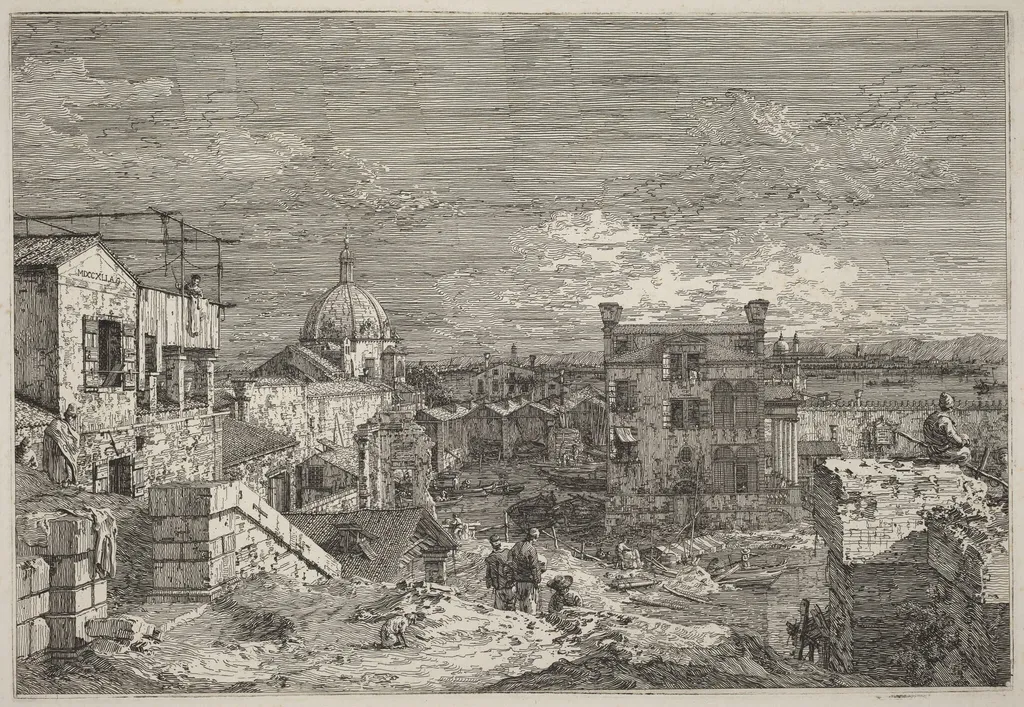
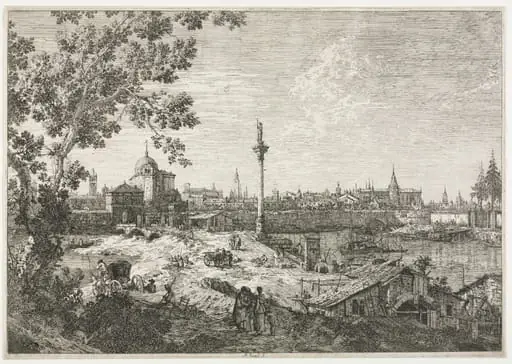
Imaginary View of Venice is an ink print by the Baroque artist Canaletto. It dates from 1741 and is held in the collection of the National Gallery of Art.
About this work
Overview
The work showcases his mastery of etching, using fine, controlled lines to render architectural and maritime detail with precision.
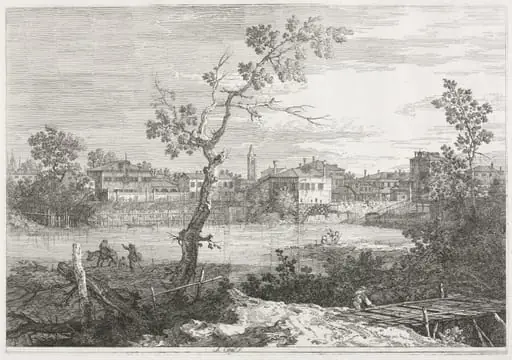
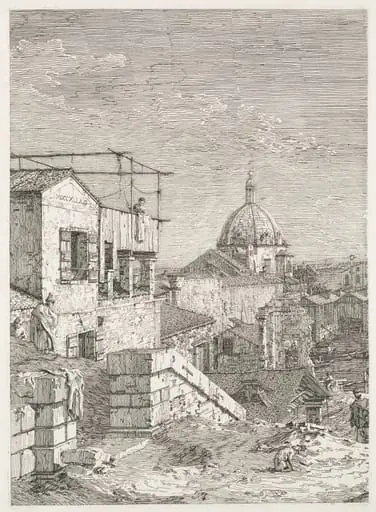
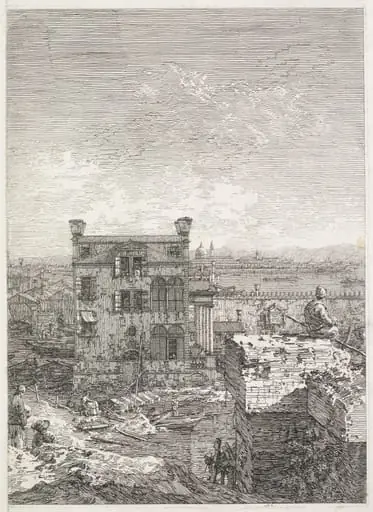
Created in 1741, *Imaginary View of Venice* is an etching by Giovanni Antonio Canal, known as Canaletto. It belongs to his series of urban landscapes that blend observed reality with inventive composition. Though rooted in Venetian topography, the scene is not a literal record but a constructed vision, typical of his capricci. The work showcases his mastery of etching, using fine, controlled lines to render architectural and maritime detail with precision.
Subject & Meaning
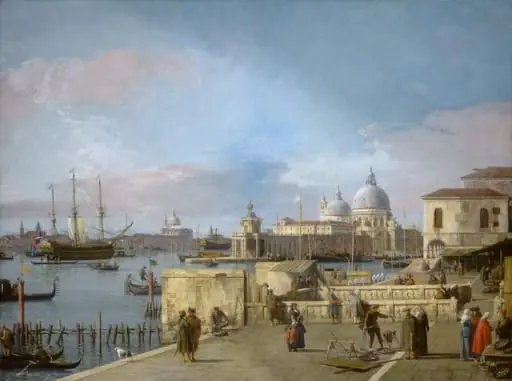
The scene depicts a bustling Venetian waterfront with tightly packed buildings, moored and sailing vessels, and scattered figures on docks and boats. The atmosphere is muted, softened by a hazy sky that suggests twilight or damp air. Rather than documenting a specific location, Canaletto assembles familiar elements into a cohesive, atmospheric whole—evoking the rhythm of daily life in Venice without anchoring it to a single place.
Technique & Style
Canaletto employed etching to achieve sharp, intricate lines that define facades, ropes, ripples, and figures with clarity. The medium allowed him to build tone through fine cross-hatching and delicate washes, enhancing the foggy, atmospheric quality. His style merges topographical accuracy with imaginative arrangement, characteristic of the capriccio tradition—where real architecture is recombined to serve visual harmony and mood.
History & Provenance
Produced during Canaletto’s peak years, this etching was likely made for collectors interested in Venetian views, both local and abroad. It circulated among patrons who valued detailed cityscapes as both artistic and documentary objects. While its early ownership is undocumented, it aligns with the broader market for Venetian vedute that flourished in the mid-18th century, particularly among British travelers on the Grand Tour.
Context
In early 18th-century Venice, etched vedute were popular among tourists and connoisseurs seeking souvenirs of the city’s grandeur. Canaletto stood at the center of this trend, refining a style that balanced realism with artistic license. His work responded to growing demand for images that captured Venice’s unique urban character, even as the city’s political influence waned—making visual memory a form of cultural preservation.
Legacy
Canaletto’s etchings, including this one, helped define the visual language of Venetian cityscapes for later generations. His fusion of observation and invention influenced both printmakers and painters across Europe. While his oil paintings often receive more attention, his etchings remain significant for their technical refinement and their role in disseminating the image of Venice beyond its borders.
Artist & collection
Artist
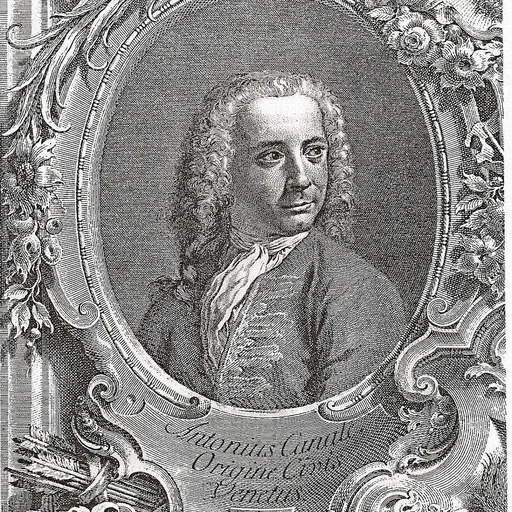
Giovanni Antonio Canal (18 October 1697 – 19 April 1768), commonly known as Canaletto (Italian: ), was an Italian painter from the Republic of Venice, considered an important member of the 18th-century Venetian school.

![The House with the Inscription [left], by Canaletto](https://artifactworldgallery.com/img/canaletto--the-house-with-the-inscription-left--c8e9fad25fb271b4-w320.webp)