Artwork
Pra della Valle
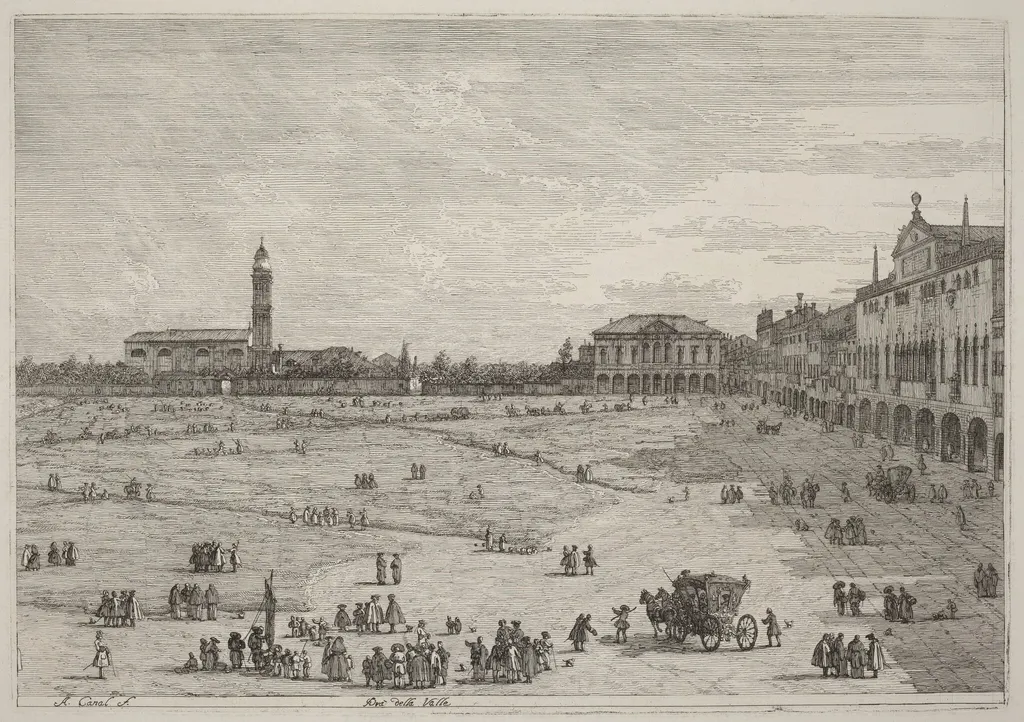
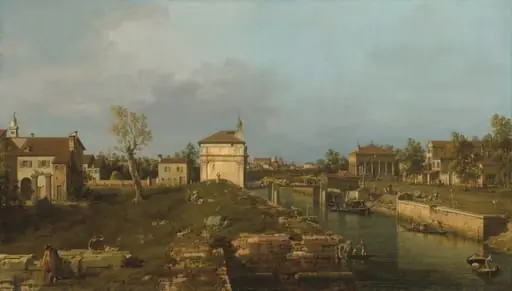
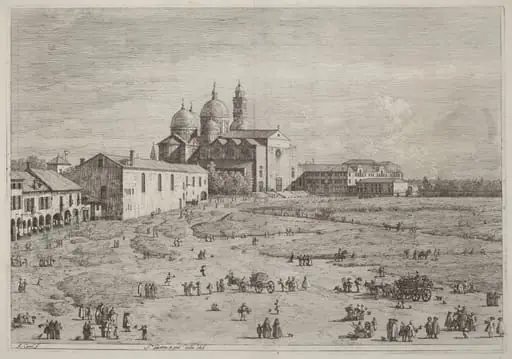
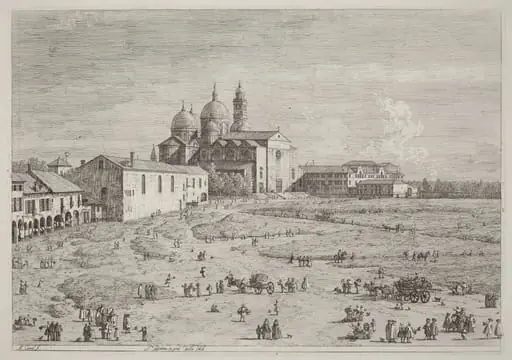
Pra della Valle is an ink print by the Baroque artist Canaletto. It dates from 1740 and is held in the collection of the National Gallery of Art.
About this work
Overview
Though primarily recognized for his oil paintings of Venetian vistas, Canaletto also produced precise etchings that captured urban life with clarity.
Created circa 1740, *Pra della Valle* is an etching by Giovanni Antonio Canal, known as Canaletto, depicting a public square in Padua. Though primarily recognized for his oil paintings of Venetian vistas, Canaletto also produced precise etchings that captured urban life with clarity. This print reflects his interest in topographical accuracy and the rhythm of daily activity in public spaces, rendered through fine linear detail rather than broad brushwork.
Subject & Meaning
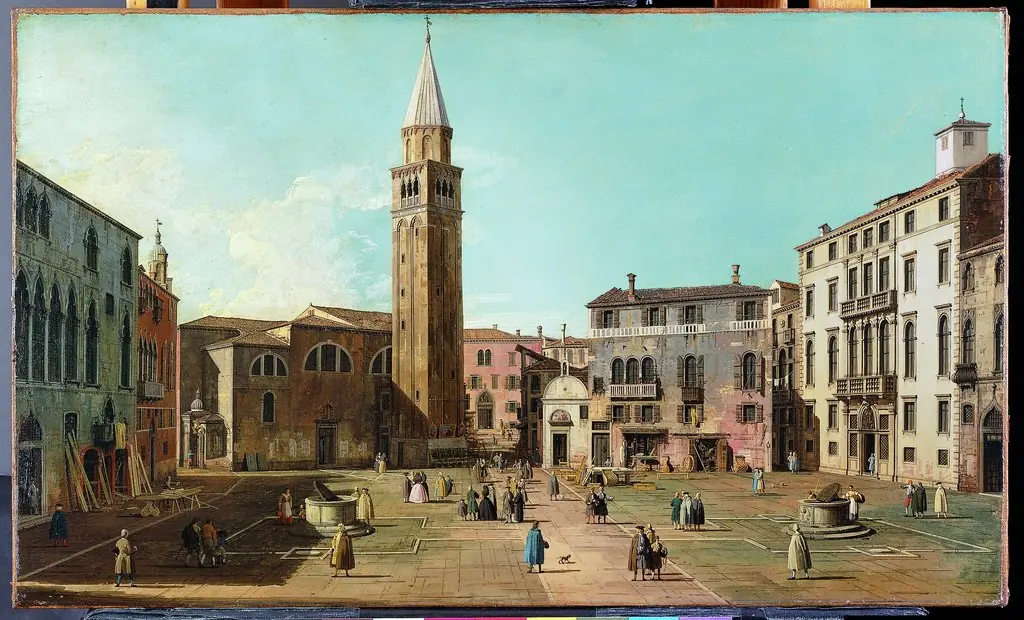
The scene portrays Pra della Valle, one of Europe’s largest town squares, alive with pedestrians, horse-drawn vehicles, and grouped figures engaged in ordinary routines. The distant tower of the Basilica of Saint Anthony anchors the composition, grounding the bustling activity in a recognizable civic landmark. The work conveys no overt narrative but instead offers a quiet documentation of urban sociability and spatial order in mid-18th-century Padua.
Technique & Style
Canaletto employed etching to achieve fine, controlled lines that define architecture and movement with clarity. The composition uses linear perspective to draw the eye toward the basilica’s tower, while varying line density suggests texture and depth. Unlike the dramatic contrasts of Baroque painting, this print relies on subtle tonal gradations and meticulous draftsmanship, reflecting a more observational, topographical approach than theatrical expression.
History & Provenance
The etching was produced during Canaletto’s period of active printmaking, likely as part of a series documenting Italian urban landscapes. It circulated among collectors and travelers drawn to the Grand Tour tradition, serving as both a souvenir and a record of places beyond Venice. Its survival in museum collections today attests to its enduring value as a documentary artifact of 18th-century Italian civic life.
Context
In the 1740s, Italian cities like Padua were centers of intellectual and social life, with large public squares functioning as hubs for commerce, ceremony, and leisure. Canaletto’s interest in such spaces aligned with broader European trends favoring topographical accuracy in art. His etchings responded to a growing market for images that combined aesthetic appeal with geographic fidelity, bridging art and cartography.
Legacy
Canaletto’s etchings, including *Pra della Valle*, influenced later topographical artists and contributed to the development of urban documentation in print. While less celebrated than his paintings, these works remain important for their precision and insight into daily life in Enlightenment-era Italy. They continue to serve as reference points for historians studying urban form and public space in 18th-century Europe.
Artist & collection
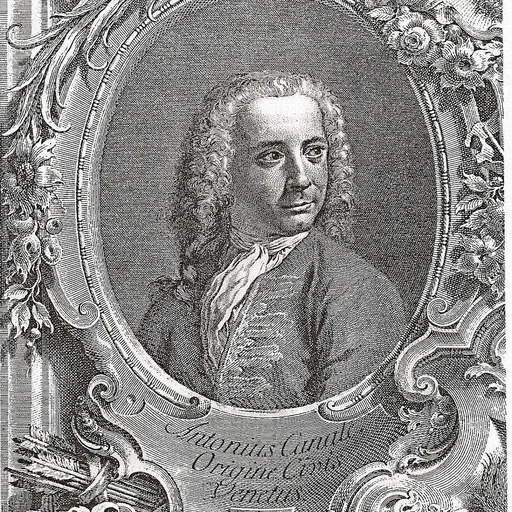
Artist
Giovanni Antonio Canal (18 October 1697 – 19 April 1768), commonly known as Canaletto (Italian: ), was an Italian painter from the Republic of Venice, considered an important member of the 18th-century Venetian school.