Artwork
The Equestrian Monument
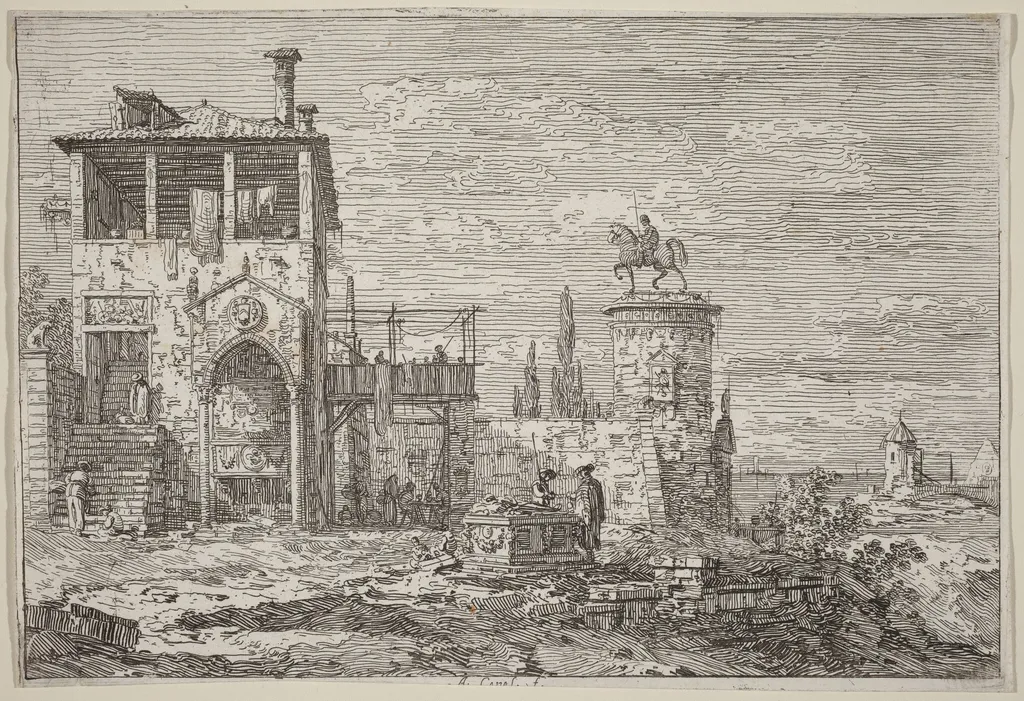
The Equestrian Monument is an ink print by the Baroque artist Canaletto. It dates from 1740 and is held in the collection of the National Gallery of Art.
About this work
Overview
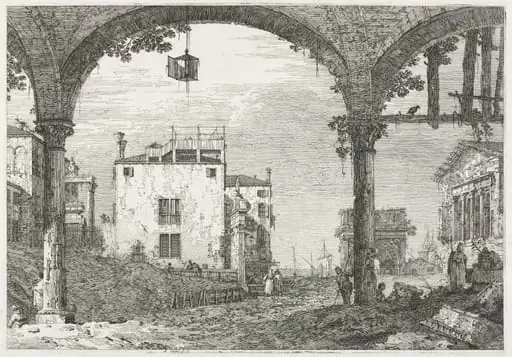
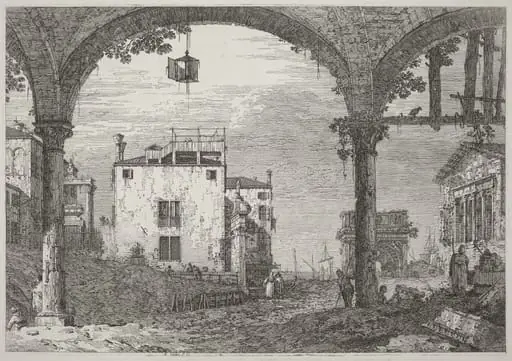
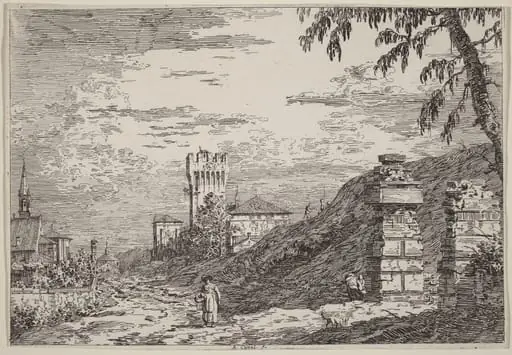
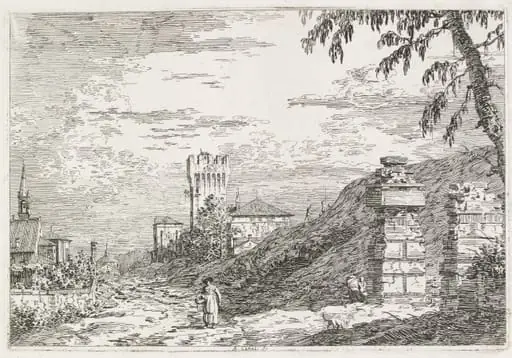
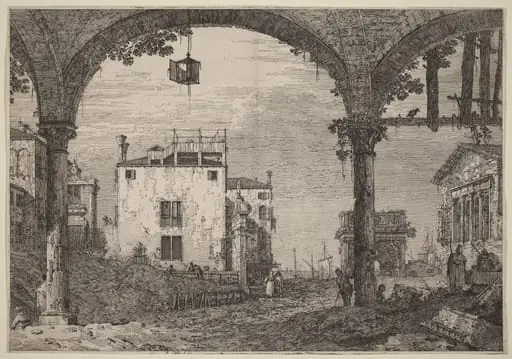
Created circa 1740, this etching titled The Equestrian Monument is attributed to Giovanni Antonio Canal, better known as Canaletto. The print captures a bustling urban scene centered on a grand monument crowned by a horse and rider, framed by surrounding architecture, a central arch, and a crowd of figures beneath a cloudy sky.
Subject & Meaning
The composition presents a monumental structure that dominates the cityscape, suggesting civic pride or commemorative purpose. The rider atop the horse adds a narrative element, while the surrounding pedestrians and buildings convey everyday life, linking public ceremony with the ordinary rhythms of the urban environment.
Technique & Style
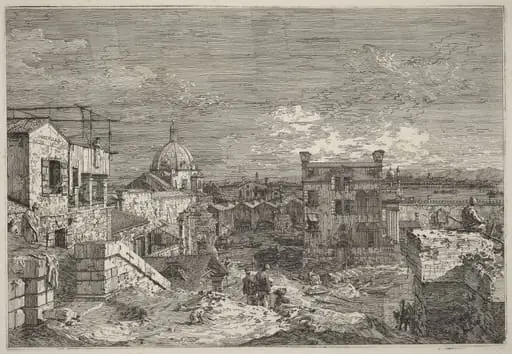
Executed in fine etched lines, the work demonstrates Canaletto’s meticulous approach to texture and perspective. Contrasting light and shadow model the forms, creating depth and a sense of three‑dimensional space. The dramatic chiaroscuro and theatrical arrangement align the piece with Baroque sensibilities, emphasizing grandeur and movement.
Context
Canaletto is chiefly celebrated for his vedute of Venice, Rome, and London, yet his printmaking practice ran alongside his painted output. This etching illustrates his habit of merging authentic architectural detail with imagined elements, a method that allowed him to craft idealized yet plausible city scenes for a European market eager for such images.
Artist & collection
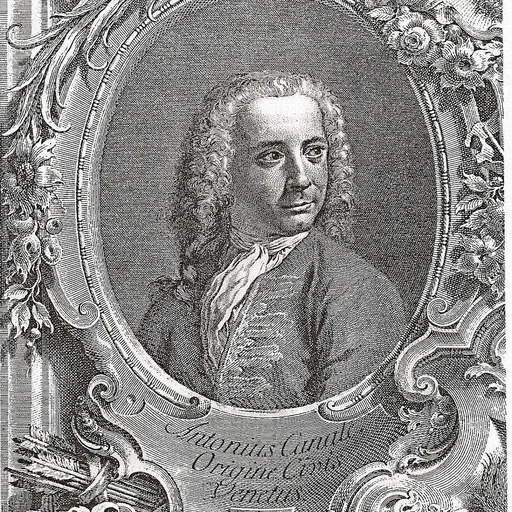
Artist
Giovanni Antonio Canal (18 October 1697 – 19 April 1768), commonly known as Canaletto (Italian: ), was an Italian painter from the Republic of Venice, considered an important member of the 18th-century Venetian school.