Artwork
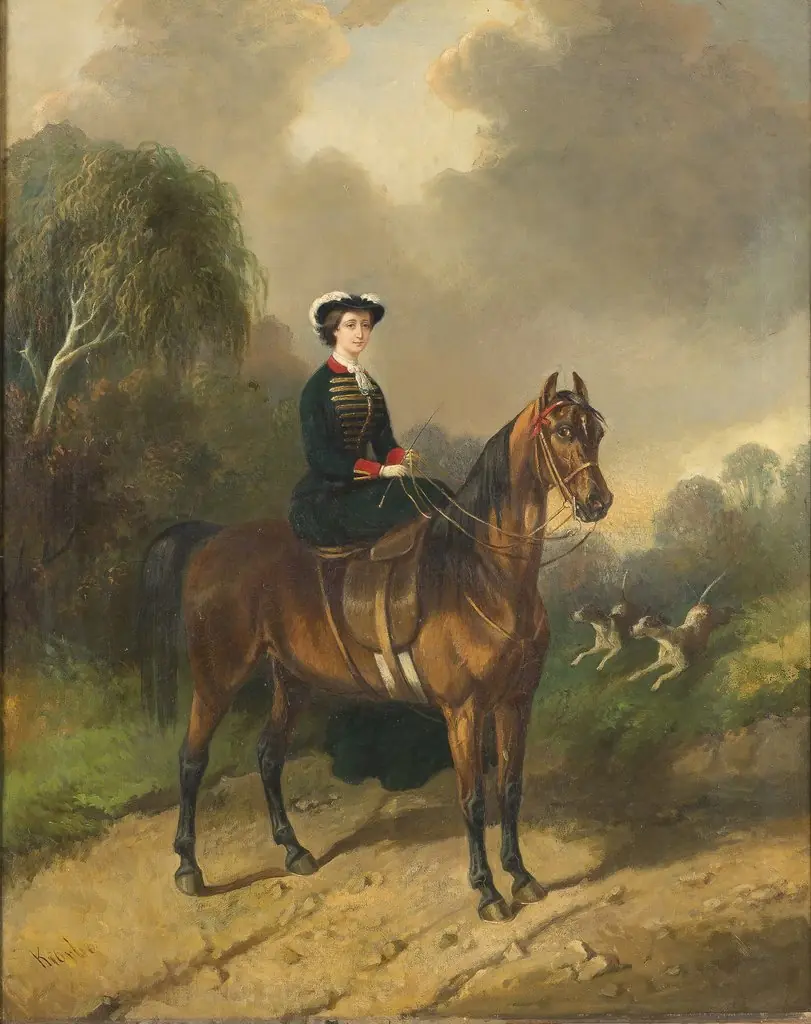
Portrait of a Riding Woman
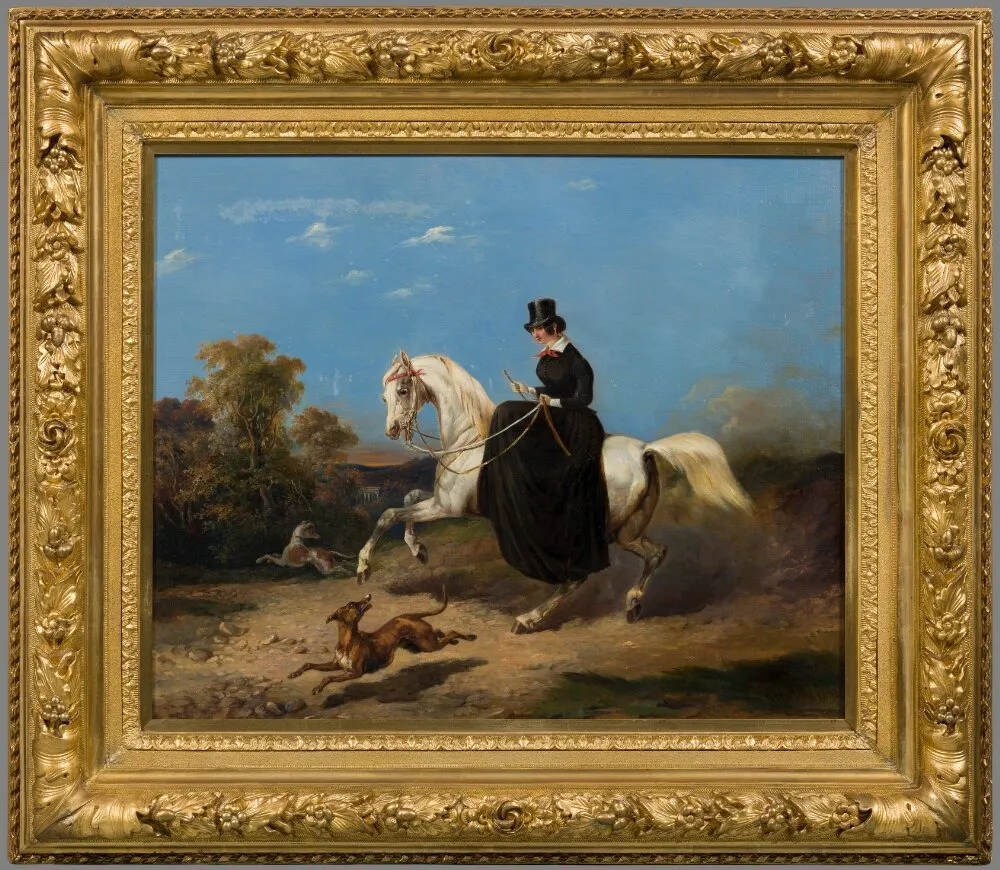
Portrait of a Riding Woman is an unspecified painting by the Biedermeier artist Carl Fredrik Kiörboe. It dates from 1848 and is held in the collection of the Nationalmuseum.
About this work
Overview
Painted in 1848 by Carl Fredrik Kiörboe, a Danish-born artist active in Sweden, this work captures a woman on horseback amid a lively outdoor scene.
Painted in 1848 by Carl Fredrik Kiörboe, a Danish-born artist active in Sweden, this work captures a woman on horseback amid a lively outdoor scene. Kiörboe, largely self-taught, specialized in animals and rural life, and this portrait reflects his interest in motion and natural behavior. The painting is held in the Nationalmuseum’s collection in Stockholm, where it exemplifies the quiet realism of the Biedermeier tradition.
Subject & Meaning
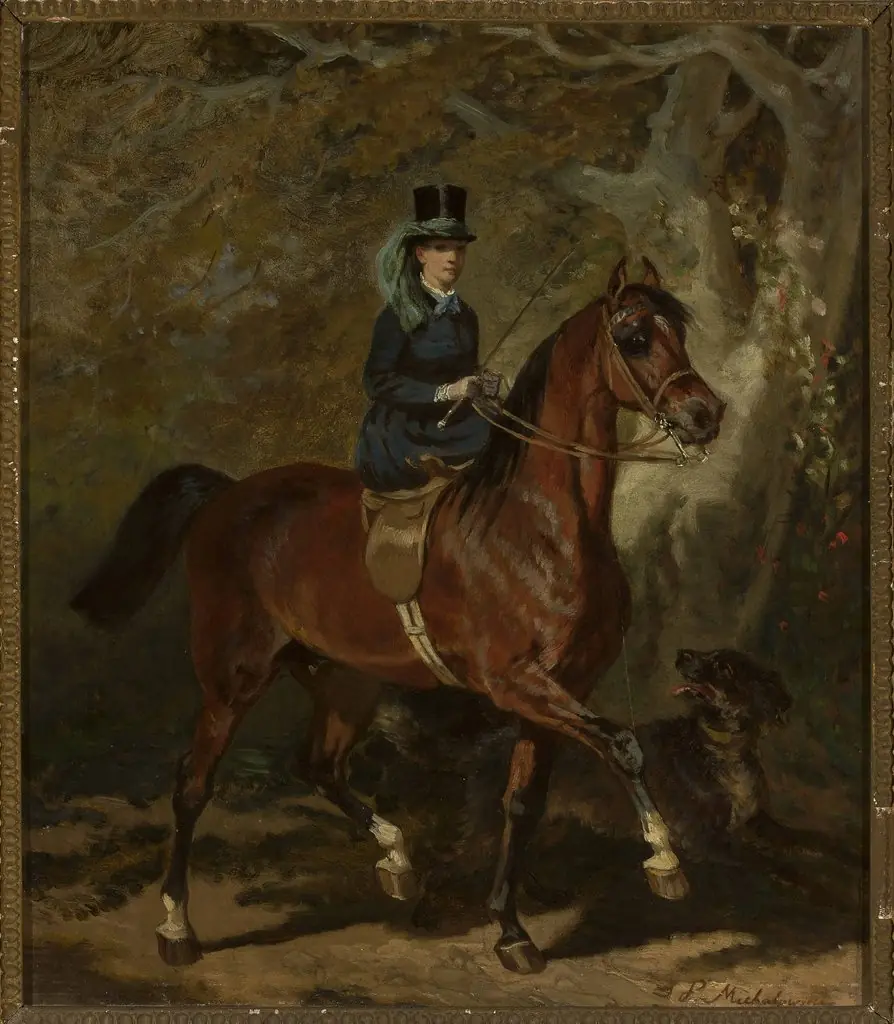
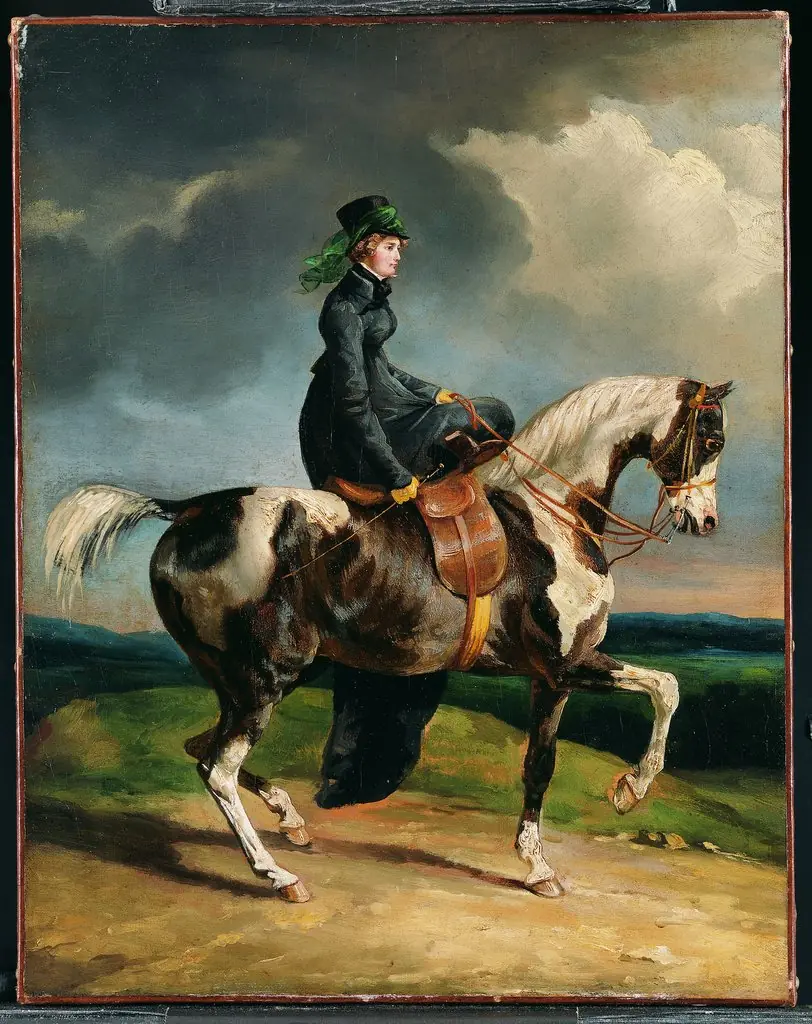
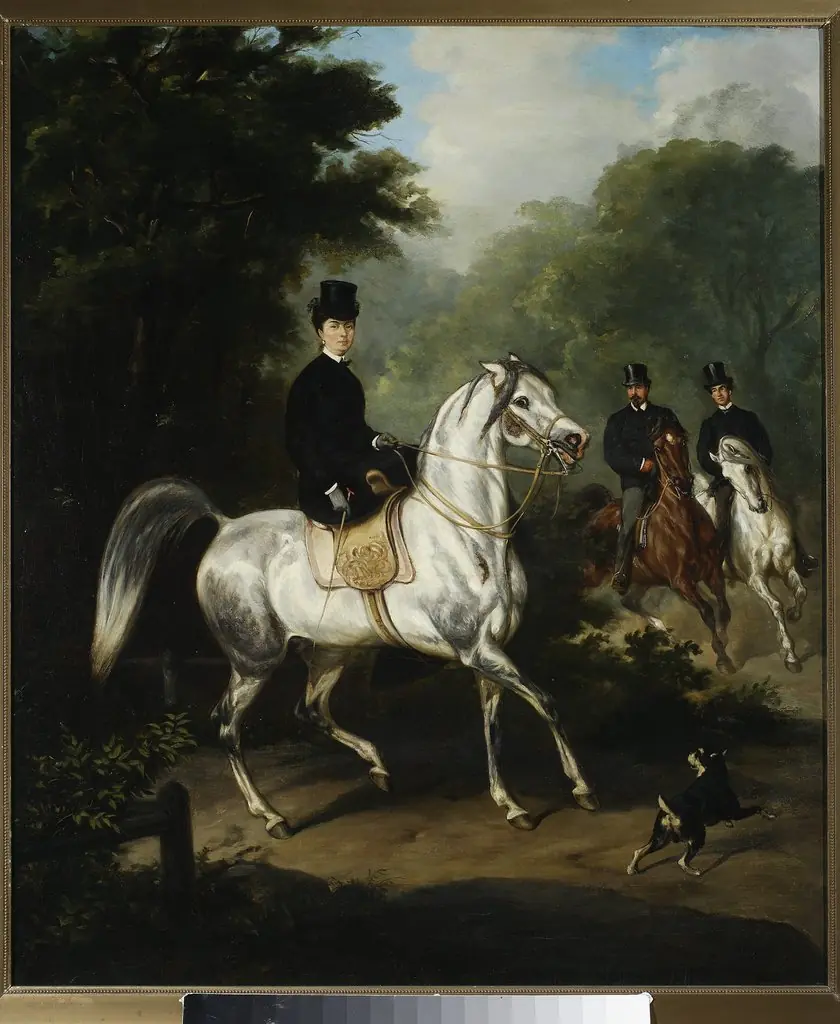
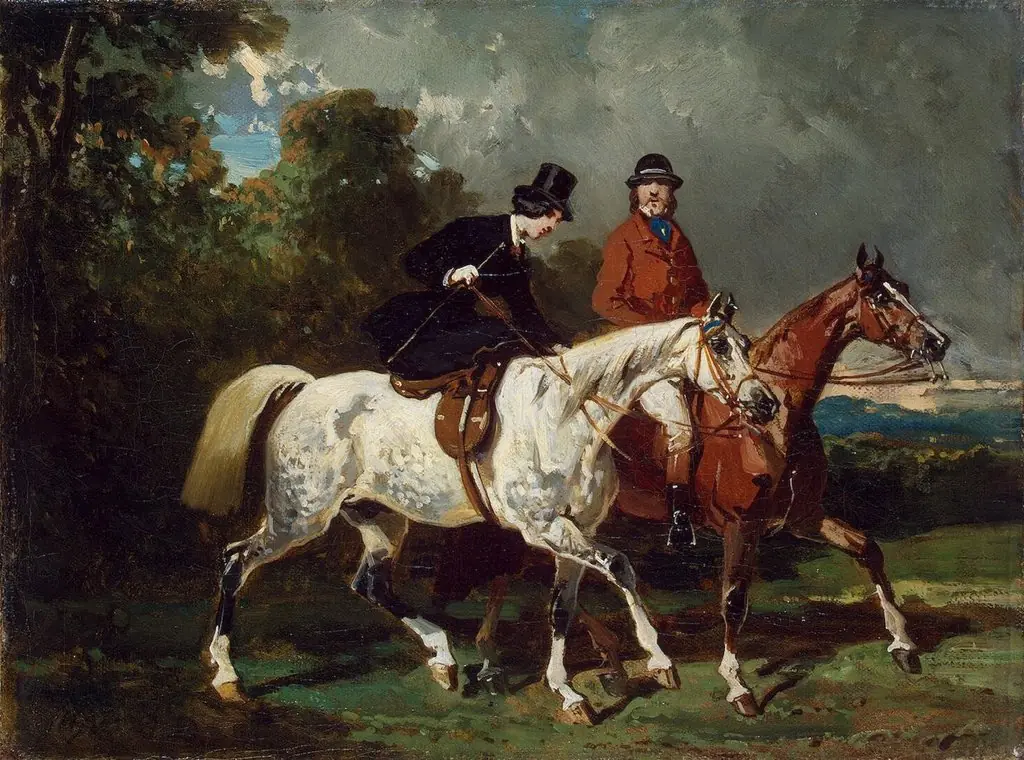
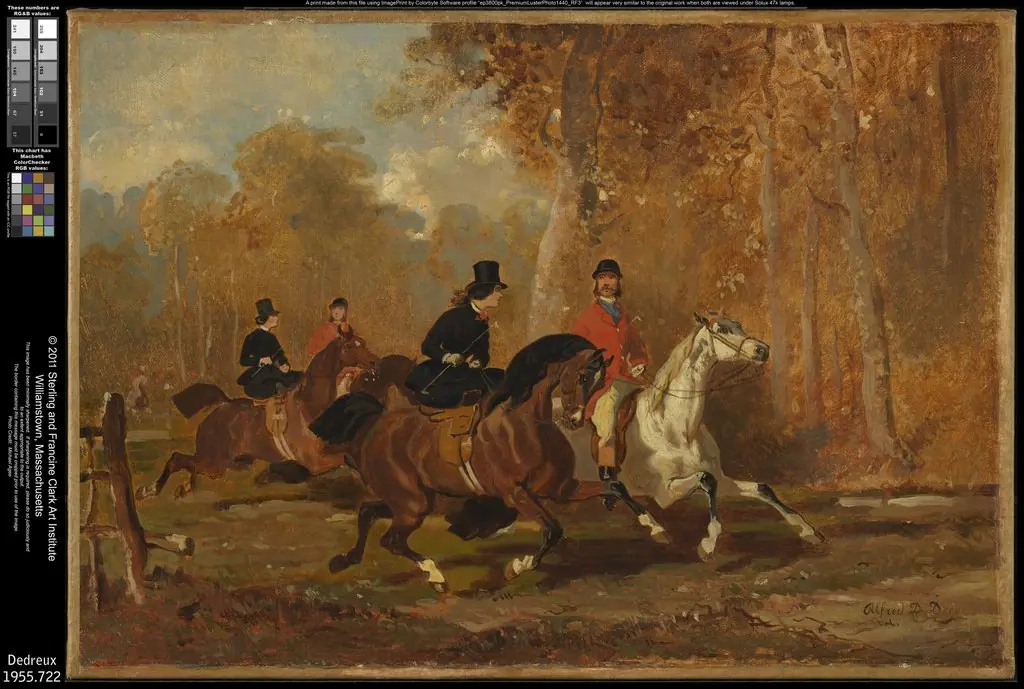
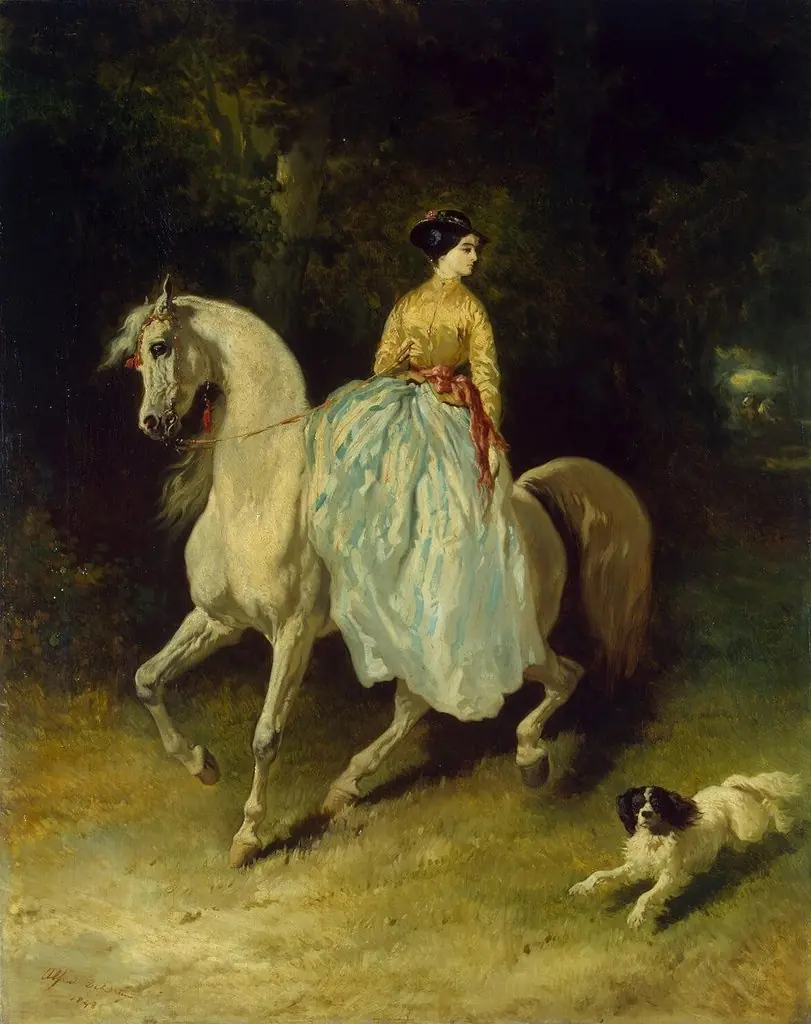
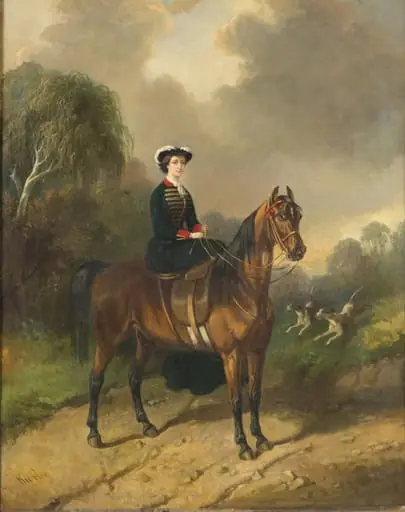
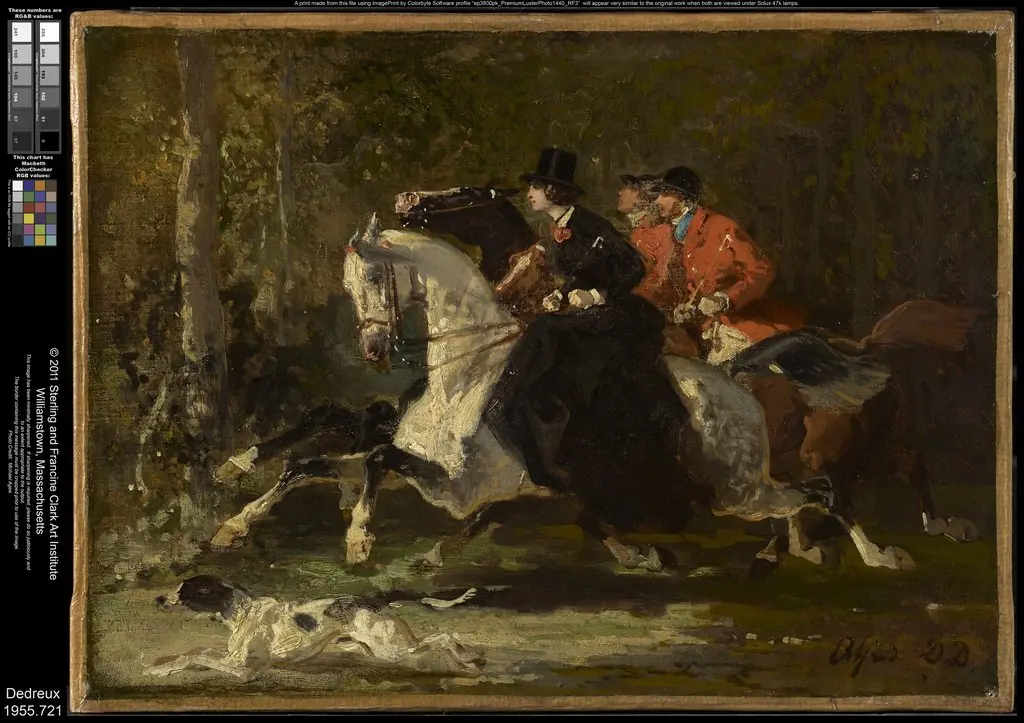
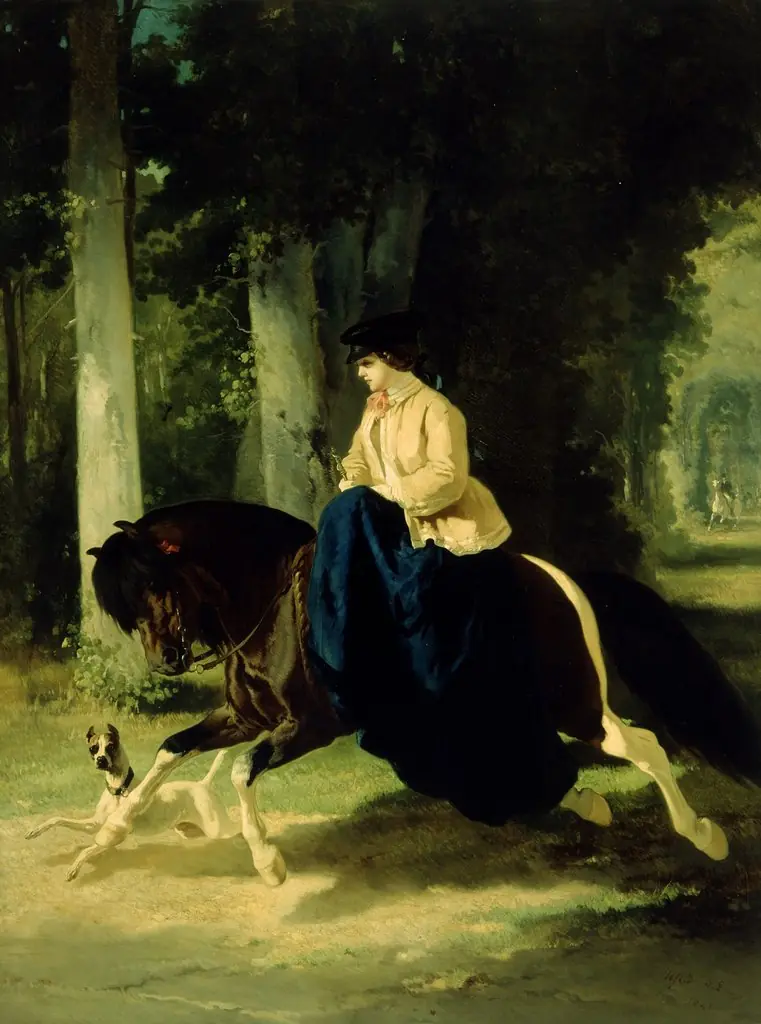
The subject is a woman dressed in formal equestrian attire—a long black dress and top hat—riding a rearing white horse. Two dogs dart at the horse’s feet, suggesting a moment of controlled chaos. The scene conveys neither grandeur nor narrative, but rather an intimate, everyday equestrian moment. The woman’s composed posture contrasts with the animal energy around her, hinting at poise amid motion without overt symbolism.
Technique & Style
Kiörboe employed a restrained, detailed approach aligned with Biedermeier aesthetics: clear forms, muted tones, and careful rendering of textures like fur, fabric, and horsehide. The composition avoids theatricality, focusing instead on observed reality. Brushwork is precise yet unobtrusive, allowing the natural movement of horse and dogs to dominate. The sky and trees frame the scene without distracting, reinforcing the quiet dignity of the moment.
History & Provenance
Created in 1848, the painting entered the Nationalmuseum’s collection in Sweden, where it has remained since. Kiörboe, though not formally trained, gained recognition for his animal studies and rural scenes. This work reflects his consistent focus on domesticated animals in outdoor settings. No significant changes in ownership or restoration are documented, suggesting stable preservation within institutional care.
Context
In mid-19th-century Scandinavia, the Biedermeier style favored domestic tranquility and natural observation over romantic drama. Kiörboe’s work aligned with this trend, capturing ordinary moments with quiet precision. Equestrian portraits were common among the elite, but his focus on movement and animals—rather than status—distinguishes this piece from more formal aristocratic depictions of the era.
Legacy
Kiörboe’s legacy lies in his quiet documentation of animal life within everyday Swedish settings. While not widely known beyond regional art circles, his works, including this portrait, offer insight into the cultural appreciation of animals and rural leisure in 19th-century Scandinavia. The painting endures as a representative example of his distinctive, unembellished approach to natural subjects.
Artist & collection
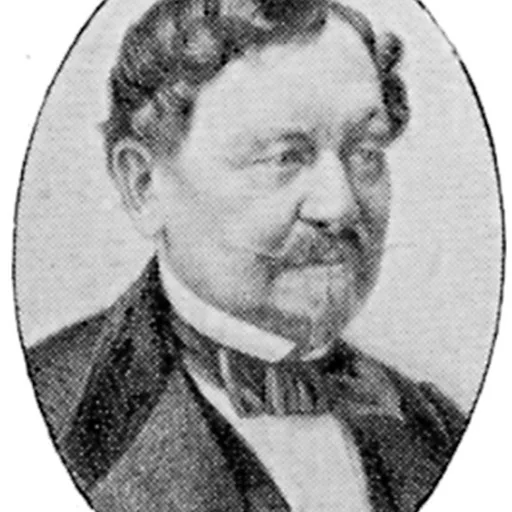
Artist
Carl Fredrik Kiörboe (1 June 1799, Christiansfeld – 2 January 1876, Dijon) was a Danish-born Swedish artist who specialized in paintings with animals; primarily dogs and horses. He was apparently self-taught.