Artwork
Dancing Light of Morning
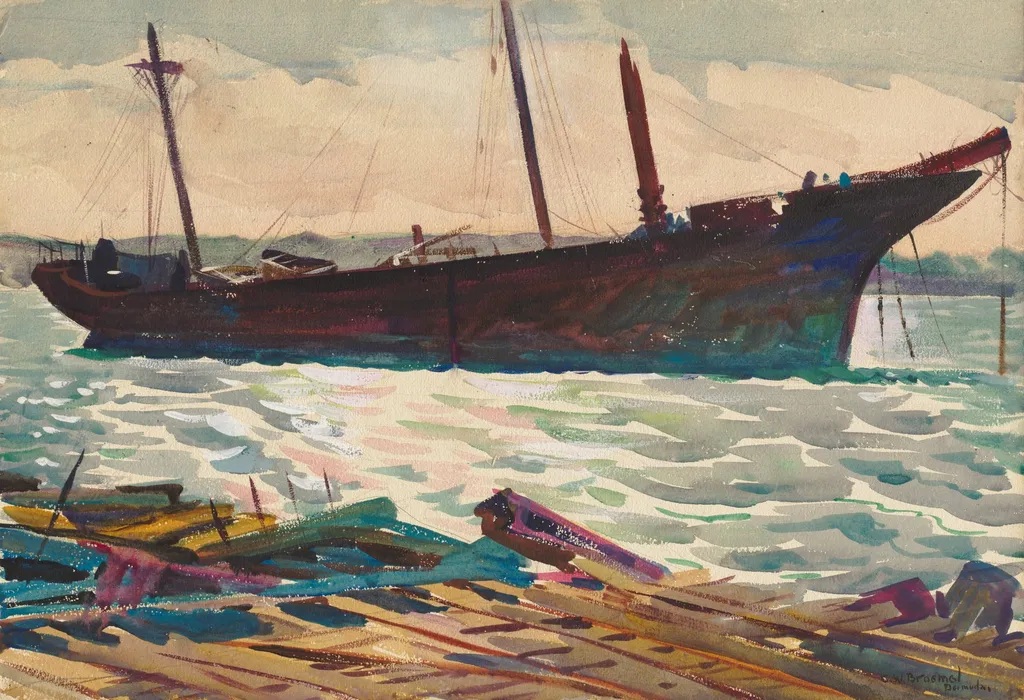
Dancing Light of Morning is a drawing by Carl William Broemel. It dates from 1925 and is held in the collection of the Cleveland Museum of Art.
About this work
Overview
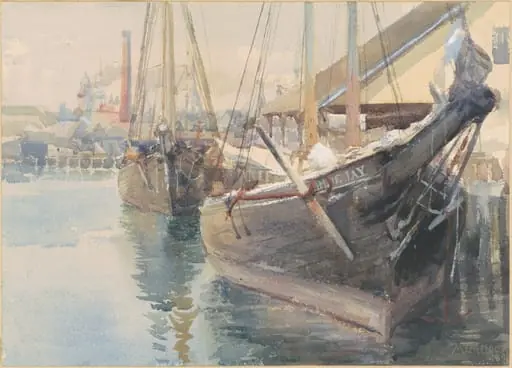
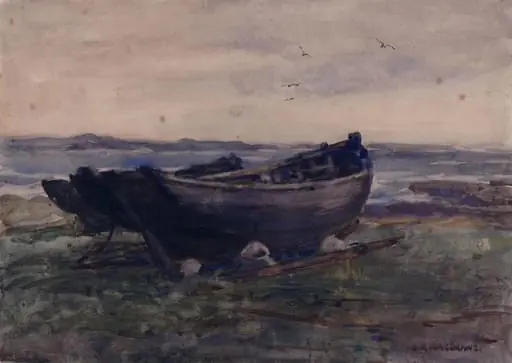
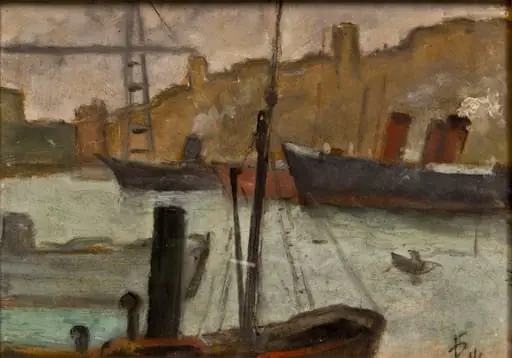
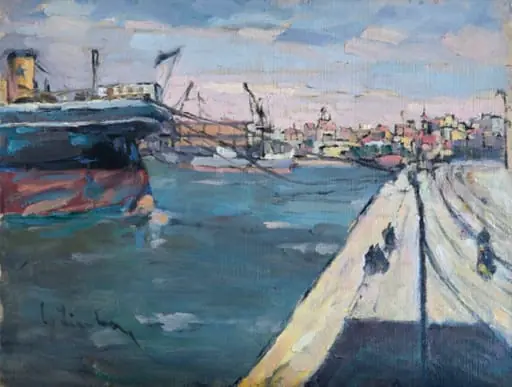
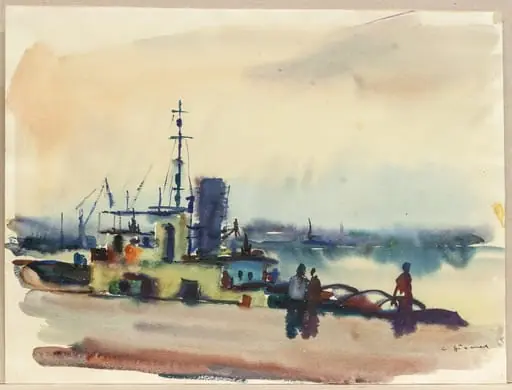
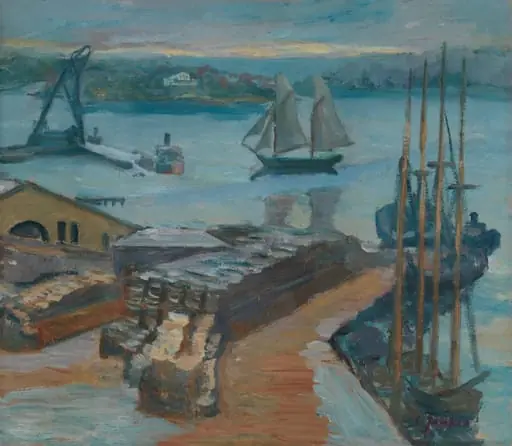
Dancing Light of Morning is a drawing executed around 1925 by American artist Carl William Broemel. The work is part of the collection of the Cleveland Museum of Art. It presents a tranquil river scene in which a weathered wooden vessel drifts amid calm water, accompanied by smaller boats that add rhythmic variety to the composition.
Subject & Meaning
The central focus is a large, aged boat with its sails furled, suggesting a moment of pause rather than voyage. The surrounding smaller craft, rendered with simple yet lively outlines, convey a sense of community activity on the water. The muted morning sky and reflective surface evoke a quiet, contemplative atmosphere, inviting viewers to consider the passage of time.
Technique & Style
The drawing’s handling of chiaroscuro—contrast between illuminated and shadowed zones—creates depth and a subtle sense of movement despite its stillness.
Broemel employs varied brushwork, alternating between thick, tactile strokes and smoother blended areas. A palette of deep browns transitioning to soft blues defines the hull and water, while touches of gold and green capture fleeting light on the surface. The drawing’s handling of chiaroscuro—contrast between illuminated and shadowed zones—creates depth and a subtle sense of movement despite its stillness.
History & Provenance
Created circa 1925, Dancing Light of Morning entered the Cleveland Museum of Art’s holdings through acquisition in the mid‑20th century. The museum’s records indicate the piece has remained in the institution’s collection since its purchase, where it has been displayed in exhibitions focusing on early 20th‑century American drawing.
Artist & collection