Artwork
Remorcher la mal
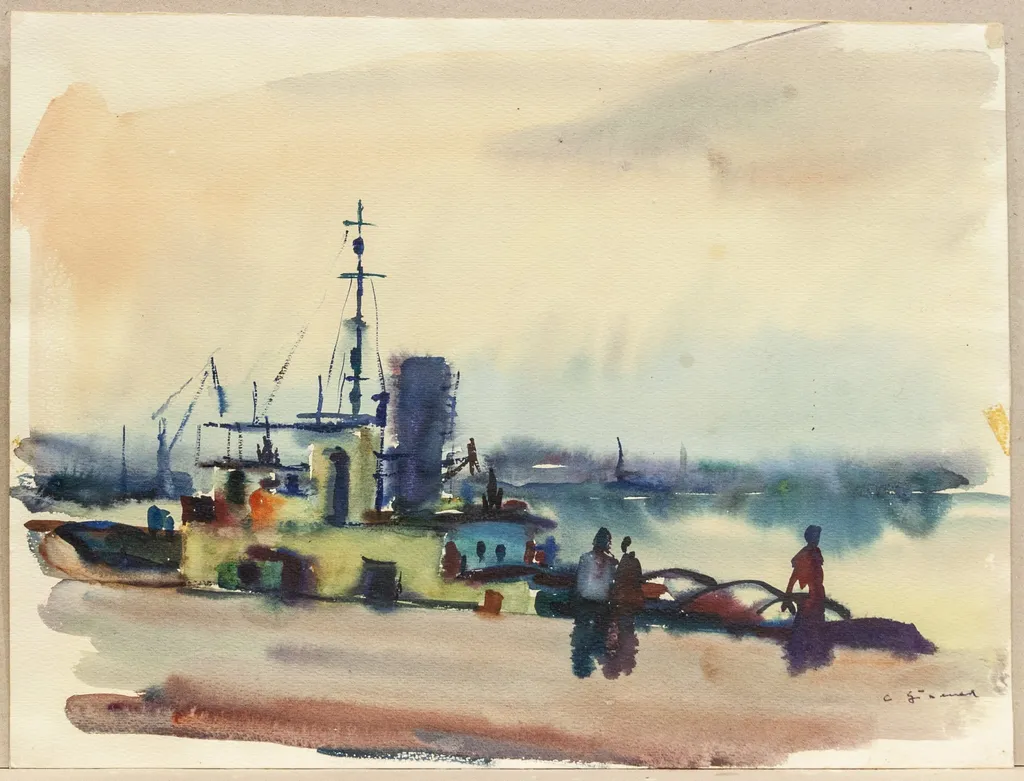
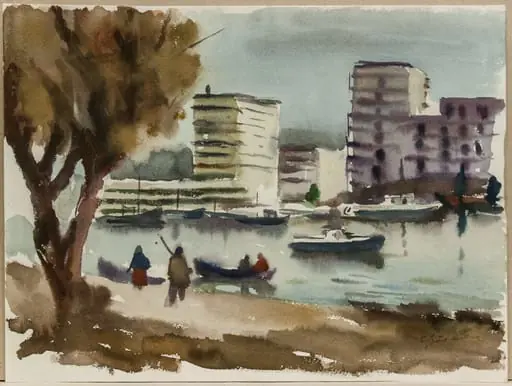
Remorcher la mal is an unspecified painting by Constantin Găvenea. It dates from 1950 and is held in the collection of the Gavrila Simion Eco-Museum Research Institute Tulcea.
About this work
Overview
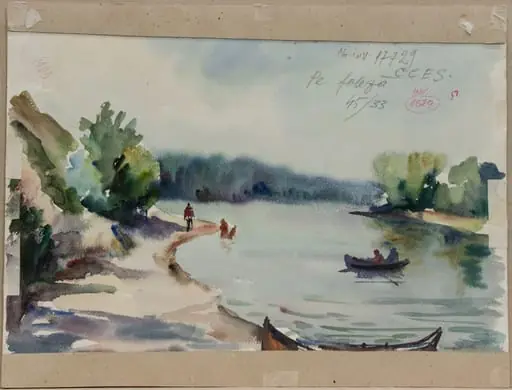
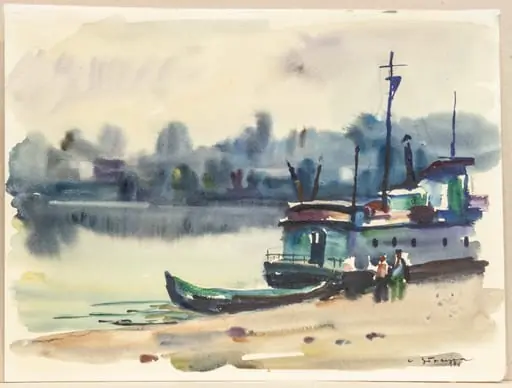
The composition centers on the quiet interaction between the boat and figures on land, rendered in subdued tones that suggest a contemplative mood.
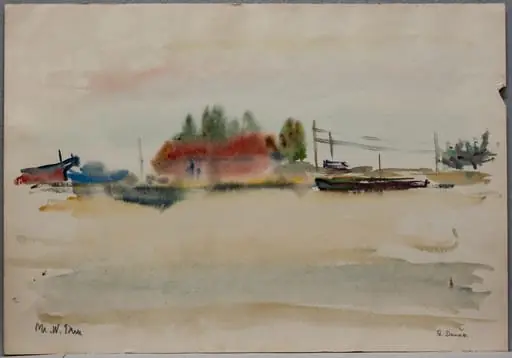
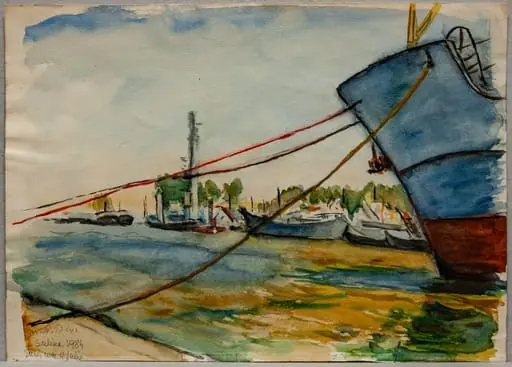
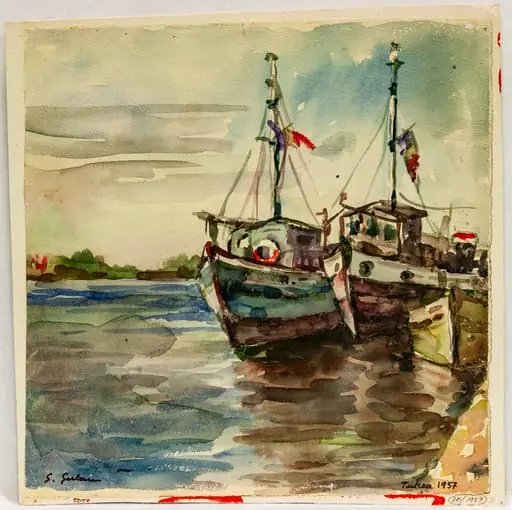
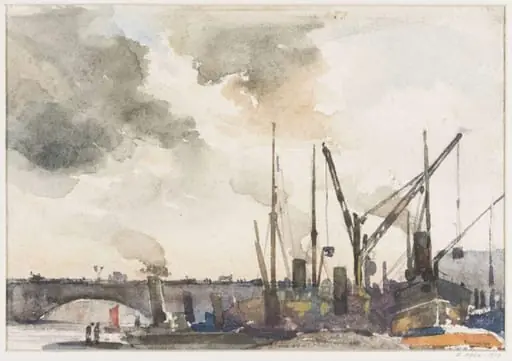
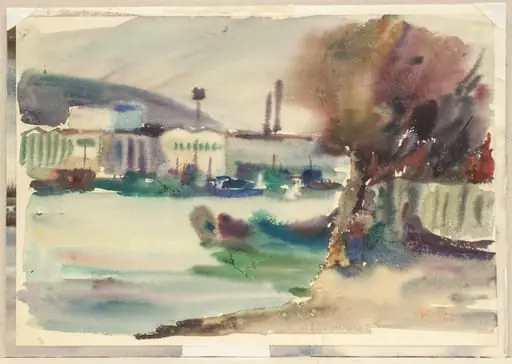
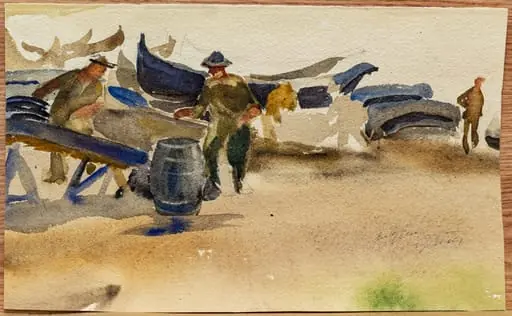
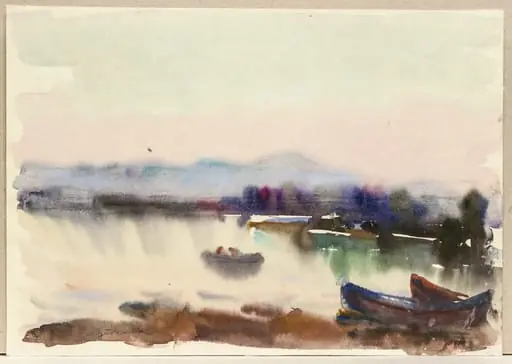
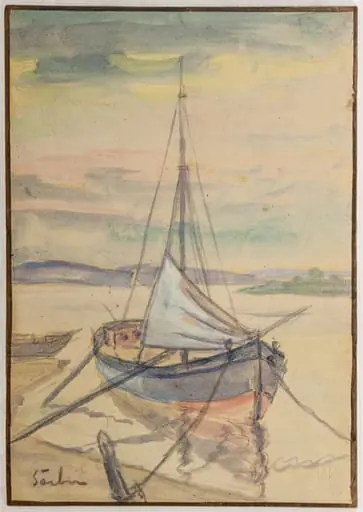
Remorcher la mal, dated around 1950, is a painting by Romanian artist Constantin Găvenea. It depicts a scene of maritime labor along a shoreline, featuring a small vessel with a tall mast and a cross at its peak. The composition centers on the quiet interaction between the boat and figures on land, rendered in subdued tones that suggest a contemplative mood. The work is part of the collection at the Museum of Ethnography.
Subject & Meaning
The painting portrays a moment of transition—perhaps the hauling of a boat ashore or the preparation for departure. Figures on the shore, dressed in dark garments, observe or assist, their postures conveying quiet diligence. The presence of a cross atop the mast may reference local religious traditions or maritime symbolism. The scene avoids drama, instead emphasizing routine and communal effort in a rural coastal setting.
Technique & Style
Găvenea employs a restrained palette of blues, greens, and browns, with soft edges and minimal contrast to evoke atmospheric stillness. Forms are simplified, and detail is suggested rather than rendered precisely, particularly in the background landscape. The brushwork is loose yet deliberate, favoring mood over realism. The composition directs attention to the boat and figures without theatrical emphasis.
History & Provenance
Created in the early 1950s, the painting emerged during a period of state-supported cultural initiatives in Romania. It entered the Museum of Ethnography’s collection as part of efforts to document regional life and labor practices. Its preservation reflects institutional interest in vernacular scenes, though little is documented about its exhibition history or the artist’s intentions beyond its thematic focus.
Context
Găvenea’s work aligns with mid-20th century Romanian art that sought to portray everyday rural and coastal existence. While not part of a formal movement, his style shares affinities with regional realist traditions that valued authenticity over idealization. The painting’s quiet tone contrasts with the more propagandistic art of the era, suggesting a personal, observational approach to depicting labor and community.
Legacy
Remorcher la mal remains a quiet example of postwar Romanian figurative painting, valued for its understated depiction of coastal life. It contributes to the Museum of Ethnography’s broader mission of preserving visual records of traditional livelihoods. Though not widely exhibited beyond institutional settings, it continues to serve as a reference for studies of regional identity and artistic response to social change.
Artist & collection
Museum
Gavrila Simion Eco-Museum Research Institute Tulcea
Continue through works from the same source collection.