Artwork
Untitled
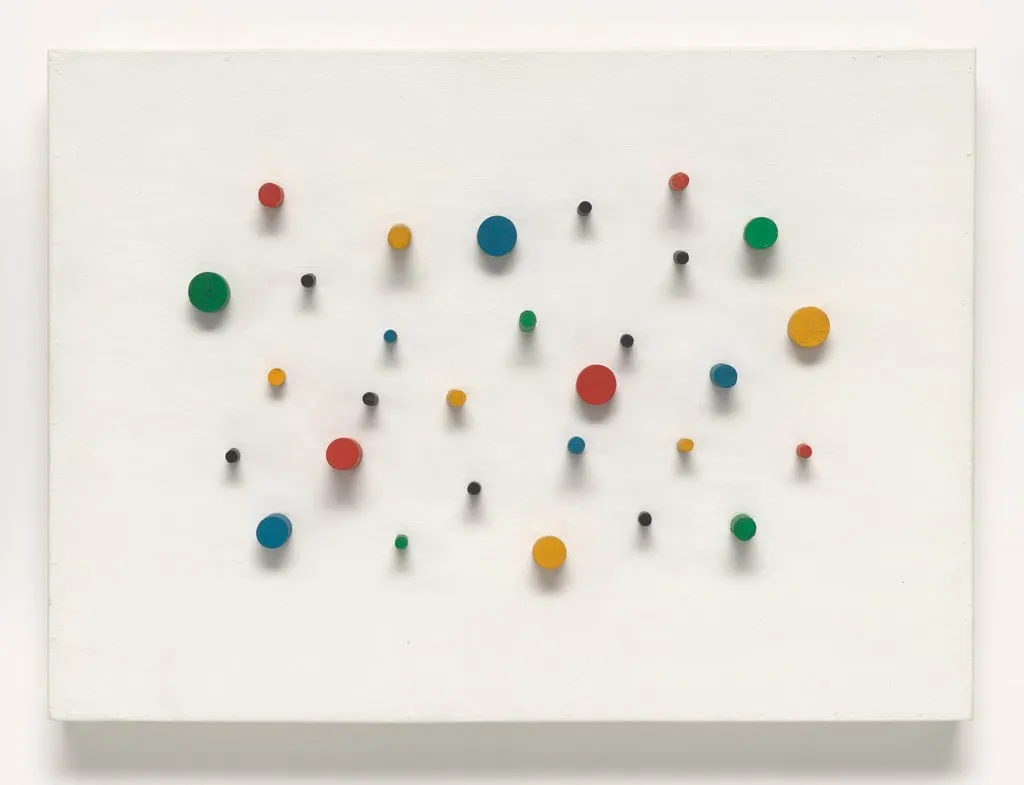
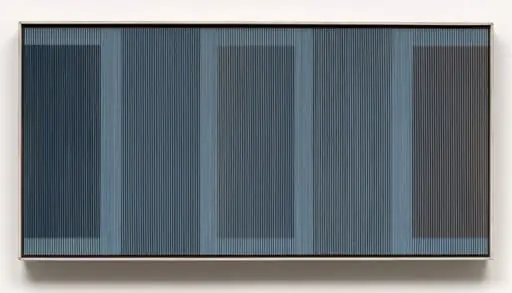
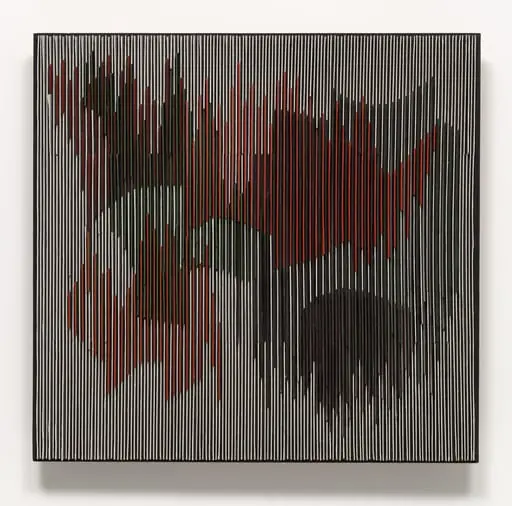
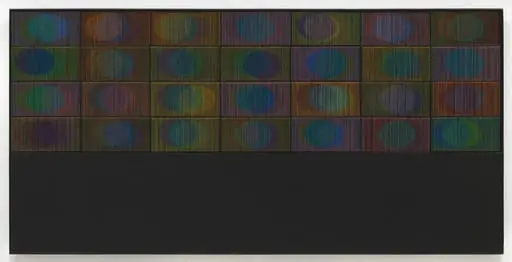
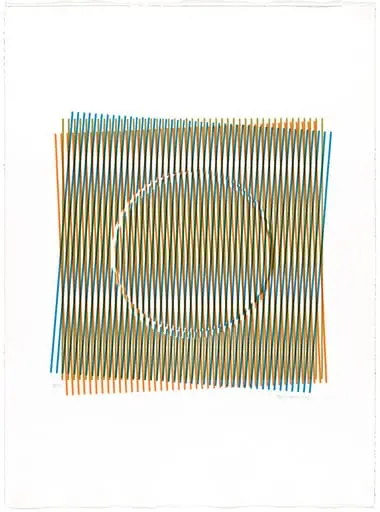
Untitled is a wood painting by Carlos Cruz-Diez. It dates from 1960 and is held in the collection of the Museum of Modern Art.
About this work
Overview
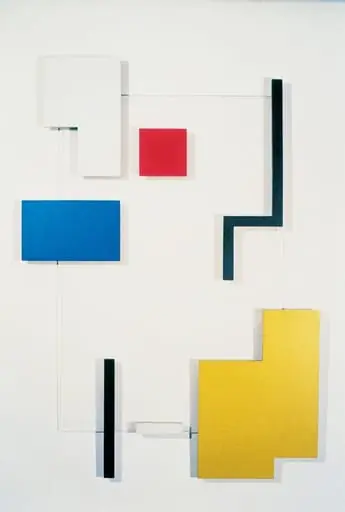
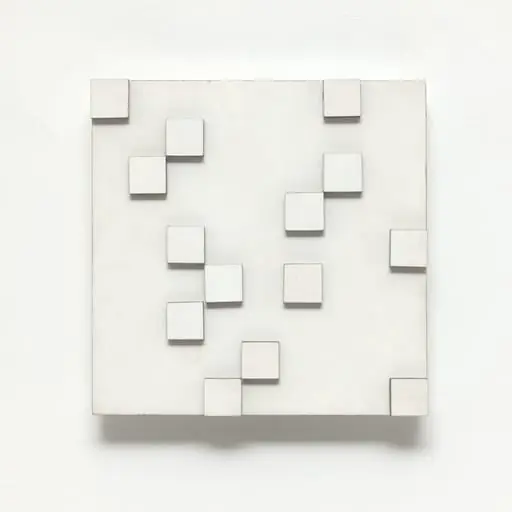
Created in 1960, this abstract work by Carlos Cruz-Diez consists of small, colored wooden dowels affixed to a wooden panel coated in synthetic polymer paint.
Created in 1960, this abstract work by Carlos Cruz-Diez consists of small, colored wooden dowels affixed to a wooden panel coated in synthetic polymer paint. The dowels, painted in red, blue, yellow, green, and black, are arranged in a scattered pattern across a white field. Unlike traditional brushwork, the pigment is applied directly to the physical objects, emphasizing material presence over gestural mark-making.
Subject & Meaning
The work rejects representational imagery in favor of pure chromatic interaction. The isolated dots function as autonomous color units, inviting viewers to perceive hue independently of form or composition. Cruz-Diez’s approach reflects his interest in color as a dynamic, experiential phenomenon rather than a symbolic or narrative element.
Technique & Style
Each colored dot is a short wooden dowel, painted with synthetic polymer and mounted perpendicularly to the surface. The physical projection creates subtle shadows, enhancing the sense of three-dimensionality. This method replaces painting with assembly, transforming color into tangible, sculptural elements that engage light and space directly.
History & Provenance
The work entered The Museum of Modern Art’s collection in the 1960s, during a period when the institution was expanding its holdings of Latin American abstraction. It reflects Cruz-Diez’s early experiments in kinetic and chromatic art, preceding his larger environmental installations. Its preservation highlights its significance in postwar non-objective art.
Context
Emerging from the Venezuelan avant-garde, Cruz-Diez was part of a broader movement redefining painting through material and perception. This piece aligns with contemporaneous investigations in Europe and the Americas that questioned the flatness of the canvas, favoring object-based color applications and viewer-activated optical effects.
Legacy
The work anticipates Cruz-Diez’s later explorations into color as an independent, mobile force. Its use of industrial materials and rejection of brushwork influenced subsequent generations of artists pursuing dematerialized color fields and participatory visual experiences, contributing to the evolution of post-painterly abstraction.
Artist & collection

Artist
Carlos Cruz-Diez was a Venezuelan artist who played a central role in the development of Kinetic and Op art.