Artwork
Christ Crowned with Thorns
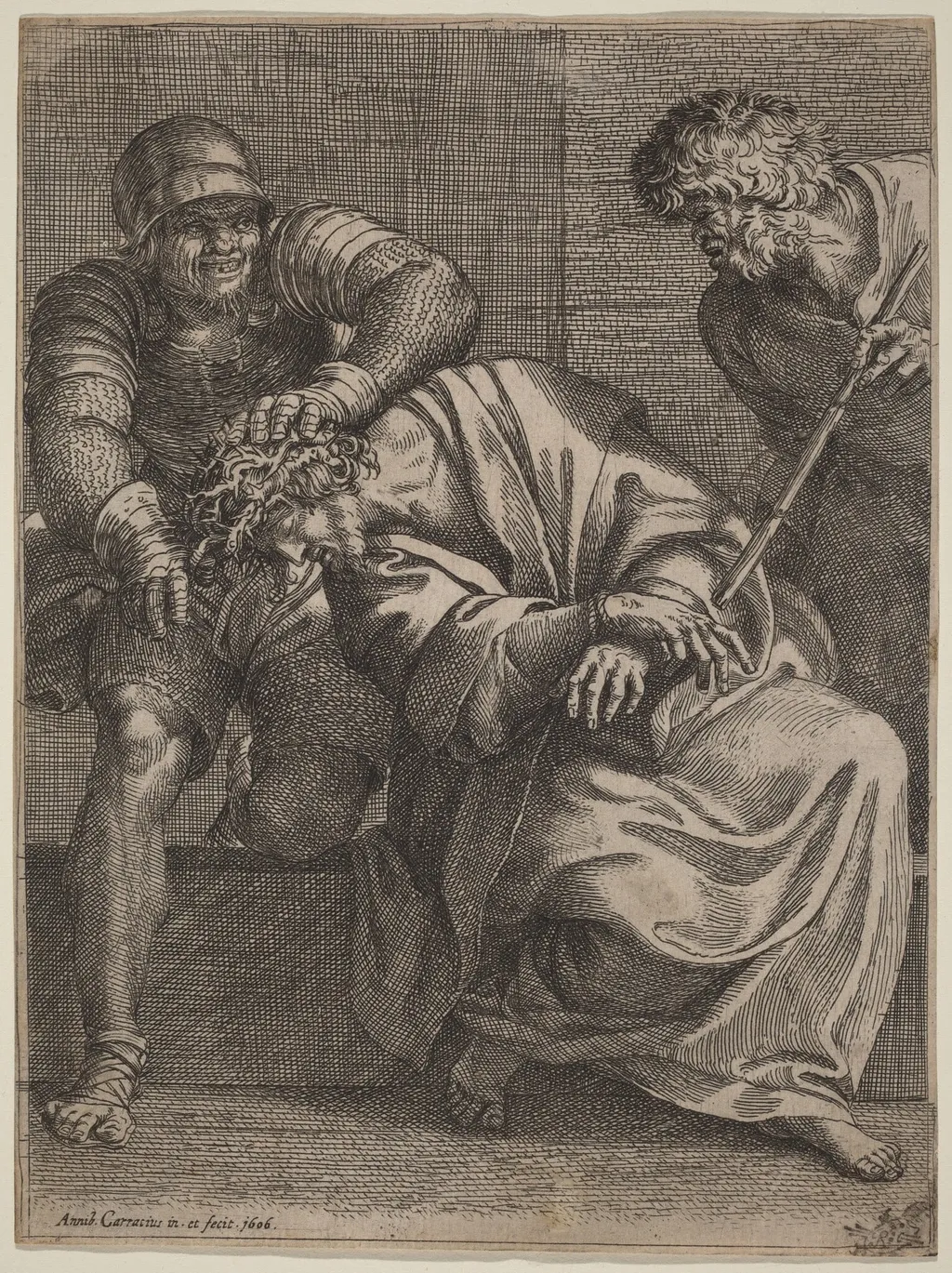
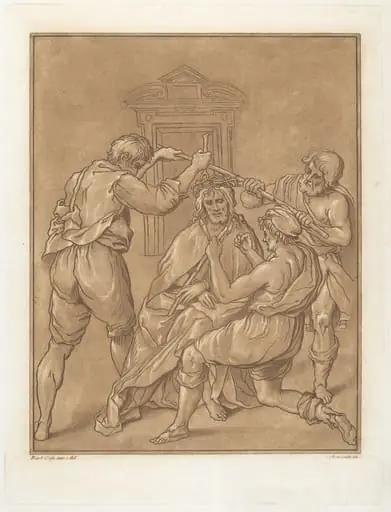
Christ Crowned with Thorns is an ink print by the Baroque artist Annibale Carracci. It dates from 1606 and is held in the collection of the National Gallery of Art.
About this work
Overview
Annibale Carracci’s 1606 etching, titled *Christ Crowned with Thorns*, presents a compact, high‑contrast image on laid paper. The composition centers on a figure restrained by two armored men, his head thrown back in apparent agony, while a plain background isolates the dramatic encounter.
Subject & Meaning
The work visualizes the biblical episode in which Christ is mocked and tormented before his crucifixion. The restrained figure, clothed in a long robe, embodies the suffering and humiliation inflicted by his captors, emphasizing the spiritual tension of the Passion narrative.
Technique & Style
Executed with fine etched lines and delicate cross‑hatching, Carracci creates depth through subtle shading that models flesh and armor. The crisp rendering of textures and the stark contrast between figures and the unadorned backdrop reflect Baroque interests in drama, movement, and chiaroscuro within the print medium.
History & Provenance
Created during Carracci’s mature period after his relocation from Bologna to Rome, the etching aligns with his broader efforts to fuse classical monumentality with dynamic expression. It was produced as a single‑sheet print, typical of early 17th‑century circulation among collectors of religious imagery.
Context
The image belongs to the early Baroque phase, when artists sought to intensify emotional engagement through vivid narrative scenes. Carracci’s approach combines his Bolognese training in academic drawing with the emerging Roman taste for theatricality, situating the work within the transition from Mannerist restraint to Baroque vigor.
Artist & collection
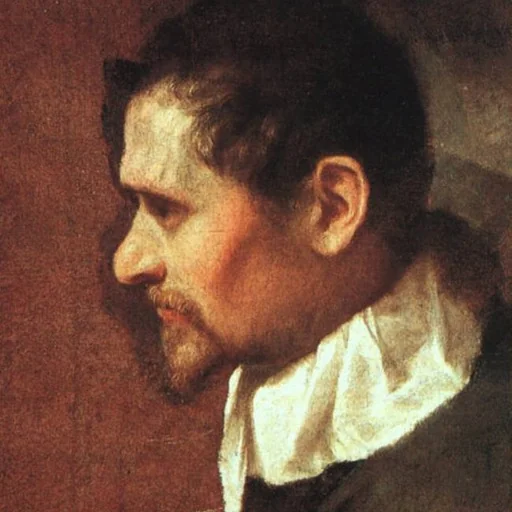
Artist
Annibale Carracci ( kə-RAH-chee, UK also kə-RATCH-ee, Italian: ; November 3, 1560 – July 15, 1609) was an Italian painter and instructor, active in Bologna and later in Rome.