Artwork
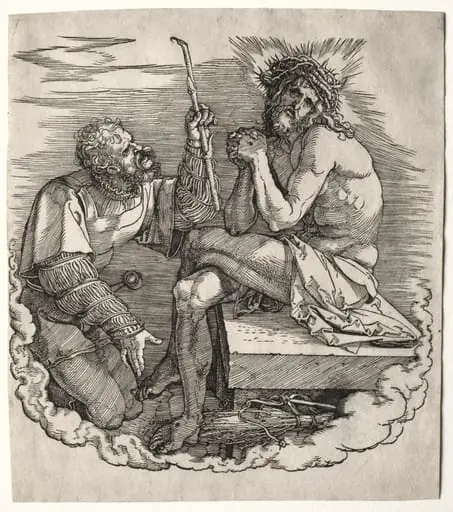
Christ Crowned with Thorns
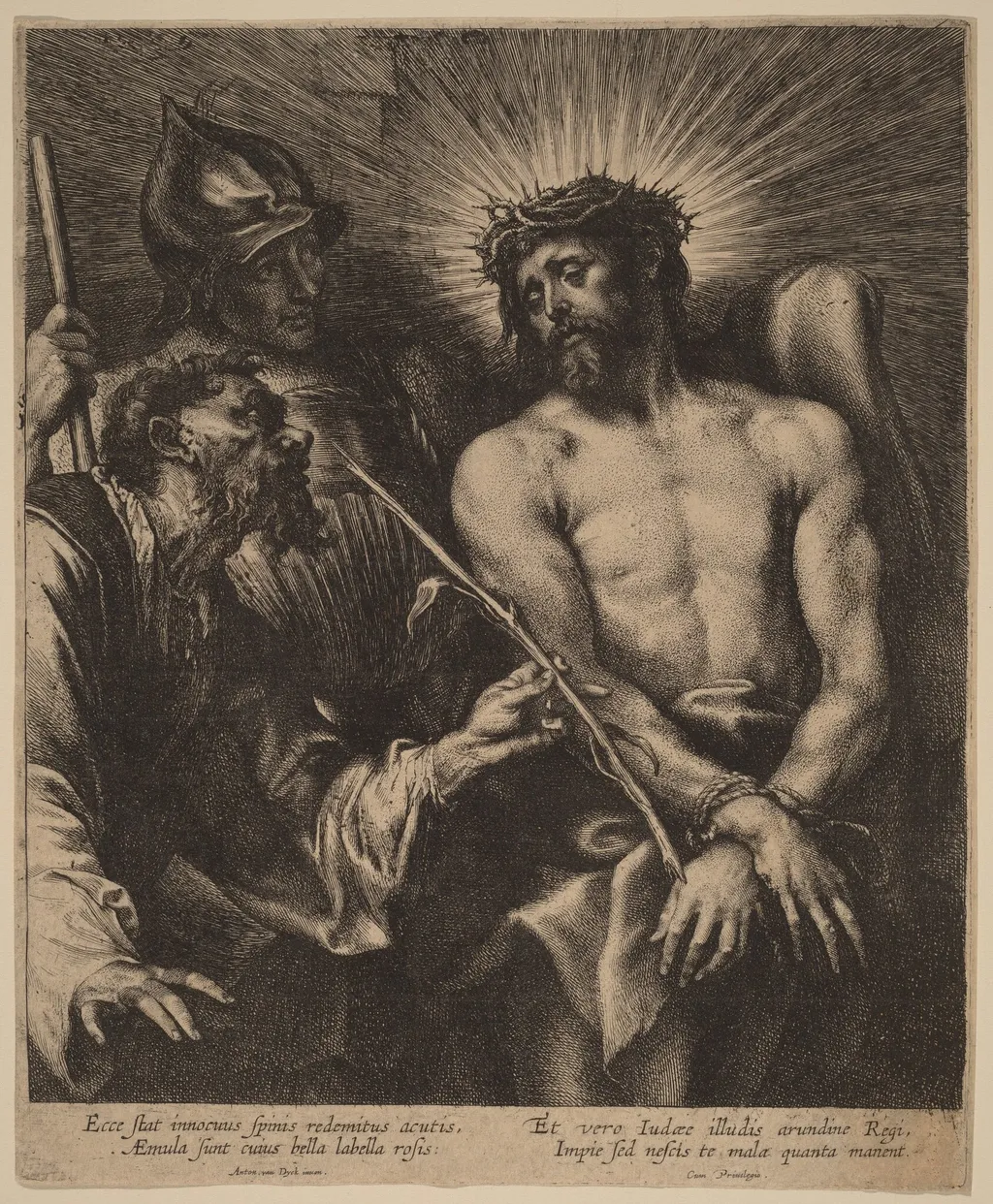
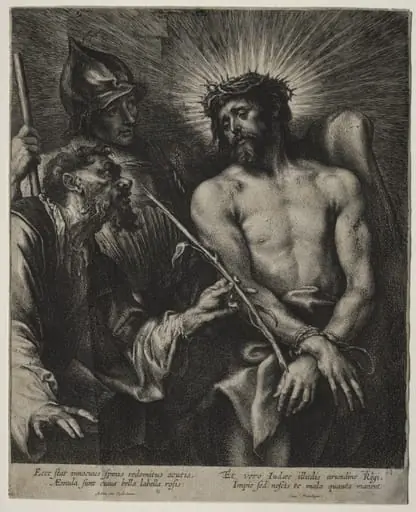
Christ Crowned with Thorns is an ink print by the Baroque artist Anthony van Dyck. It dates from 1630 and is held in the collection of the National Gallery of Art.
About this work
Overview
Created around 1630, this print by Anthony van Dyck depicts a moment from the Passion of Christ. Executed in etching and engraving with drypoint accents, the work belongs to a series of religious subjects van Dyck produced during his time in Antwerp. The composition is tightly focused, emphasizing physical tension and emotional gravity through stark contrasts and incised lines.
Subject & Meaning
The image captures Christ at the moment of humiliation, crowned with thorns and bound, his body strained under the weight of suffering. Two attendants flank him—one gripping a spear, the other holding a cloth, possibly for wiping or mockery. The scene conveys neither triumph nor redemption, but quiet endurance, reflecting devotional themes common in Counter-Reformation imagery.
Technique & Style
Van Dyck employed drypoint to carve directly into the copper plate, creating rich, velvety lines with a rough, tactile quality. Etching provided finer contours, while engraving added precision to anatomical details. The deep shadows and textured surfaces enhance the somber mood, with minimal background to isolate the figures and intensify their psychological presence.
History & Provenance
The print was made during van Dyck’s return to Antwerp after years in Italy and England. It likely served as a devotional object or study for larger compositions. Early impressions were circulated among collectors and religious institutions, particularly in the Southern Netherlands, where his graphic work was highly regarded for its emotional depth.
Context
In the early 1630s, religious imagery in the Low Countries remained vital amid ongoing tensions between Catholic and Protestant communities. Van Dyck’s prints responded to a demand for intimate, emotionally charged depictions of sacred figures. His use of graphic media allowed wider dissemination of these images beyond painted altarpieces.
Legacy
This print exemplifies van Dyck’s mastery of printmaking, influencing later artists in the use of drypoint for expressive intensity. Though less known than his portraits, his graphic works contributed to the evolution of religious print culture in 17th-century Europe, bridging the gap between painterly composition and the accessibility of printed images.
Artist & collection
Artist
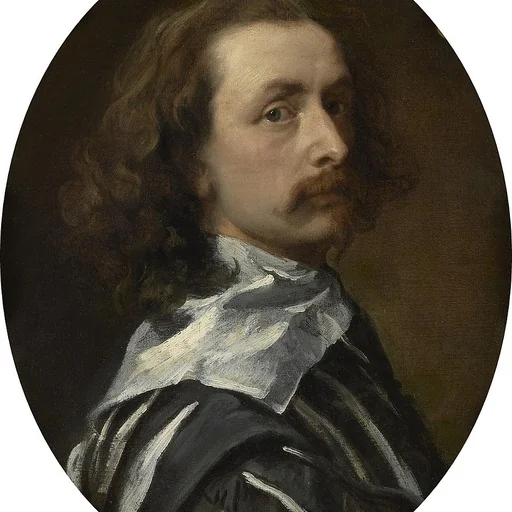
Sir Anthony van Dyck (; Dutch: Antoon van Dijck ; 22 March 1599 – 9 December 1641) was a Flemish Baroque artist, who became the leading court painter in England after success in the Spanish Netherlands and Italy.