Artwork
Absinthe
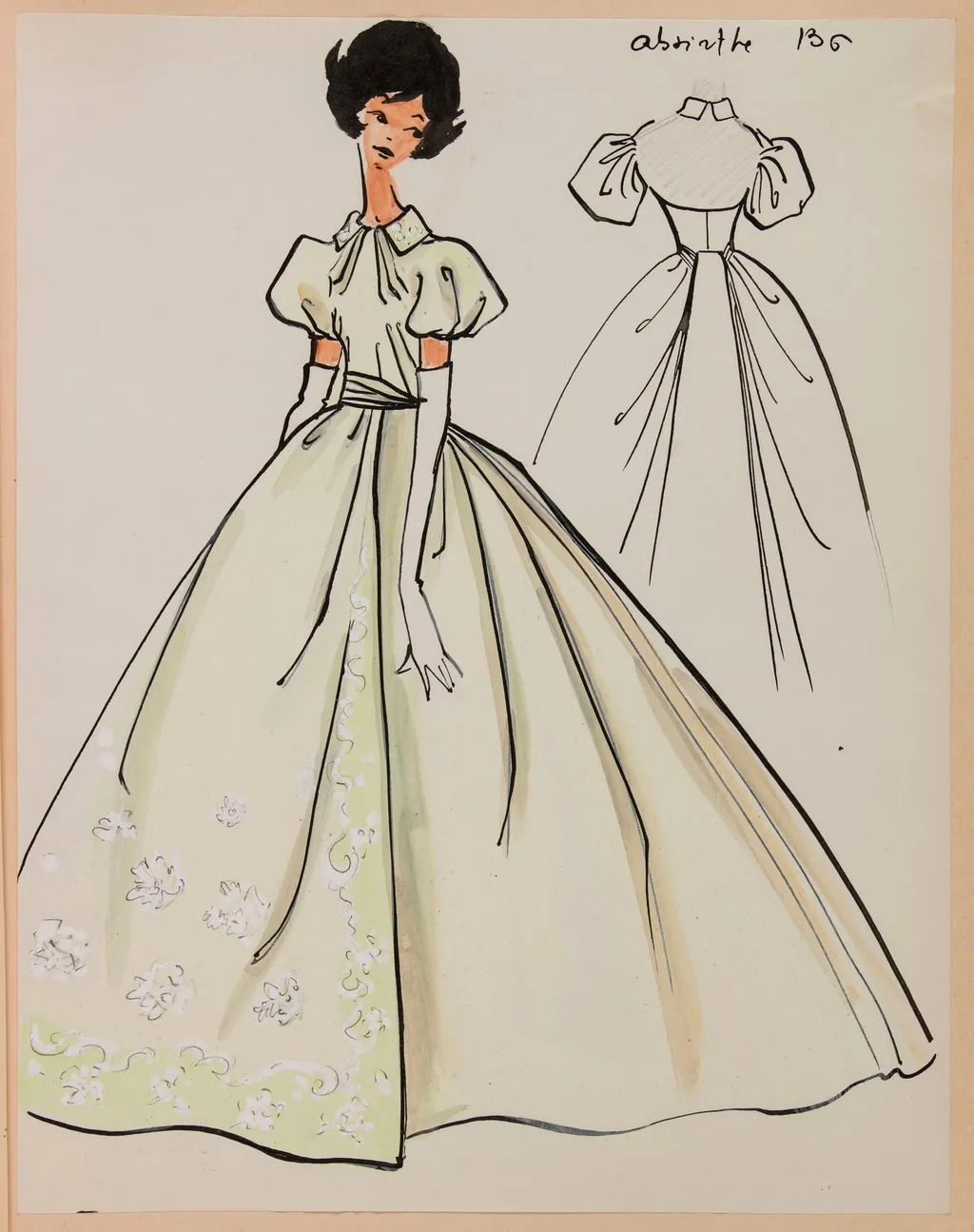
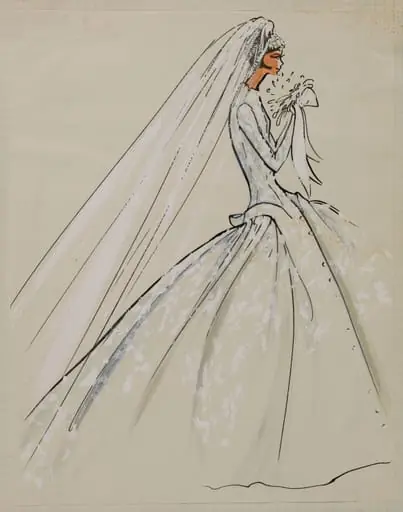
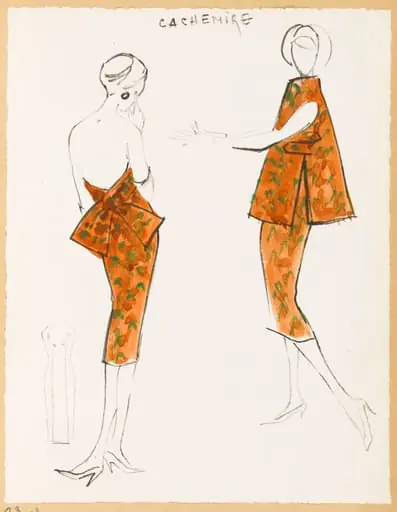
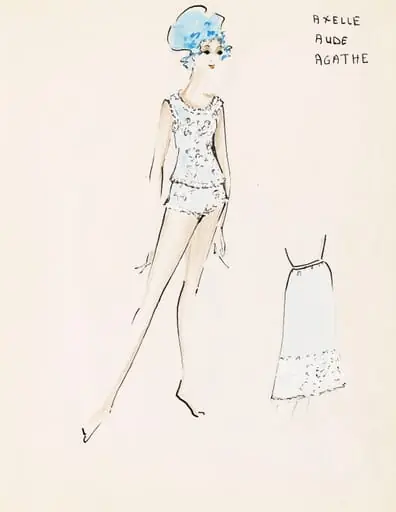
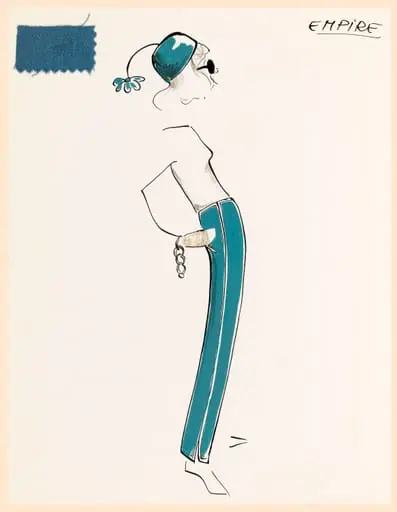
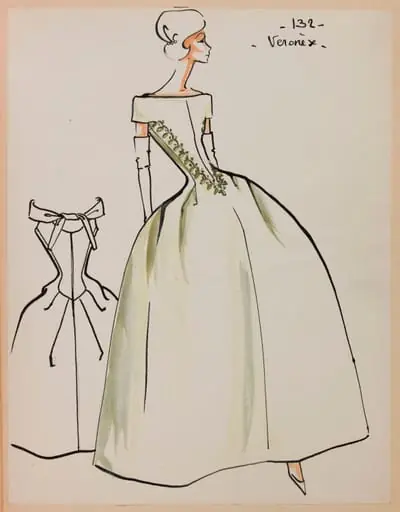
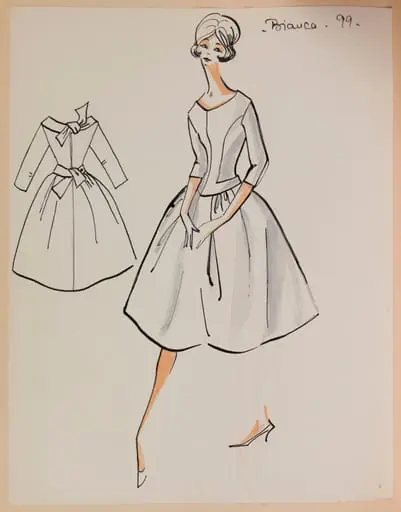
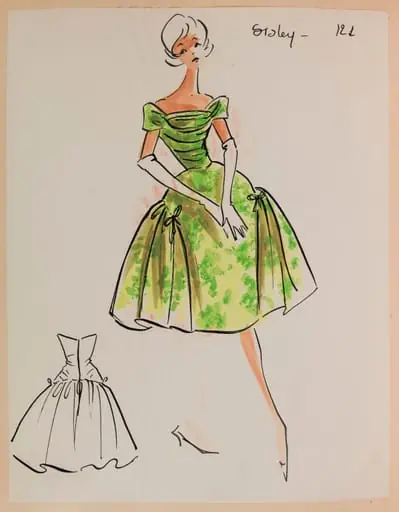
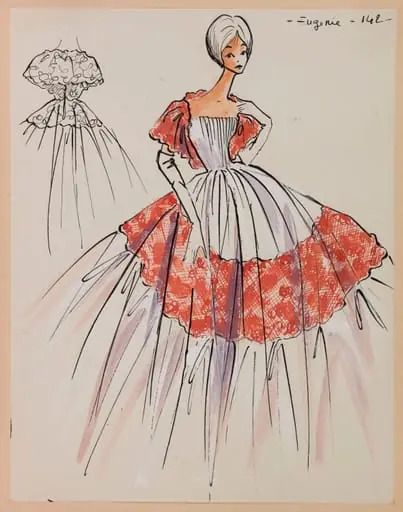
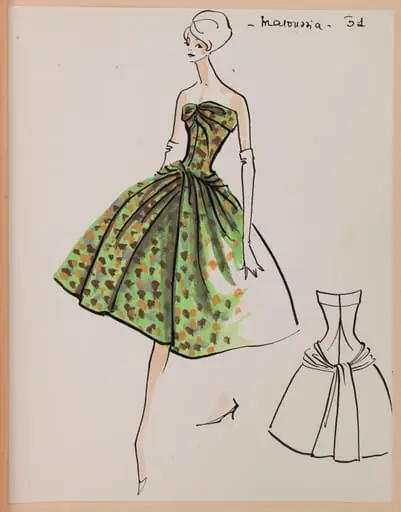
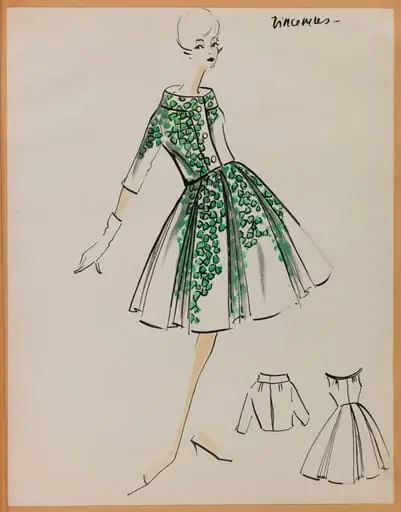
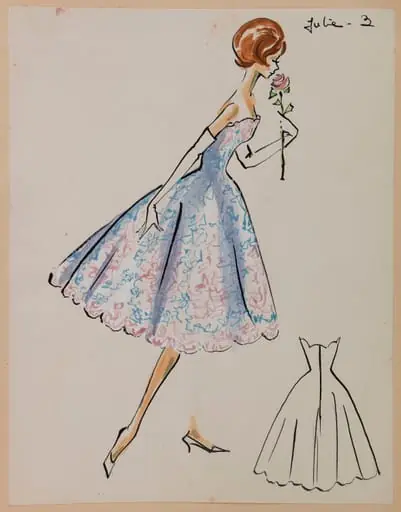
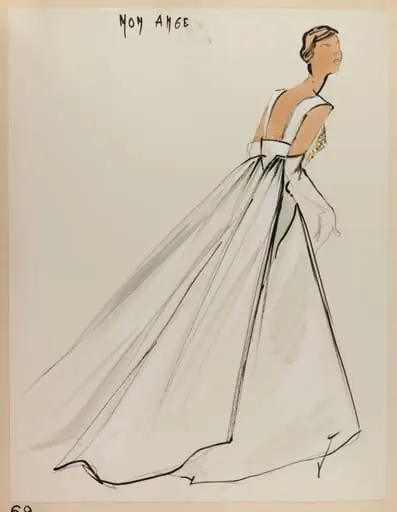
Absinthe is a drawing by Carven. It dates from 1958 and is held in the collection of the Palais Galliera - Musée de la Mode de la Ville de Paris.
About this work
Overview
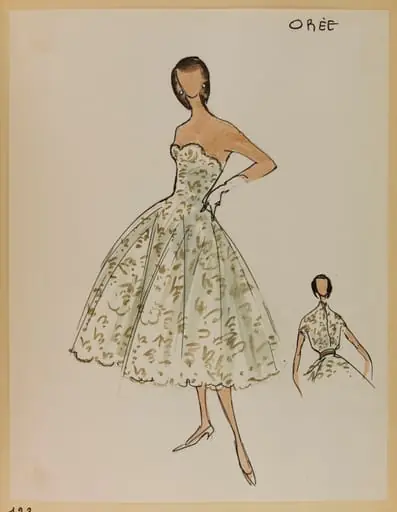
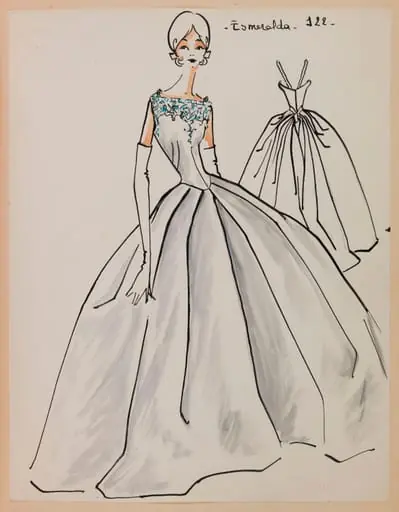
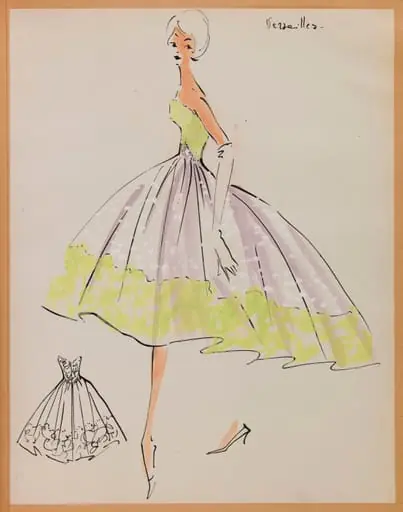
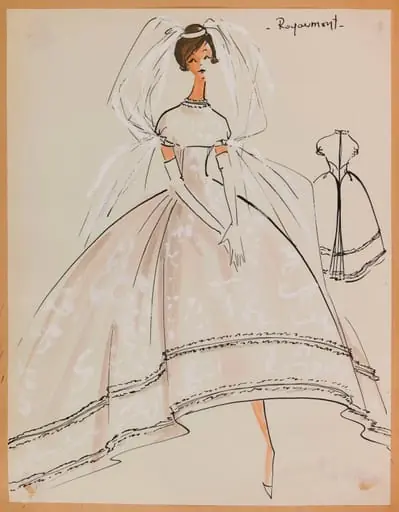
Created around 1958 by the designer Carven, this drawing is part of the Museum of Ethnography’s collection. Rendered in ink and watercolor, it captures two figures in motion, their garments rendered with fluidity and grace. The work reflects Carven’s interest in textile dynamics and feminine silhouette, blending fashion illustration with atmospheric sketching.
Subject & Meaning
The two women, dressed in elongated gowns, appear to move through an unseen space, their postures suggesting quiet rhythm rather than narrative action. The absence of facial detail and environmental context shifts focus to the drapery and weight of fabric, emphasizing elegance as a physical experience rather than a social statement.
Technique & Style
Loose, assured linework defines the contours of the dresses, while translucent watercolor washes suggest light filtering through fabric. The artist avoids sharp edges, allowing colors to bleed slightly at the hemlines and folds, enhancing the impression of movement. The skirts appear to swell and settle as if caught in a breeze, conveying airiness without literal wind.
History & Provenance
The drawing entered the Museum of Ethnography’s holdings in the late 20th century, likely acquired as part of a broader collection of mid-century fashion studies. Its origins as a preparatory sketch or personal study remain undocumented, though its preservation suggests recognition of its aesthetic significance within design archives.
Context
Carven’s work from this period often explored the interplay between couture and natural motion, responding to postwar shifts in women’s fashion toward lighter materials and more fluid forms. This piece aligns with broader European design trends that valued spontaneity and tactile expression over rigid structure.
Legacy
Though not widely exhibited, the drawing contributes to understanding Carven’s approach to fashion as a kinetic art. Its preservation in an ethnographic context highlights how clothing studies intersect with cultural observation, offering insight into mid-century ideals of grace and movement in everyday dress.
Artist & collection
Artist
These delicate ink-on-paper drawings capture the quiet poetry of everyday things: pinecones, reeds, apples.
Museum
Palais Galliera - Musée de la Mode de la Ville de Paris
Continue through works from the same source collection.