Artwork
Julie
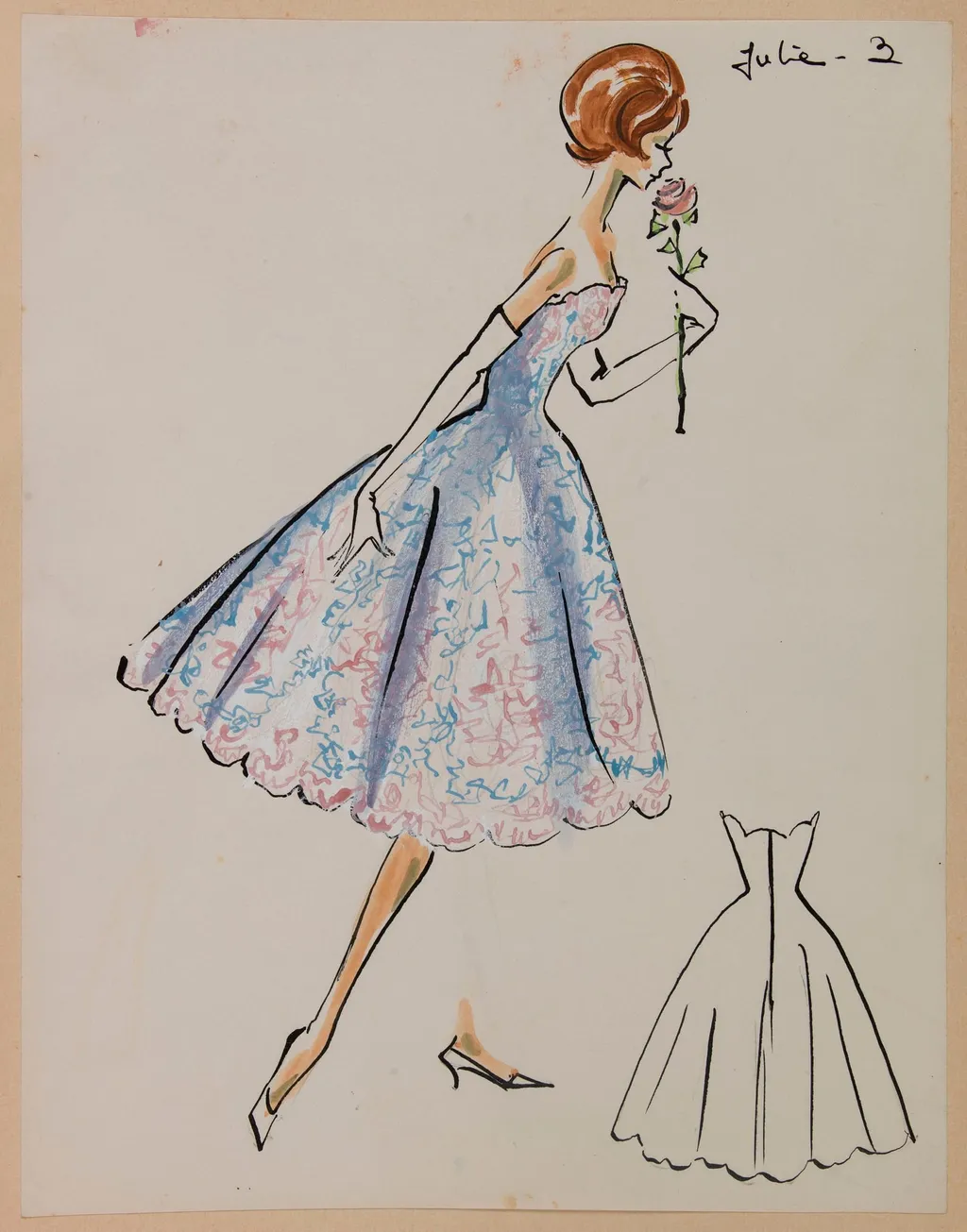
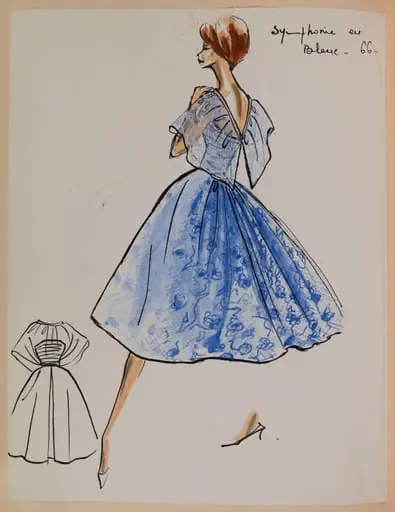
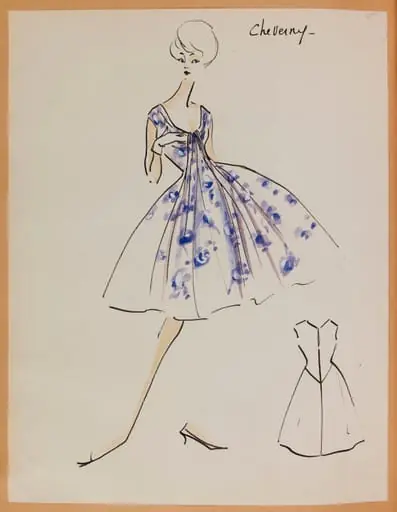
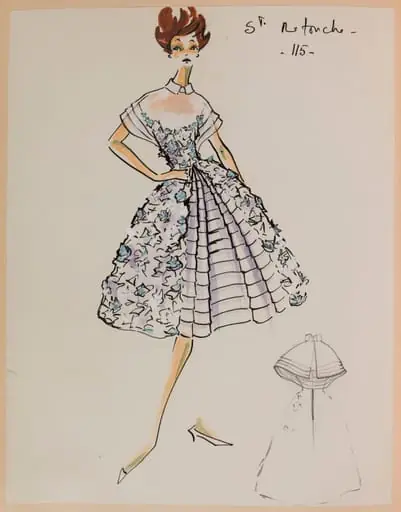
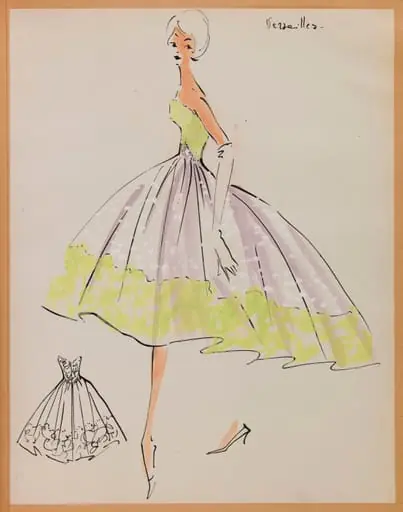
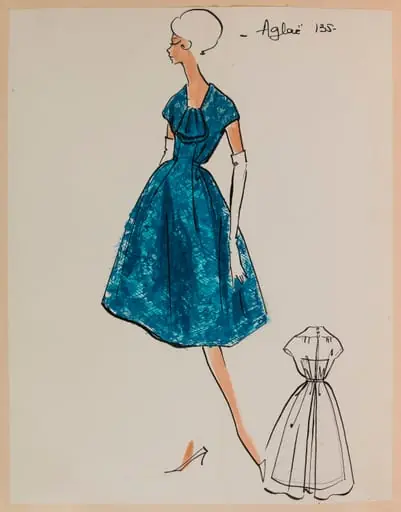
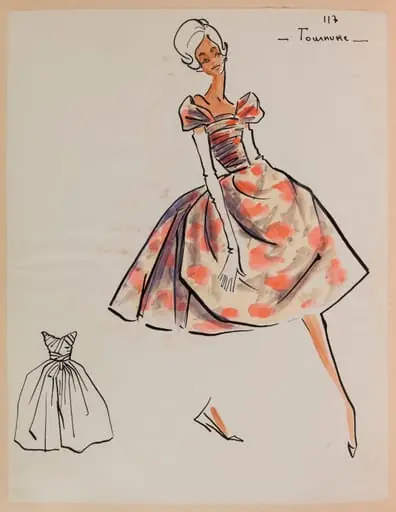
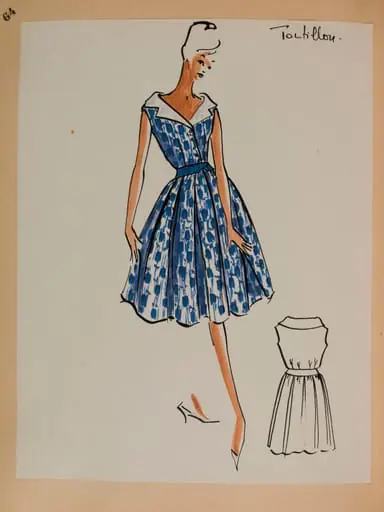
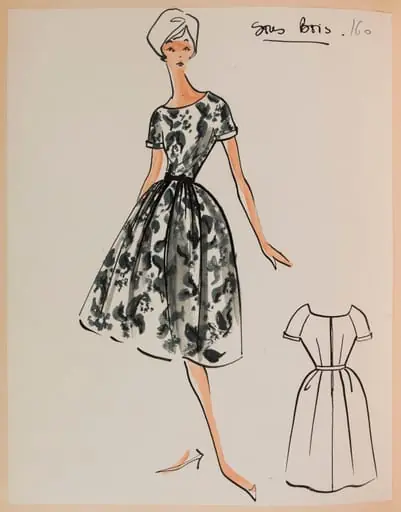
Julie is a drawing by Marie-Louise Carven. It dates from 1958 and is held in the collection of the Palais Galliera - Musée de la Mode de la Ville de Paris.
About this work
Overview
Julie is a painted portrait created around 1958, depicting a woman dressed in a floral gown, standing beside a white dress on a hanger.
Julie is a painted portrait created around 1958, depicting a woman dressed in a floral gown, standing beside a white dress on a hanger. Though associated with the fashion house Carven, the work is not a garment but a visual representation of its aesthetic. It resides in the Museum of Ethnography’s collection, suggesting its role as a cultural artifact rather than a fashion sample. The image reflects mid-century French design sensibilities through its composition and detail.
Subject & Meaning
The figure in Julie holds a single rose, a symbol often tied to grace or fleeting beauty, while her posture and attire convey quiet poise. The presence of the empty dress on the hanger introduces a duality—between the wearer and the garment, the living and the displayed. The scene suggests a moment of contemplation, perhaps referencing the ritual of dressing or the identity constructed through clothing in postwar French society.
Technique & Style
The painting employs soft, controlled brushwork to render fabric textures and skin tones. The floral pattern on the dress is rendered with delicate precision, contrasting with the smooth, flat background of beige. White gloves and black heels add structured formality, while the rose introduces a naturalistic accent. The palette—pastel florals against muted tones—echoes the restrained elegance characteristic of Carven’s fashion designs.
History & Provenance
Created during the late 1950s, Julie emerged from the studio of Marie-Louise Carven, who founded her eponymous label in 1945. Though Carven was known for ready-to-wear innovation, this work is not a garment but a painted homage to her design philosophy. Its acquisition by the Museum of Ethnography indicates an early recognition of fashion as cultural expression, beyond mere utility or commerce.
Context
In postwar France, fashion was redefining femininity and accessibility. Carven’s move toward prêt-à-porter challenged the exclusivity of haute couture. Julie reflects this shift—not as a catalog image, but as an artistic meditation on dress as personal and cultural identity. The painting aligns with broader mid-century efforts to elevate everyday aesthetics into the realm of fine art and ethnographic study.
Legacy
Julie endures as a quiet testament to the intersection of fashion and visual art in the 20th century. It does not celebrate celebrity or spectacle but instead captures the subtlety of personal style. Its placement in an ethnographic museum signals a growing scholarly interest in clothing as a marker of social and aesthetic values, influencing later exhibitions that treat fashion as material culture.
Artist & collection
Artist
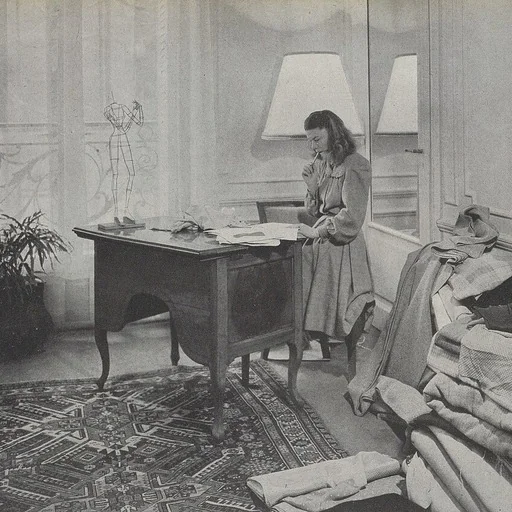
Marie-Louise Carven (31 August 1909 – 8 June 2015), born Carmen de Tommaso, was a French fashion designer who founded the house of Carven in 1945.
Museum
Palais Galliera - Musée de la Mode de la Ville de Paris
Continue through works from the same source collection.
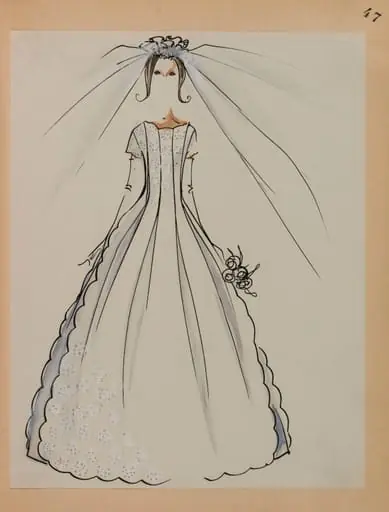 Robe de mariée festonnée et son voile
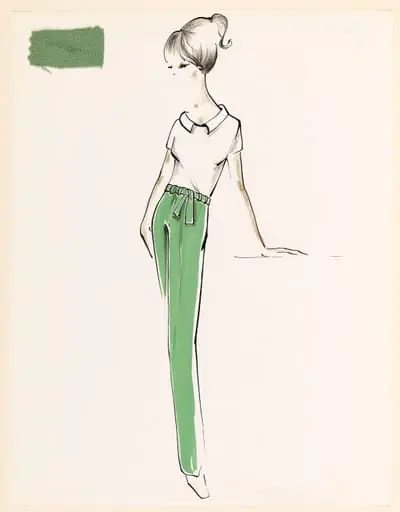 Haut blanc à manches courtes et pantalon vert à ceinture nouée
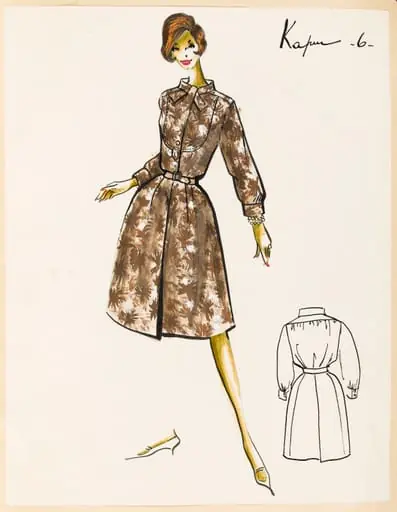 Kapur
Kapur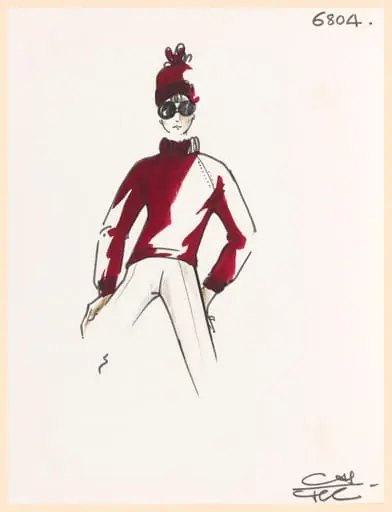 Pull-over à manches longues pourpre, bonnet assorti, pantalon et lunettes de soleil
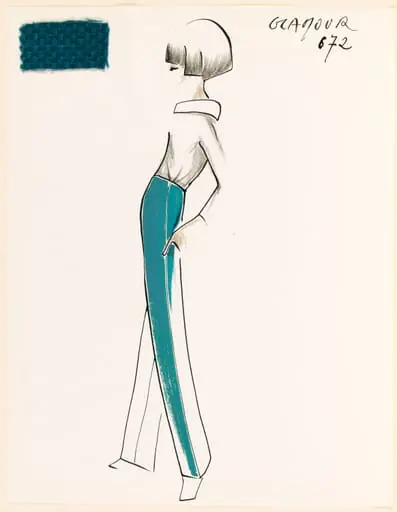 GLAMOUR
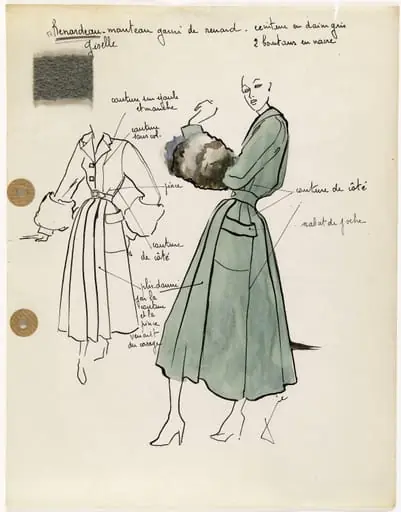 'Renardeau'
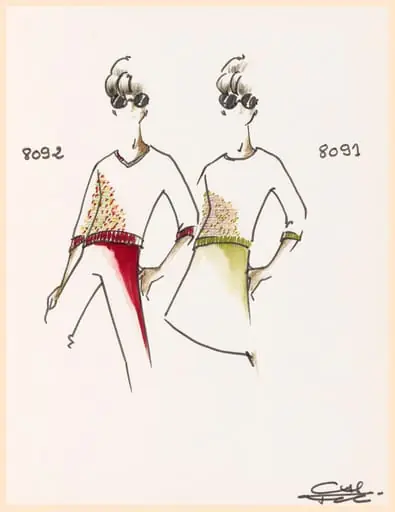 Pull-over à manches trois quarts et à encolure V à motifs multicolores, pantalon cerise et lunettes de soleil
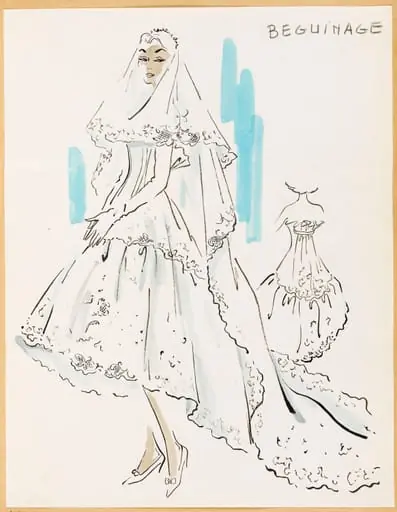 Béguinage