Artwork
Accordéon
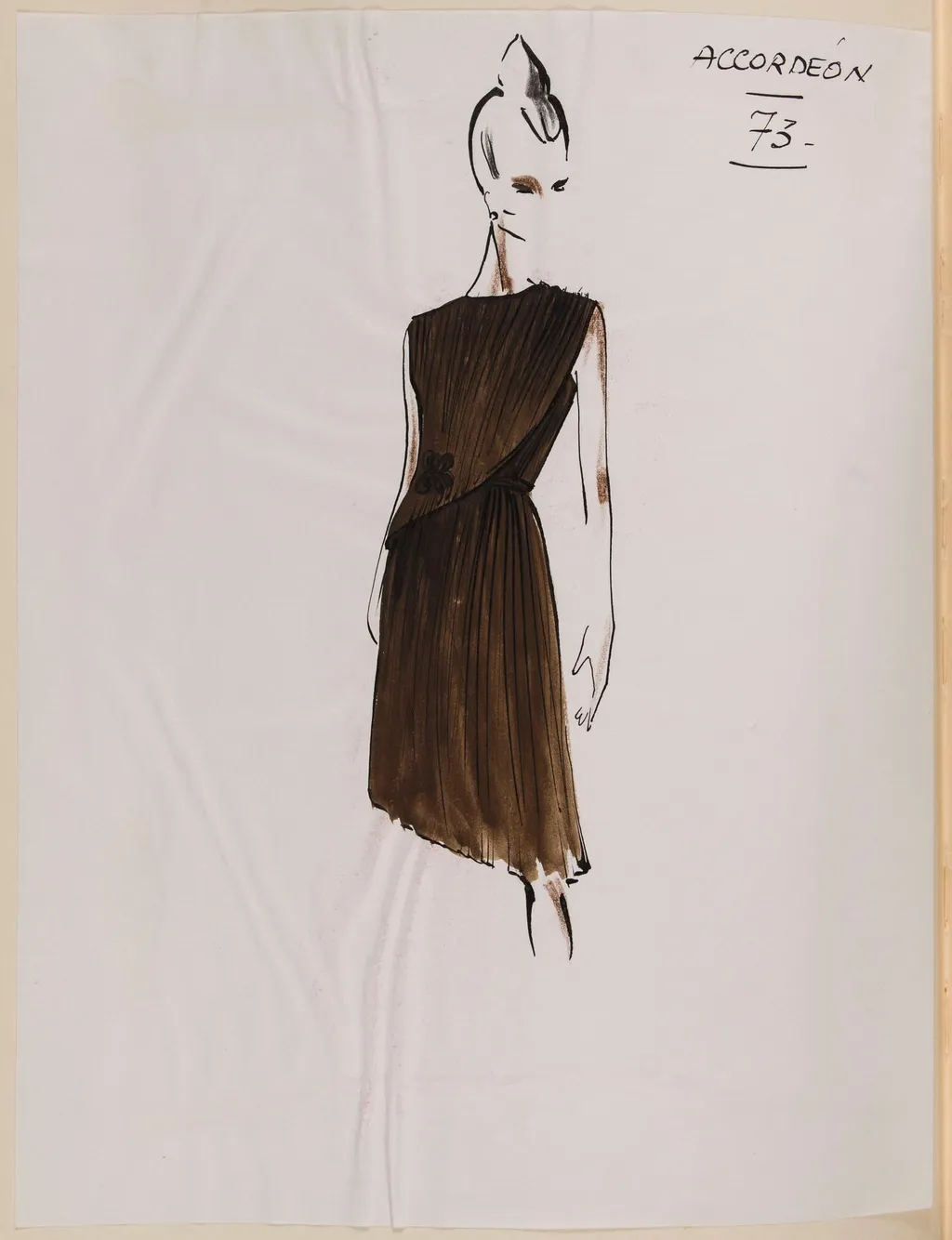
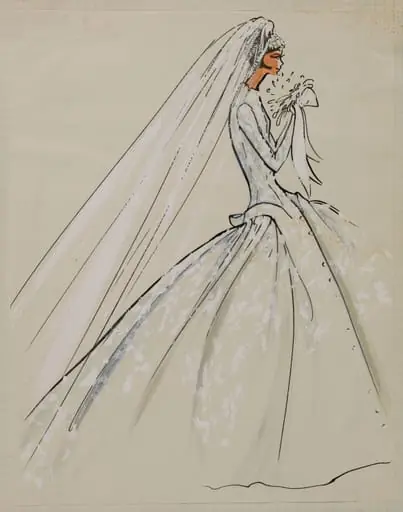
Accordéon is a drawing by Carven. It dates from 1963 and is held in the collection of the Palais Galliera - Musée de la Mode de la Ville de Paris.
About this work
Overview
The work captures a single figure in a restrained, linear style, emphasizing form and posture over decorative detail.
Accordéon is a pencil drawing attributed to the French fashion designer Carven, dated around 1963. It resides in the collection of the Museum of Ethnography. The work captures a single figure in a restrained, linear style, emphasizing form and posture over decorative detail. Though labeled as an image, it functions as a study in fashion silhouette and poise, reflecting the designer’s engagement with the aesthetics of everyday elegance.
Subject & Meaning
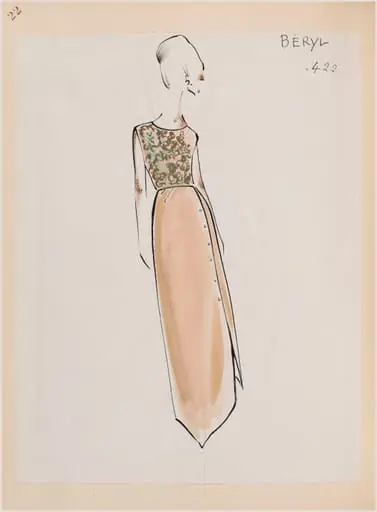
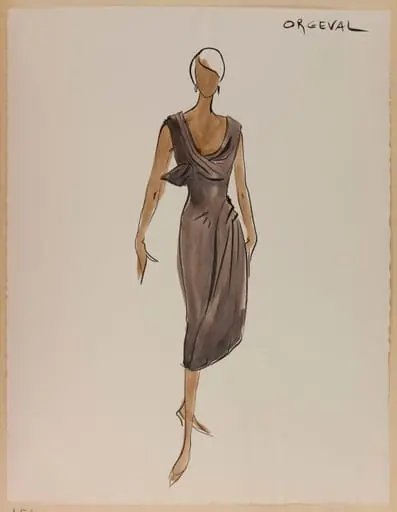
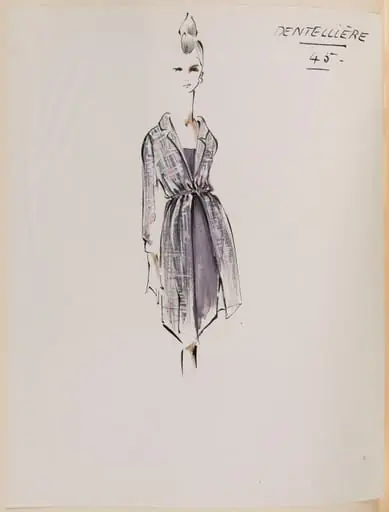
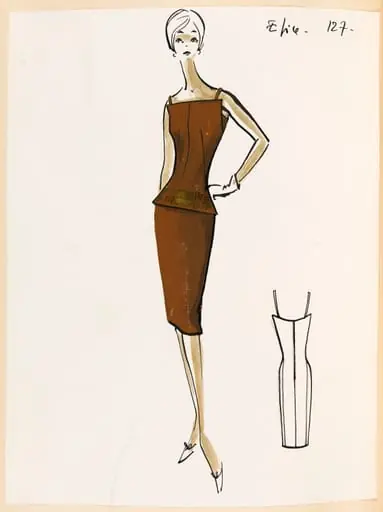
The subject is a woman dressed in a sleeveless, high-necked dress with a pleated skirt and defined waistline, suggesting formal attire. Her updo and downward gaze convey quiet composure, as if caught in a moment of preparation or reflection. The absence of facial detail invites focus on posture and garment, positioning the figure as an embodiment of refined, understated femininity rather than a specific individual.
Technique & Style
Rendered in fine, clean pencil lines, the drawing avoids shading and texture, relying on contour and proportion to suggest volume. The minimalism of the technique aligns with fashion illustration traditions of the era, prioritizing clarity and grace. The dress’s pleats and belt are rendered with precision, highlighting Carven’s attention to tailoring, while the figure’s limbs remain softly defined, enhancing the sense of stillness.
History & Provenance
The drawing entered the Museum of Ethnography’s collection in the late 20th century, likely through donation or acquisition tied to the museum’s interest in material culture and fashion. Its attribution to Carven is based on stylistic consistency with known designs from her label, though no definitive documentation of its creation or original purpose survives. It remains an unprovenanced sketch within a broader archive of fashion studies.
Context
Created in the early 1960s, the drawing reflects a period when haute couture houses like Carven’s emphasized tailored silhouettes and restrained elegance amid rising ready-to-wear trends. Fashion sketches like this were often used internally to communicate design intent or document prototypes. Its preservation in an ethnographic museum signals a growing recognition of fashion as cultural artifact, not merely commercial product.
Legacy
Accordéon contributes to the understanding of mid-century French fashion as a discipline rooted in precision and subtlety. While not widely exhibited, its presence in an ethnographic context underscores how design studies have expanded beyond galleries into anthropological frameworks. The work remains a quiet testament to the craftsmanship and aesthetic values embedded in everyday garments of its time.
Artist & collection
Artist
These delicate ink-on-paper drawings capture the quiet poetry of everyday things: pinecones, reeds, apples.
Museum
Palais Galliera - Musée de la Mode de la Ville de Paris
Continue through works from the same source collection.