Artwork
Maxim's
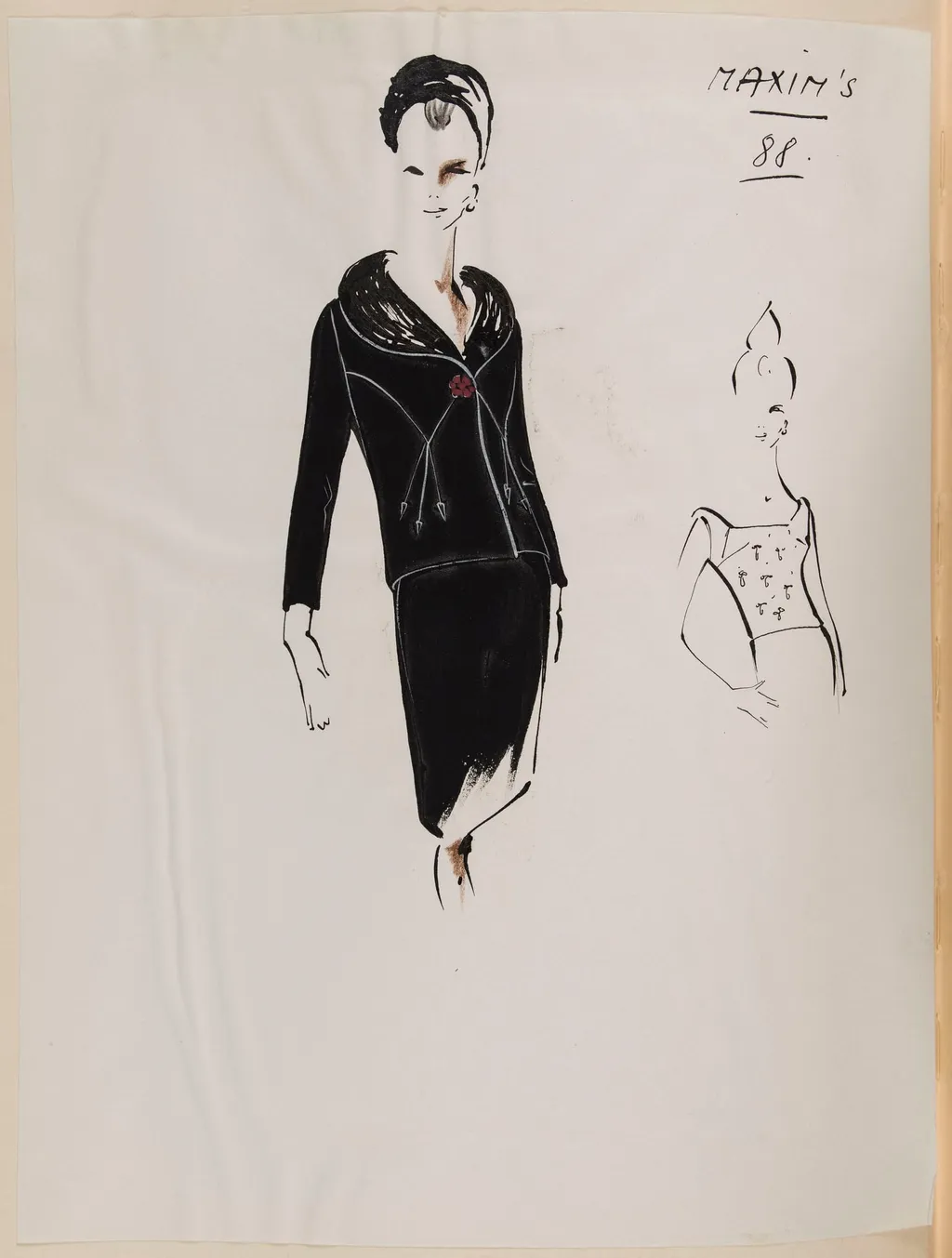
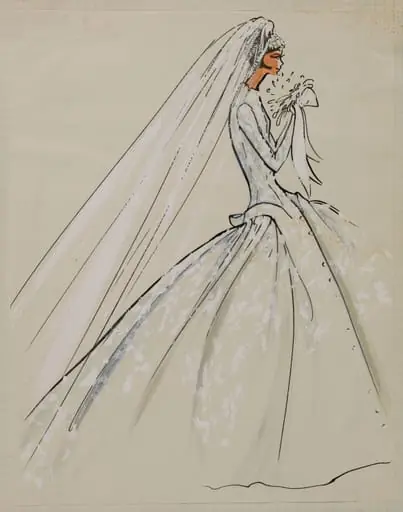
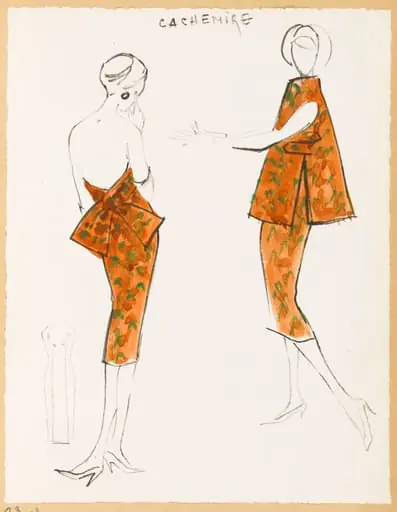
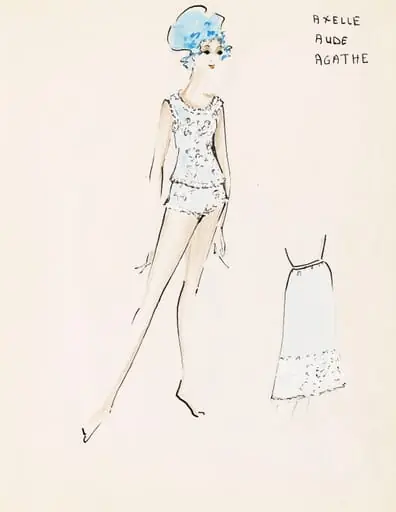
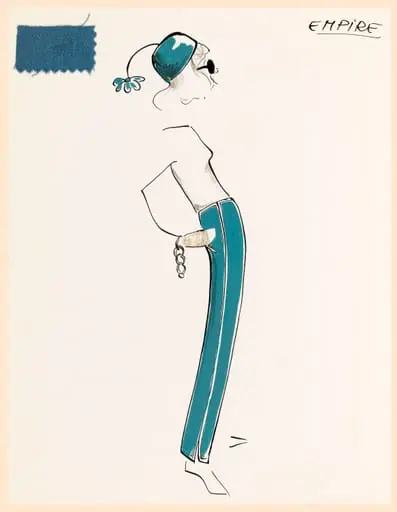
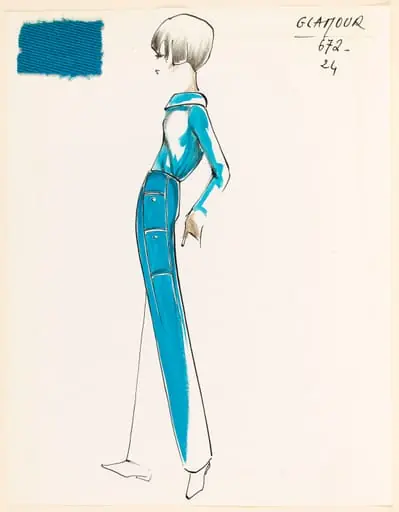
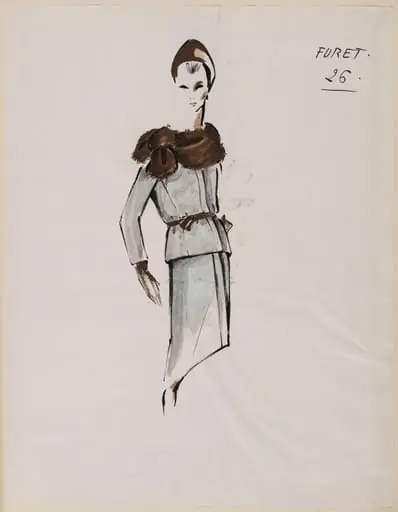
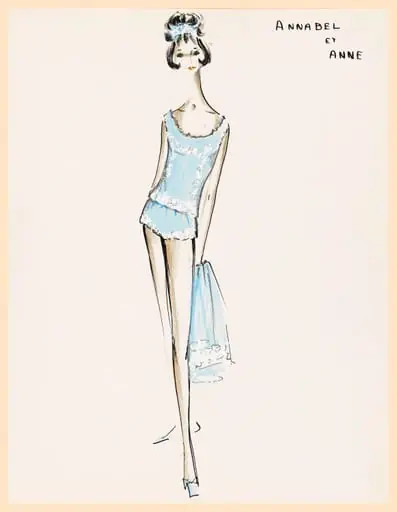
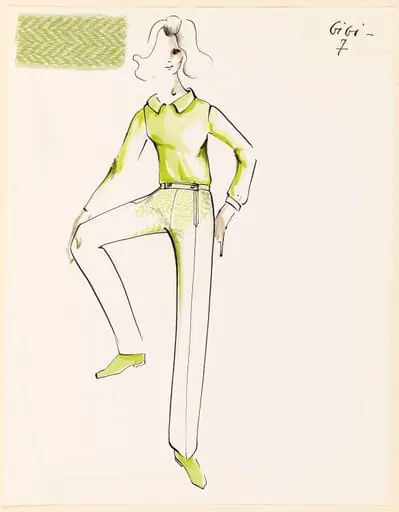
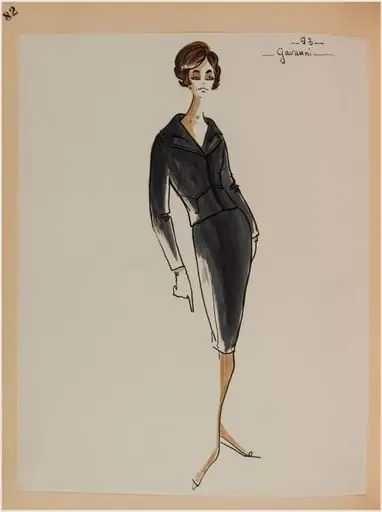
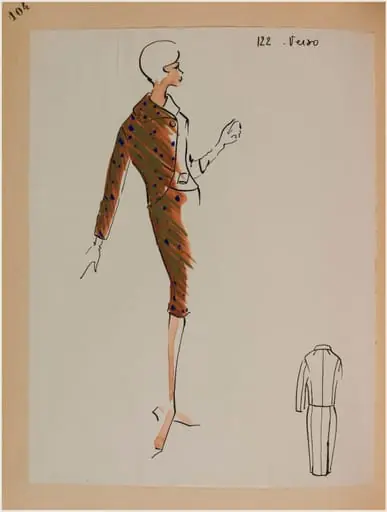
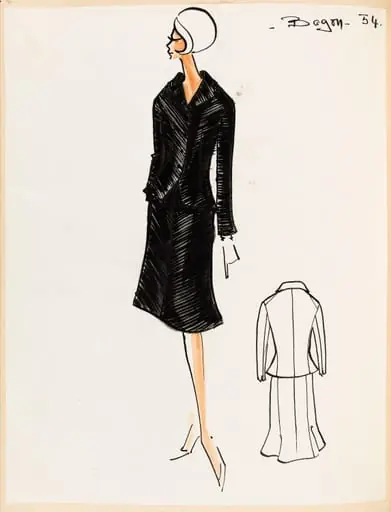
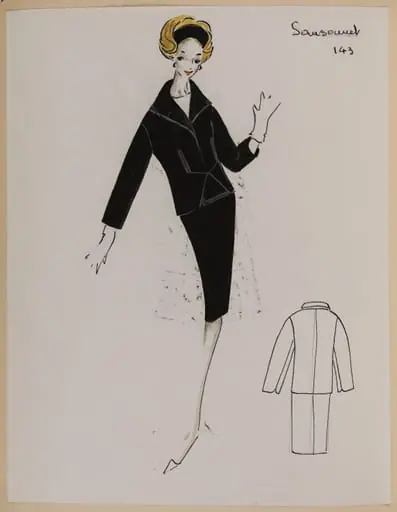
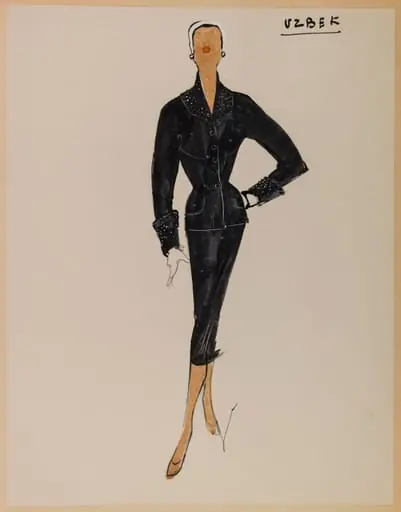
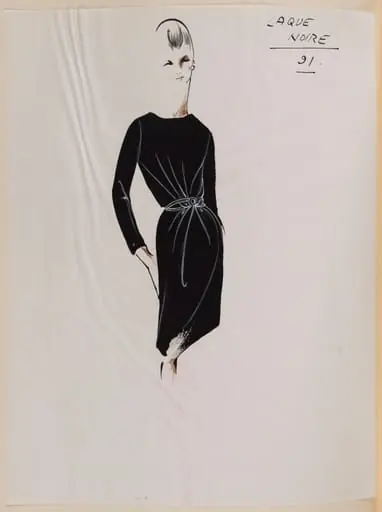
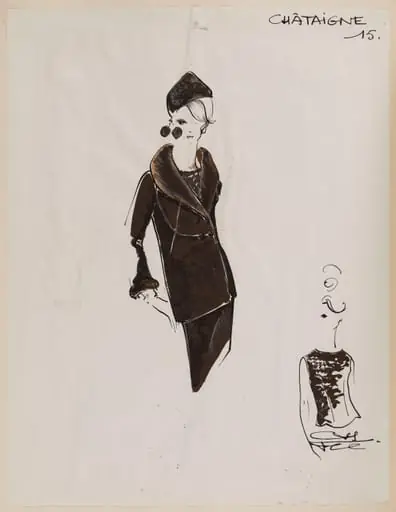
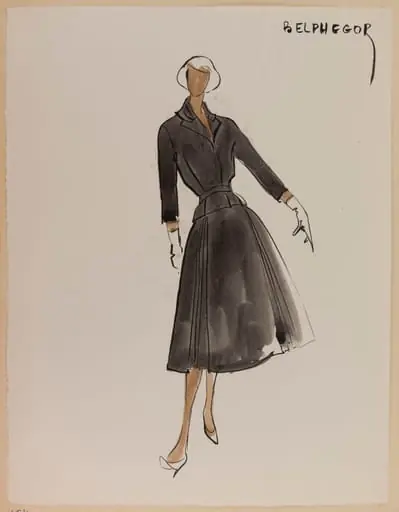
Maxim's is a drawing by Carven. It dates from 1963 and is held in the collection of the Palais Galliera - Musée de la Mode de la Ville de Paris.
About this work
Overview
It captures a woman in a minimalist black ensemble, rendered with swift, unpolished lines that suggest a working drawing rather than a finished illustration.
Created around 1963 by the designer Carven, this ink sketch is part of the Museum of Ethnography’s collection. It captures a woman in a minimalist black ensemble, rendered with swift, unpolished lines that suggest a working drawing rather than a finished illustration. The composition includes a secondary outline of the garment from behind, revealing structural details like sleeve straps. The contrast between the dark ink and pale paper emphasizes the garment’s clean silhouette.
Subject & Meaning
The figure represents a modern woman of the early 1960s, dressed in a tailored, sleeveless outfit with a high collar and a single red brooch as the only accent. Her poised stance—hand on hip—conveys quiet confidence. The inclusion of the rear view suggests an interest in garment construction over individual identity, positioning the clothing itself as the central subject rather than the wearer.
Technique & Style
Executed in loose, confident ink strokes, the sketch prioritizes fluidity over precision. The absence of shading or fine detail reinforces its function as a fashion study. The rear profile, drawn with simpler lines, acts as a technical annotation, highlighting the garment’s internal structure. The stark black-on-white contrast enhances the graphic clarity of the design, typical of mid-century fashion drafting.
History & Provenance
The work entered the Museum of Ethnography’s holdings as part of a broader collection documenting 20th-century dress design. Its origin as a personal sketch by Carven indicates it was likely used in the design process, possibly for client presentations or internal development. The museum’s acquisition reflects an institutional interest in preserving the material culture of fashion creation.
Context
In the early 1960s, Parisian fashion houses increasingly emphasized streamlined silhouettes and functional elegance. Carven, known for her tailored yet wearable designs, was part of this shift. This sketch aligns with contemporaneous trends favoring simplicity and structural clarity, contrasting with the more ornate styles of previous decades. The focus on garment anatomy over portraiture reflects a professional, design-driven approach.
Legacy
The sketch endures as a record of Carven’s design methodology, illustrating how fashion was conceived through rapid, iterative drawing. Its preservation in an ethnographic museum underscores the growing recognition of fashion as cultural artifact. Though not widely exhibited, it contributes to scholarly understanding of how designers translated ideas into wearable form during a transformative era in fashion.
Artist & collection
Artist
These delicate ink-on-paper drawings capture the quiet poetry of everyday things: pinecones, reeds, apples.

Museum
Palais Galliera - Musée de la Mode de la Ville de Paris
Continue through works from the same source collection.