Artwork
Albatros
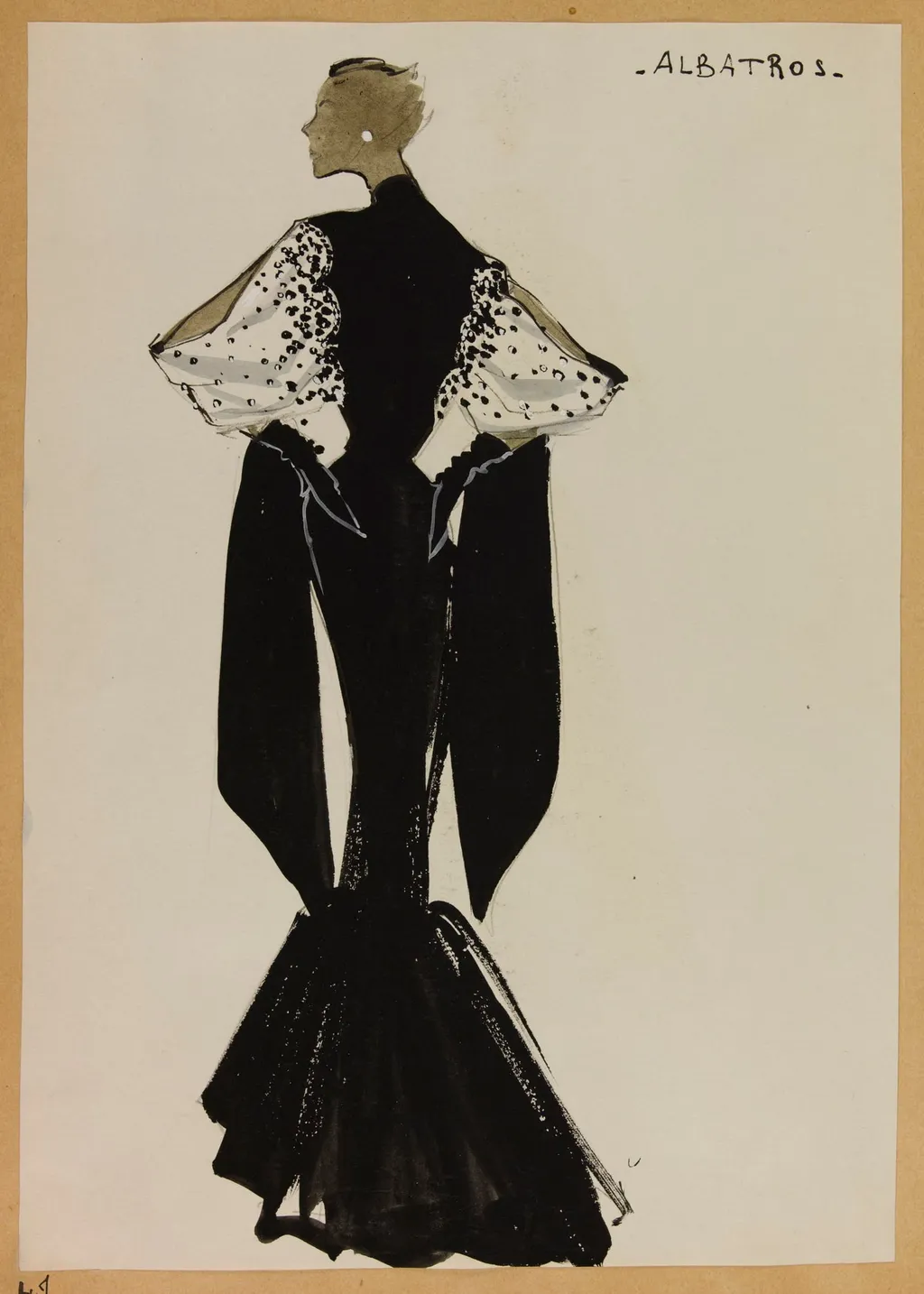
Albatros is a drawing by Carven. It dates from 1952 and is held in the collection of the Palais Galliera - Musée de la Mode de la Ville de Paris.
About this work
Overview
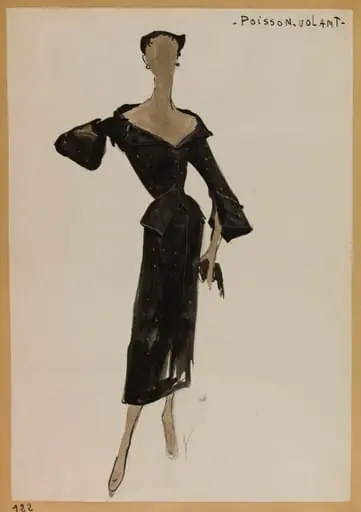
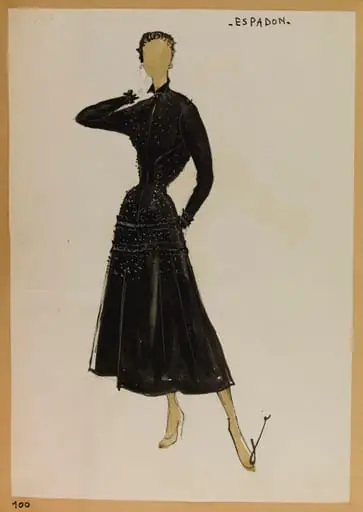
Created in 1952 by Carven, Albatros is a pencil drawing depicting a female figure from behind, dressed in a long black gown.
Created in 1952 by Carven, Albatros is a pencil drawing depicting a female figure from behind, dressed in a long black gown. The work resides in the Museum of Ethnography and functions as a fashion study rather than a portrait. Its minimal background and focused composition emphasize the garment’s structure and detail, reflecting mid-century design practices in textile and silhouette experimentation.
Subject & Meaning
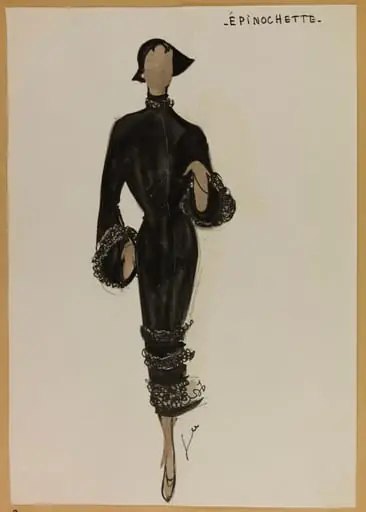
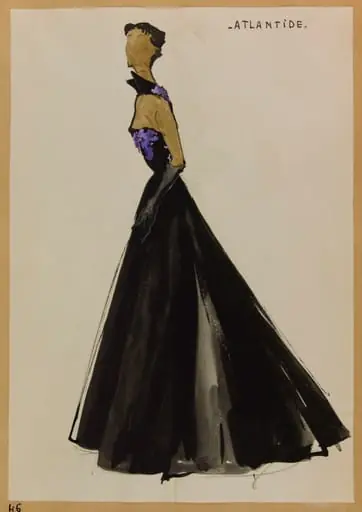
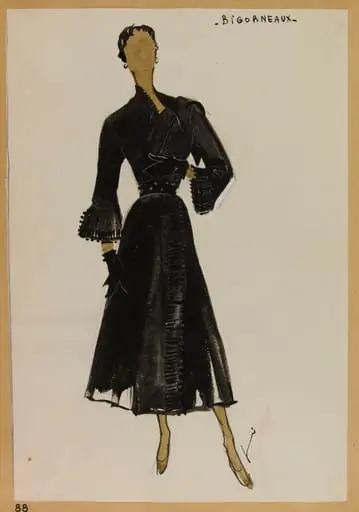
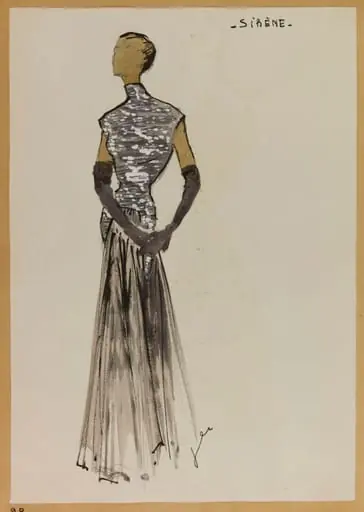
The subject is not a specific person but an idealized form meant to showcase a dress named Albatros. The figure’s anonymity directs attention to the clothing’s form—its exaggerated silhouette and textured sleeves suggest movement and elegance. The title, inscribed in the upper corner, reinforces the dress as the central subject, aligning the work with fashion documentation rather than narrative art.
Technique & Style
Carven employed rapid, fluid pencil strokes to render the dress’s volume and texture. The puffed sleeves are marked with dense, small dots suggesting embroidery or beading, while the flaring skirt is defined by loose, sweeping lines. The absence of facial features or environmental context strips the image to its essential forms, emphasizing the garment’s architectural qualities through economical draftsmanship.
History & Provenance
The drawing entered the Museum of Ethnography’s collection as part of a broader archive of mid-century fashion sketches. Its origin lies in Carven’s design studio, where such studies were used to communicate garment construction to tailors and clients. Unlike finished garments, these drawings served as working documents, preserved later for their cultural and aesthetic significance.
Context
In the early 1950s, Parisian fashion houses emphasized structured silhouettes and dramatic volume, particularly in evening wear. Albatros reflects this trend, echoing the full skirts and sculpted sleeves popularized by designers like Dior. The drawing’s focus on textile detail and form aligns with industry practices that valued precision in rendering fabric behavior over individual identity.
Legacy
Albatros remains a representative example of fashion illustration from postwar France, illustrating how design concepts were communicated visually before mass production. Its preservation in an ethnographic context underscores its role as a cultural artifact, capturing the intersection of craftsmanship, aesthetics, and gendered dress norms of its era.
Artist & collection
Artist
These delicate ink-on-paper drawings capture the quiet poetry of everyday things: pinecones, reeds, apples.
Museum
Palais Galliera - Musée de la Mode de la Ville de Paris
Continue through works from the same source collection.