Artwork
Coeur d'artichaut
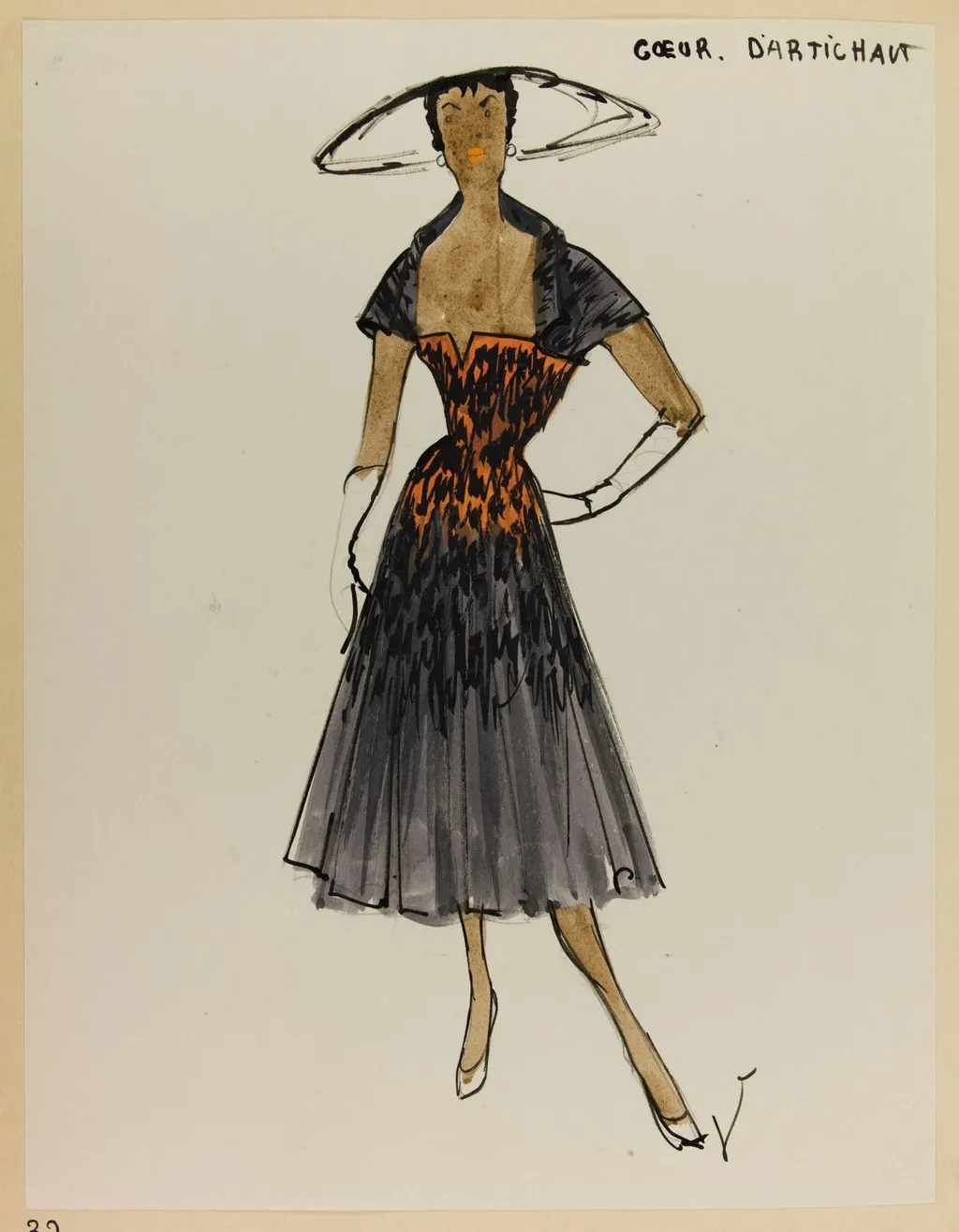
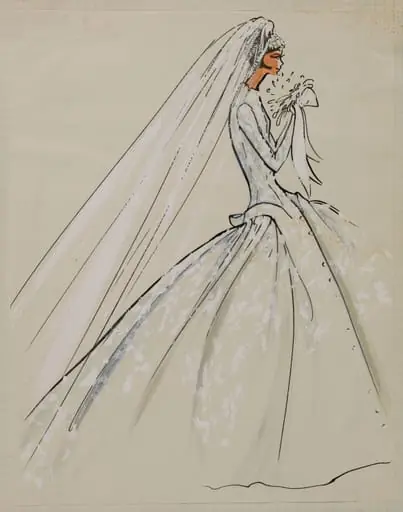
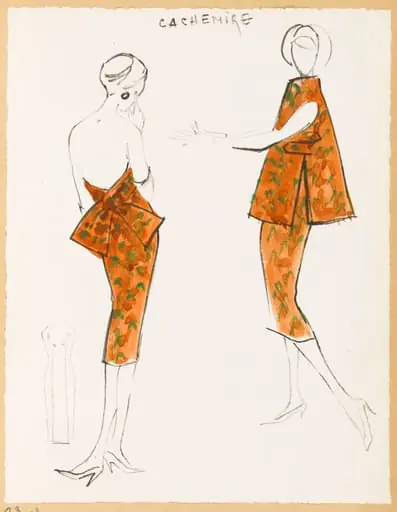
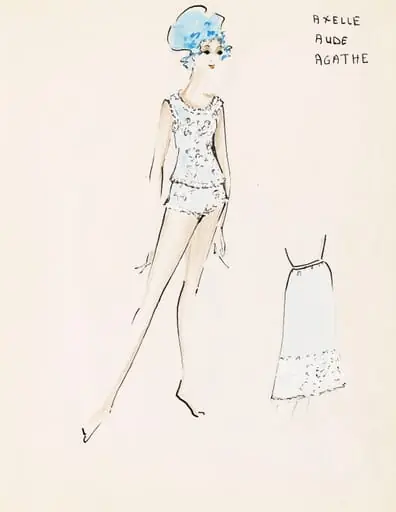
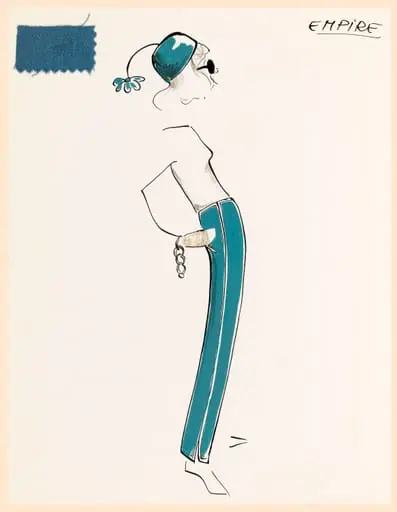
Coeur d'artichaut is a drawing by Carven. It dates from 1953 and is held in the collection of the Palais Galliera - Musée de la Mode de la Ville de Paris.
About this work
Overview
Its muted palette and minimalist background direct attention to the garment’s design, consistent with mid-century fashion editorial practices.
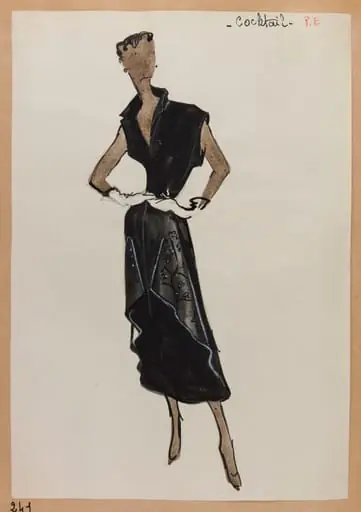
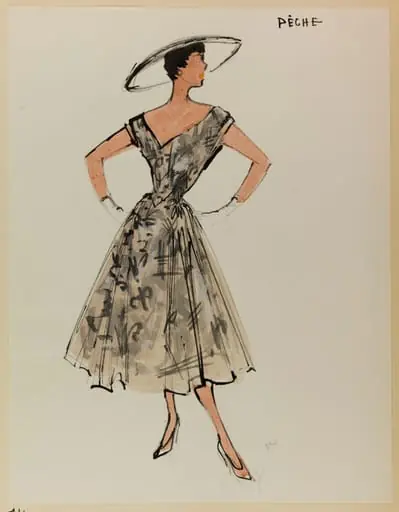
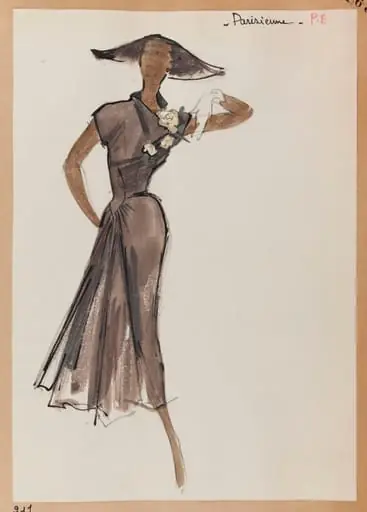
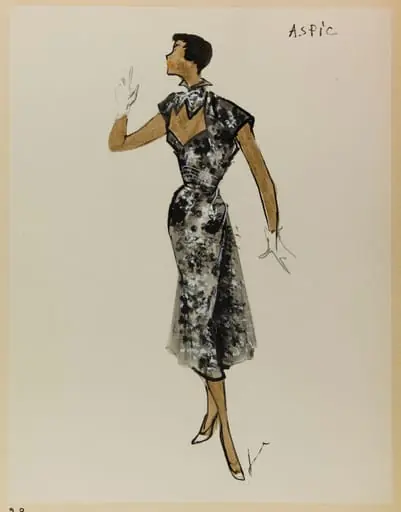
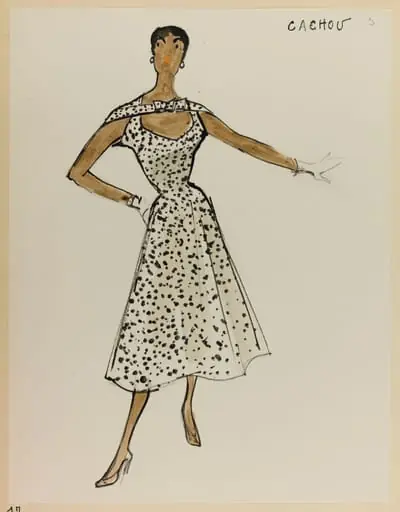
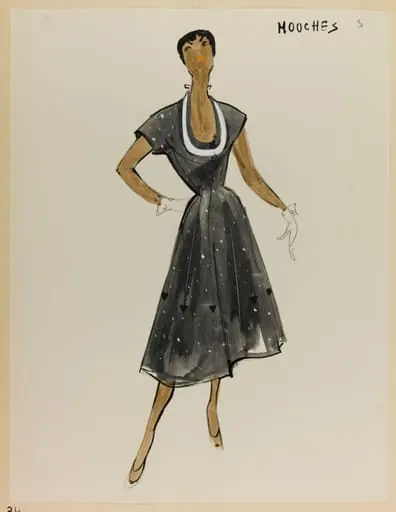
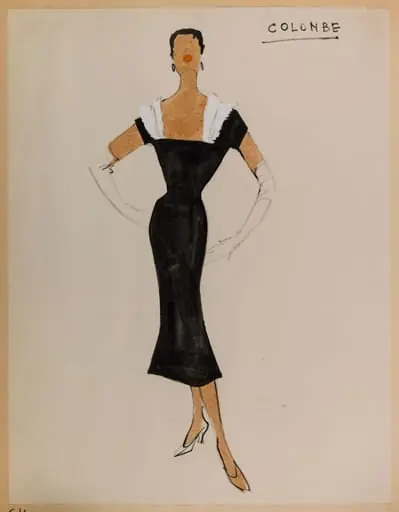
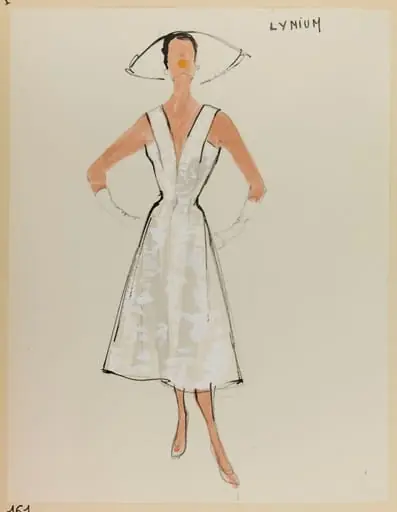
Coeur d'artichaut is a fashion illustration dated around 1953, attributed to the French design house Carven. Executed in ink and wash, it depicts a woman in a stylized pose, rendered with clean, confident lines and restrained tonal variation. The image functions as a catalog piece, capturing a specific ensemble rather than a narrative scene. Its muted palette and minimalist background direct attention to the garment’s design, consistent with mid-century fashion editorial practices.
Subject & Meaning
The figure is portrayed as a poised, modern woman, her posture relaxed yet deliberate—hand on hip, one leg lightly bent. Her attire, featuring a leopard-print bodice and dark skirt, reflects postwar trends blending wild animal motifs with tailored silhouettes. The hat and heels suggest urban sophistication, while the short hair and minimal jewelry convey a sense of understated elegance. The work does not aim for psychological depth but rather presents an idealized archetype of contemporary femininity in fashion.
Technique & Style
The illustration employs bold, fluid outlines with sparse shading to define form and volume. Colors are subdued, limited to the dress’s contrasting patterns and neutral tones in skin and background. The absence of detailed facial features or environmental context emphasizes the clothing as the primary subject. This approach aligns with commercial fashion drawing of the era, prioritizing clarity and visual impact over realism, suited for publication in magazines or design portfolios.
History & Provenance
The work entered the collection of the Museum of Ethnography in the latter half of the 20th century, likely as part of a broader acquisition of fashion ephemera documenting mid-century European design. Its inclusion in an ethnographic context suggests an interest in material culture and everyday aesthetics rather than fine art. The piece remains unattributed to a specific illustrator, consistent with institutional practices that often record design houses over individual artists.
Context
Created during a period when Paris remained a global center of fashion, Carven’s illustrations reflected the industry’s shift toward accessible, wearable elegance after wartime austerity. Leopard print, once associated with exoticism, had become a mainstream symbol of bold femininity. This drawing aligns with contemporaneous work by illustrators like Christian Bérard and René Gruau, who used simplified forms to convey luxury and movement in commercial media.
Legacy
Coeur d'artichaut endures as a representative example of 1950s fashion illustration, valued for its clarity and period-specific aesthetic. It contributes to scholarly understanding of how clothing was visually marketed and culturally imagined in postwar Europe. Though not widely exhibited, its presence in an ethnographic collection underscores the growing recognition of fashion as a legitimate field of material culture study.
Artist & collection
Artist
These delicate ink-on-paper drawings capture the quiet poetry of everyday things: pinecones, reeds, apples.
Museum
Palais Galliera - Musée de la Mode de la Ville de Paris
Continue through works from the same source collection.