Artwork
Ambre
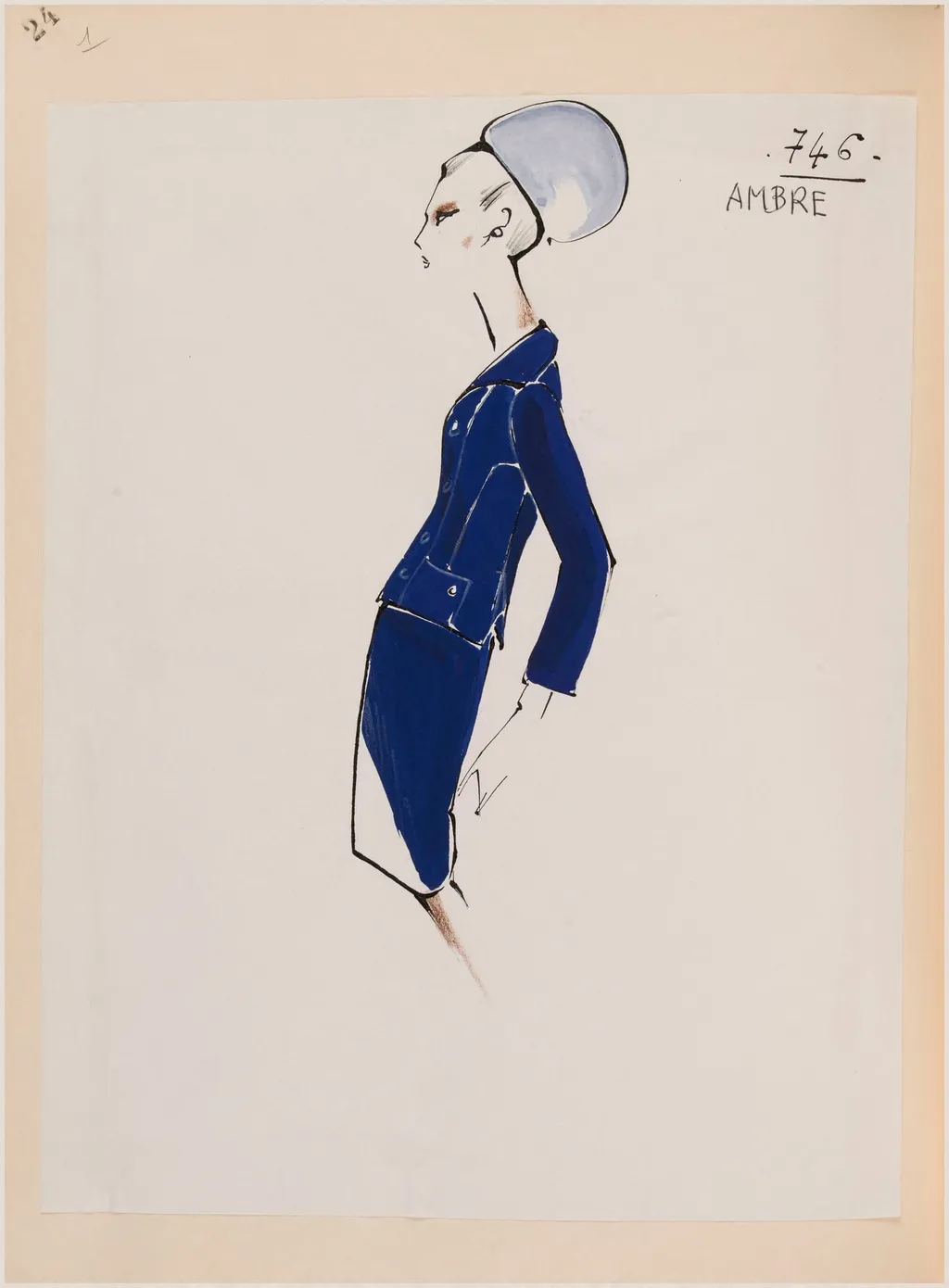
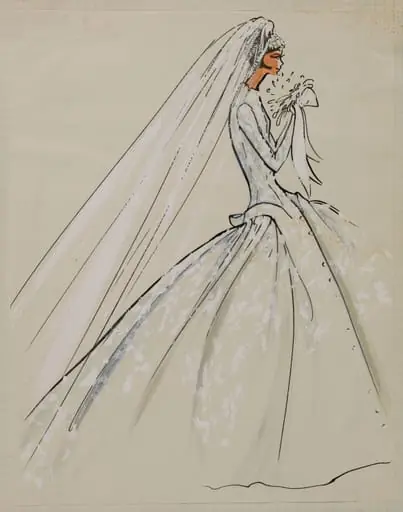
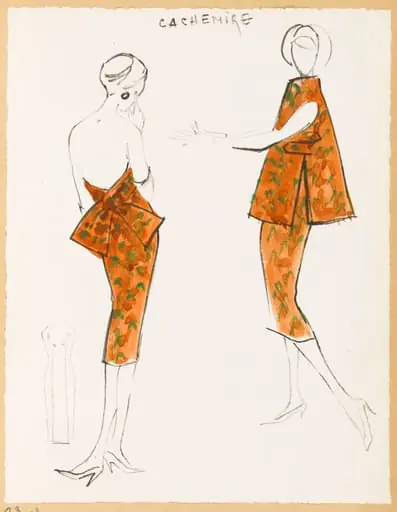
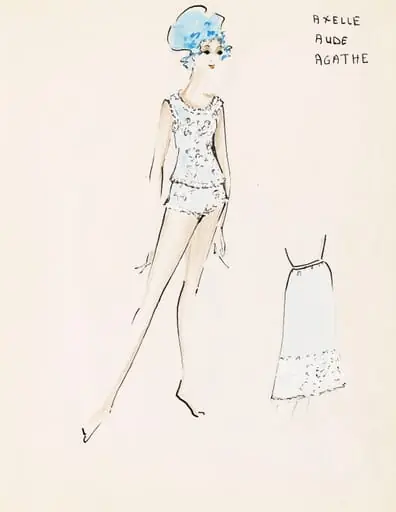
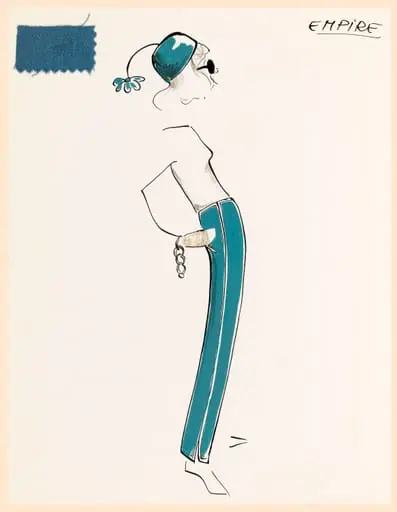
Ambre is a drawing by Carven. It dates from 1965 and is held in the collection of the Palais Galliera - Musée de la Mode de la Ville de Paris.
About this work
Overview
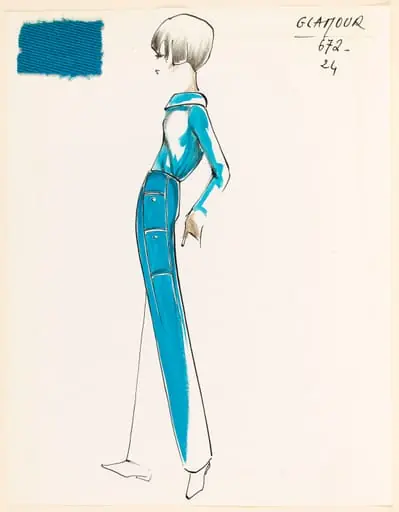
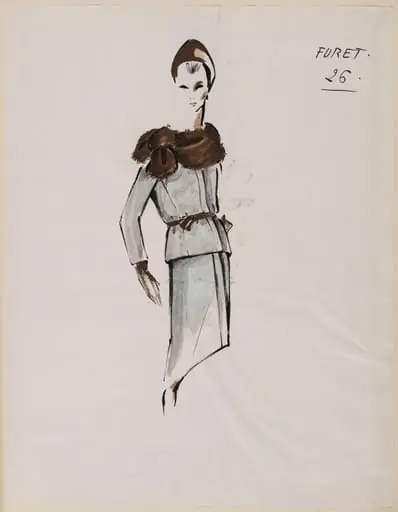
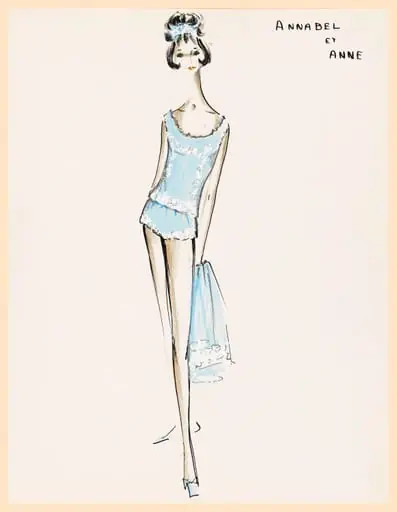
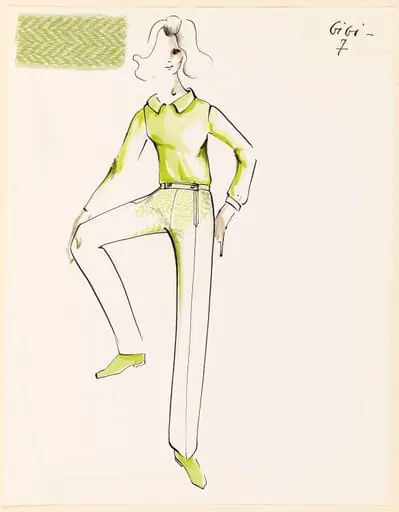
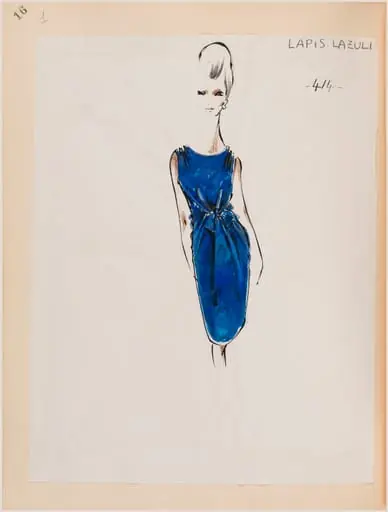
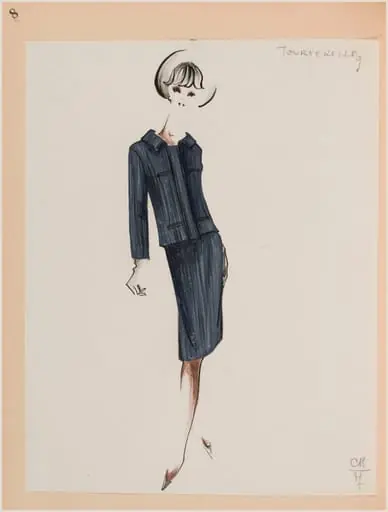
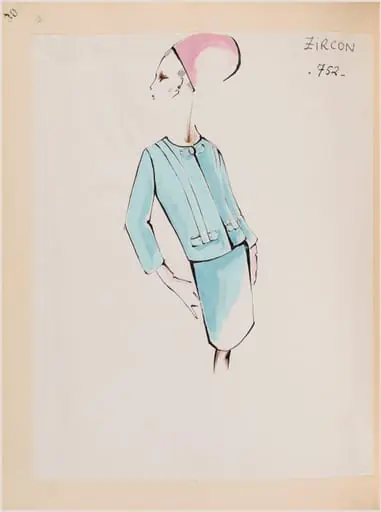
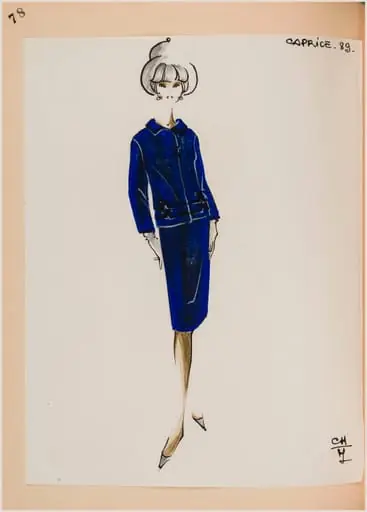
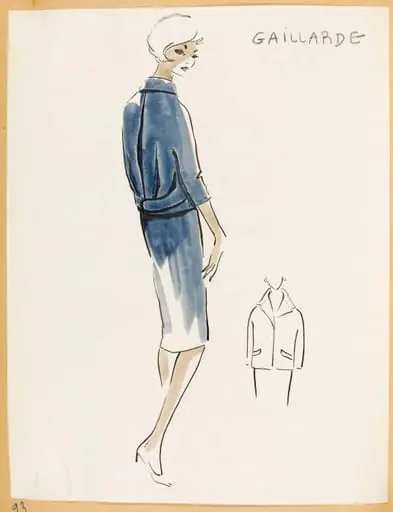
Ambre is a pencil drawing created around 1965 by the designer Carven. It is part of the collection at the Museum of Ethnography. The work presents a stylized portrait of a woman in formal attire, rendered with clean lines and minimal detail. Its focus on dress and posture aligns with mid-century fashion documentation practices, though it lacks overt narrative or symbolic elements.
Subject & Meaning
The subject is a woman dressed in a tailored jacket and pencil skirt, her hair neatly coiffed in a rounded style. She faces left, her posture upright and composed. The attire suggests professional or upper-middle-class femininity of the 1960s, but the drawing does not indicate a specific identity or event. It functions more as a study of silhouette and garment structure than as a portrait.
Technique & Style
Executed in pencil on light beige paper, the drawing employs precise, restrained linework. Shading is subtle, used only to define form and volume without texture or depth. The background is left unmodeled, emphasizing the figure. The style reflects the conventions of fashion illustration from the period—clean, functional, and focused on garment clarity over emotional expression.
History & Provenance
The drawing was produced by Carven around 1965, likely as part of a design archive or editorial project. It entered the Museum of Ethnography’s collection through documented acquisition, though its original commission or publication context remains unrecorded. Its preservation suggests recognition of its value as a cultural artifact of mid-century fashion design.
Context
In the mid-1960s, fashion houses like Carven produced detailed drawings to communicate designs to clients and manufacturers. Ambre reflects this industry practice, where illustrations served as technical records before mass production. Unlike avant-garde art of the time, it prioritizes utility and clarity, aligning with commercial design norms rather than fine art movements.
Legacy
Ambre contributes to the historical record of women’s fashion design in postwar Europe. While not widely exhibited, it remains a representative example of how fashion houses visually codified style during a period of rapid change in women’s professional attire. Its presence in an ethnographic museum underscores its role as a cultural artifact rather than a work of fine art.
Artist & collection
Artist
These delicate ink-on-paper drawings capture the quiet poetry of everyday things: pinecones, reeds, apples.
Museum
Palais Galliera - Musée de la Mode de la Ville de Paris
Continue through works from the same source collection.