Artwork
Aigue-marine
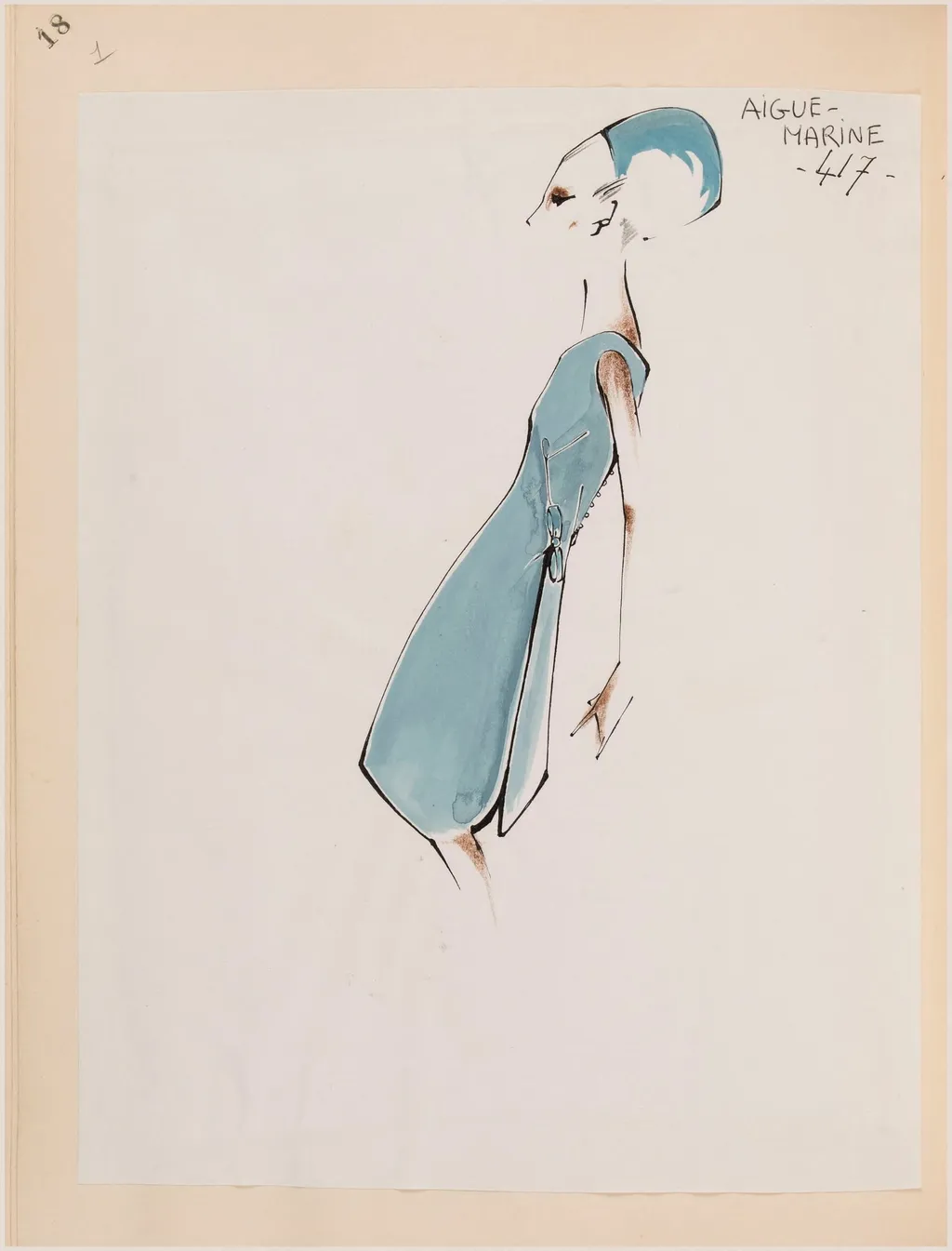
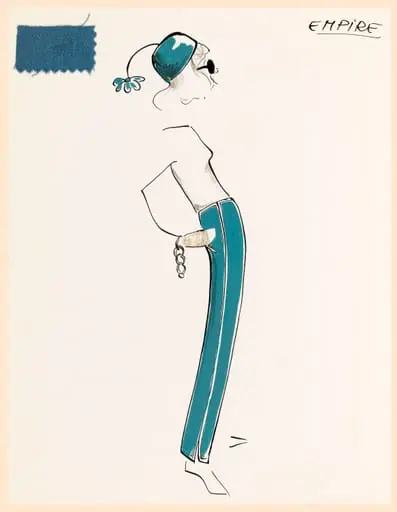
Aigue-marine is a drawing by Carven. It dates from 1965 and is held in the collection of the Palais Galliera - Musée de la Mode de la Ville de Paris.
About this work
Overview
The work is part of the Museum of Ethnography’s collection, where it is preserved as an example of mid-century fashion drawing.
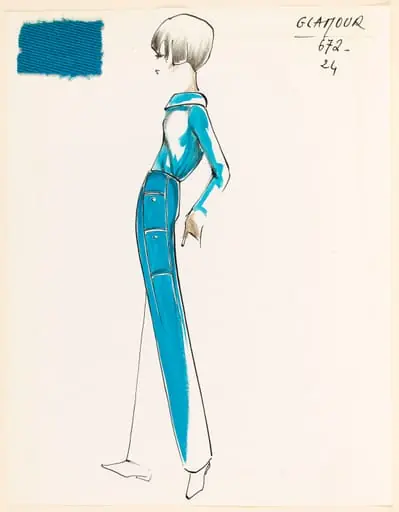
Aigue-marine is a pencil sketch on paper created around 1965 by the French fashion illustrator Carven. It depicts a solitary female figure in a stylized pose, rendered with swift, confident lines. The work is part of the Museum of Ethnography’s collection, where it is preserved as an example of mid-century fashion drawing. Its title, meaning 'sea water' in French, references the teal hue of the subject’s garment.
Subject & Meaning
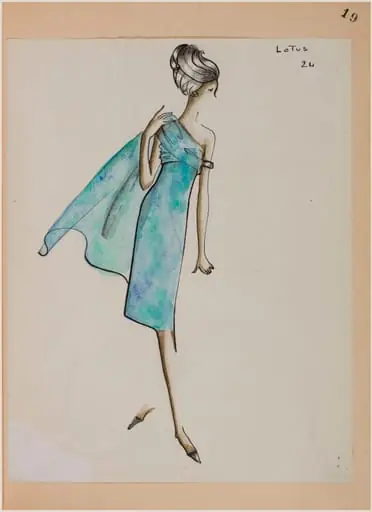
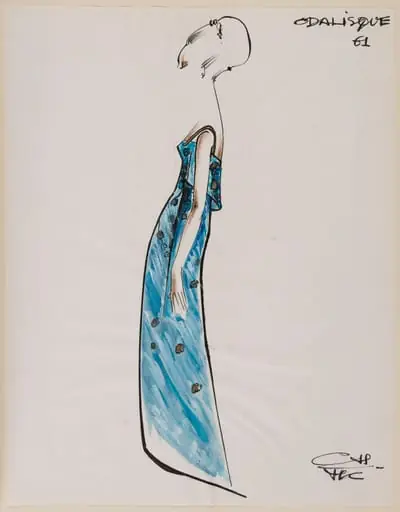
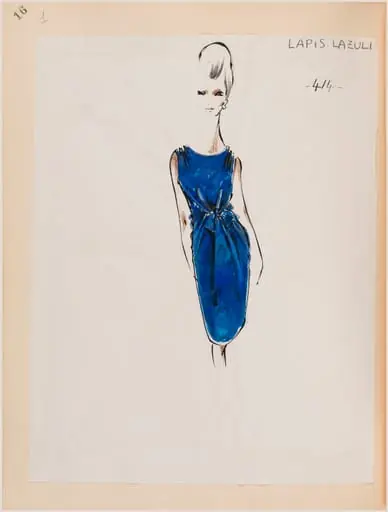
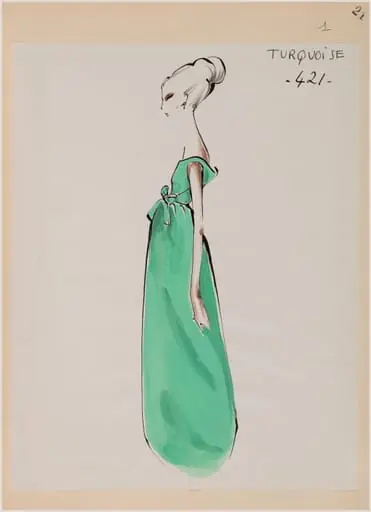
The figure is a woman dressed in a long, solid teal gown with a high collar and a broad-brimmed hat, its inner band a pale tone. Her posture—hand on hip, other arm relaxed—suggests poise rather than performance. The absence of facial detail and background focuses attention on silhouette and fabric. The title evokes the color of the sea, linking the garment’s tone to natural fluidity and calm, possibly reflecting a mood or aesthetic ideal rather than a specific person.
Technique & Style
Carven employed a loose, gestural technique, using bold, unblended lines to define form with minimal shading. The drawing’s spontaneity suggests a rapid study, capturing essence over detail. The lack of texture or depth emphasizes the flatness of the dress and hat, aligning with fashion illustration’s tradition of prioritizing silhouette and movement. The palette is restrained, relying on tone and contour rather than color washes.
History & Provenance
Created circa 1965, the sketch entered the Museum of Ethnography’s collection as part of a broader acquisition of fashion-related materials. While Carven’s commercial work is less documented, this piece survives as a personal or preparatory study. Its preservation in an ethnographic context, rather than a fashion archive, suggests its value as a cultural artifact reflecting mid-century aesthetics and gendered dress norms.
Context
In the 1960s, fashion illustration was transitioning from highly rendered commercial work to more expressive, personal styles. Carven’s sketch aligns with this shift, favoring immediacy over polish. The figure’s attire—elegant yet unadorned—echoes contemporary trends toward streamlined silhouettes. The choice to preserve such a sketch in an ethnographic museum reflects an interest in everyday visual culture beyond haute couture.
Legacy
Aigue-marine remains a quiet example of Carven’s draftsmanship, offering insight into the artist’s approach to form and movement. Though not widely published, its presence in a museum collection ensures its role as a reference for studying the evolution of fashion drawing in the postwar era. It stands as a testament to the artistic value of ephemeral, working sketches in fashion history.
Artist & collection
Artist
These delicate ink-on-paper drawings capture the quiet poetry of everyday things: pinecones, reeds, apples.
Museum
Palais Galliera - Musée de la Mode de la Ville de Paris
Continue through works from the same source collection.