Artwork
Auteuil
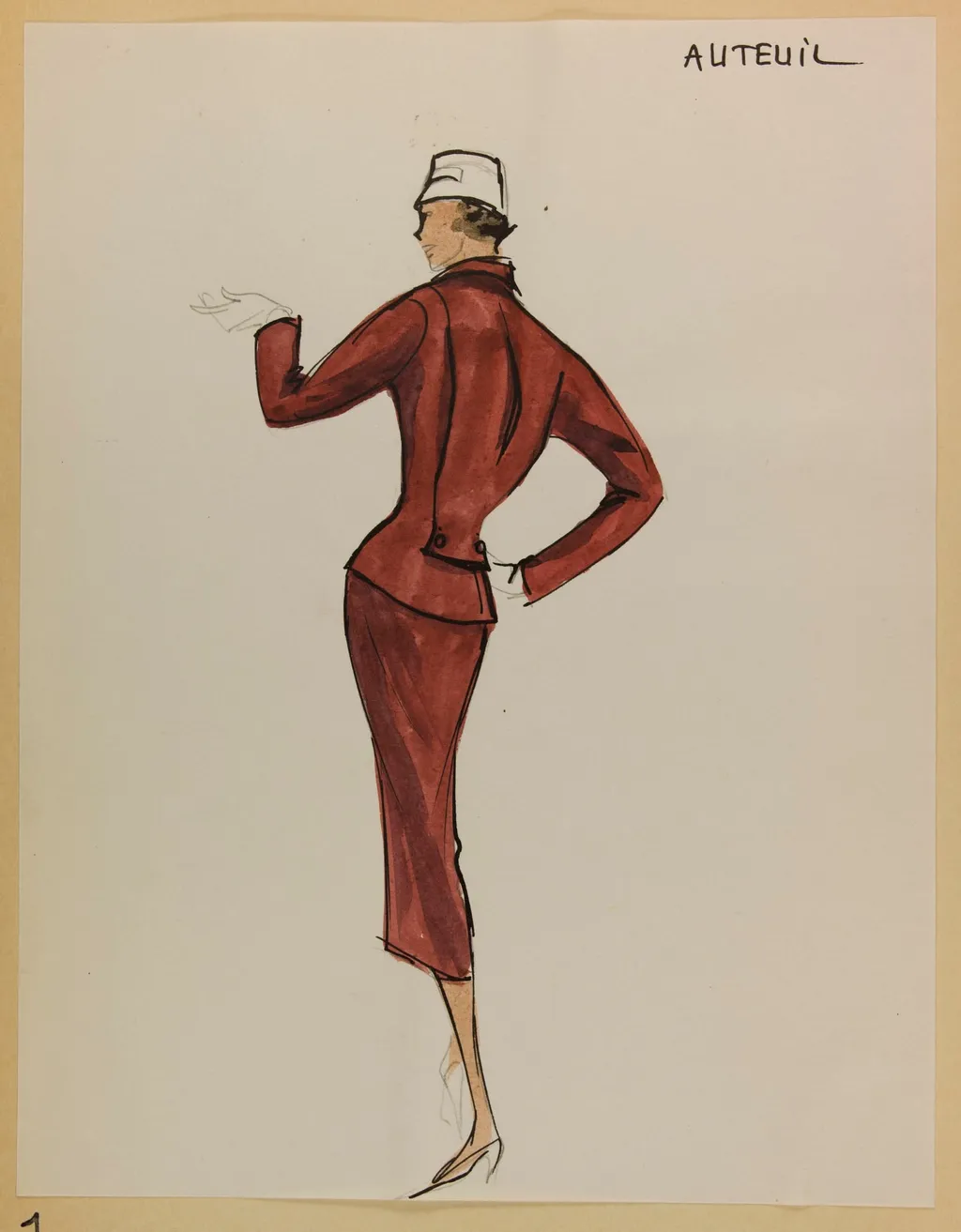
Auteuil is a drawing by Carven. It dates from 1955 and is held in the collection of the Palais Galliera - Musée de la Mode de la Ville de Paris.
About this work
Overview
The work is part of the collection at the Museum of Ethnography, where it is preserved as a record of mid-century fashion illustration.
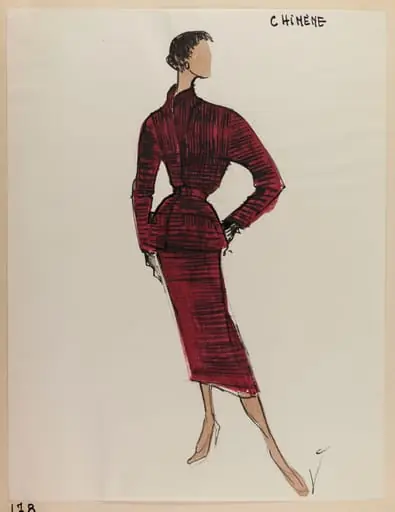
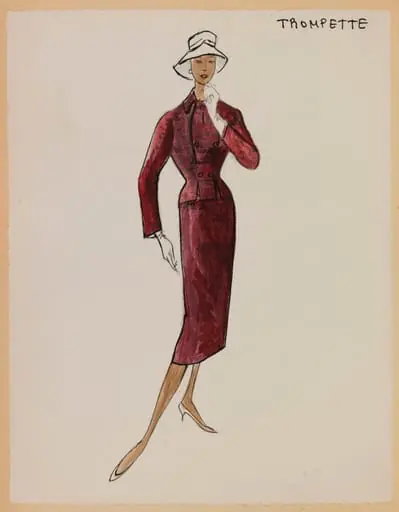
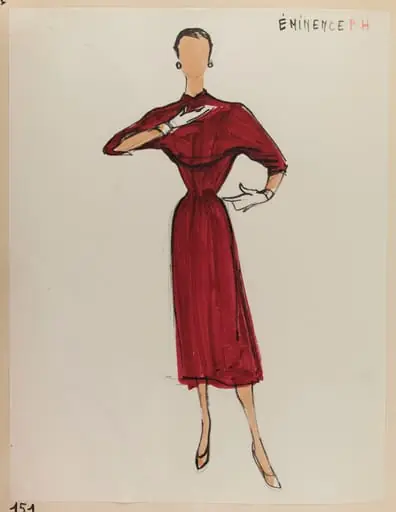
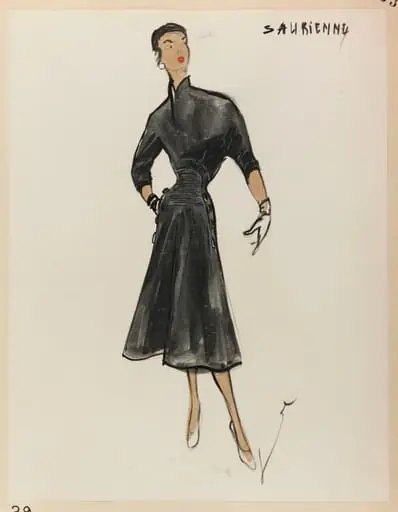
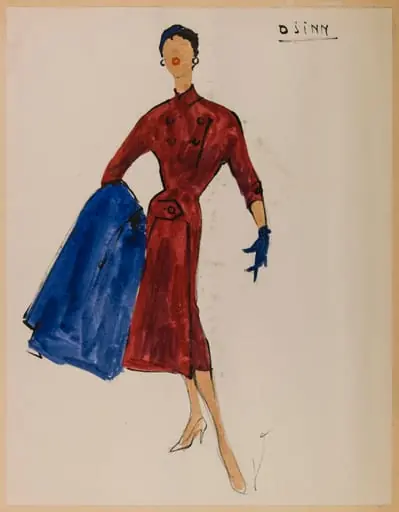
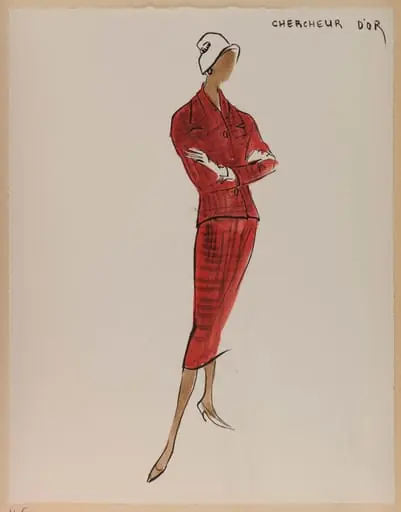
Created around 1955, Auteuil is a pencil or ink drawing attributed to the fashion designer Carven. It depicts a woman in a red suit, standing with a composed posture, one hand on her hip and the other extended. The image is rendered on a plain white ground, eliminating contextual distractions. The work is part of the collection at the Museum of Ethnography, where it is preserved as a record of mid-century fashion illustration.
Subject & Meaning
The figure in Auteuil presents a self-assured stance, suggesting an individual comfortable in her presentation. Her attire—a tailored red suit, white hat, and heels—reflects the elegance of 1950s women’s fashion. The pose, neither theatrical nor passive, implies quiet authority. While not explicitly labeled as a model, the image evokes the persona of a woman who embodies the aesthetic ideals of her time, possibly representing Carven’s own design philosophy.
Technique & Style
The drawing employs clean, precise lines with minimal shading, emphasizing form over texture. The absence of background or environmental detail directs attention to the silhouette and garments. The contrast between the vivid red suit and the neutral white paper heightens visual clarity. This restrained approach aligns with fashion illustration practices of the era, where clarity and elegance took precedence over expressive brushwork or narrative context.
History & Provenance
Auteuil was produced during Carven’s active years as a couturier, likely as a preparatory sketch or promotional image. It entered the Museum of Ethnography’s collection at an unspecified date, possibly through donation or acquisition tied to the museum’s interest in material culture and dress. Its preservation there reflects an institutional recognition of fashion as a cultural artifact, rather than merely a commercial product.
Context
In the mid-1950s, Paris remained a center of haute couture, and designers like Carven cultivated distinct visual identities through sketches and advertisements. Auteuil reflects this environment, where fashion imagery served both artistic and commercial ends. The drawing’s simplicity mirrors contemporary trends in editorial illustration, which favored clean lines and focused compositions to highlight garment design over personal narrative.
Legacy
Auteuil endures as a quiet example of how fashion designers documented their vision beyond garments. Though not widely exhibited, its presence in an ethnographic museum underscores the evolving scholarly view of fashion as cultural expression. The work contributes to a broader understanding of mid-century design practices, where illustration was a vital bridge between concept and consumer.
Artist & collection
Artist
These delicate ink-on-paper drawings capture the quiet poetry of everyday things: pinecones, reeds, apples.
Museum
Palais Galliera - Musée de la Mode de la Ville de Paris
Continue through works from the same source collection.