Artwork
Auvergne
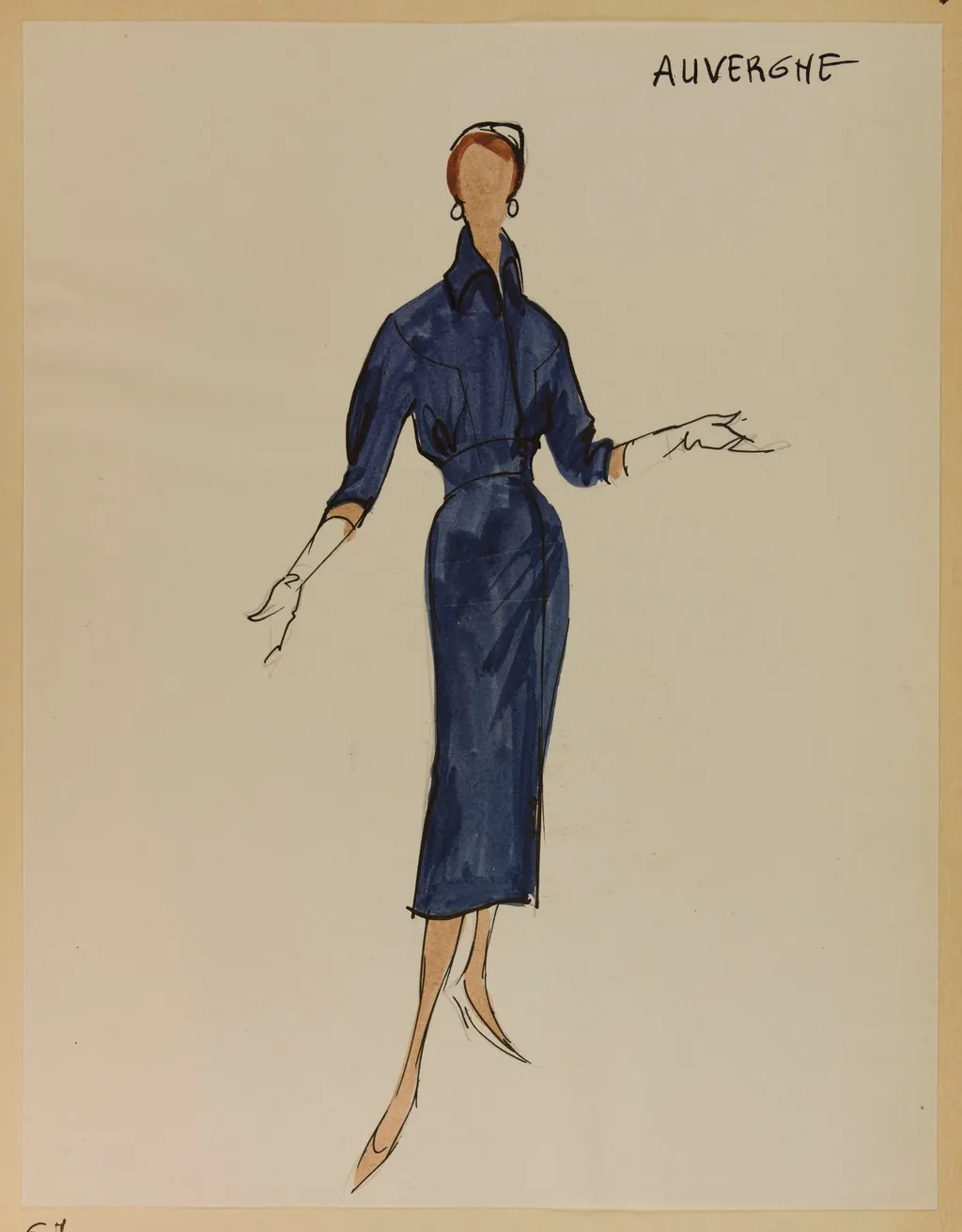
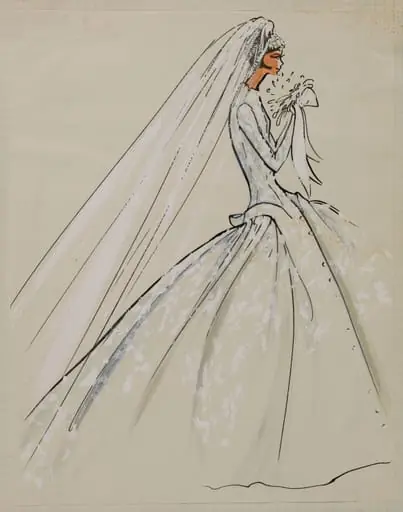
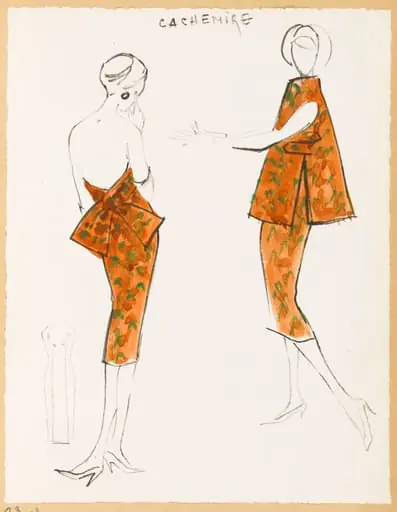
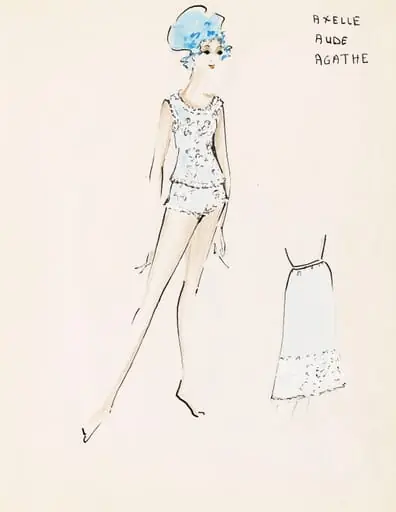
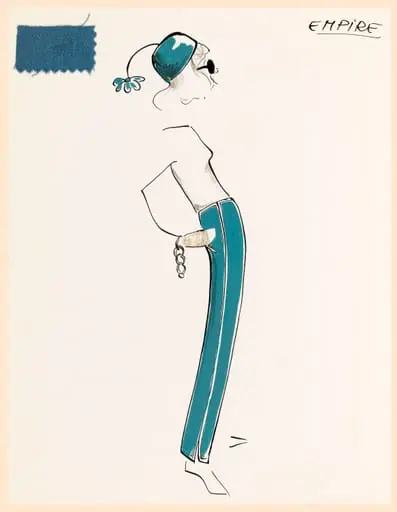
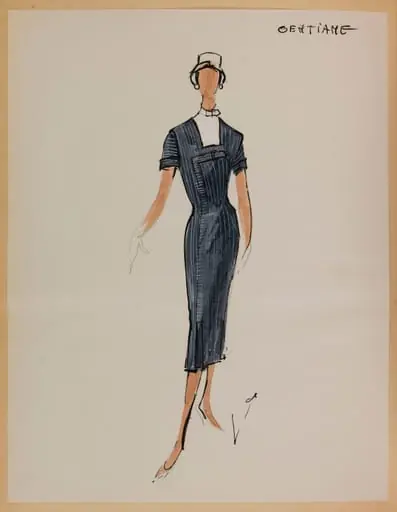
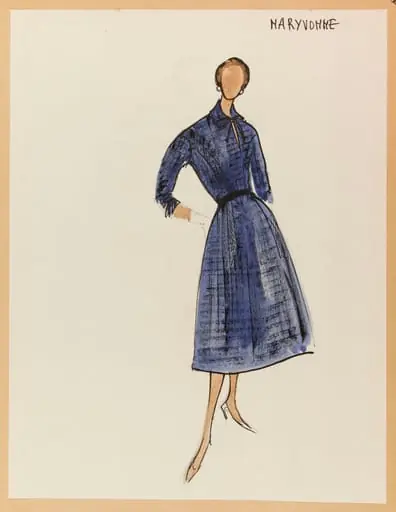
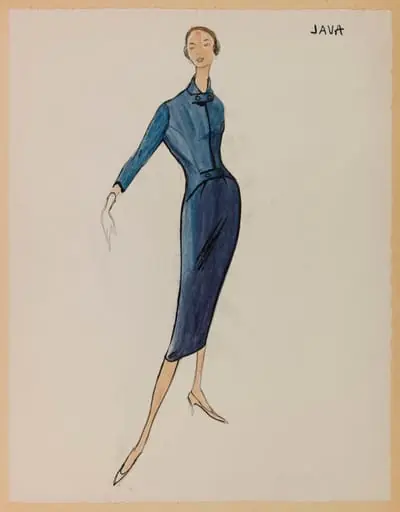
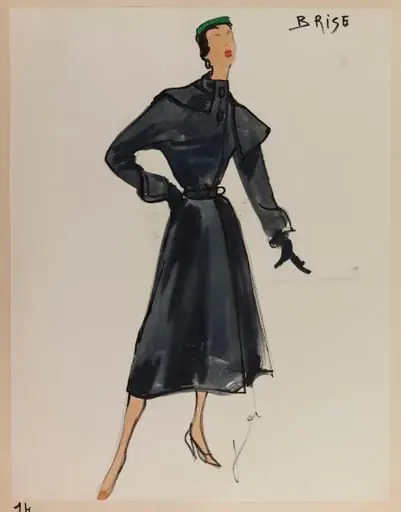
Auvergne is a drawing by Carven. It dates from 1955 and is held in the collection of the Palais Galliera - Musée de la Mode de la Ville de Paris.
About this work
Overview
Auvergne is a pencil drawing dated around 1955, attributed to the designer Carven. It resides in the collection of the Museum of Ethnography. The work presents a single figure in a restrained, linear style, emphasizing costume details over narrative or environment. Its modest scale and clean lines reflect mid-century fashion illustration practices focused on garment presentation.
Subject & Meaning
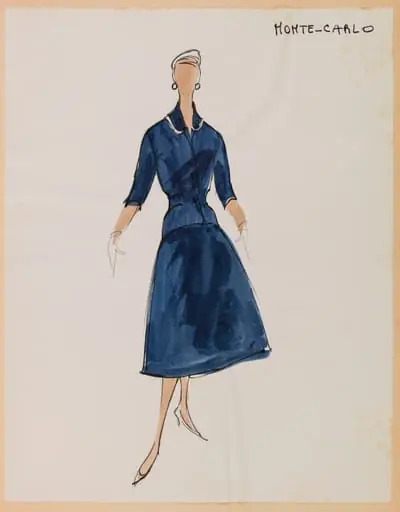
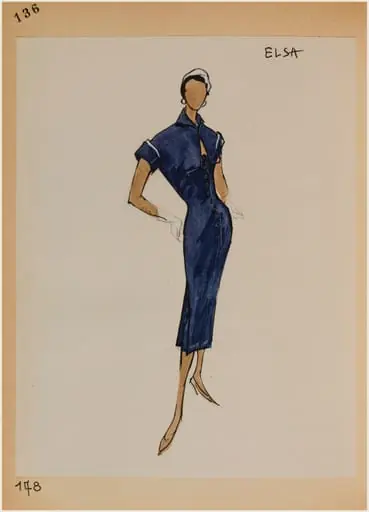
The figure is a woman dressed in a knee-length, dark blue dress with a fitted waist, buttoned front, and matching belt. White gloves, earrings, and heels suggest formal or urban attire. Her composed posture and neutral expression convey dignity rather than emotion. The drawing functions as a study of dress, capturing how clothing defines posture and social presence without overt storytelling.
Technique & Style
Rendered in pencil on paper, the drawing employs minimal shading and precise contours. Background is left unmodeled, a light beige wash serving only to frame the figure. Details like button placement and glove seams are carefully indicated, while hair and facial features remain simplified. The style prioritizes clarity and elegance, typical of fashion sketches intended for design reference.
History & Provenance
Created circa 1955, the work originates from Carven’s design studio during a period when the house was refining its signature blend of Parisian refinement and practical elegance. It entered the Museum of Ethnography’s collection as part of a broader effort to document 20th-century dress as cultural artifact, rather than purely aesthetic object.
Context
In mid-1950s Paris, fashion illustrators like Carven documented garments for clients and press, often working in a stripped-down visual language. This drawing aligns with contemporaneous practices at houses like Dior and Balenciaga, where sketches served as blueprints before production. Unlike fine art, such works were functional, yet retained aesthetic discipline.
Legacy
Auvergne contributes to the archival record of postwar French fashion, illustrating how design houses communicated silhouette and detail before photographic documentation became dominant. Its preservation in an ethnographic museum underscores its value as evidence of everyday style and the material culture of mid-century women’s dress.
Artist & collection
Artist
These delicate ink-on-paper drawings capture the quiet poetry of everyday things: pinecones, reeds, apples.
Museum
Palais Galliera - Musée de la Mode de la Ville de Paris
Continue through works from the same source collection.