Artwork
Elsa
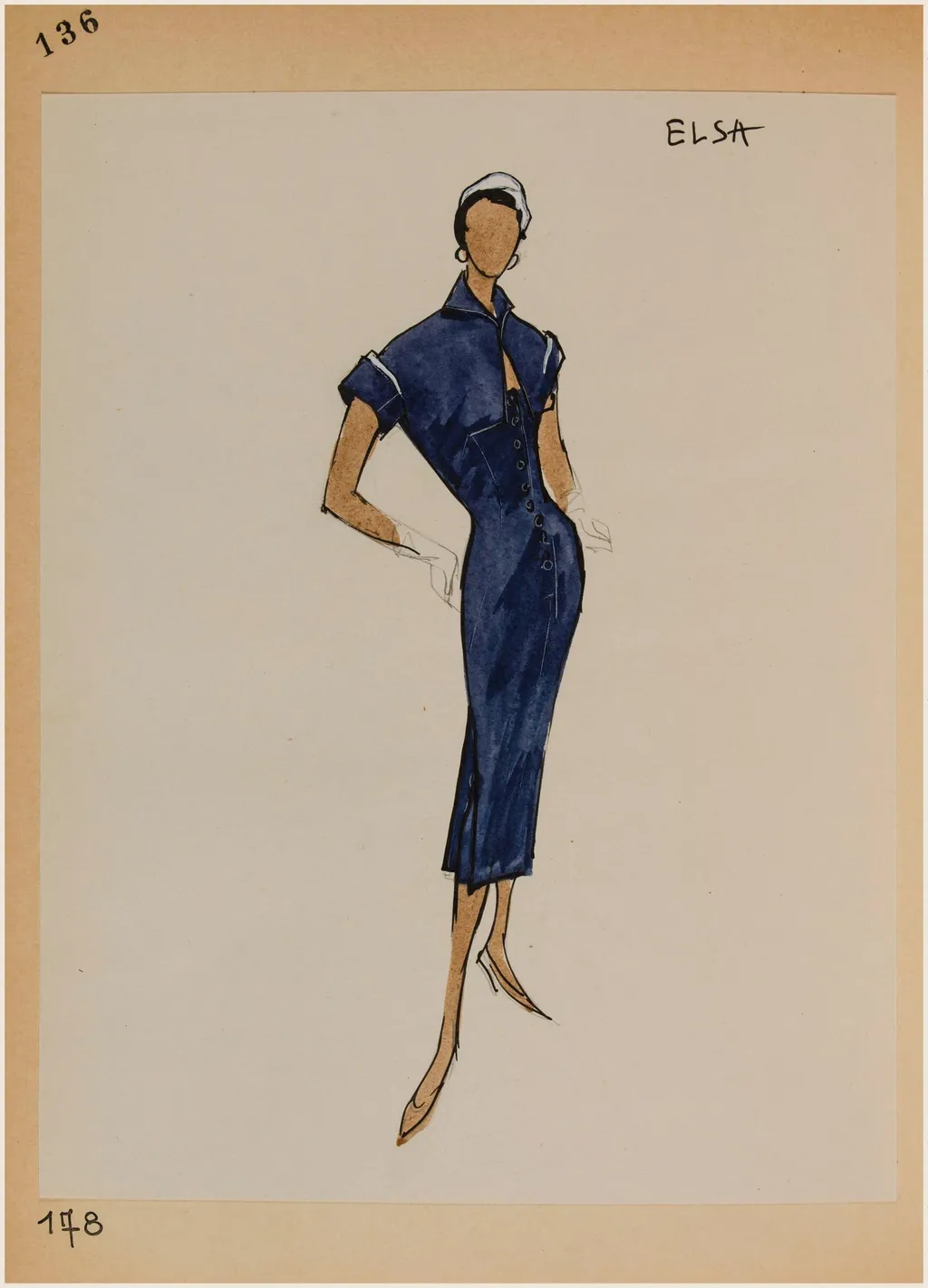
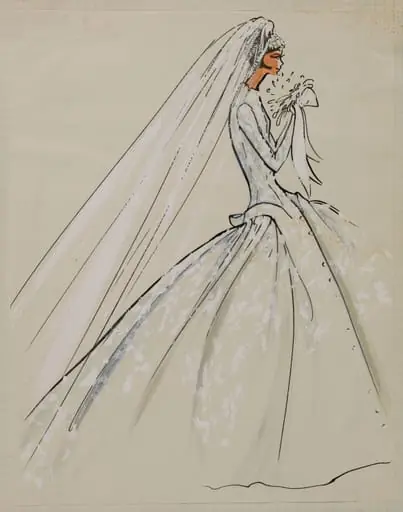
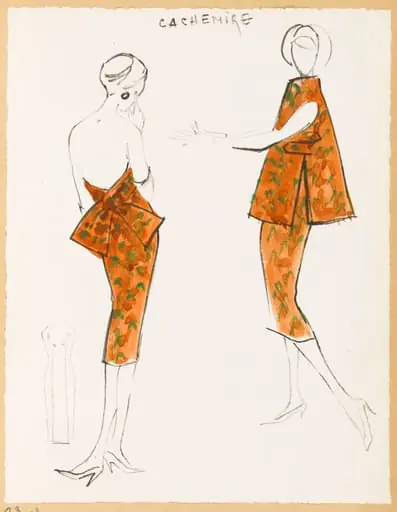
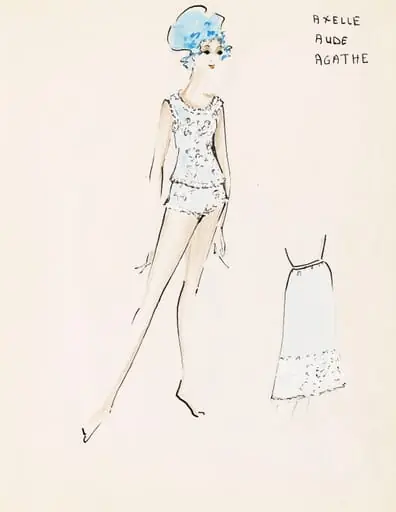
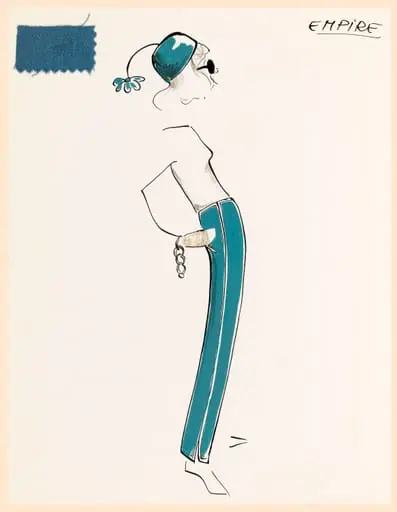
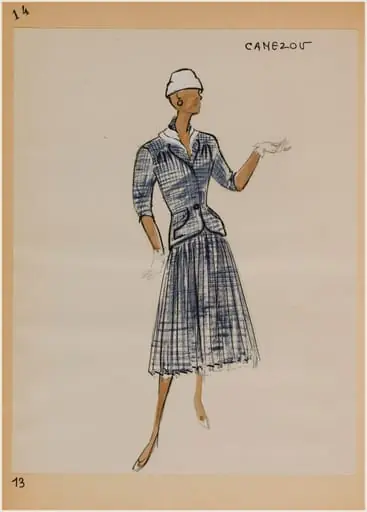
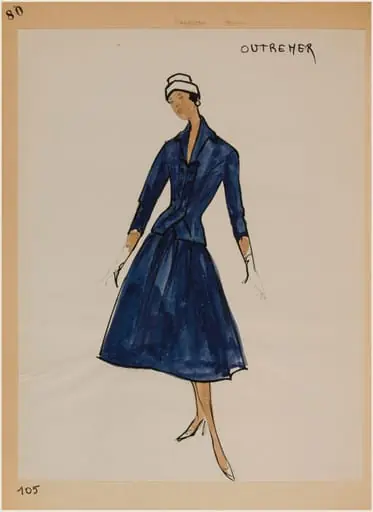
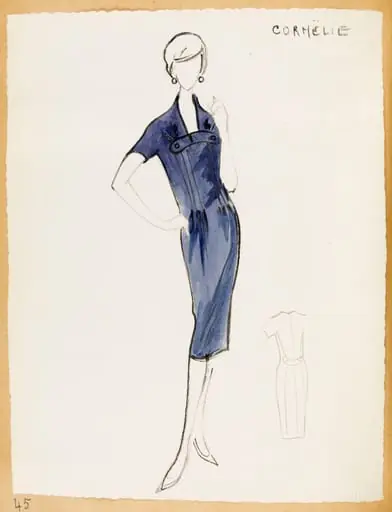
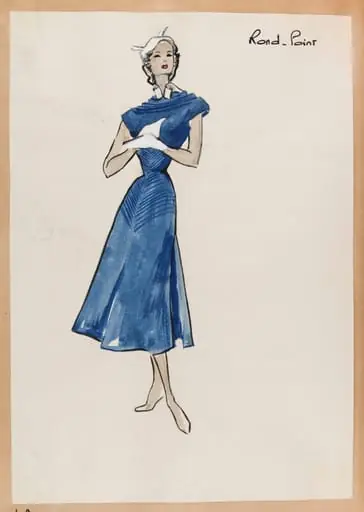
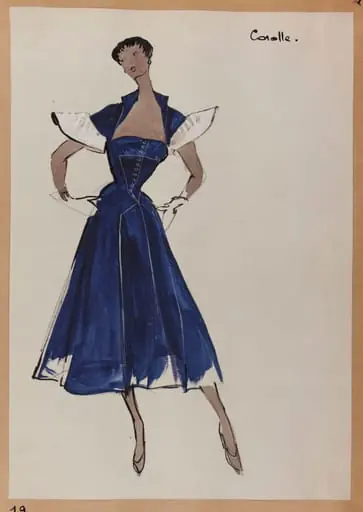
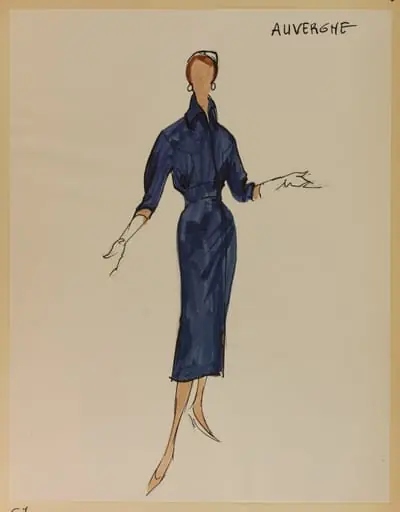
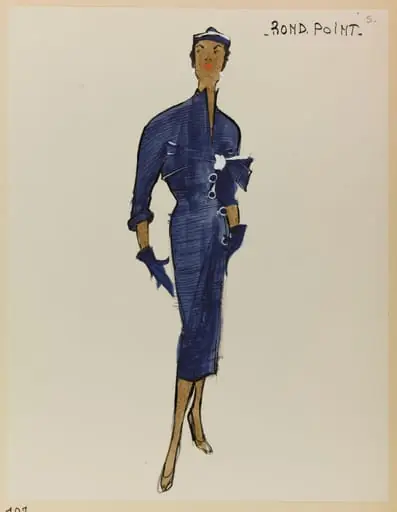
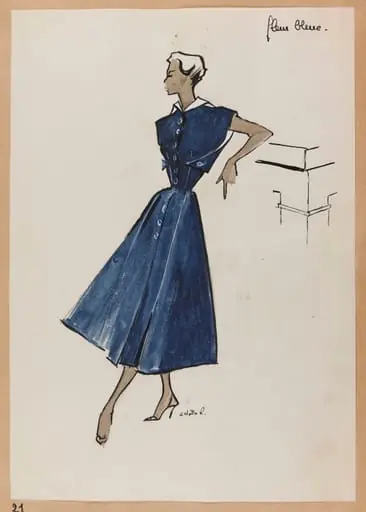
Elsa is a drawing by Carven. It dates from 1956 and is held in the collection of the Palais Galliera - Musée de la Mode de la Ville de Paris.
About this work
Overview
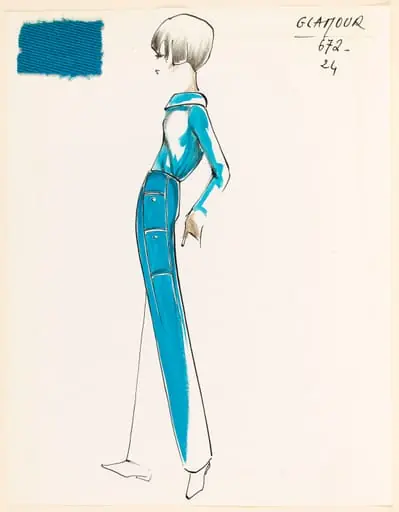
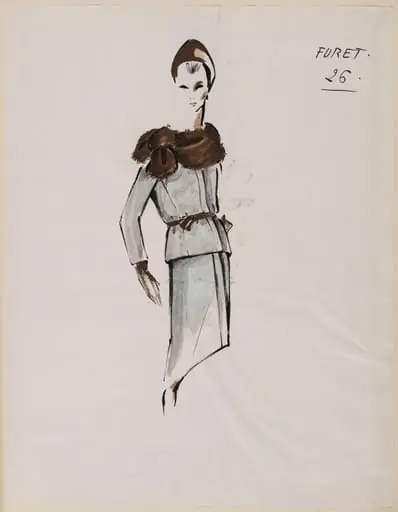
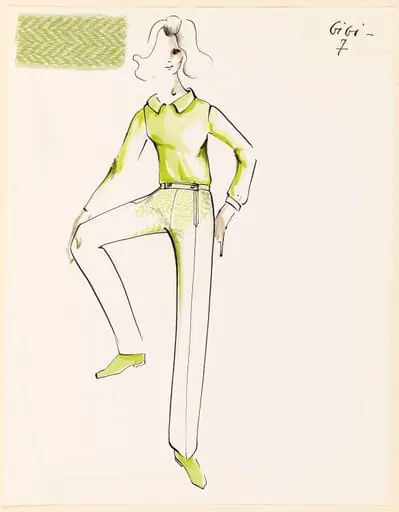
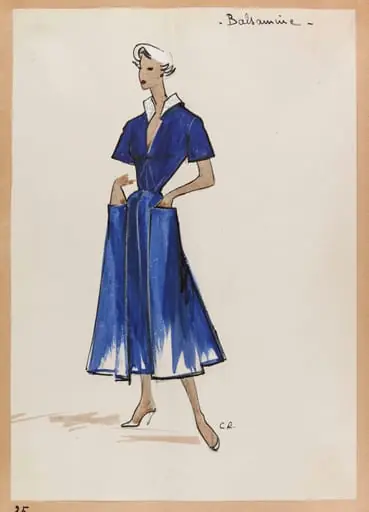
Created in 1956 by the designer Carven, this ink sketch depicts a woman in a modest, tailored ensemble. The drawing is held in the collection of the Museum of Ethnography and reflects the designer’s interest in everyday dress as a subject of visual study. Rendered with minimal detail, the work emphasizes form and posture over ornamentation, capturing a quiet moment of stillness.
Subject & Meaning
The clothing, a dark blue dress with a jacket, reflects mid-century French women’s wear: practical, understated, and functional.
The figure is portrayed in a relaxed, natural stance—hand on hip, feet grounded—suggesting an ordinary, unposed moment. The clothing, a dark blue dress with a jacket, reflects mid-century French women’s wear: practical, understated, and functional. The absence of facial features or background directs focus to the silhouette and the relationship between body and garment, highlighting dress as an extension of personal presence.
Technique & Style
Carven employed fluid, confident ink lines to define the contours of the dress and jacket. The strokes are economical yet expressive, suggesting fabric weight and subtle movement without shading or texture. The clean, uncluttered composition avoids decorative elements, aligning with a modernist approach to fashion drawing that prioritizes clarity and structural integrity over embellishment.
History & Provenance
The sketch entered the Museum of Ethnography’s collection as part of a broader effort to document 20th-century domestic attire. While Carven is primarily known for fashion design, this work appears to be a personal study, possibly made during the design process or as a record of contemporary dress. Its preservation suggests recognition of its value as a cultural artifact rather than a commercial illustration.
Context
In postwar France, fashion design increasingly turned toward simplicity and accessibility. Carven’s sketch aligns with this shift, capturing the rise of wearable, non-theatrical clothing for urban women. Unlike haute couture presentations, this drawing reflects the quiet reality of daily dress, offering insight into how ordinary women engaged with style beyond the runway.
Legacy
Though not widely exhibited, the sketch contributes to scholarly understanding of how designers observed and recorded everyday fashion. It stands as a quiet counterpoint to more flamboyant fashion illustrations of the era, preserving a moment when design was rooted in observation rather than spectacle. Its presence in an ethnographic museum underscores its role as a document of social life.
Artist & collection
Artist
These delicate ink-on-paper drawings capture the quiet poetry of everyday things: pinecones, reeds, apples.
Museum
Palais Galliera - Musée de la Mode de la Ville de Paris
Continue through works from the same source collection.