Artwork
Balsamine
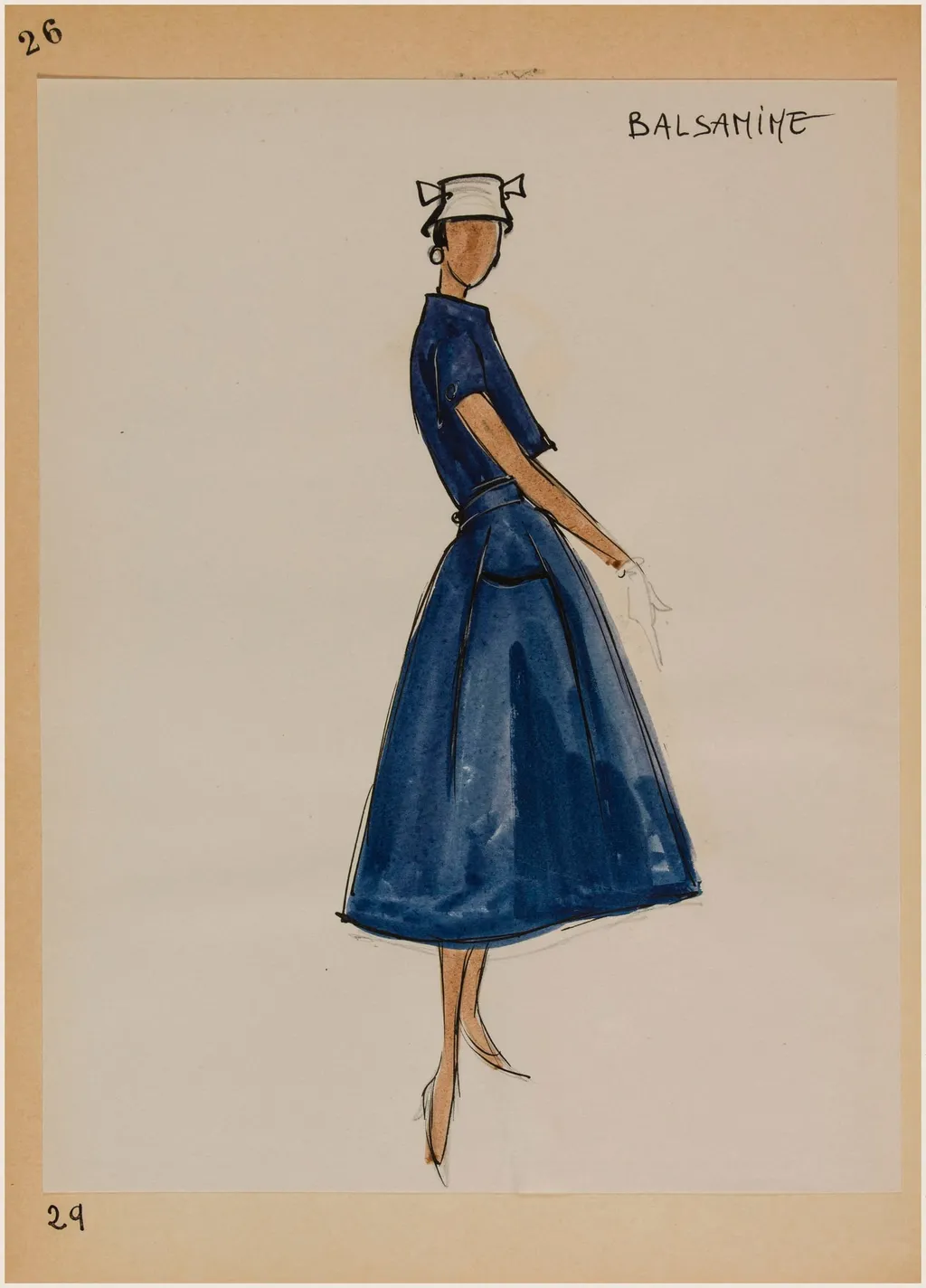
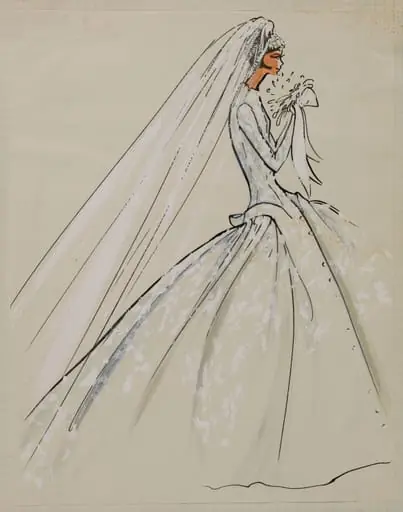
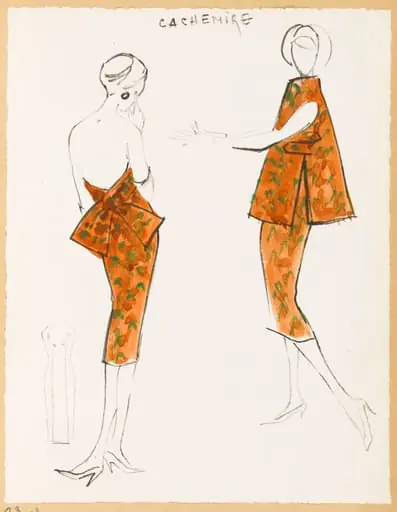
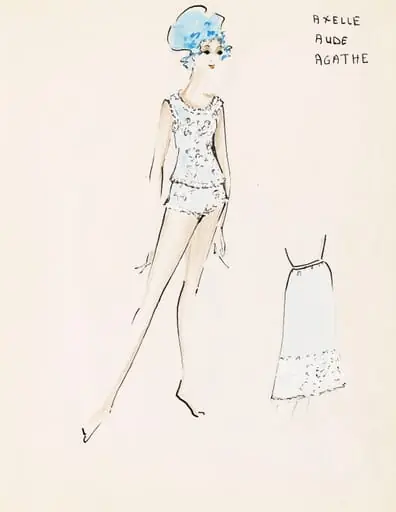
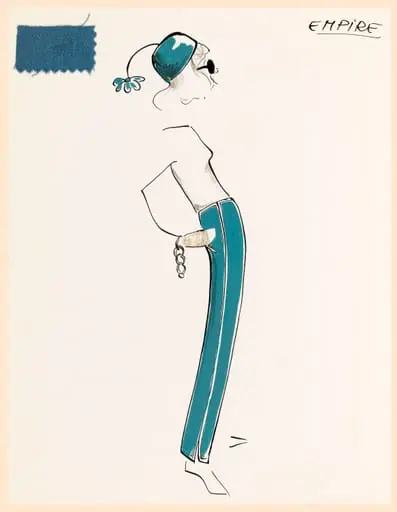
Balsamine is a drawing by Carven. It dates from 1956 and is held in the collection of the Palais Galliera - Musée de la Mode de la Ville de Paris.
About this work
Overview
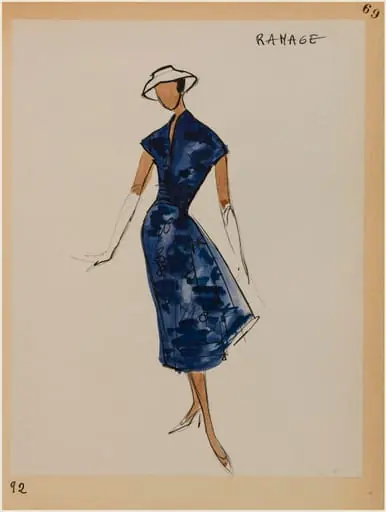
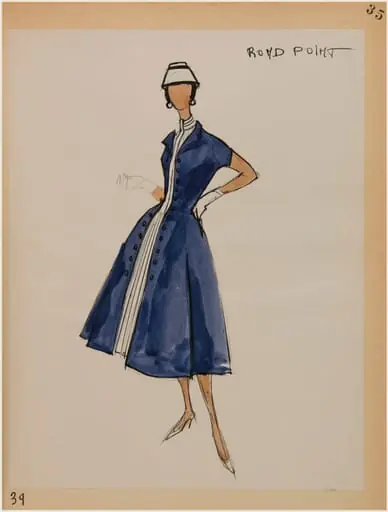
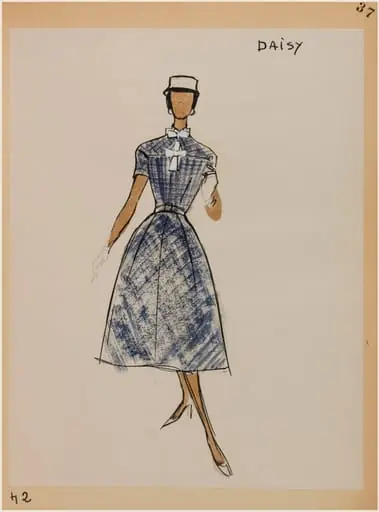
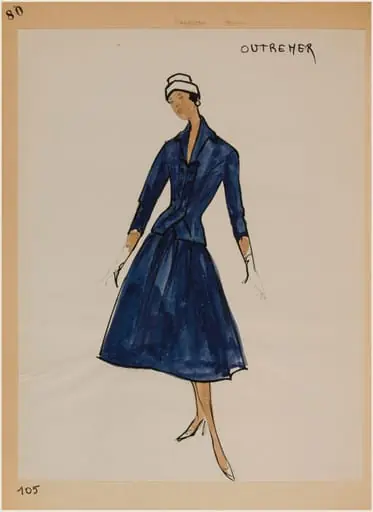
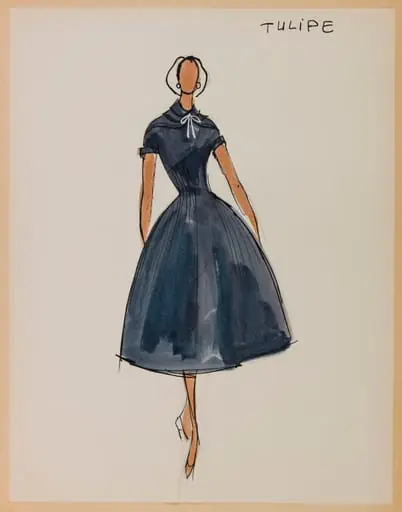
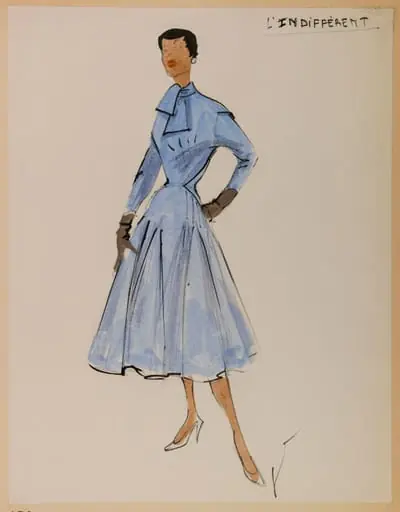
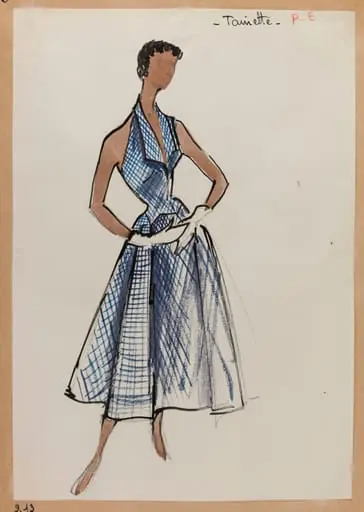
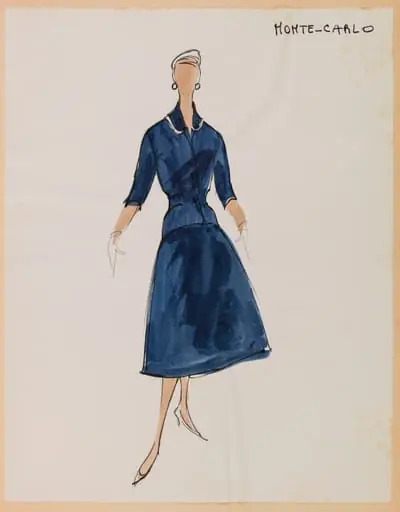
The work reflects Carven’s practice of documenting garment designs through rapid, expressive drawings rather than finished illustrations.
Balsamine is a 1956 ink sketch by French fashion designer Carven, executed in a fluid, economical line. It depicts a woman in a simple, flowing dress and is part of the Museum of Ethnography’s collection. The work reflects Carven’s practice of documenting garment designs through rapid, expressive drawings rather than finished illustrations. Its title, inscribed in the upper corner, likely refers to the dress’s internal designation within the atelier.
Subject & Meaning
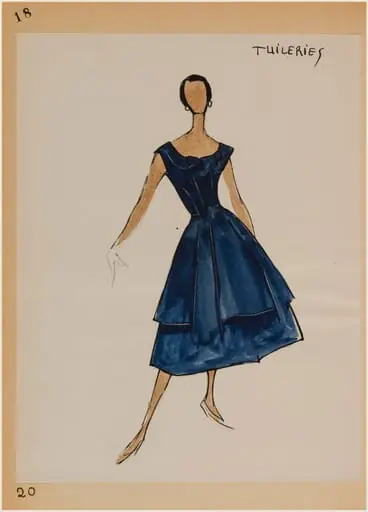
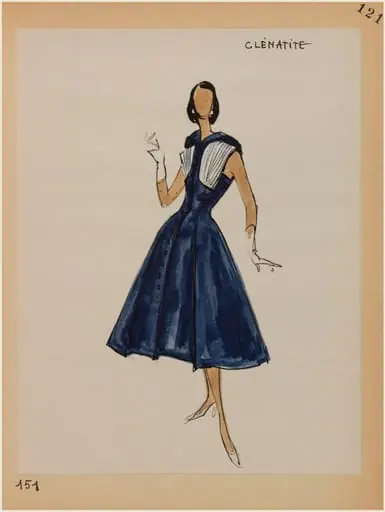
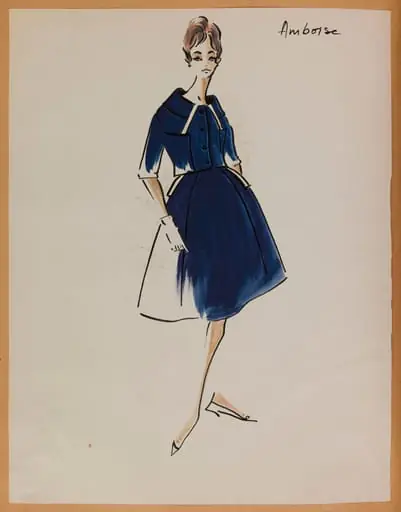
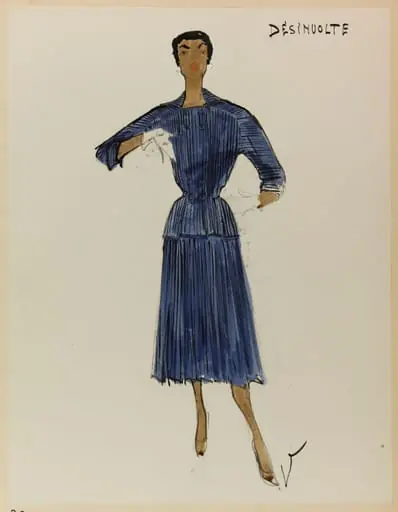
The figure wears a dark blue, flared dress with a matching white belt and a broad-brimmed hat adorned with a bow. The attire suggests a casual yet refined femininity, characteristic of postwar Parisian style. The absence of facial features and minimal detailing shifts focus to the silhouette and movement of the garment, emphasizing design over identity. The title, Balsamine, may reference a plant or color, hinting at the dress’s intended mood or hue.
Technique & Style
Carven employed swift, confident brushwork to define the dress’s folds and contours, using minimal strokes to suggest volume and texture. The lines are clean and uncluttered, avoiding ornamental detail in favor of structural clarity. The white hat and belt stand out against the darker fabric through contrast rather than shading, reinforcing a modernist aesthetic rooted in reduction and rhythm rather than realism.
History & Provenance
Created in 1956 during Carven’s active design years, the sketch was likely used internally to communicate garment construction to tailors. It entered the Museum of Ethnography’s collection as part of a broader effort to preserve fashion as cultural artifact. Its preservation reflects growing institutional interest in mid-century fashion design as a form of material culture, beyond its commercial function.
Context
In the mid-1950s, Parisian fashion houses emphasized tailored elegance, yet Carven’s sketches reveal a quieter, more intimate approach. Unlike the grand presentations of haute couture, Balsamine captures a personal, wearable ideal—suitable for everyday life. The drawing aligns with a broader trend among designers to document their work with immediacy, prioritizing function and movement over theatrical presentation.
Legacy
Balsamine exemplifies how fashion sketches functioned as both technical tools and aesthetic statements. Its preservation in an ethnographic museum underscores the shift in how fashion is valued—not merely as clothing, but as a cultural record. Carven’s approach influenced later generations of designers who embraced sketching as a direct, unfiltered medium for expressing form and movement.
Artist & collection
Artist
These delicate ink-on-paper drawings capture the quiet poetry of everyday things: pinecones, reeds, apples.
Museum
Palais Galliera - Musée de la Mode de la Ville de Paris
Continue through works from the same source collection.