Artwork
Clématite
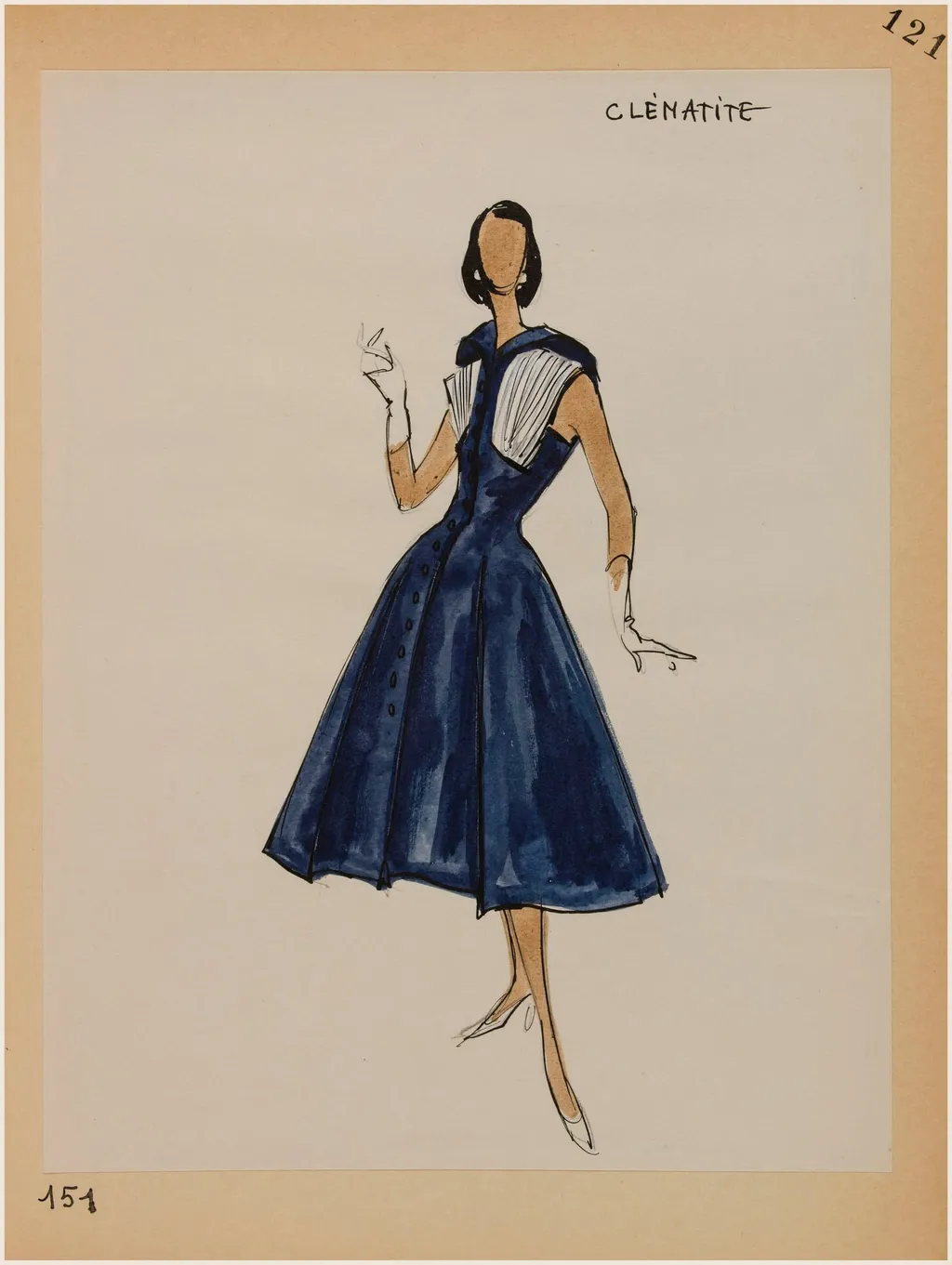
Clématite is a drawing by Marie-Louise Carven. It dates from 1956 and is held in the collection of the Palais Galliera - Musée de la Mode de la Ville de Paris.
About this work
Overview
Created in 1956 by French designer Marie-Louise Carven, *Clématite* is a fashion sketch depicting a tailored dress from her prêt-à-porter collection.
Created in 1956 by French designer Marie-Louise Carven, *Clématite* is a fashion sketch depicting a tailored dress from her prêt-à-porter collection. Carven, who founded her label in 1945, was among the early Parisian designers to bridge haute couture with accessible ready-to-wear. The drawing, held in the Museum of Ethnography, reflects her focus on elegant, wearable designs suited to smaller frames, emphasizing structure and proportion over ornamentation.
Subject & Meaning
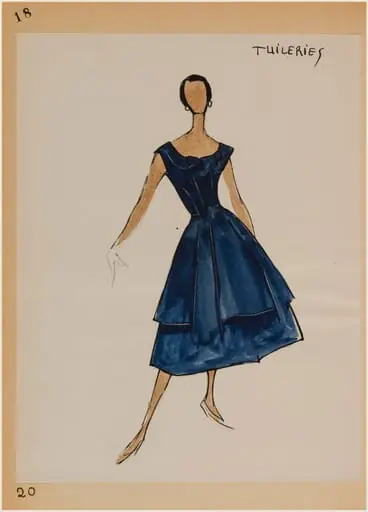
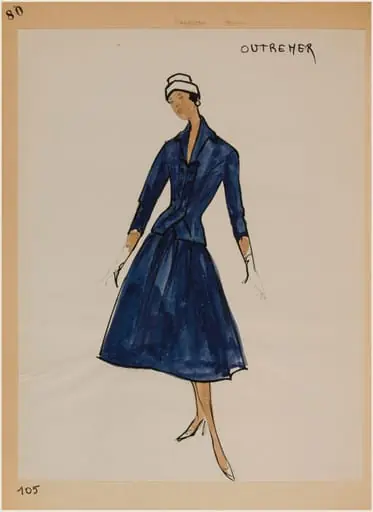
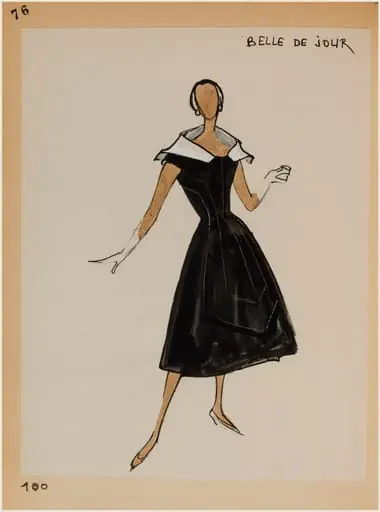
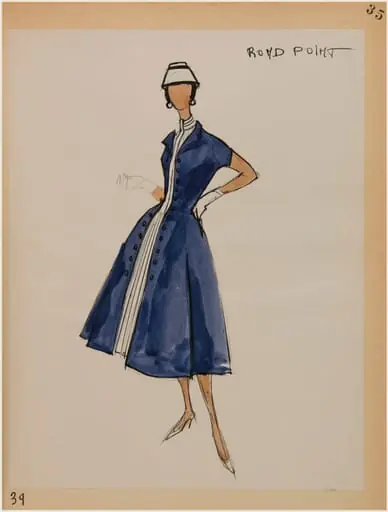
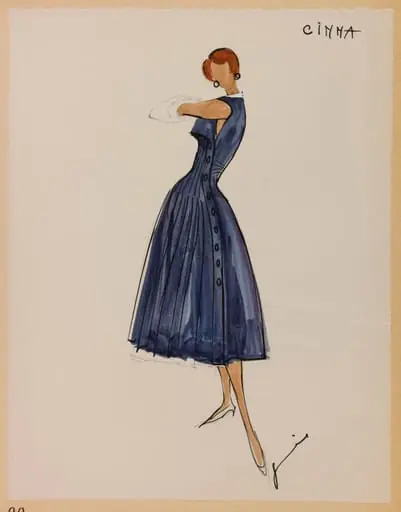
The sketch portrays a woman in a dark blue dress with a defined waist and flared skirt, wearing a white collar and front buttons. She holds a cigarette and a small object, suggesting a casual, modern posture. The name 'Clématite'—likely the design’s title—hints at botanical inspiration, though the dress itself is restrained. The image conveys postwar femininity: poised yet unpretentious, blending refinement with everyday ease.
Technique & Style
Rendered in simple, clean lines, the drawing prioritizes silhouette over detail. The flared skirt is suggested through subtle curves, while the fitted bodice and collar are defined with precision. The figure’s neat hair and poised stance reflect Carven’s aesthetic of controlled elegance. The minimal use of shading and absence of background focus attention on the garment’s form, characteristic of fashion illustration meant for production, not display.
History & Provenance
The sketch entered the collection of the Museum of Ethnography as part of a broader effort to document 20th-century fashion as cultural artifact. Carven’s decision to produce ready-to-wear in the 1950s marked a shift in Parisian fashion, moving away from exclusivity. This drawing, likely used internally for pattern-making or client presentation, survived as a record of her design process and the democratization of fashion.
Context
In postwar France, fashion was redefining identity amid economic recovery and changing gender roles. Carven’s designs catered to women seeking practicality without sacrificing style. Her ready-to-wear line, rare among Parisian couturiers at the time, responded to demand for affordable, well-cut clothing. *Clématite* exemplifies this trend—elegant yet attainable, reflecting a society increasingly valuing function in personal expression.
Legacy
Carven’s integration of couture principles into accessible clothing paved the way for modern ready-to-wear. *Clématite* stands as a quiet testament to her influence: a design not meant for grandeur, but for daily life. Its preservation in a museum of ethnography underscores how fashion, once dismissed as ephemeral, came to be recognized as a meaningful expression of cultural and social change.
Artist & collection
Artist
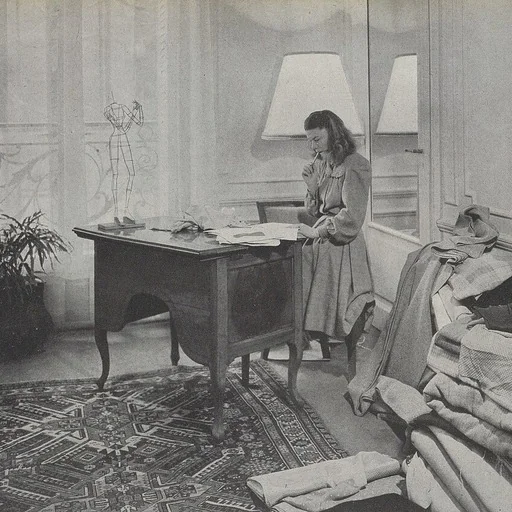
Marie-Louise Carven (31 August 1909 – 8 June 2015), born Carmen de Tommaso, was a French fashion designer who founded the house of Carven in 1945.
Museum
Palais Galliera - Musée de la Mode de la Ville de Paris
Continue through works from the same source collection.
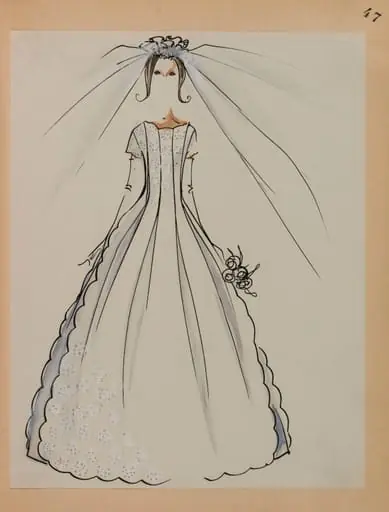 Robe de mariée festonnée et son voile
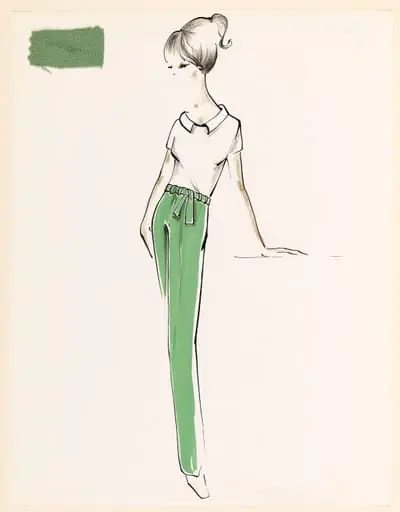 Haut blanc à manches courtes et pantalon vert à ceinture nouée
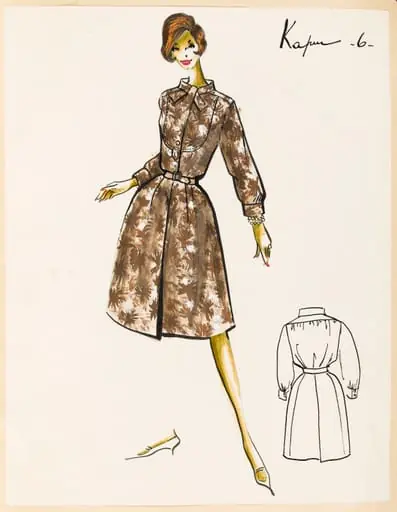 Kapur
Kapur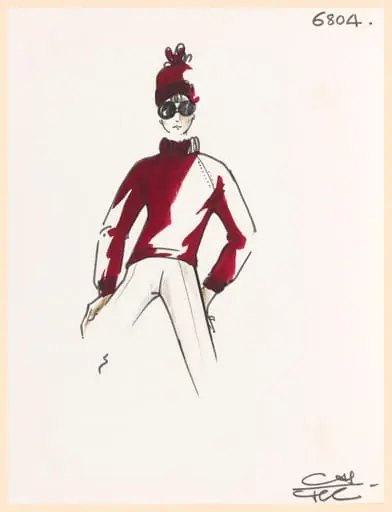 Pull-over à manches longues pourpre, bonnet assorti, pantalon et lunettes de soleil
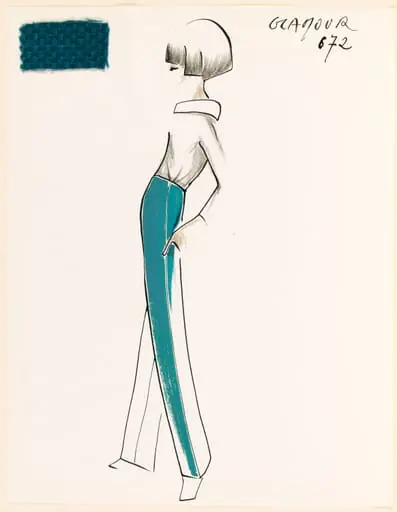 GLAMOUR
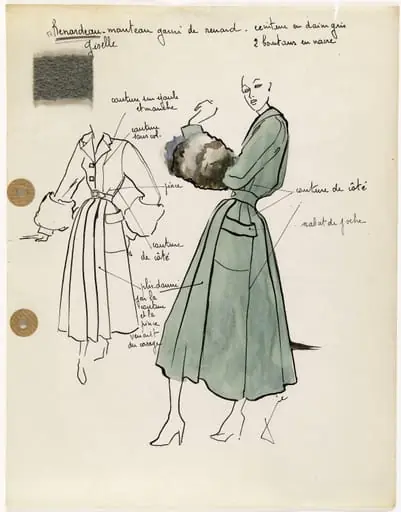 'Renardeau'
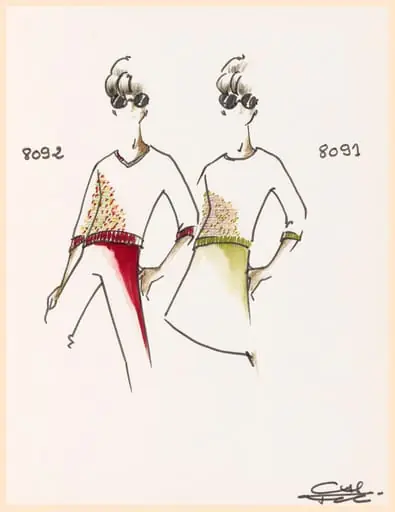 Pull-over à manches trois quarts et à encolure V à motifs multicolores, pantalon cerise et lunettes de soleil
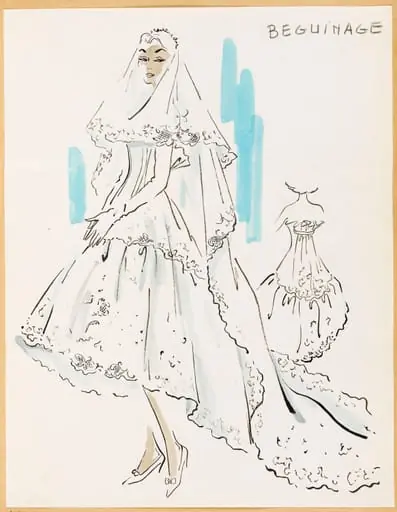 Béguinage