Artwork
Barakouda
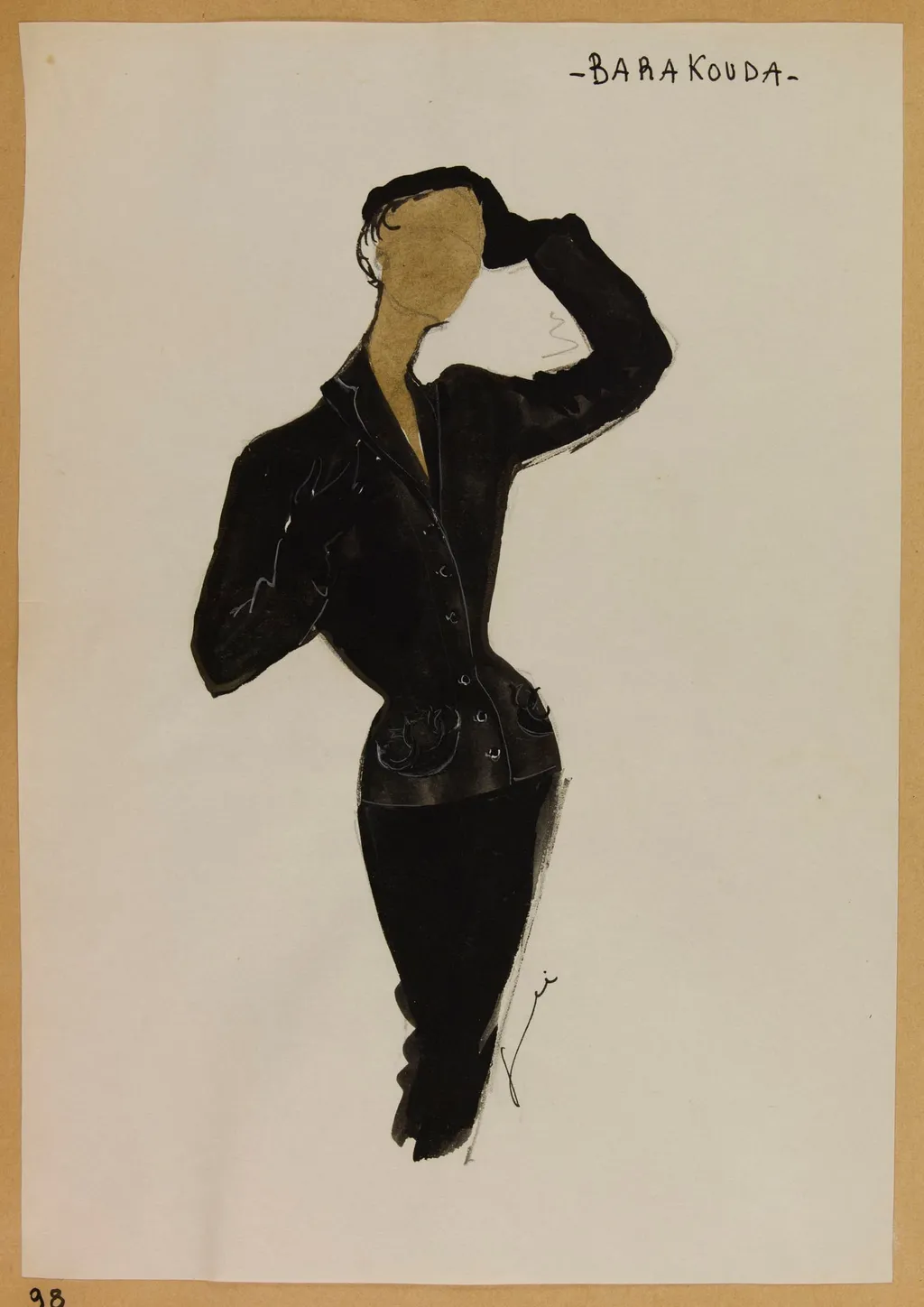
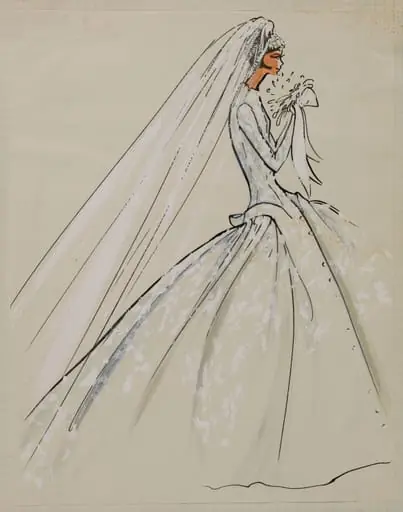
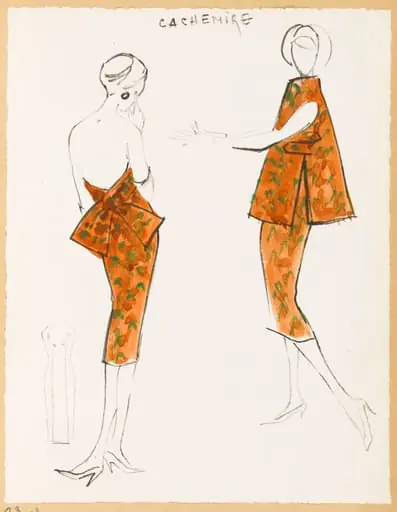
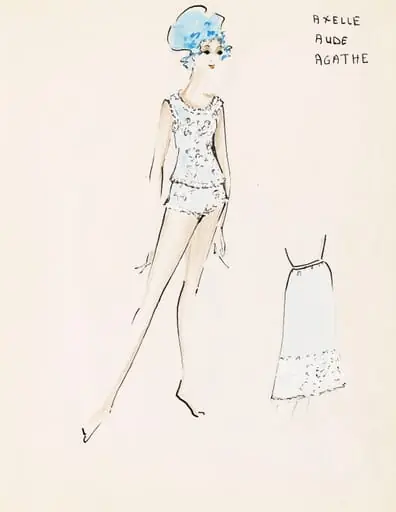
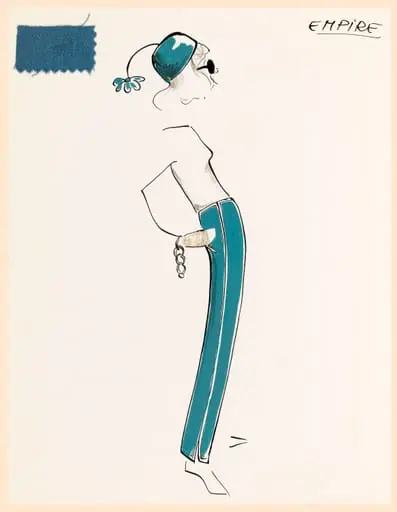
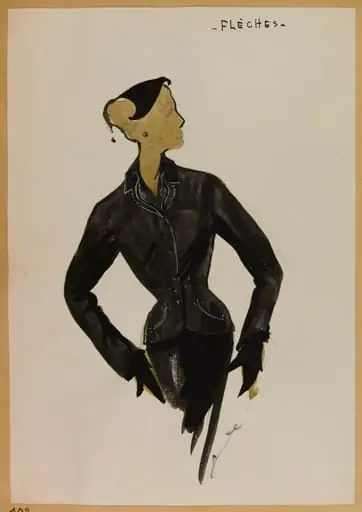
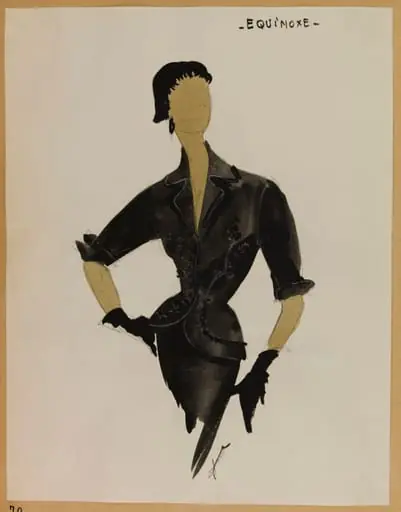
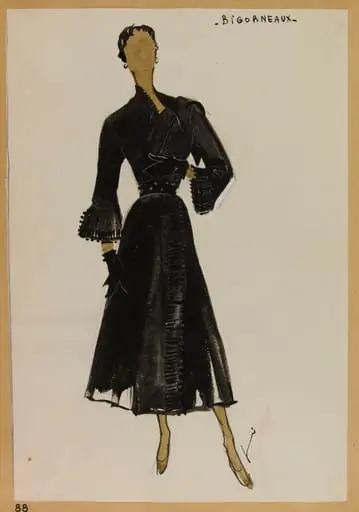
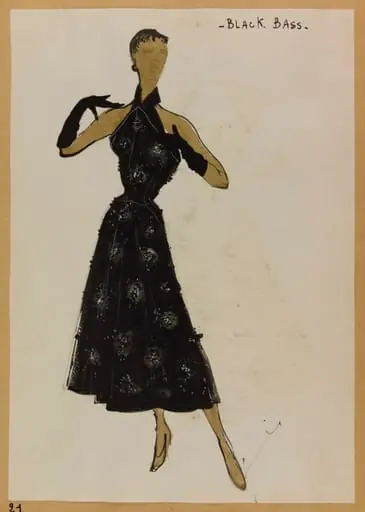
Barakouda is a drawing by Carven. It dates from 1952 and is held in the collection of the Palais Galliera - Musée de la Mode de la Ville de Paris.
About this work
Overview
Its minimalist approach reflects Carven’s broader aesthetic sensibility, rooted in fashion design but extended into graphic expression.
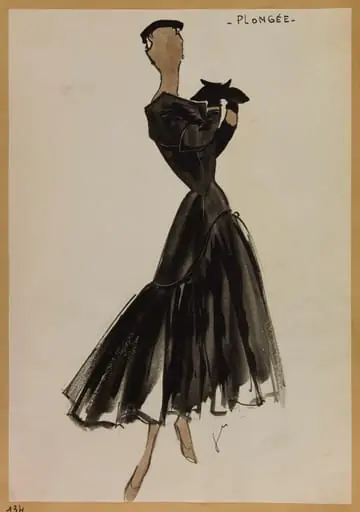
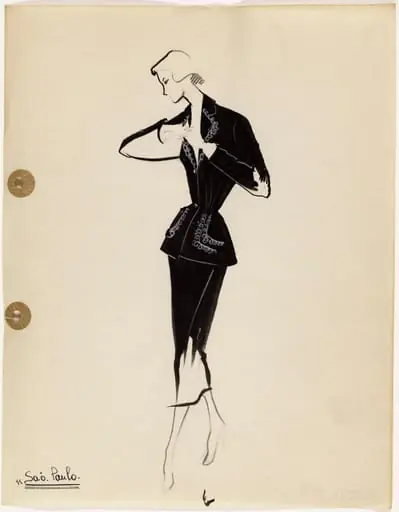
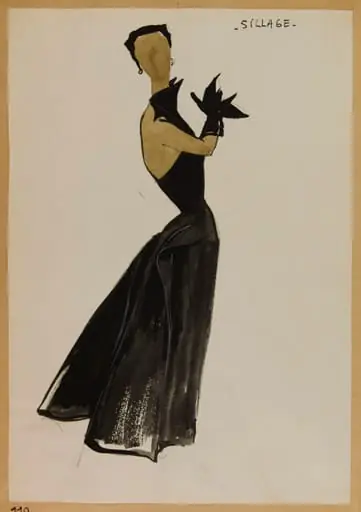
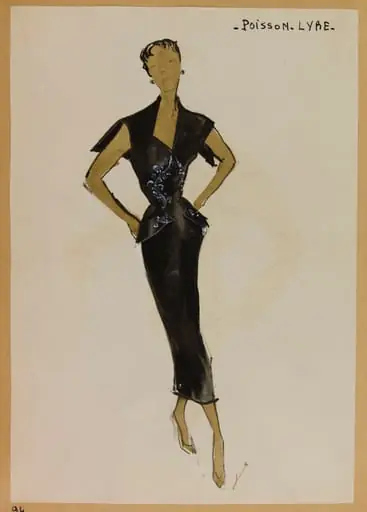
Barakouda is a 1952 drawing by the French designer Carven, held in the collection of the Museum of Ethnography. Executed in ink or pencil, the work depicts a solitary female figure in a restrained, monochromatic palette. The composition emphasizes posture and silhouette, avoiding ornamental detail in favor of clarity and quiet dignity. Its minimalist approach reflects Carven’s broader aesthetic sensibility, rooted in fashion design but extended into graphic expression.
Subject & Meaning
The figure is a woman dressed in a long-sleeved black jacket and skirt, her body angled slightly left while her face turns directly toward the viewer. Her right hand is lifted near her head, suggesting a moment of contemplation or adjustment. The pose conveys composure rather than narrative, inviting interpretation as an embodiment of refined self-possession. No contextual clues are provided, allowing the image to function as a study in presence rather than story.
Technique & Style
Rendered with precise, unbroken lines and no shading, the drawing relies on contour and proportion to define form. The absence of texture or background isolates the figure, enhancing its sculptural quality. Carven’s background in fashion design is evident in the attention to drapery and silhouette, yet the work avoids decorative flourishes. The result is a harmonious balance between elegance and restraint, characteristic of mid-century modernist graphic sensibilities.
History & Provenance
Created in 1952, Barakouda entered the collection of the Museum of Ethnography at an unspecified date, likely as part of a broader acquisition of design-related materials. While Carven is primarily known for fashion, this drawing appears to be a standalone graphic work, possibly a study or personal sketch. Its preservation in an ethnographic context suggests an interest in cultural representations of dress and demeanor during the postwar period.
Context
In the early 1950s, European designers like Carven were redefining postwar femininity through clean lines and understated luxury. Barakouda aligns with this cultural moment, reflecting a shift away from wartime austerity toward quiet sophistication. Unlike fashion illustrations meant for publication, this drawing operates as a private meditation on form and gesture, offering insight into how design principles extended beyond garments into visual culture.
Legacy
Barakouda remains a quiet testament to Carven’s ability to translate fashion’s ethos into graphic form. Though not widely exhibited, its presence in an ethnographic museum underscores its value as a cultural artifact of mid-century aesthetics. It contributes to broader discussions about the boundaries between fashion, drawing, and identity, offering scholars a subtle yet resonant example of design thinking beyond the runway.
Artist & collection
Artist
These delicate ink-on-paper drawings capture the quiet poetry of everyday things: pinecones, reeds, apples.
Museum
Palais Galliera - Musée de la Mode de la Ville de Paris
Continue through works from the same source collection.