Artwork
Flèches
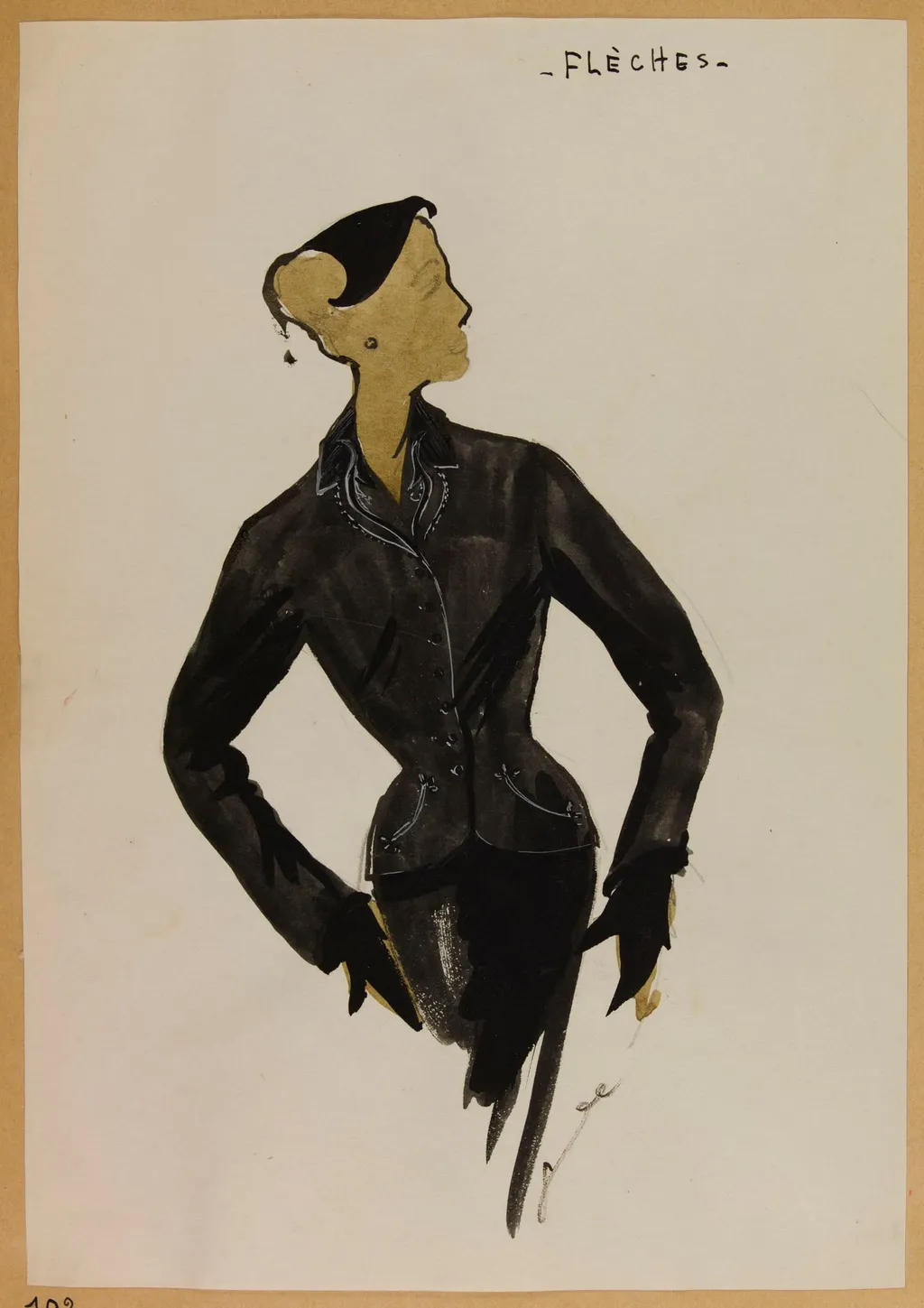
Flèches is a drawing by Carven. It dates from 1952 and is held in the collection of the Palais Galliera - Musée de la Mode de la Ville de Paris.
About this work
Overview
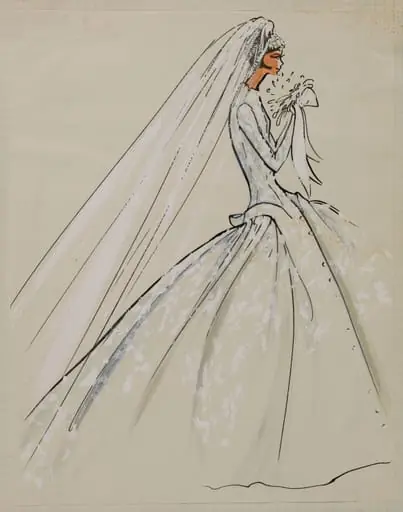
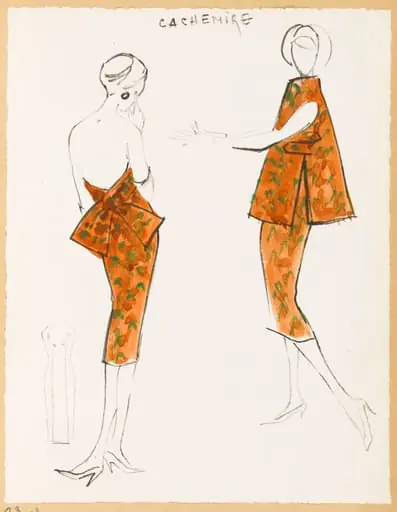
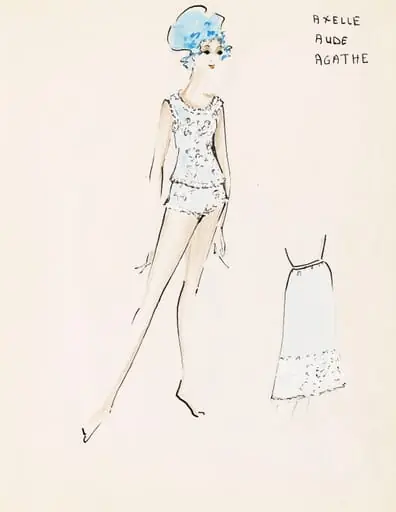
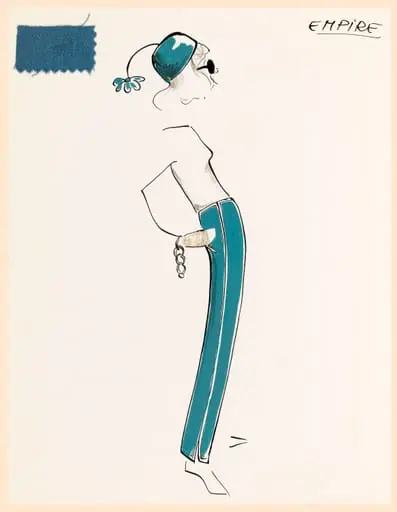
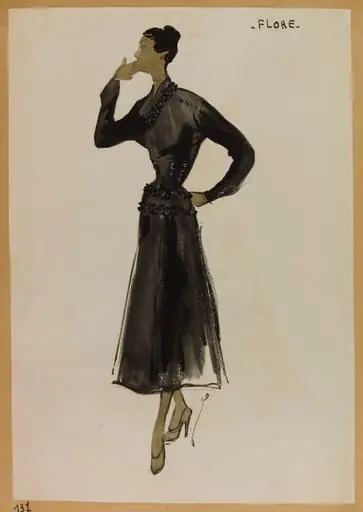
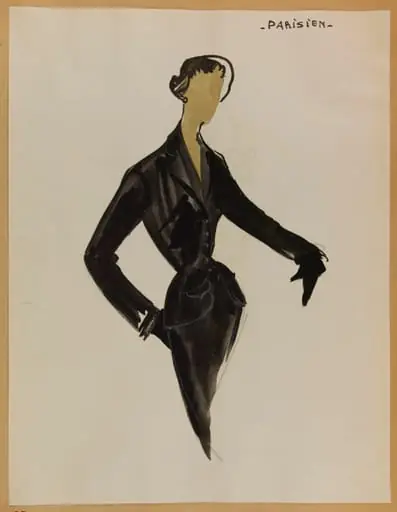
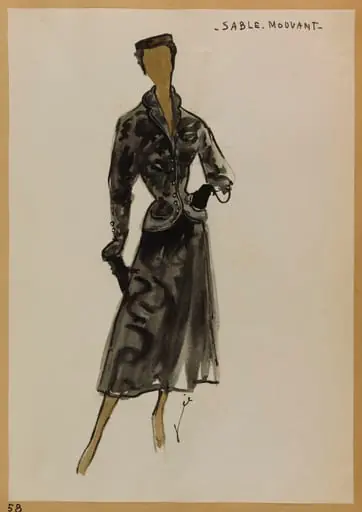
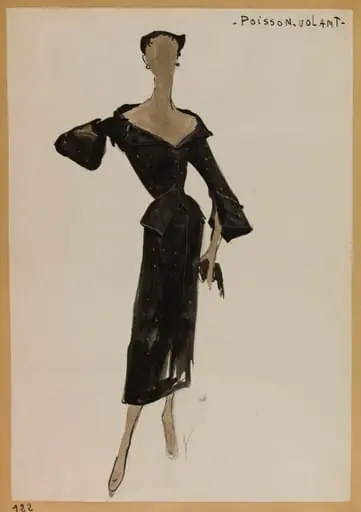
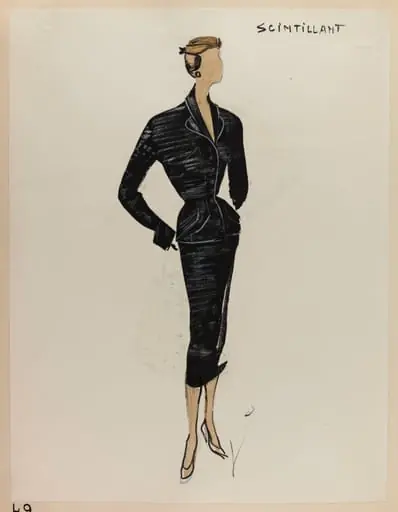
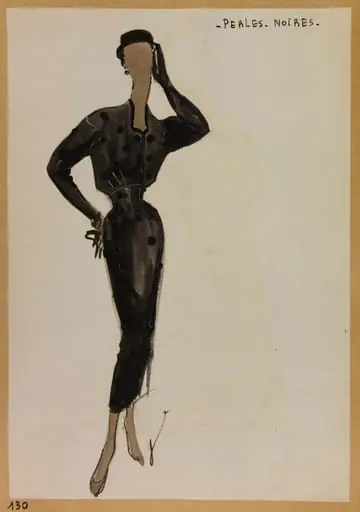
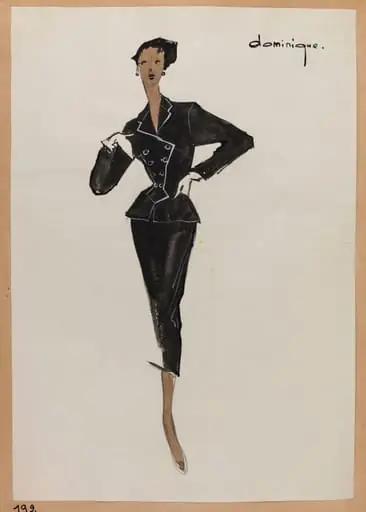
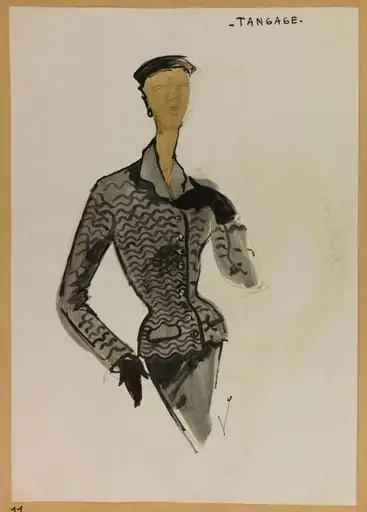
It depicts a solitary female figure in formal attire, rendered with restrained lines and minimal detail.
Flèches is a 1952 drawing by the French designer and artist Carven, executed in ink or pencil on paper. It depicts a solitary female figure in formal attire, rendered with restrained lines and minimal detail. The work is part of the collection at the Museum of Ethnography, where it is cataloged as a visual artifact reflecting mid-century French fashion sensibilities and gendered representation in design.
Subject & Meaning
The figure is a woman standing with hands on hips, facing right, dressed in a black jacket and skirt, accompanied by a black hat and a single earring. Her posture suggests composure and quiet authority. The absence of facial features and the stylized form shift focus from individual identity to an archetype of urban femininity, evoking the poised demeanor associated with postwar Parisian style.
Technique & Style
Carven employed a linear, economical drawing style, using sharp contours and flat tonal areas to define form. The figure’s dark clothing contrasts against a pale beige background, enhancing its silhouette without modeling or shading. The lack of detail in the face and environment emphasizes abstraction over realism, aligning the work with fashion illustration traditions of the period.
History & Provenance
Created in 1952, Flèches originated within Carven’s broader practice as a fashion designer who often translated garment concepts into graphic form. It entered the Museum of Ethnography’s collection as part of a broader acquisition of design materials documenting mid-century French couture. Its preservation reflects institutional interest in fashion as cultural expression rather than purely aesthetic object.
Context
In early 1950s France, fashion illustration served as a bridge between design studios and public taste. Carven, known for her tailored women’s wear, used such drawings to communicate silhouette and attitude. Flèches reflects a moment when fashion imagery emphasized elegance through restraint, aligning with the era’s shift from wartime austerity toward refined, understated modernity.
Legacy
Flèches remains a modest but representative example of how fashion designers documented their aesthetic vision outside of garment production. Its presence in an ethnographic museum underscores its value as a cultural document, illustrating how clothing and posture conveyed social identity in postwar Europe. It continues to inform scholarly study of fashion as visual language.
Artist & collection
Artist
These delicate ink-on-paper drawings capture the quiet poetry of everyday things: pinecones, reeds, apples.
Museum
Palais Galliera - Musée de la Mode de la Ville de Paris
Continue through works from the same source collection.