Artwork
Bec jaune
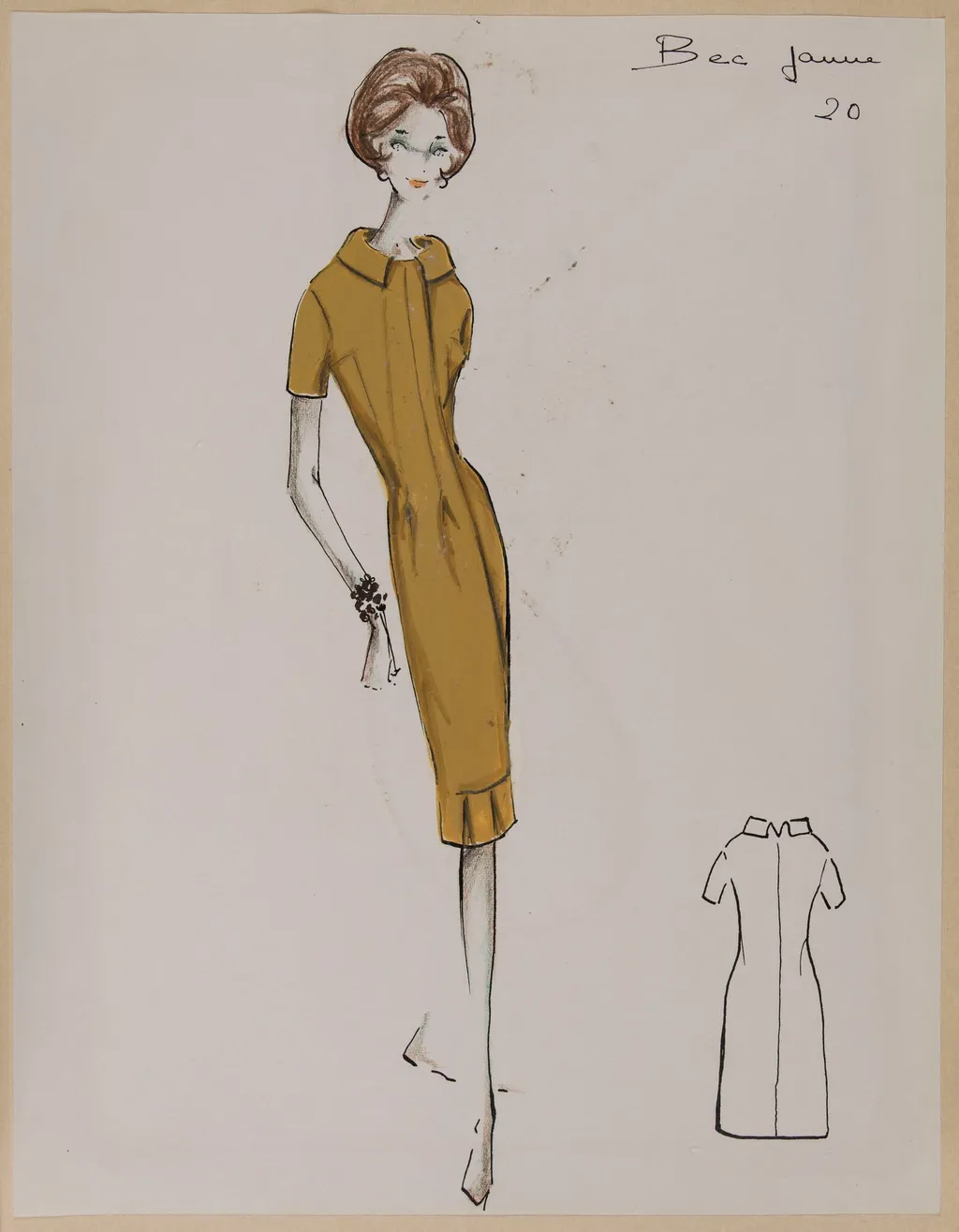
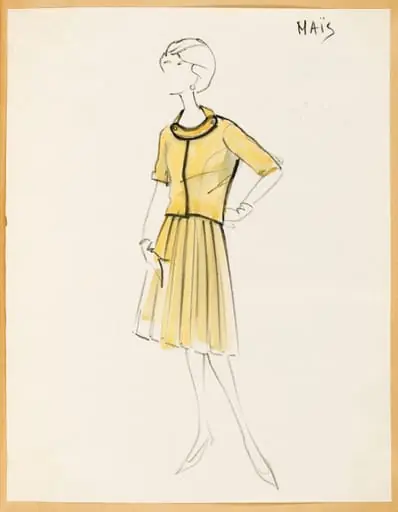
Bec jaune is a drawing by Carven. It dates from 1960 and is held in the collection of the Palais Galliera - Musée de la Mode de la Ville de Paris.
About this work
Overview
Bec jaune is a pencil sketch dating to around 1960, attributed to the French fashion house Carven. Executed on paper, it functions as a design study rather than a finished illustration. The work is part of the collection at the Museum of Ethnography, where it is preserved as an artifact of mid-century fashion documentation, reflecting the studio’s process in developing wearable forms.
Subject & Meaning
The figure is not a portrait but a schematic representation of a garment’s intended wearer, emphasizing silhouette over individuality.
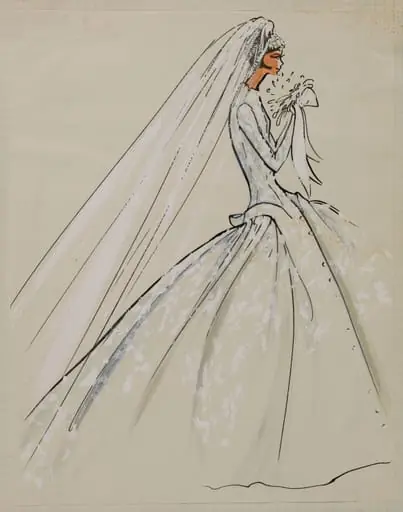
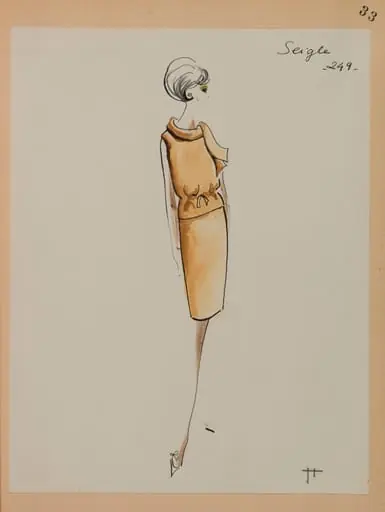
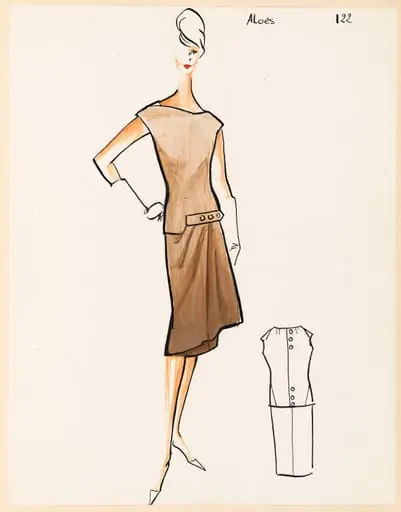
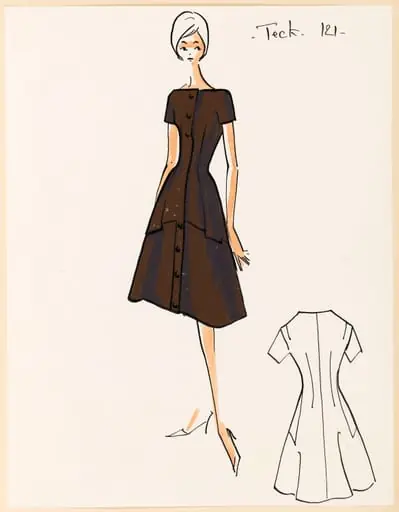
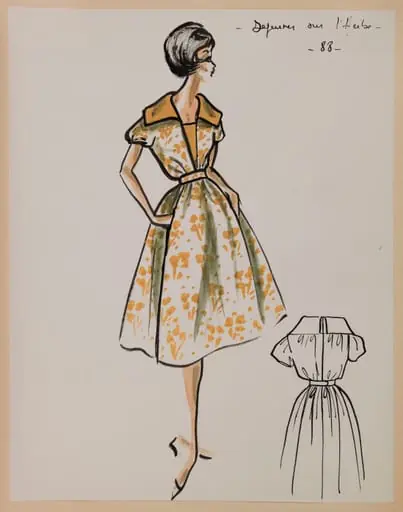
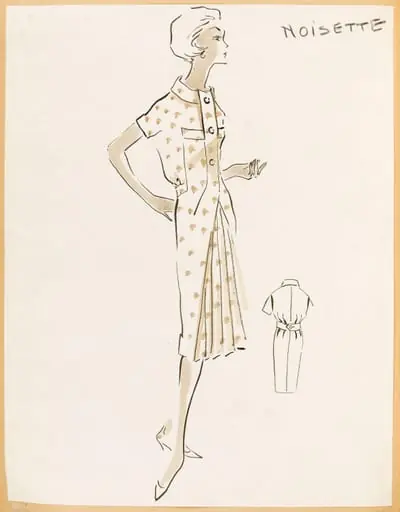
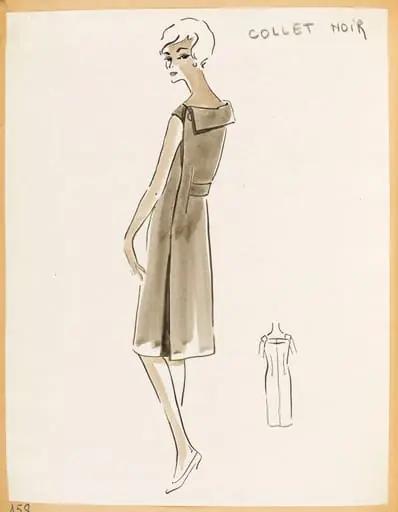
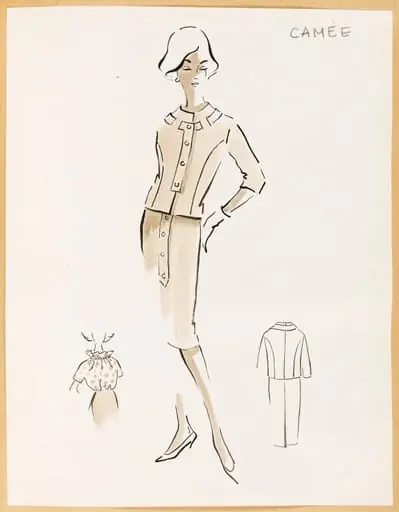
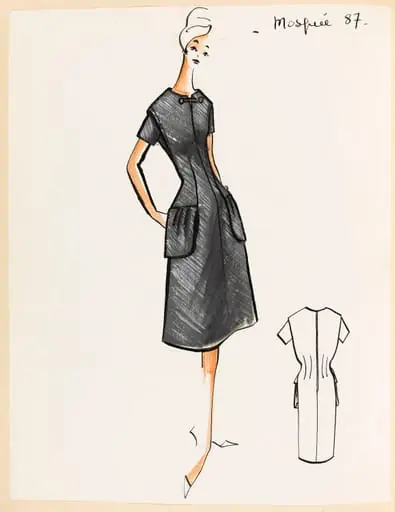
The drawing depicts a woman in a modest, long brown dress with a high collar and short sleeves, holding a small bouquet. Her hair is neatly gathered, suggesting a restrained, domestic elegance. The figure is not a portrait but a schematic representation of a garment’s intended wearer, emphasizing silhouette over individuality. The title, 'Bec jaune,' may reference a design code or internal label, not a personal name.
Technique & Style
The sketch employs loose, rapid pencil strokes to suggest form, with minimal detail reserved for the face and hands. The dress is outlined with faint, almost architectural lines, resembling a pattern template. This method prioritizes clarity of structure over decorative finish, typical of fashion ateliers using drawing as a tool for construction rather than display. The signature 'Bec jaune' appears in one corner, likely a maker’s annotation.
History & Provenance
The drawing entered the Museum of Ethnography’s collection as part of a broader acquisition of fashion-related materials from Carven’s archives. Its origin lies within the house’s design studio during the early 1960s, a period when the brand was refining its signature blend of French simplicity and wearable innovation. Its preservation reflects institutional interest in the material culture of fashion design.
Context
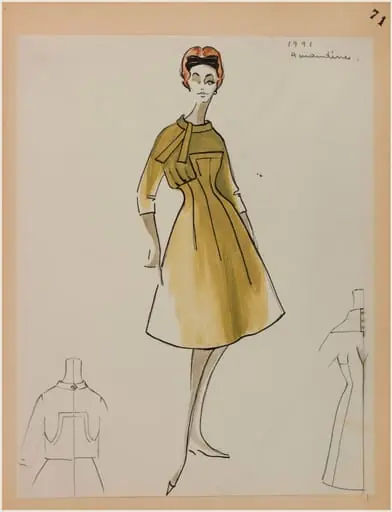
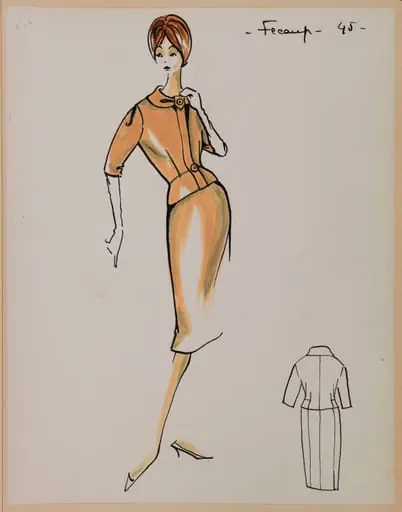
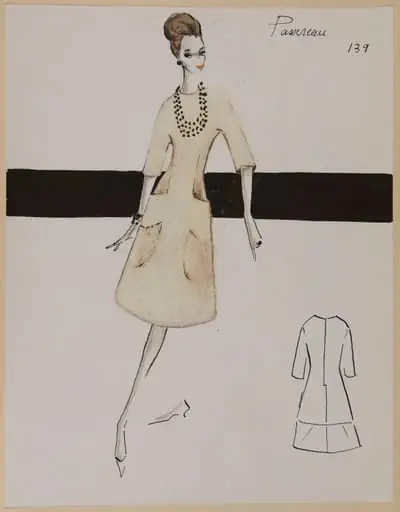
In the 1960s, fashion houses like Carven relied on hand-drawn sketches to communicate garment ideas to tailors and clients. These studies were functional, often discarded after use, making surviving examples rare. Bec jaune exemplifies the quiet, utilitarian nature of design work before digital tools, where every line served a practical purpose in translating vision into cloth.
Legacy
Bec jaune endures not as a celebrated design but as a quiet testament to the labor behind fashion production. It offers insight into how garments were conceived through iterative, hand-drawn processes. Today, it contributes to scholarly understanding of mid-century French fashion practice, valued for its authenticity over aesthetic finish.
Artist & collection
Artist
These delicate ink-on-paper drawings capture the quiet poetry of everyday things: pinecones, reeds, apples.
Museum
Palais Galliera - Musée de la Mode de la Ville de Paris
Continue through works from the same source collection.