Artwork
Amandine
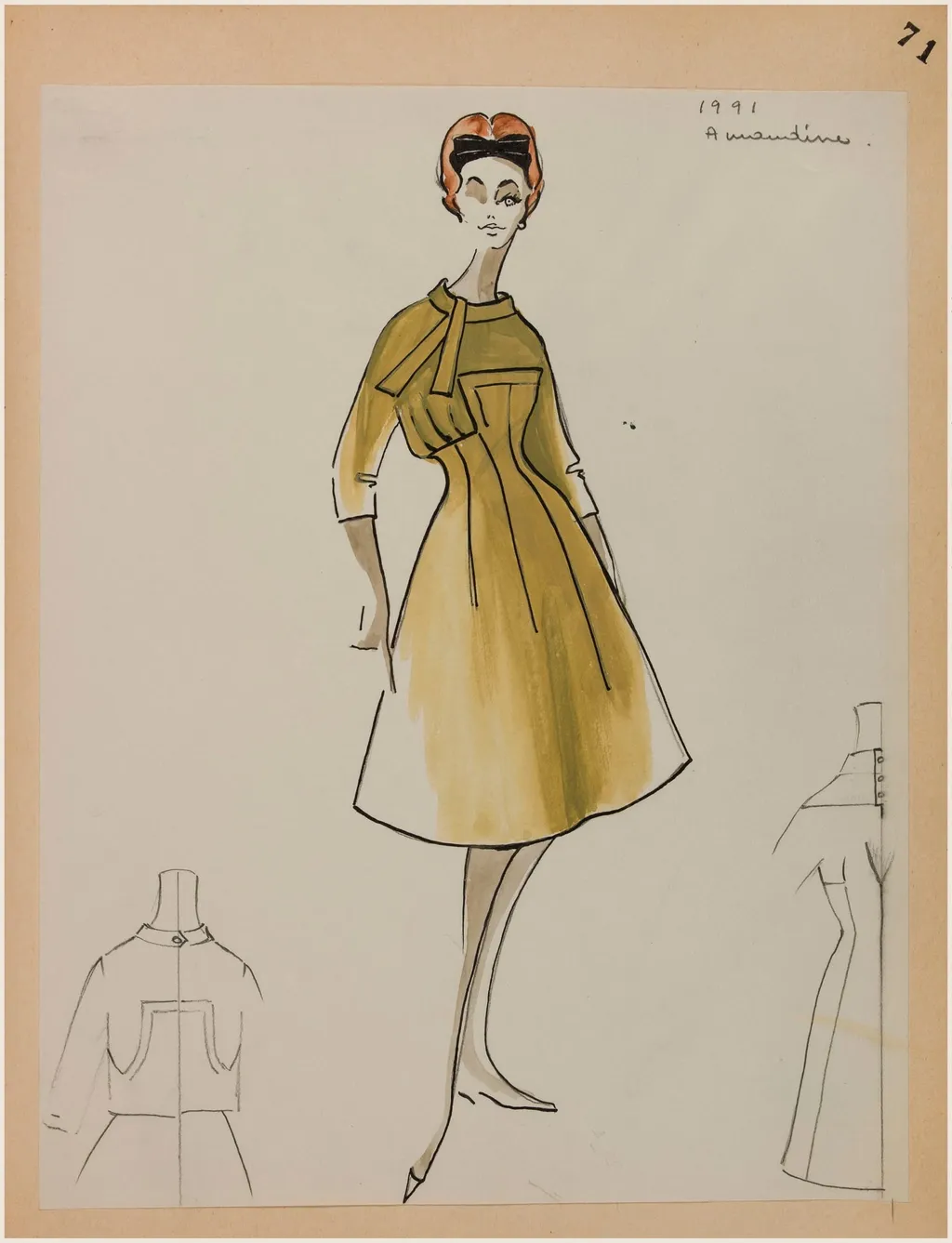
Amandine is a drawing by Carven. It dates from 1958 and is held in the collection of the Palais Galliera - Musée de la Mode de la Ville de Paris.
About this work
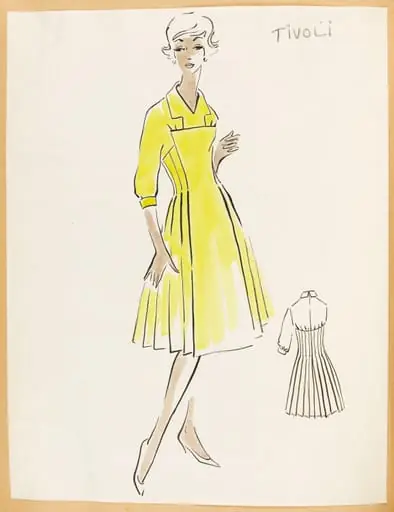
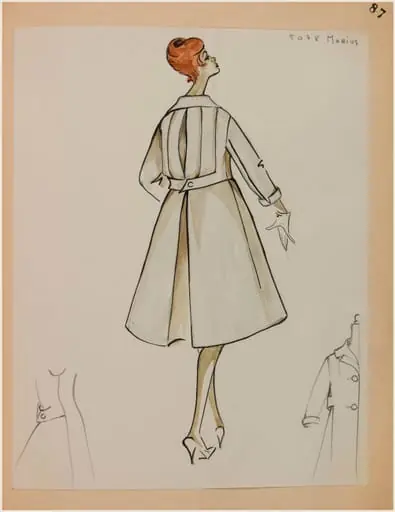
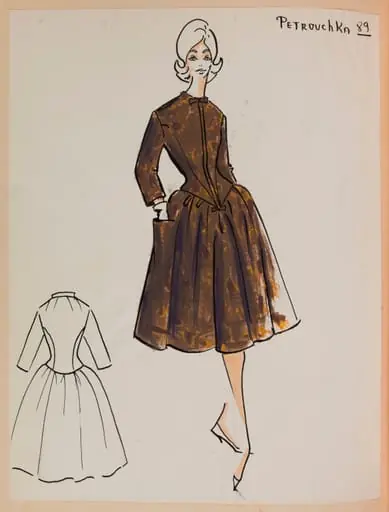
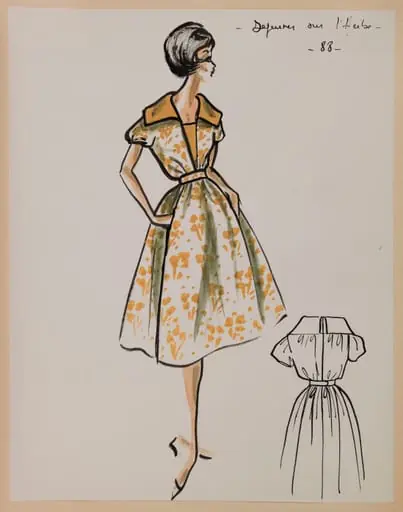
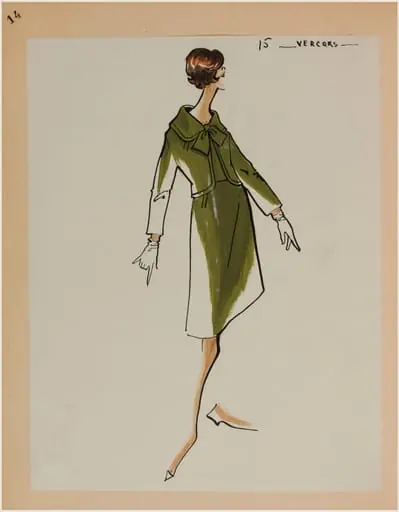
This sketch shows a woman in a simple, knee-length olive dress with a collar and short sleeves.
This sketch shows a woman in a simple, knee-length olive dress with a collar and short sleeves. Her hair is pulled back neatly, and she stands with one hand resting on her hip. The lines are bold and flat, with no shading—just solid colors and black outlines.
The drawing includes two small sketches of the dress’s front and back, showing how it fits. The date "1991" is written in the corner, but the artist’s name is also there—Carven.
Next, check out Carven to see more of their work.
Overview
Amandine is a mid‑20th‑century illustration attributed to the French fashion house Carven, dated approximately 1958. The piece is part of the collection of the Museum of Ethnography, where it is displayed as an example of post‑war fashion drawing.
Subject & Meaning
The image portrays a woman dressed in a modest, knee‑length olive garment featuring a collar and short sleeves. Her hair is neatly pulled back, and she adopts a confident pose with one hand on her hip, suggesting a blend of elegance and everyday wear.
Technique & Style
Rendered in bold, flat lines and solid colour fields, the drawing relies on black outlines without any gradation or shading. The composition includes two auxiliary sketches that depict the front and back of the dress, offering a technical view of its construction.
History & Provenance
Although the primary execution is dated to the late 1950s, a later annotation of the year 1991 appears in the lower corner, alongside Carven’s signature, indicating a possible re‑dating or cataloguing event. The work entered the Museum of Ethnography’s holdings through acquisition in the early 2000s.
Artist & collection
Artist
These delicate ink-on-paper drawings capture the quiet poetry of everyday things: pinecones, reeds, apples.
Museum
Palais Galliera - Musée de la Mode de la Ville de Paris
Continue through works from the same source collection.