Artwork
Blues
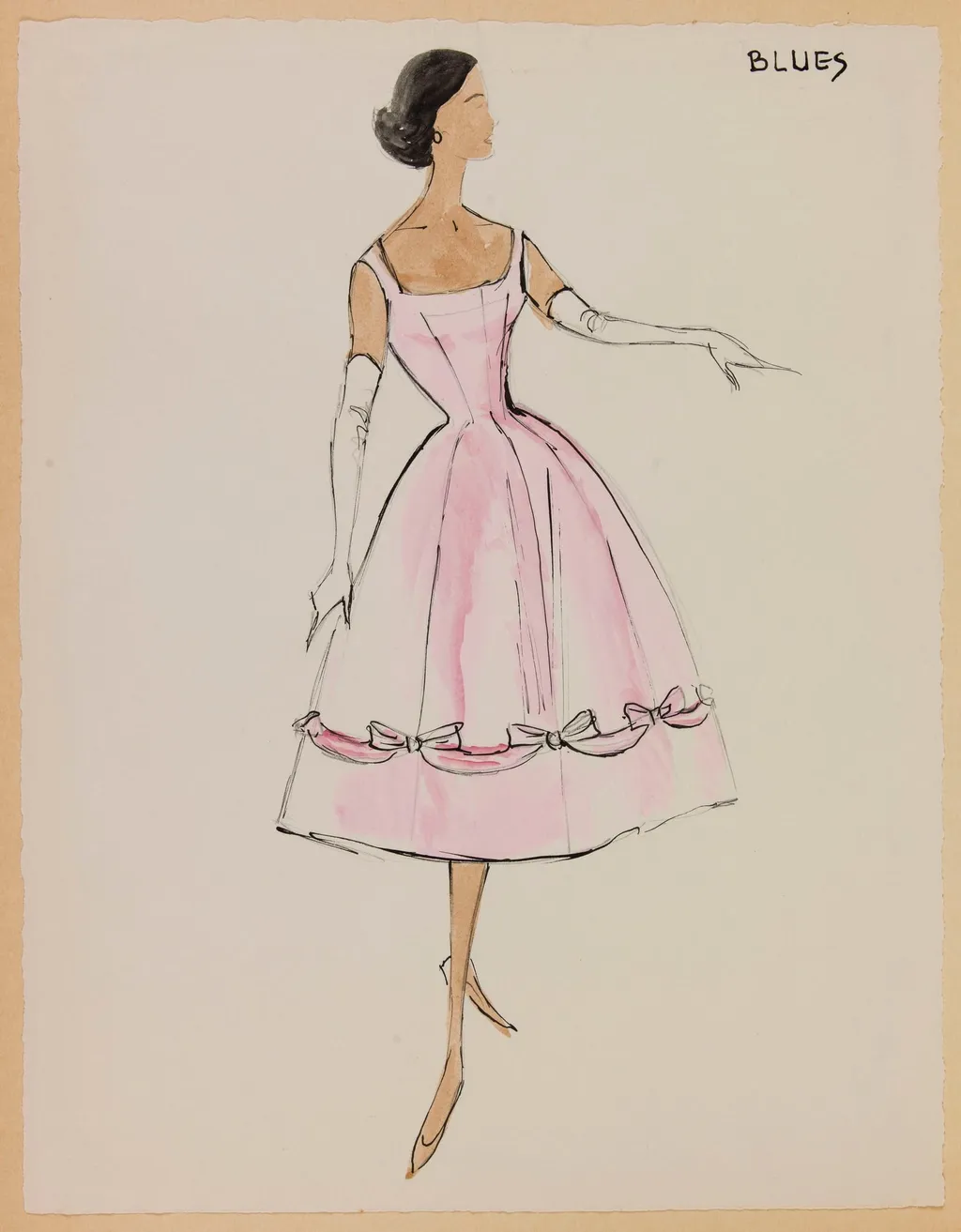
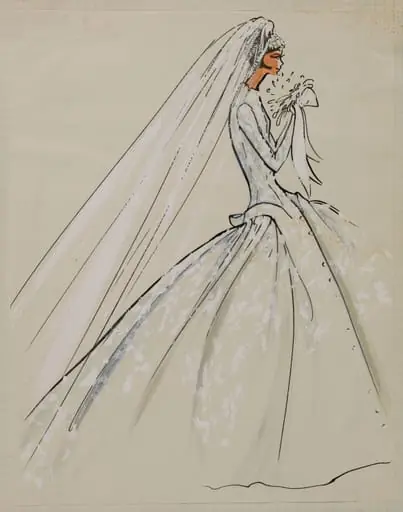
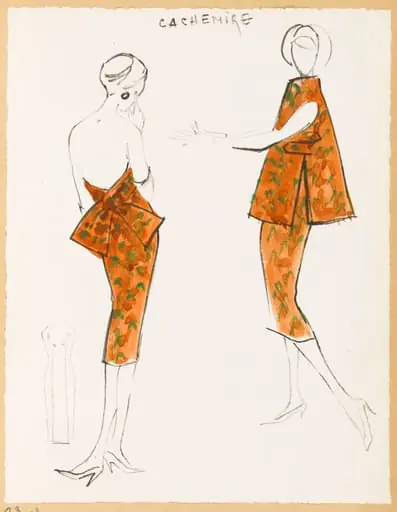
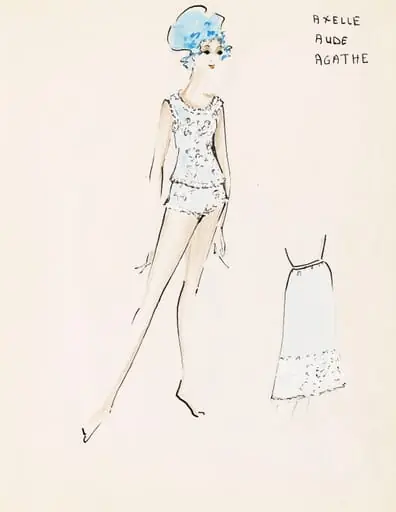
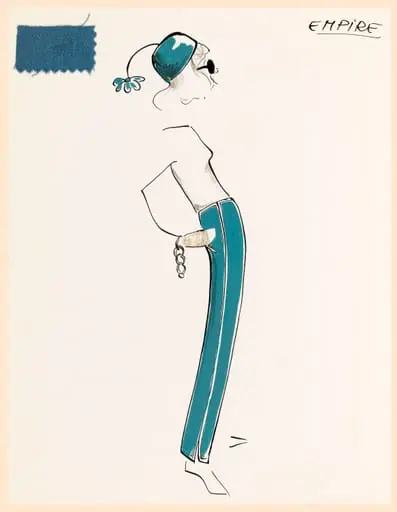
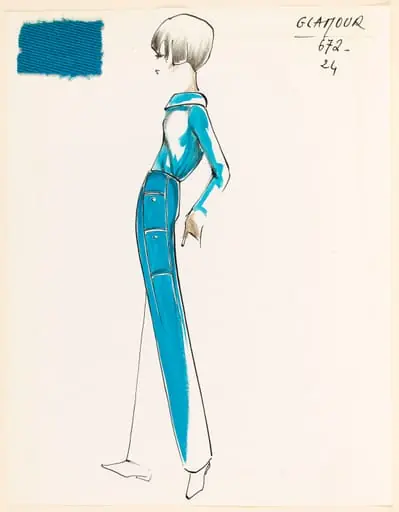
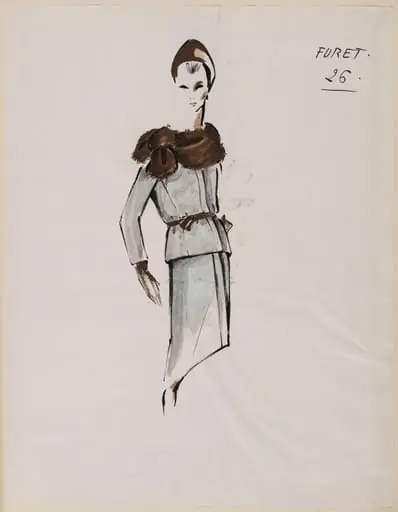
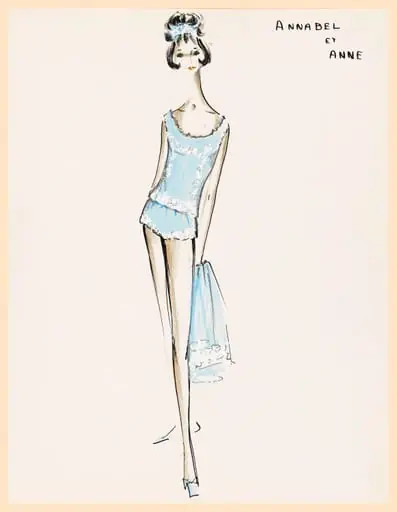
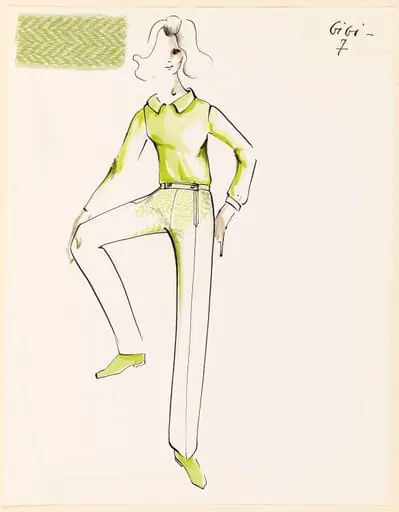
Blues is a drawing by Carven. It dates from 1956 and is held in the collection of the Palais Galliera - Musée de la Mode de la Ville de Paris.
About this work
Overview
It is part of the collection at the Museum of Ethnography, where it is preserved as an example of informal, personal draftwork from the mid-20th century.
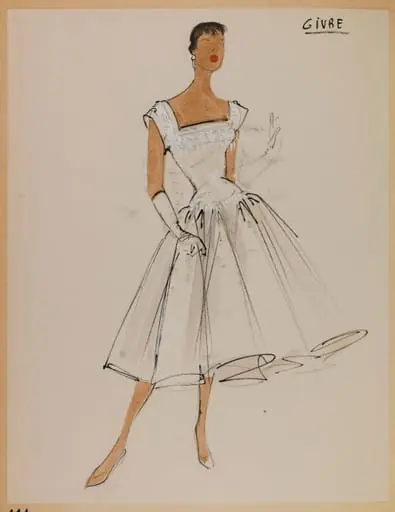
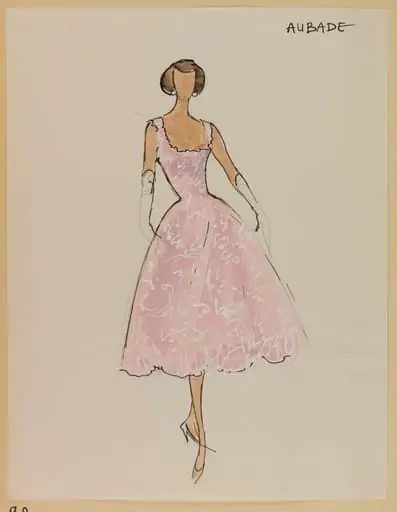
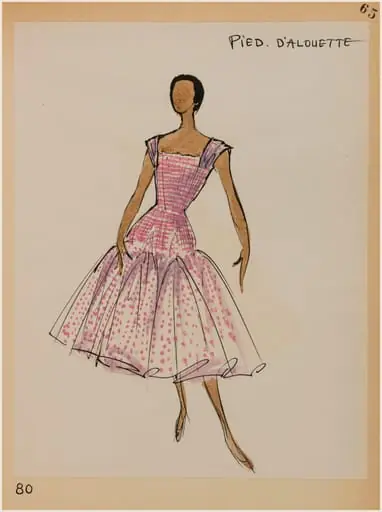
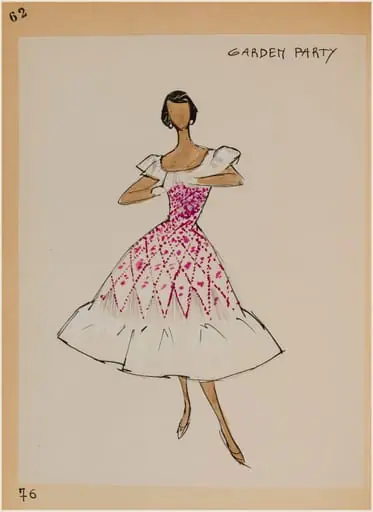
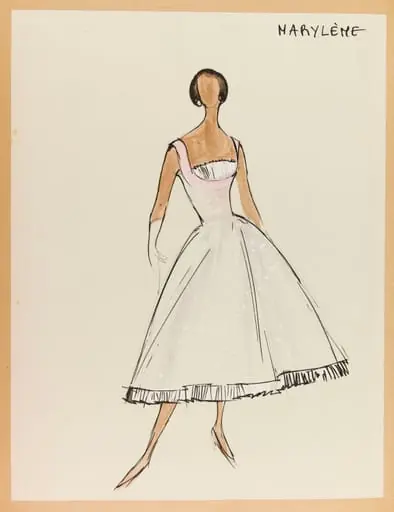
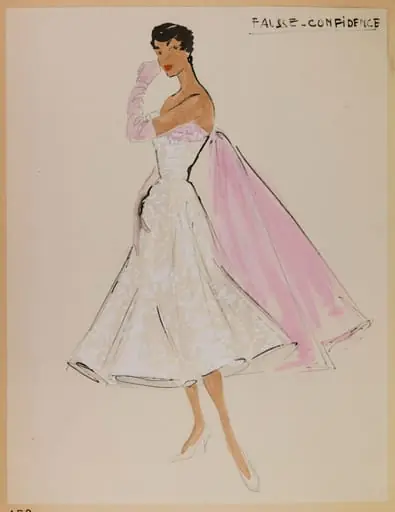
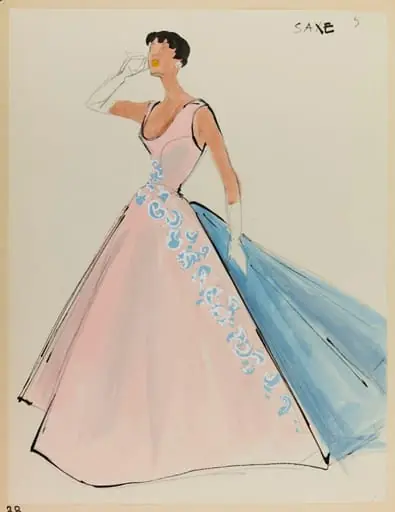
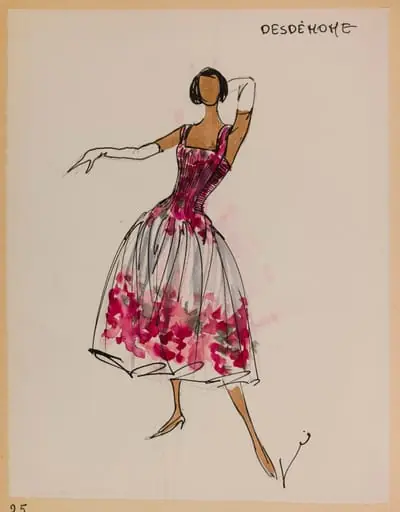
Created around 1956 by Carven, this ink sketch captures a solitary female figure in motion. Executed with fluid, unrefined lines, the drawing conveys immediacy rather than polish. It is part of the collection at the Museum of Ethnography, where it is preserved as an example of informal, personal draftwork from the mid-20th century. The title 'BLUES' appears in the corner, offering a subtle emotional cue without explicit narrative.
Subject & Meaning
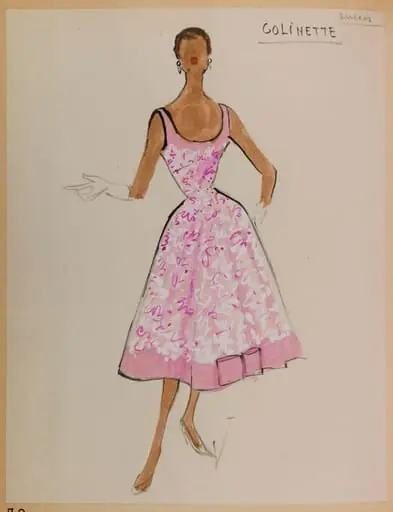
The figure, dressed in a pink, sleeveless gown with a fitted waist and flared hem adorned with small bows, appears caught mid-movement, arms extended as if dancing or gesturing. The plain background isolates her, emphasizing physical presence over context. The title 'BLUES' suggests a mood—perhaps melancholy, rhythm, or introspection—but the sketch resists definitive interpretation, leaving emotional resonance open to the viewer.
Technique & Style
Rendered in loose, rapid ink strokes, the drawing exhibits the spontaneity of a preparatory sketch. Contours are suggestive rather than defined, with minimal shading and no fine detail. The absence of background elements and the emphasis on dynamic posture reflect a focus on movement and gesture. This approach prioritizes expressive energy over finish, aligning with informal studio practices of the period.
History & Provenance
The work entered the Museum of Ethnography’s collection following the artist’s estate, though its exact path from studio to institution remains undocumented. It was likely retained by Carven as a personal study rather than a finished piece. Its preservation reflects the museum’s interest in ephemeral creative processes, not just polished outputs, offering insight into the artist’s working methods.
Context
Created in the mid-1950s, this sketch emerges during a period when fashion design and fine art increasingly intersected in postwar Europe. Carven, known for couture, occasionally produced informal drawings that blurred the line between garment studies and expressive figure work. This piece reflects a broader trend of designers using sketching as both technical tool and emotional outlet.
Legacy
Though not widely exhibited, the sketch contributes to understanding Carven’s creative process beyond commercial fashion. Its preservation in an ethnographic context signals a shift toward valuing informal artistic artifacts as cultural records. It invites consideration of how personal, unpolished works can illuminate the emotional and physical rhythms behind professional practice.
Artist & collection
Artist
These delicate ink-on-paper drawings capture the quiet poetry of everyday things: pinecones, reeds, apples.
Museum
Palais Galliera - Musée de la Mode de la Ville de Paris
Continue through works from the same source collection.