Artwork
Pied d'alouette
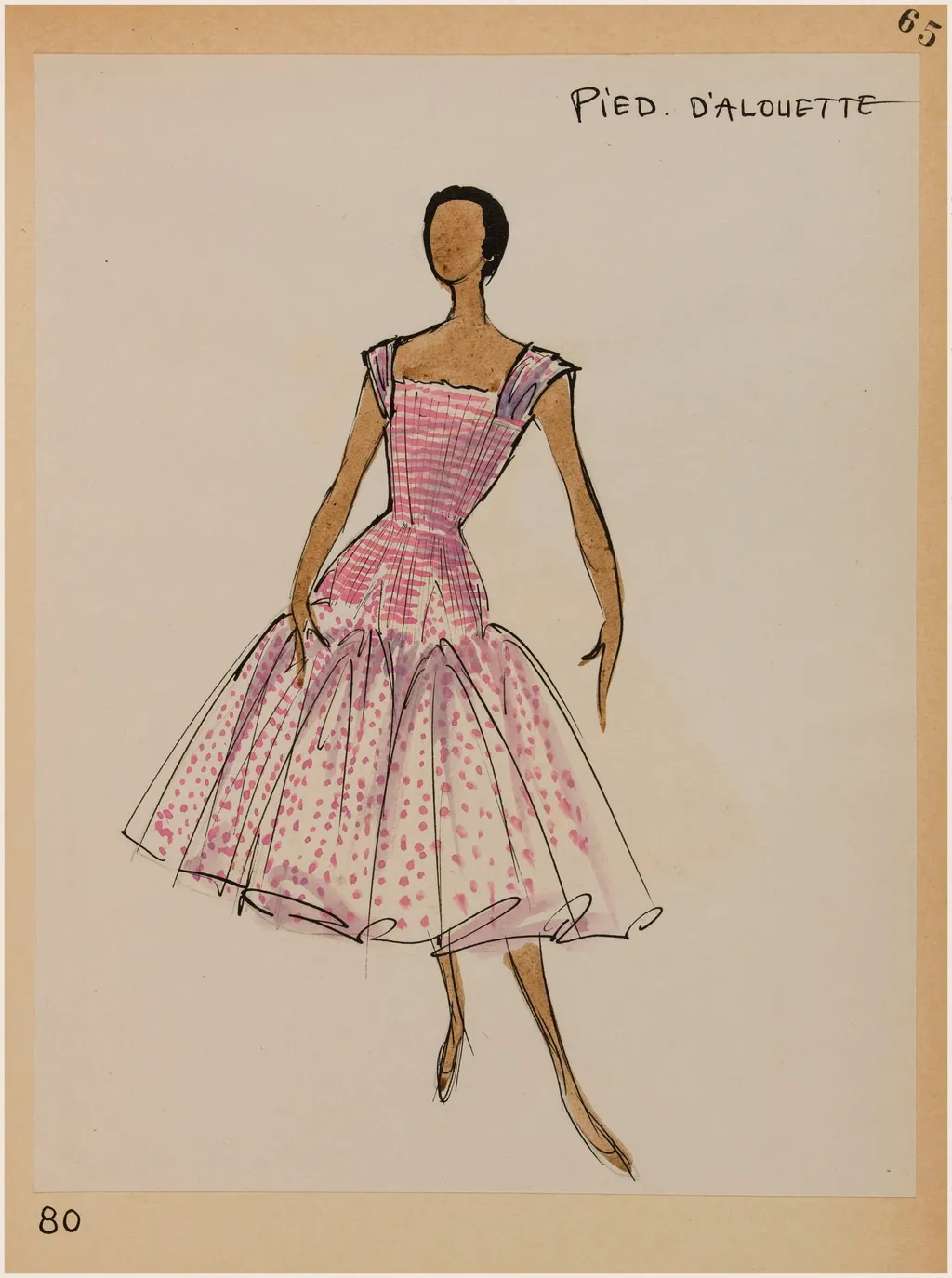
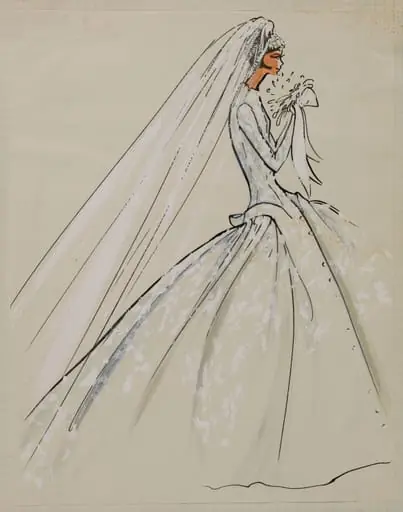
Pied d'alouette is a drawing by Carven. It dates from 1956 and is held in the collection of the Palais Galliera - Musée de la Mode de la Ville de Paris.
About this work
Overview
Its title, meaning 'lark’s foot' in French, may allude to the shape of the garment’s ruffled hem, suggesting a natural, organic form.
Created in 1956 by the designer Carven, this ink sketch titled Pied d’alouette depicts a woman in a delicately rendered dress. The work is part of the collection at the Museum of Ethnography. Its title, meaning 'lark’s foot' in French, may allude to the shape of the garment’s ruffled hem, suggesting a natural, organic form. The drawing captures movement and texture through minimal, expressive lines rather than detailed realism.
Subject & Meaning
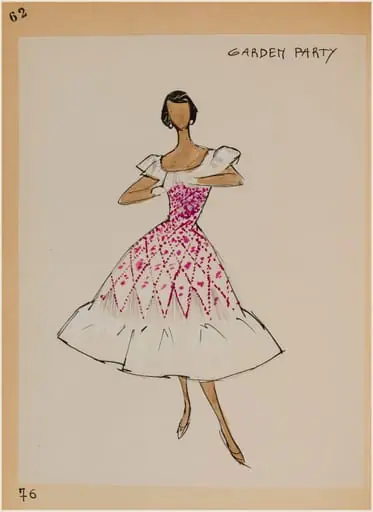
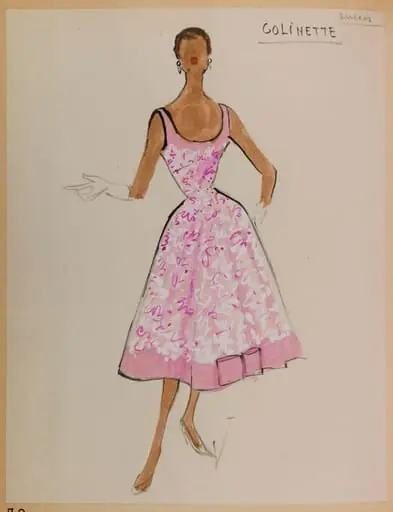
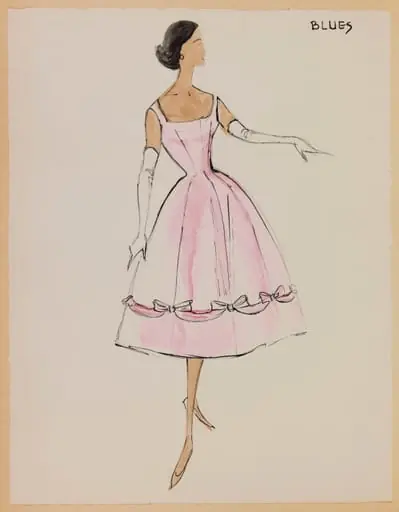
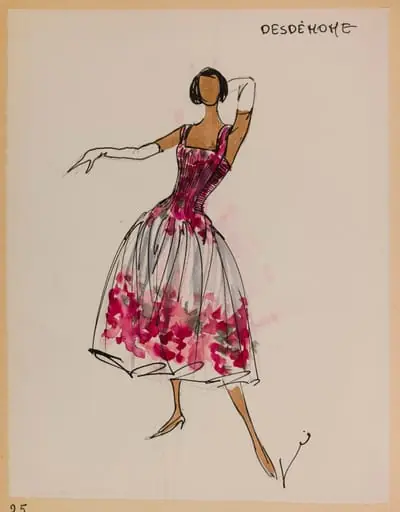
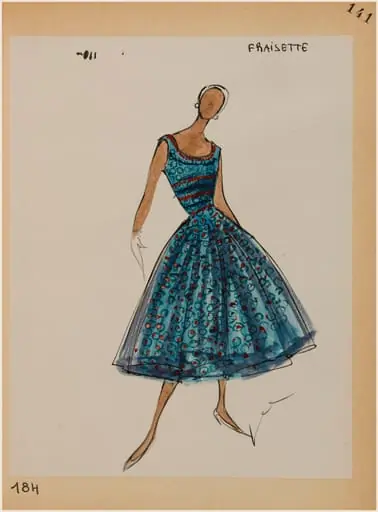
The figure is portrayed in a quiet, grounded stance, arms resting at her sides, suggesting stillness amid flowing fabric. The dress, with its pink checkered bodice and polka-dotted ruffle, evokes a sense of playful femininity common in mid-century fashion. The title’s reference to a wildflower’s foot-like shape may imply a connection between the garment’s form and natural motifs, reinforcing a subtle harmony between fashion and the organic world.
Technique & Style
The artist employs loose, fluid ink lines to suggest the weight and drape of fabric, avoiding rigid outlines. Soft shading and delicate stippling create texture in the skirt’s polka dots and the folds of the material. The absence of facial detail focuses attention on the garment’s silhouette and movement. This restrained approach reflects a design sensibility prioritizing form and textile over portraiture.
History & Provenance
The sketch was produced in 1956 during Carven’s active years as a Parisian fashion designer. It entered the Museum of Ethnography’s collection as part of a broader effort to document fashion as cultural artifact. While its exact origin within the designer’s archive is undocumented, its preservation suggests recognition of its value in illustrating mid-century textile design and aesthetic ideals.
Context
In the 1950s, fashion illustration often bridged design and art, serving both commercial and archival purposes. Carven’s work aligned with a postwar European trend favoring lightness and elegance in women’s wear. This sketch reflects that ethos, capturing the era’s preference for delicate patterns and fluid silhouettes, while also contributing to the growing institutional interest in fashion as a subject worthy of museum curation.
Legacy
Though not widely exhibited, the sketch remains a quiet example of how fashion design was documented beyond runway presentations. Its inclusion in an ethnographic museum underscores a shift toward viewing clothing as cultural expression. The work continues to serve as a reference for studying mid-century textile aesthetics and the role of sketching in the design process.
Artist & collection
Artist
These delicate ink-on-paper drawings capture the quiet poetry of everyday things: pinecones, reeds, apples.

Museum
Palais Galliera - Musée de la Mode de la Ville de Paris
Continue through works from the same source collection.