Artwork
Bourgeon
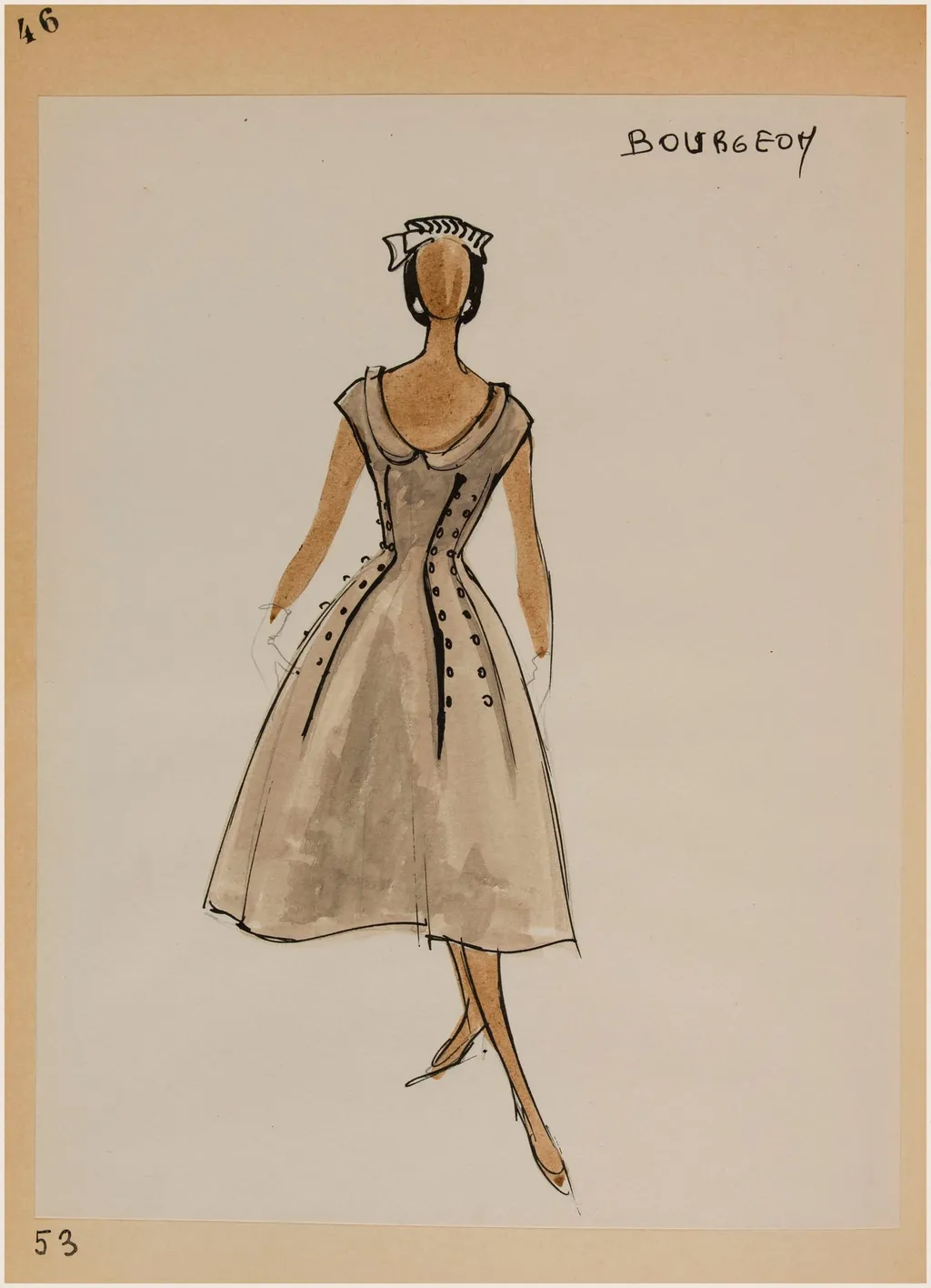
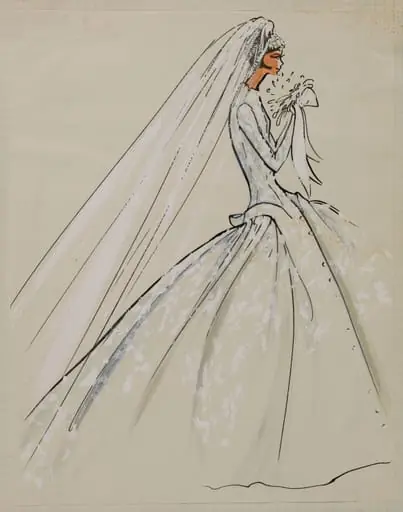
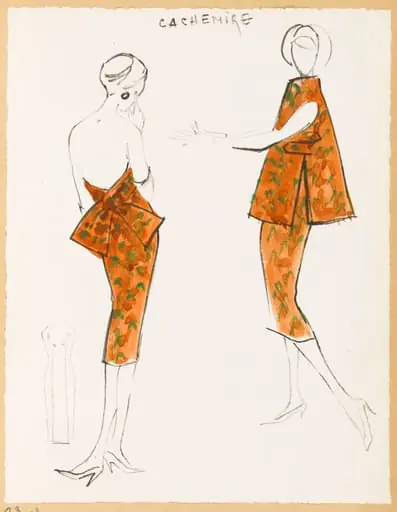
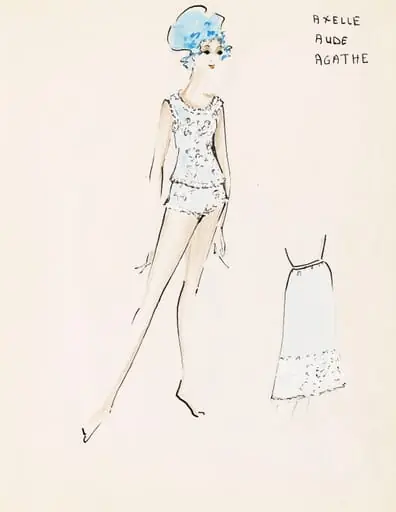
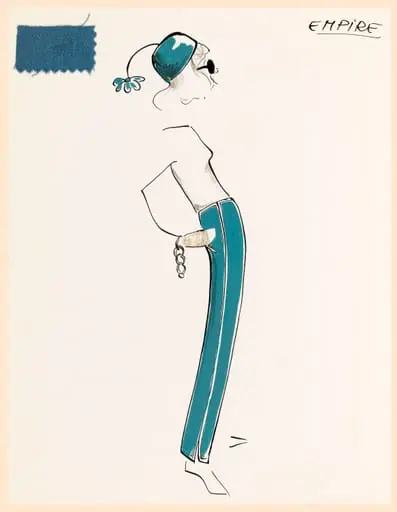
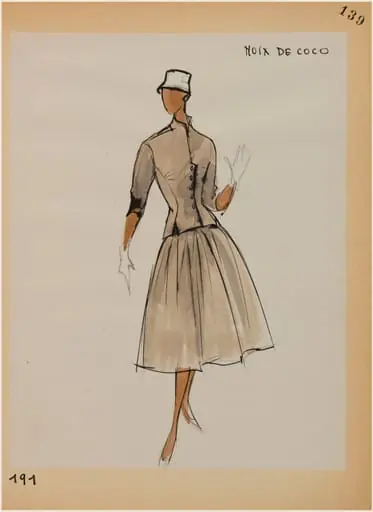
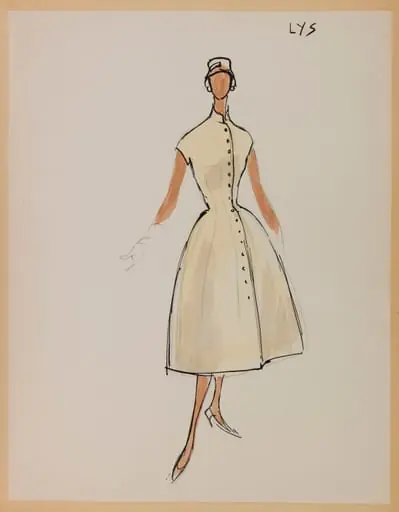
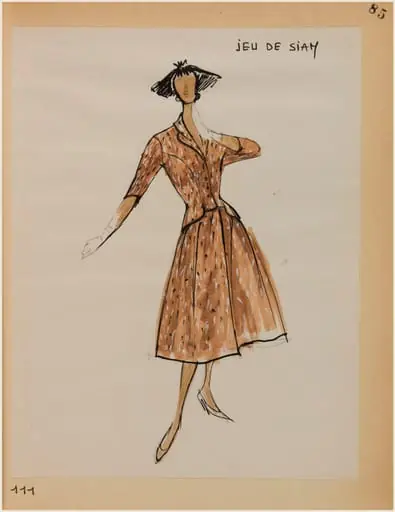
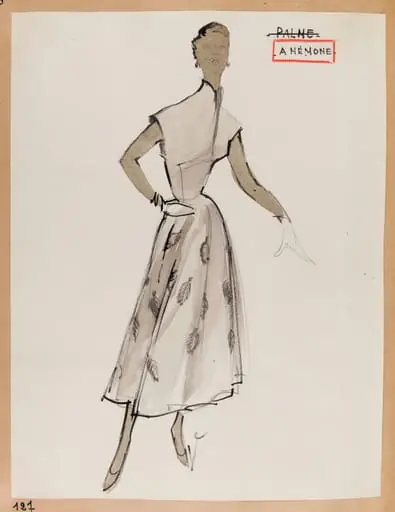
Bourgeon is a drawing by Carven. It dates from 1956 and is held in the collection of the Palais Galliera - Musée de la Mode de la Ville de Paris.
About this work
Overview
Its current location is the Museum of Ethnography, where it is preserved not as a finished garment but as a record of creative thought in motion.
Bourgeon, dated 1956, is a loose watercolor sketch by the designer Carven. Executed in rapid, fluid lines, it captures a woman in a modest, everyday dress. The work lacks the polish of a formal illustration, suggesting it was made as a spontaneous design note. Its current location is the Museum of Ethnography, where it is preserved not as a finished garment but as a record of creative thought in motion.
Subject & Meaning
The figure wears a simple dress with a deep V-neck, short sleeves, and a line of small black buttons. The skirt flares gently, and low-heeled shoes complete the quiet, grounded silhouette. The title, Bourgeon—French for 'bud'—may allude to emerging fashion trends or the potential of new forms. Rather than depicting grandeur, the sketch suggests quiet evolution, a moment of nascent design rather than final expression.
Technique & Style
Carven used minimal watercolor washes to suggest shadow and volume, applied over quick ink lines that remain visible and unrefined. The brushwork is economical, with no attempt to hide underdrawings or correct contours. This approach prioritizes immediacy over precision, capturing the essence of form rather than its detail. The sketch’s energy comes from its spontaneity, not its finish.
History & Provenance
Created in 1956, Bourgeon entered the collection of the Museum of Ethnography as part of a broader archive of design materials. It was not exhibited as a standalone artwork at the time but preserved for its insight into the designer’s process. Its survival reflects institutional interest in the ephemeral traces of fashion creation, not just the final product.
Context
In mid-century Paris, fashion designers often worked from rapid sketches to explore silhouettes before committing to pattern-making. Bourgeon fits this practice, reflecting a time when couture houses relied on hand-drawn ideas to communicate vision. The simplicity of the dress aligns with postwar trends favoring practicality and understated elegance over ornamentation.
Legacy
Bourgeon survives as a quiet testament to the iterative nature of fashion design. It offers no claim to fame but reveals the unpolished thinking behind garments that later entered production. Its presence in an ethnographic museum underscores how design processes, not just finished objects, contribute to cultural understanding.
Artist & collection
Artist
These delicate ink-on-paper drawings capture the quiet poetry of everyday things: pinecones, reeds, apples.
Museum
Palais Galliera - Musée de la Mode de la Ville de Paris
Continue through works from the same source collection.