Artwork
Marguerite
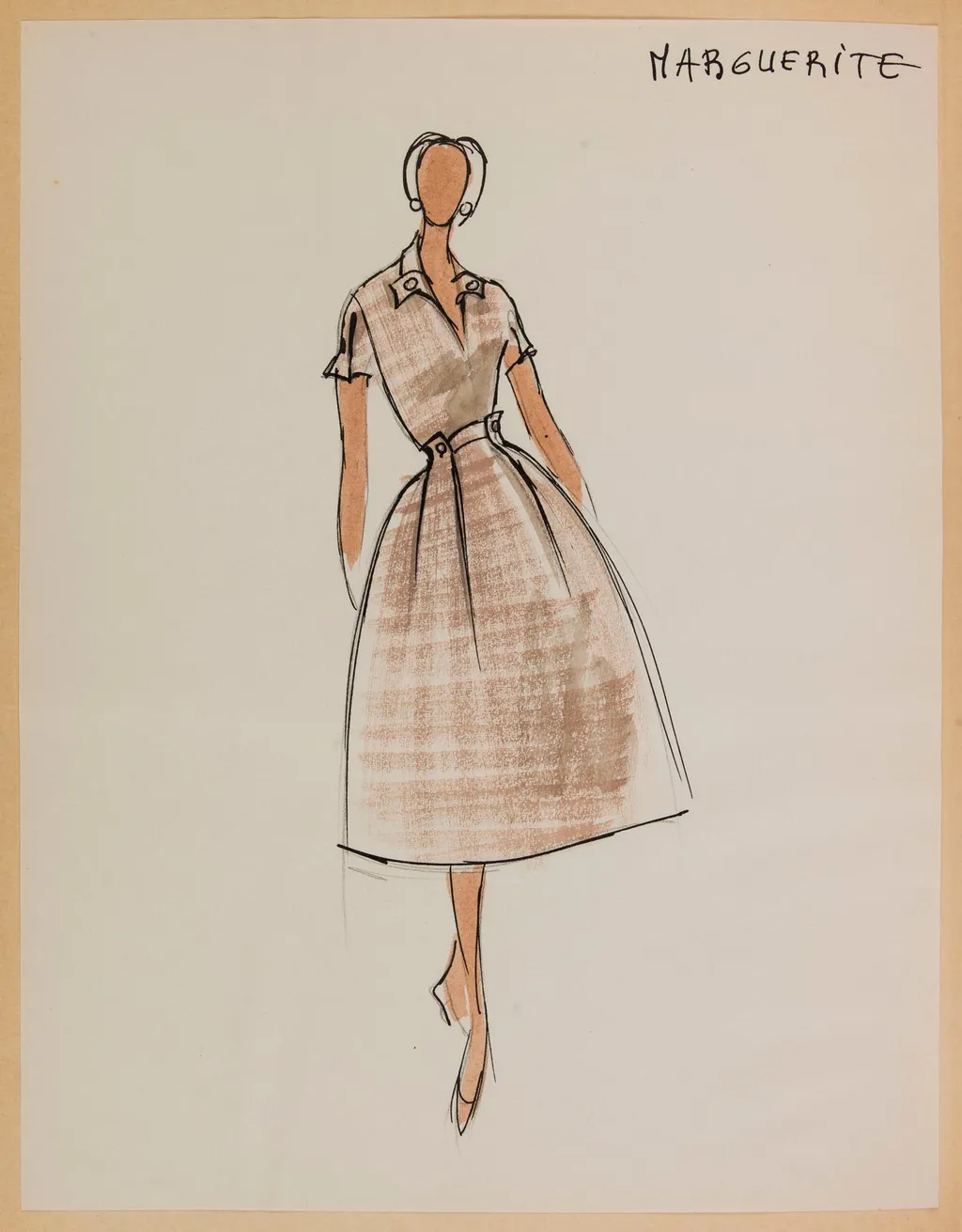
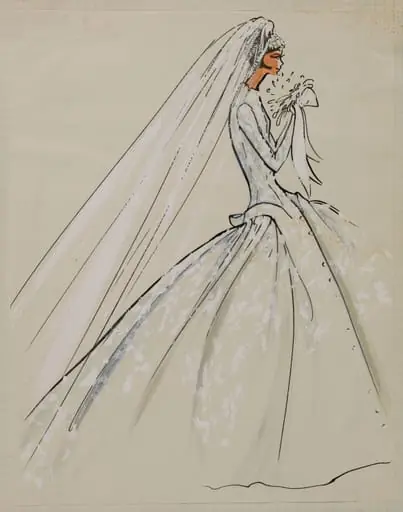
Marguerite is a drawing by Carven. It dates from 1956 and is held in the collection of the Palais Galliera - Musée de la Mode de la Ville de Paris.
About this work
Overview
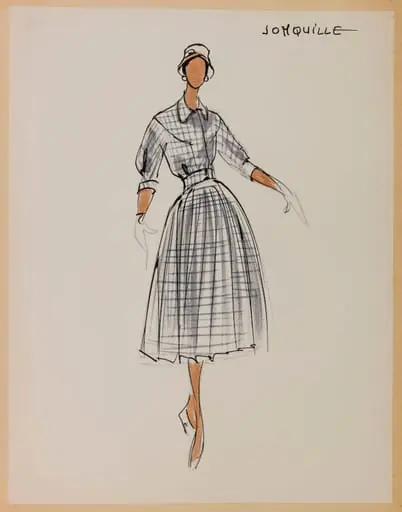
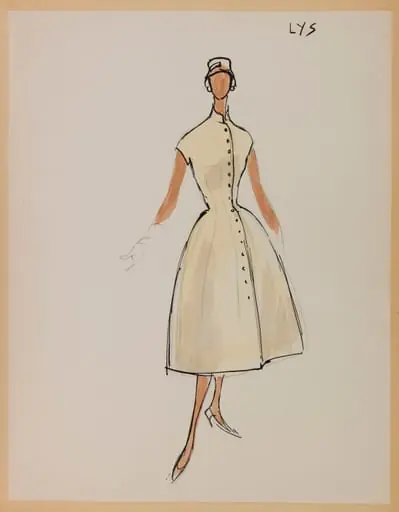
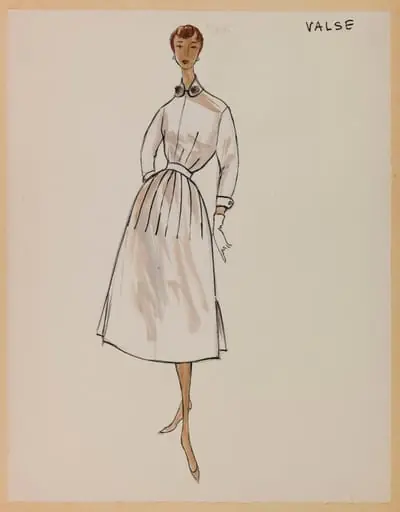
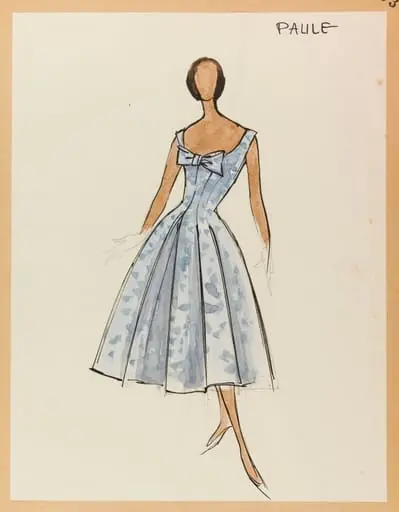
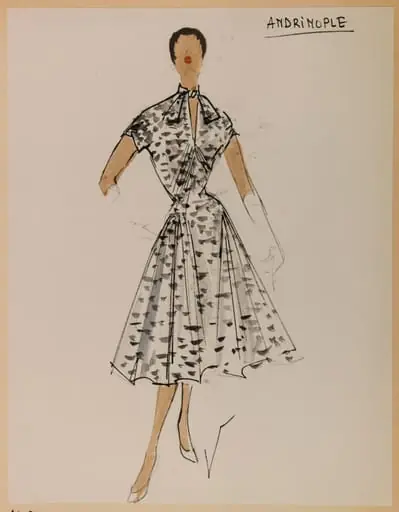
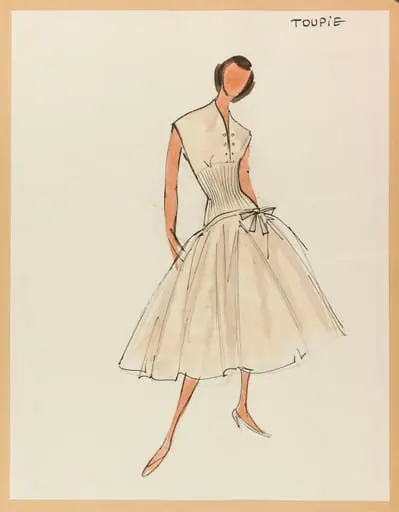
The drawing depicts a female figure in a modest, tailored dress, rendered with minimal detail and a restrained palette of soft browns.
Created around 1956, this pencil or ink sketch is attributed to the French fashion house Carven. It resides in the collection of the Museum of Ethnography. The drawing depicts a female figure in a modest, tailored dress, rendered with minimal detail and a restrained palette of soft browns. The absence of background elements and the presence of the name 'Marguerite' suggest it may have served as a design reference rather than a finished illustration.
Subject & Meaning
The figure, labeled 'Marguerite,' wears a simple dress with short sleeves, a defined waistline, and a gently flared skirt. The name may reference a model, client, or internal code, though its specific significance remains undocumented. The drawing’s focus on silhouette and structure implies an intent to capture a wearable form, possibly for production or presentation, rather than to convey narrative or identity.
Technique & Style
Executed in light, fluid lines, the sketch employs a restrained tonal range dominated by muted browns. Forms are suggested with economy, avoiding shading or texture. The figure is centered against a blank surface, emphasizing the garment’s outline and proportions. This approach reflects the functional nature of fashion drafting, prioritizing clarity and adaptability over artistic embellishment.
History & Provenance
The sketch entered the Museum of Ethnography’s collection without documented provenance prior to its acquisition. Its origin within Carven’s design studio is inferred from stylistic consistency with mid-century French fashion archives. No records confirm its purpose or the identity of Marguerite, leaving its context partially obscured despite its clear association with the brand’s design process.
Context
In the mid-1950s, French fashion houses like Carven emphasized refined, wearable designs for a growing middle-class clientele. This sketch aligns with the era’s preference for understated elegance and structural precision. Such studies were common in ateliers, serving as transitional tools between concept and garment. Its preservation reflects a broader institutional interest in documenting the material culture of fashion production.
Legacy
Though not publicly exhibited often, the sketch contributes to scholarly understanding of Carven’s design methodology during its postwar peak. It exemplifies how fashion houses relied on quick, functional drawings to translate ideas into production. Its presence in an ethnographic museum underscores the cultural value assigned to everyday design artifacts, beyond high fashion’s more celebrated pieces.
Artist & collection
Artist
These delicate ink-on-paper drawings capture the quiet poetry of everyday things: pinecones, reeds, apples.
Museum
Palais Galliera - Musée de la Mode de la Ville de Paris
Continue through works from the same source collection.