Artwork
'Caballero'
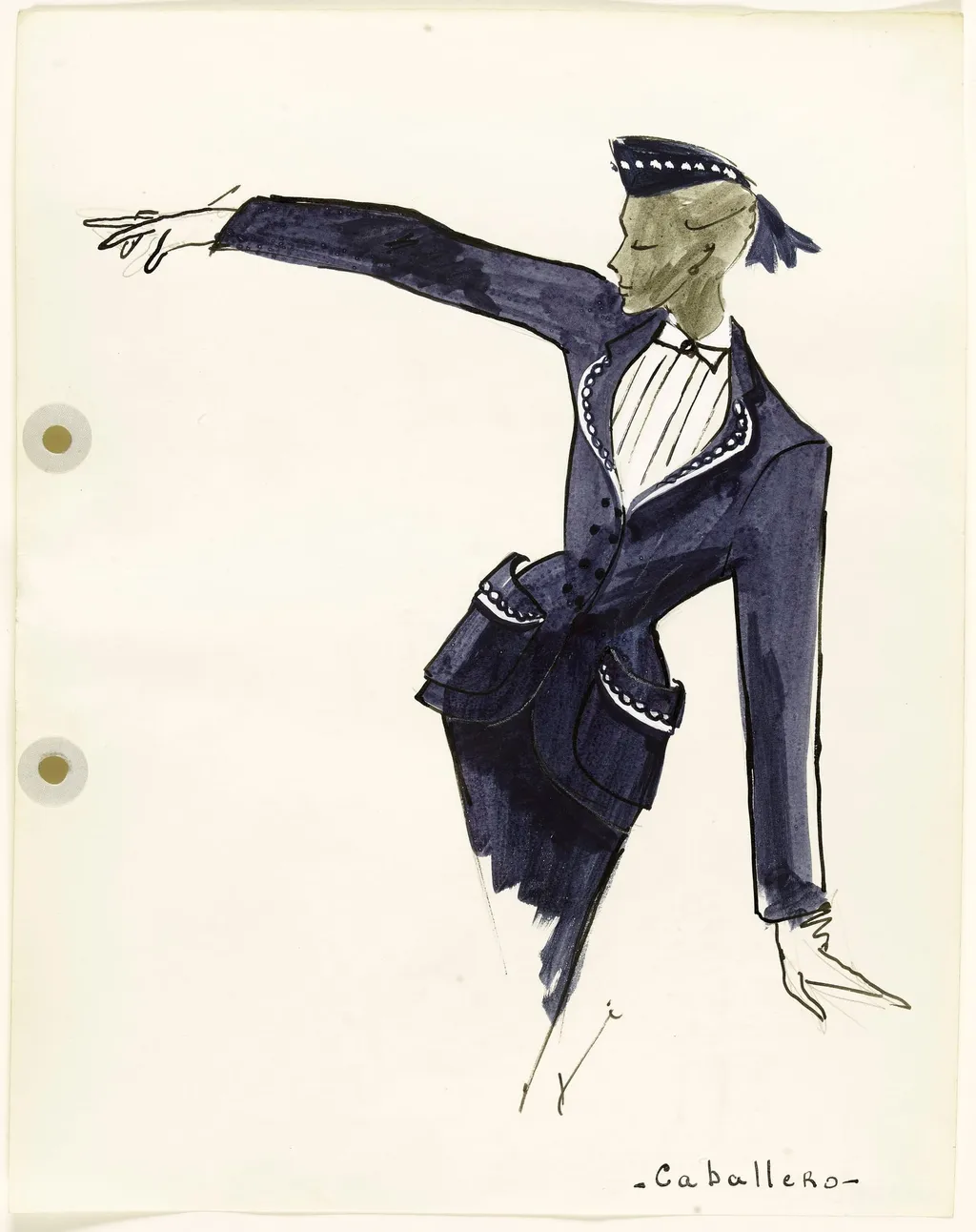
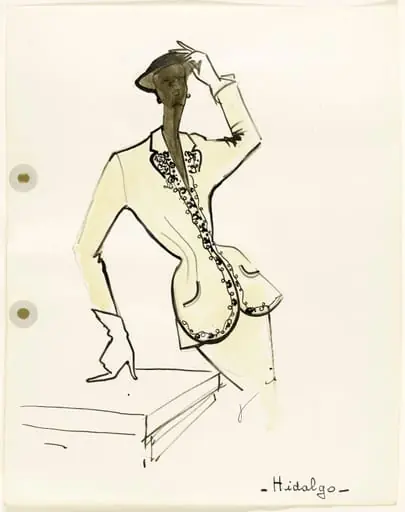
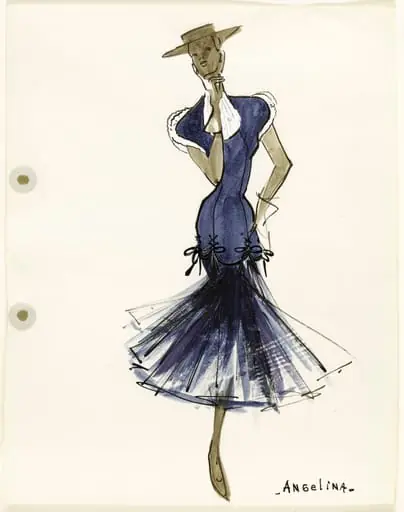
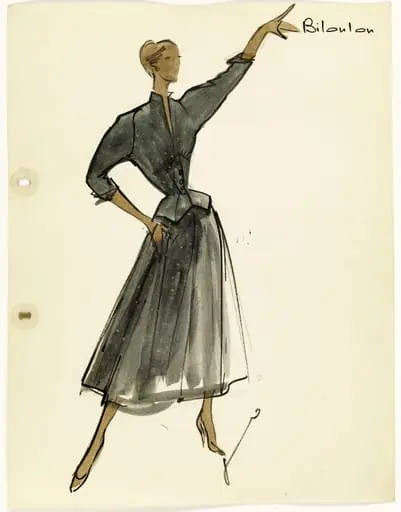
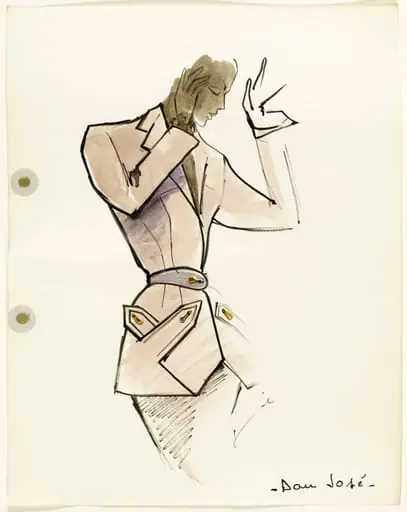
'Caballero' is a drawing by Carven. It dates from 1951 and is held in the collection of the Palais Galliera - Musée de la Mode de la Ville de Paris.
About this work
The man's attire is adorned with white buttons and accents on his jacket, shirt, and hat, adding a touch of elegance to the overall design.
The painting 'Caballero' by Carven, created in 1951, is a drawing that showcases a man dressed in a dark blue suit with white accents. The man is depicted with his right arm extended, wearing a matching hat and a white shirt with a black bow tie.
The man's attire is adorned with white buttons and accents on his jacket, shirt, and hat, adding a touch of elegance to the overall design. The dark blue color of the suit provides a striking contrast to the white accents, creating a visually appealing composition.
This drawing is part of the collection at the Museum of Ethnography.
Overview
Created in 1951 by the artist Carven, 'Caballero' is a drawn portrait of a formally dressed man. The work resides in the collection of the Museum of Ethnography, where it is cataloged as part of a broader study of cultural dress and identity. Though labeled as a painting in some records, the medium is executed in ink or pencil on paper, emphasizing line and contrast over color field.
Subject & Meaning
The figure depicted is a man in a dark blue suit with precise white detailing—buttons, collar, hat trim, and bow tie. His extended right arm suggests gesture or address, possibly evoking ceremonial or performative roles. The attire, while stylized, aligns with early 20th-century formal wear in certain Latin American contexts, hinting at social status or ritual function rather than individual portraiture.
Technique & Style
Carven employs sharp, controlled linework to define the figure’s form and clothing. The contrast between the deep blue of the suit and the crisp white accents is achieved through careful hatching and negative space, not pigment. The rendering is restrained, avoiding shading or texture, focusing instead on silhouette and pattern, suggesting influence from graphic design or folk illustration traditions.
History & Provenance
The work entered the Museum of Ethnography’s collection shortly after its creation, likely acquired as part of a broader effort to document regional dress and cultural expression. No documentation exists of prior ownership or exhibition prior to its institutional acquisition. Its classification as ethnographic material reflects its use in studying costume as cultural artifact rather than fine art.
Context
In the early 1950s, many artists in Latin America turned to depicting local figures as symbols of national identity. 'Caballero' aligns with this trend, though its formal simplicity distinguishes it from more expressive or political works. It may represent a specific regional archetype, such as a town official or festival performer, but no definitive regional attribution has been established.
Legacy
Though not widely exhibited outside the Museum of Ethnography, 'Caballero' remains a reference in studies of mid-century Latin American graphic representation. Its minimalism and focus on costume have influenced later ethnographic illustration practices. The work continues to be cited in academic discussions on the intersection of dress, identity, and visual documentation.
Artist & collection
Artist
These delicate ink-on-paper drawings capture the quiet poetry of everyday things: pinecones, reeds, apples.
Museum
Palais Galliera - Musée de la Mode de la Ville de Paris
Continue through works from the same source collection.