Artwork
'Cambodge'
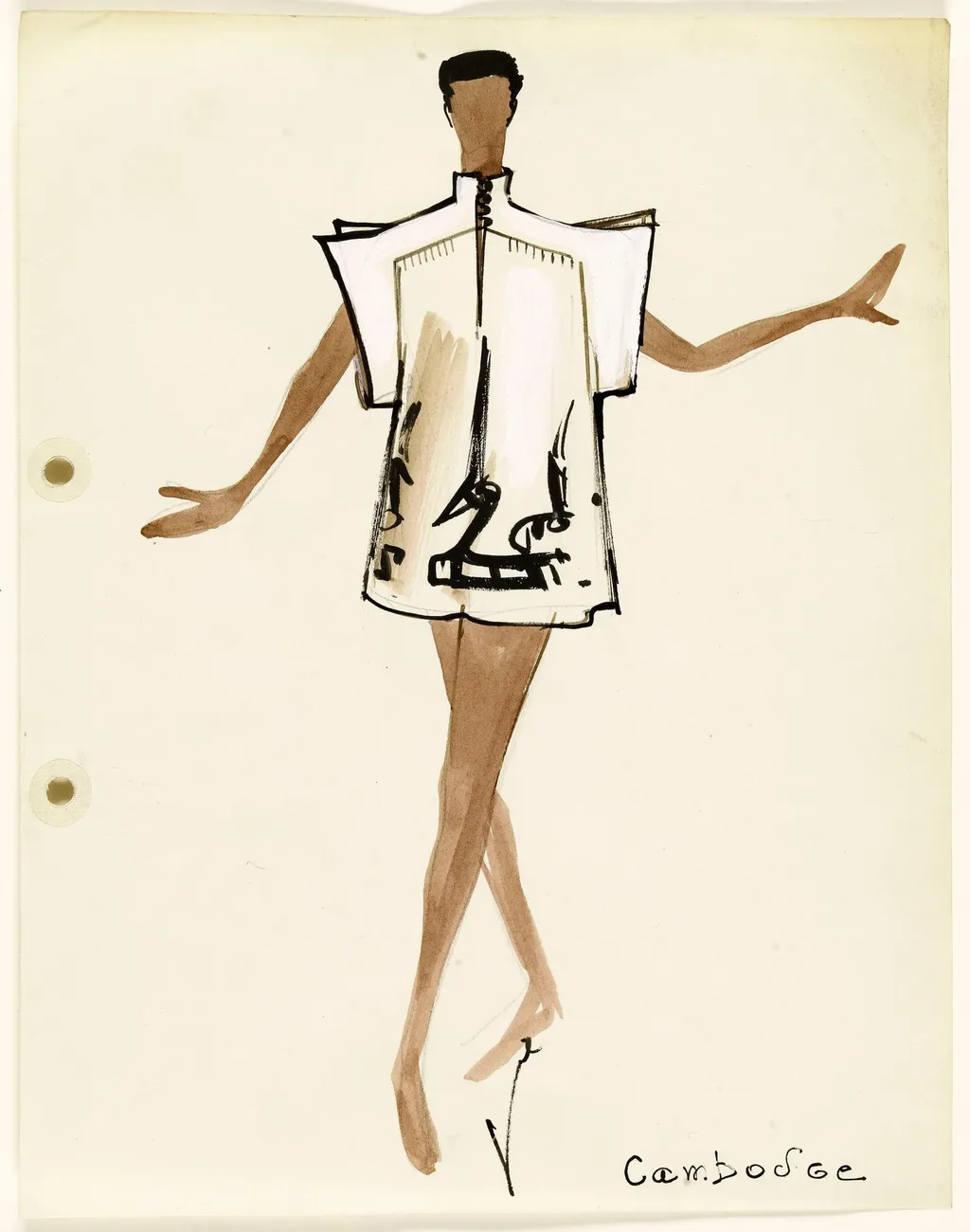
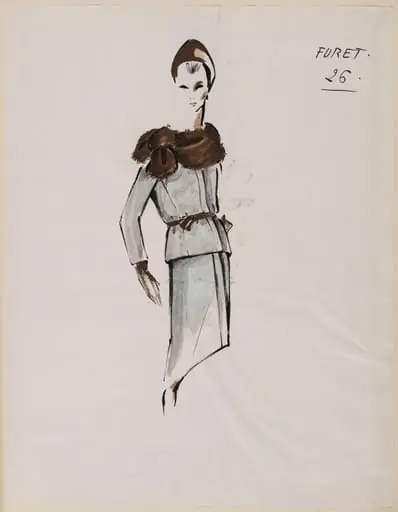
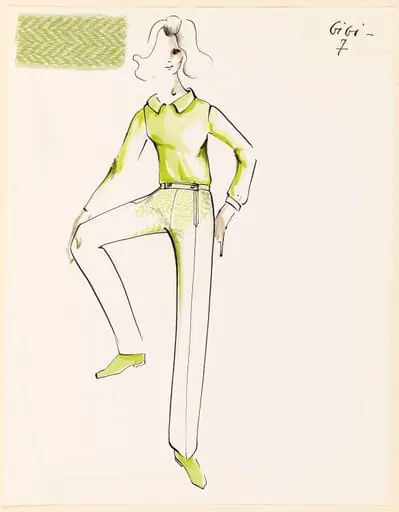
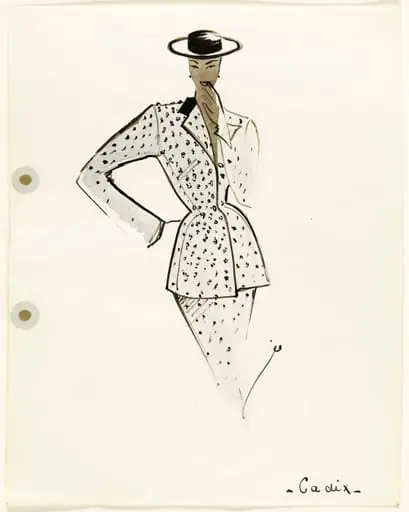
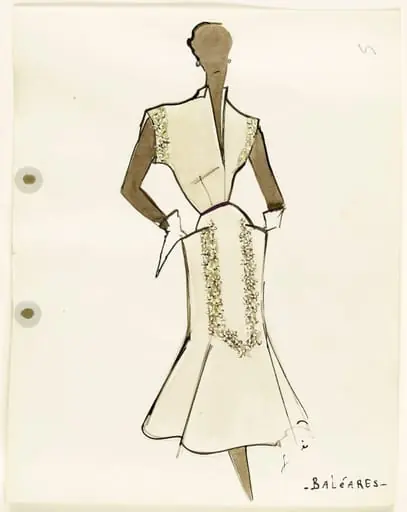
'Cambodge' is a drawing by Carven. It dates from 1951 and is held in the collection of the Palais Galliera - Musée de la Mode de la Ville de Paris.
About this work
Overview
Created in 1951, 'Cambodge' is a pencil sketch by French designer Carven, now in the collection of the Museum of Ethnography.
Created in 1951, 'Cambodge' is a pencil sketch by French designer Carven, now in the collection of the Museum of Ethnography. It captures a solitary figure in motion, rendered with minimal detail and fluid, unrefined lines. The work lacks the polish of finished illustration, instead conveying a sense of immediacy and informal observation. Its title references Cambodia, suggesting a cultural or geographic inspiration, though the figure remains abstracted.
Subject & Meaning
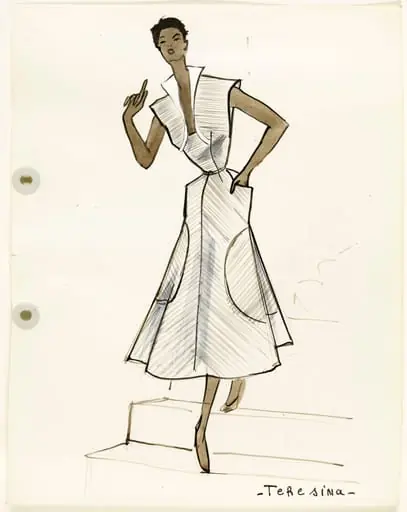
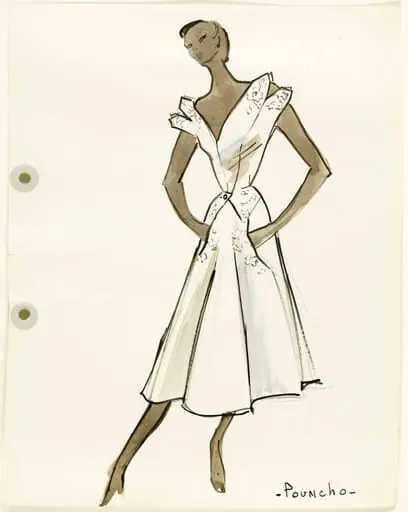
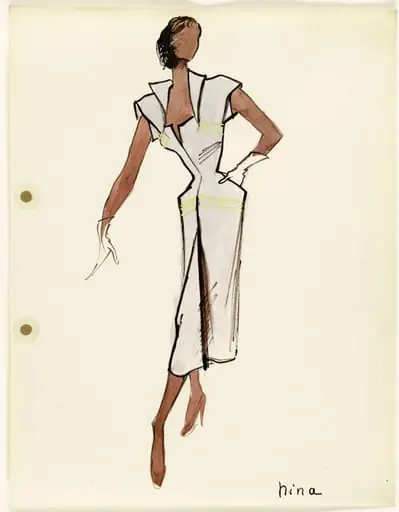
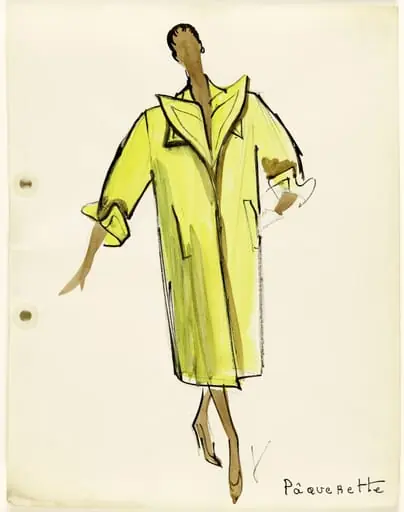
The figure appears to be a woman in a loose, sleeveless garment, arms extended—one upward, one downward—as if caught in a transient gesture. No facial features or identifying markers are present, emphasizing movement over identity. The title 'Cambodge' implies a connection to Cambodia, yet the figure’s attire and posture are generalized, avoiding specific cultural detail. The work seems less a portrait than a study of form and motion in a tropical context.
Technique & Style
Carven employed swift, gestural pencil strokes to define the figure and fabric, avoiding shading or fine detail. The dress is suggested through angular, boxy contours, while the face is reduced to a dark, featureless oval. The sketchy quality conveys spontaneity, aligning with fashion design’s tradition of rapid ideation. The absence of texture or ornamentation reflects a focus on silhouette and posture rather than realism or narrative.
History & Provenance
The sketch entered the Museum of Ethnography’s collection after Carven’s career as a fashion designer. Its origins are undocumented beyond the 1951 date and the artist’s signature in the corner. Unlike her couture garments, this work was not produced for commercial use, suggesting it served as a personal or preparatory study. Its preservation in an ethnographic context hints at its perceived cultural resonance, though its intent remains ambiguous.
Context
In postwar France, fashion designers often sketched freely as part of their creative process, using drawing to explore form and movement before construction. Carven, known for lightweight, modern silhouettes, may have used this sketch to experiment with draping or motion in warm-weather attire. The title’s reference to Cambodia reflects mid-century European fascination with Southeast Asia, though the image offers no direct ethnographic accuracy.
Legacy
Though not a finished garment or public artwork, 'Cambodge' illustrates how fashion designers translated observation into abstract visual language. Its presence in an ethnographic museum underscores the blurred boundary between design study and cultural representation. The sketch remains a quiet example of how functional creativity—rooted in movement and simplicity—can outlive its original purpose.
Artist & collection
Artist
These delicate ink-on-paper drawings capture the quiet poetry of everyday things: pinecones, reeds, apples.
Museum
Palais Galliera - Musée de la Mode de la Ville de Paris
Continue through works from the same source collection.