Artwork
Caracas
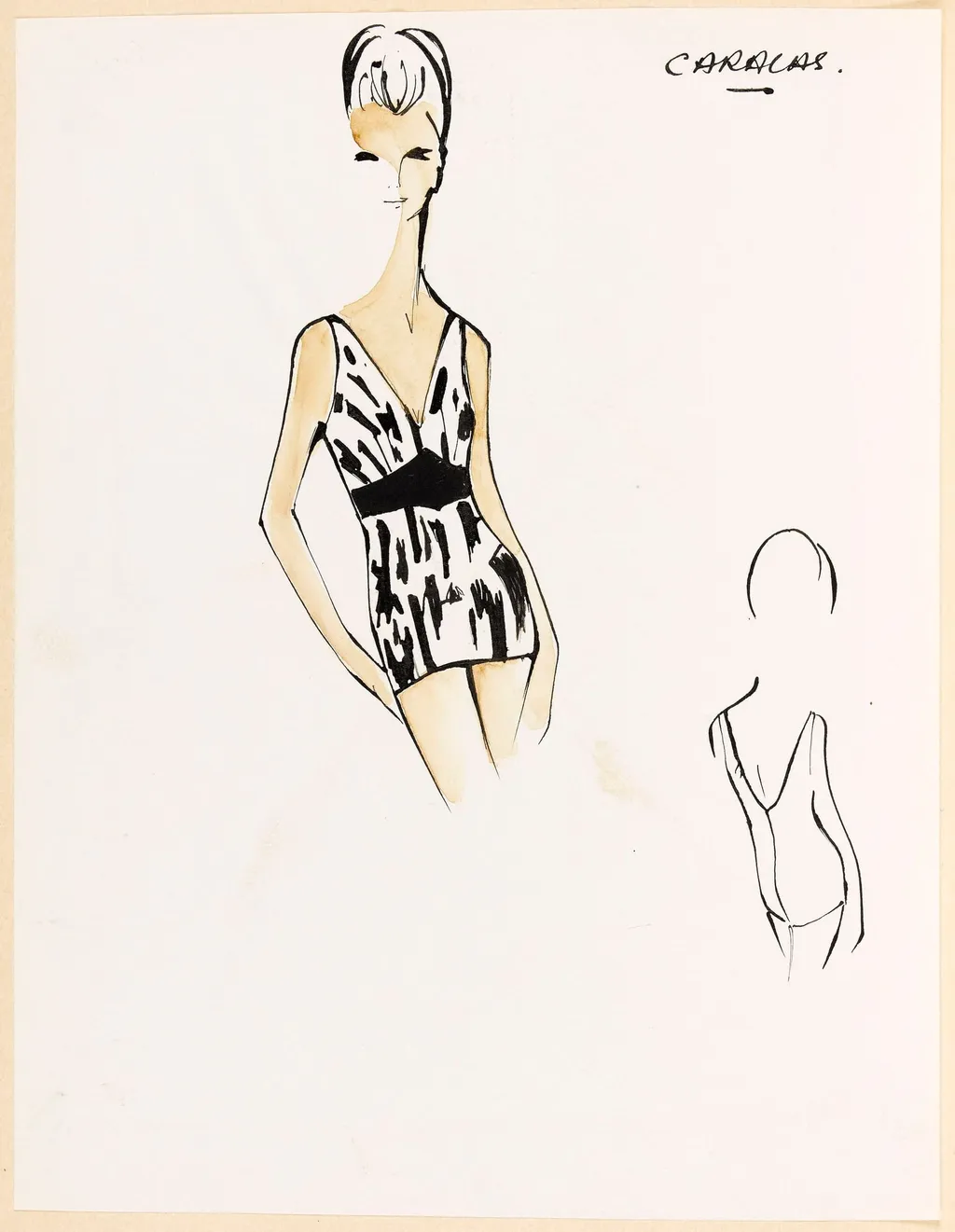
Caracas is a drawing by Carven. It dates from 1964 and is held in the collection of the Palais Galliera - Musée de la Mode de la Ville de Paris. Created around 1964, this drawing is part of the Museum of Ethnography’s collection.
About this work
Overview
Created around 1964, this drawing is part of the Museum of Ethnography’s collection. It bears the signature “Caracas,” which may refer either to the artist’s name or to the work’s title. The piece consists of a primary figure rendered in bold, graphic lines, accompanied by a secondary, loosely sketched silhouette.
Subject & Meaning
The central figure is a woman dressed in a stark black‑and‑white costume, the skirt marked by pronounced vertical stripes. Her hair is neatly pulled back and she adopts a confident pose, one hand placed on her hip. To the right, a faint, gestural outline of a figure seen from behind suggests a preparatory study or an incidental gesture.
Technique & Style
The drawing is executed with rapid, expressive strokes that convey immediacy rather than polish. The contrast between the crisp, defined contours of the main figure and the tentative, sketchy lines of the secondary silhouette highlights a process‑oriented approach, emphasizing the artist’s interest in capturing movement and form quickly.
History & Provenance
Attributed to the artist known as Carven, the work dates to the mid‑1960s, a period marked by experimental drawing practices. It entered the Museum of Ethnography’s holdings at an unspecified date, where it remains accessible for study and public viewing.
Context
The piece reflects broader trends of the 1960s that favored spontaneous line work and graphic simplification. Its monochromatic palette and emphasis on pattern echo contemporary explorations of abstraction and the interplay between figure and background.
Artist & collection
Artist
These delicate ink-on-paper drawings capture the quiet poetry of everyday things: pinecones, reeds, apples.

Museum
Palais Galliera - Musée de la Mode de la Ville de Paris
Continue through works from the same source collection.