Artwork
Cascade
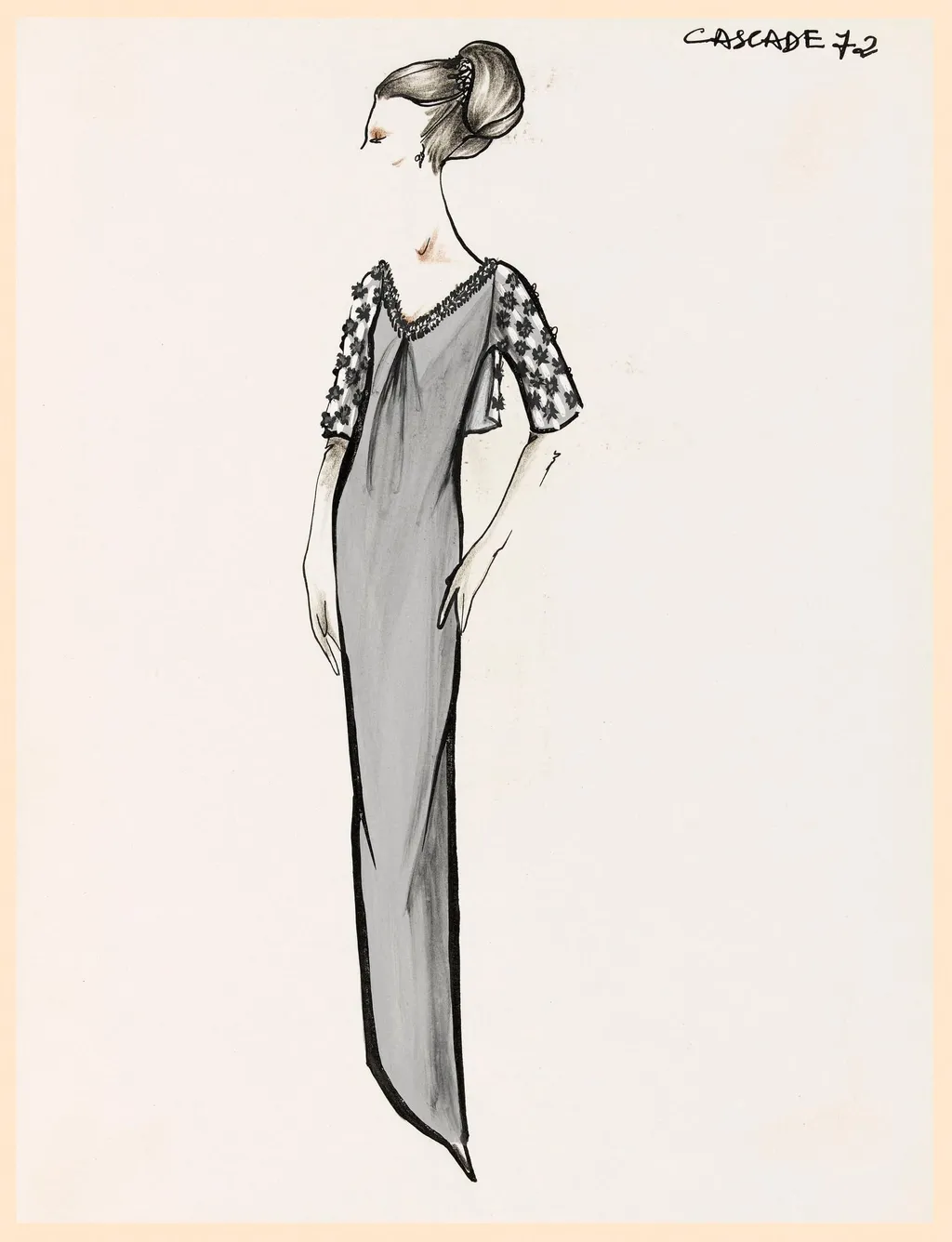
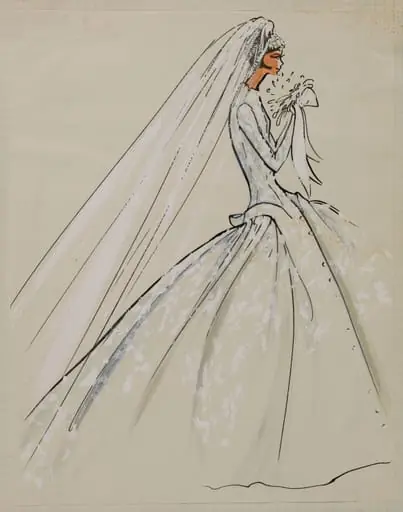
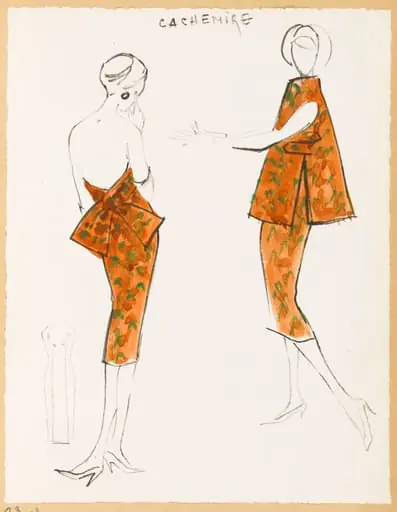
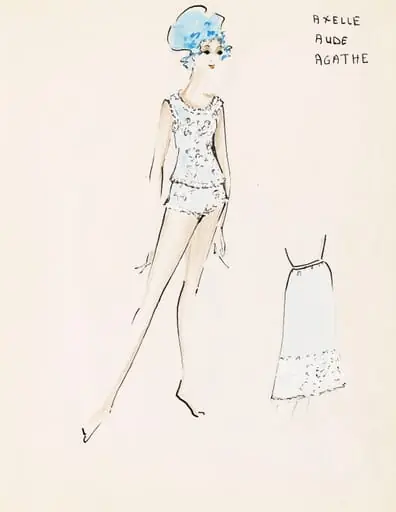
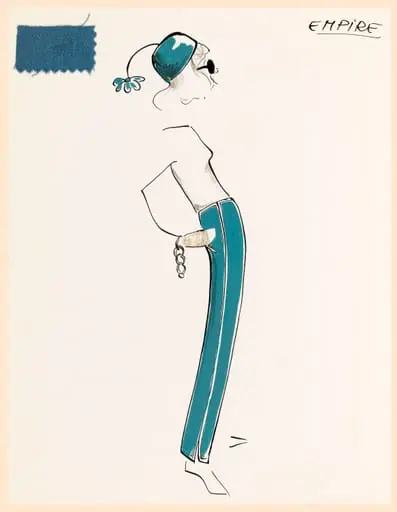
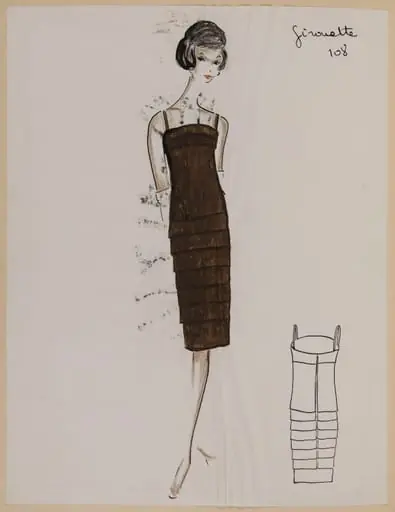
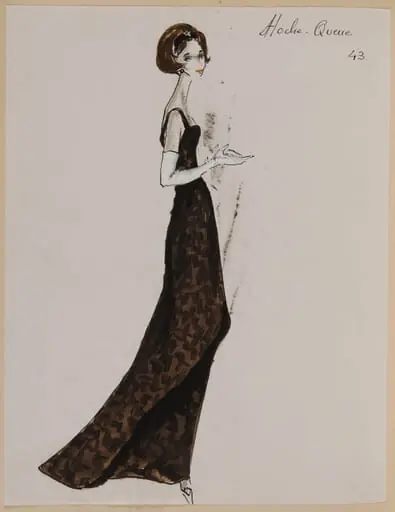
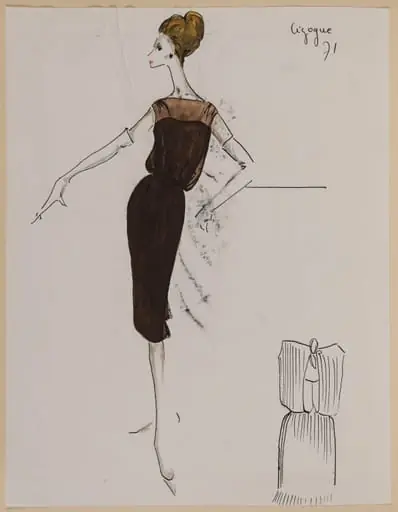
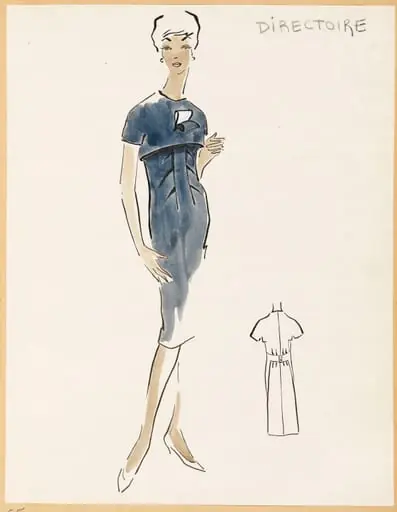
Cascade is a drawing by Carven. It dates from 1962 and is held in the collection of the Palais Galliera - Musée de la Mode de la Ville de Paris.
About this work
Overview
Created around 1962, Cascade is a pencil sketch by the fashion designer Carven. It resides in the collection of the Museum of Ethnography. The work captures a single figure in motion, rendered with minimal yet deliberate lines. Its focus on textile flow and posture reflects Carven’s interest in how clothing interacts with the body, rather than on detailed portraiture or narrative.
Subject & Meaning
The title, Cascade, evokes the natural rhythm of fabric falling or shifting, aligning the garment’s movement with the imagery of water.
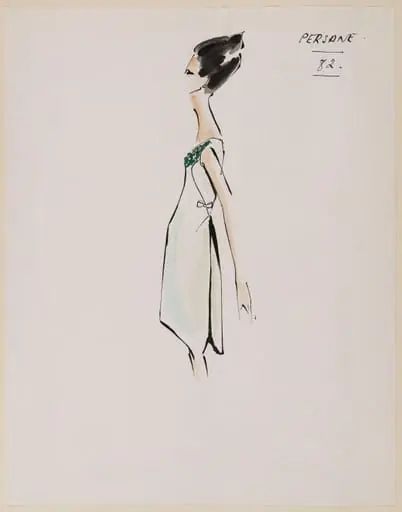
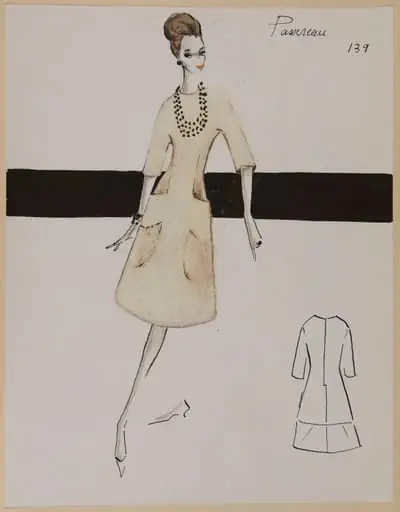
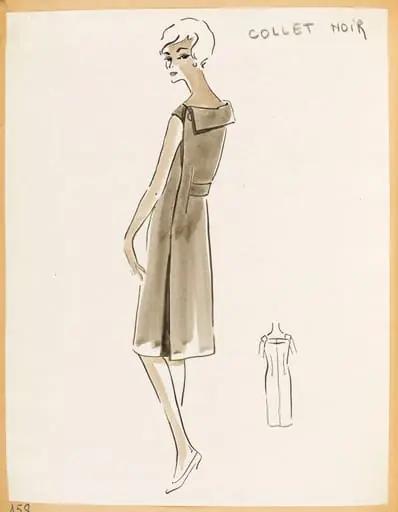
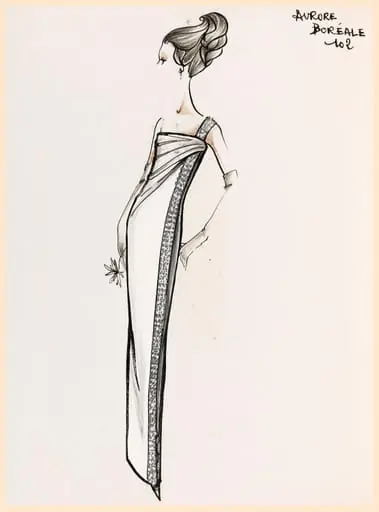
The subject is a woman dressed in a long, high-necked gown with short puffed sleeves and a slender waist. Her posture—one hand on the hip—suggests quiet poise rather than theatrical display. The title, Cascade, evokes the natural rhythm of fabric falling or shifting, aligning the garment’s movement with the imagery of water. The figure’s restrained expression and tidy hairstyle emphasize elegance through simplicity.
Technique & Style
Carven employed swift, fluid pencil strokes to imply the weight and drape of fabric without outlining it rigidly. The lines are light and uneven, suggesting motion rather than fixed form. Minimal shading and absence of background isolate the figure, directing attention to the garment’s silhouette and the subtle tension between stillness and implied movement. The technique prioritizes atmosphere over precision.
History & Provenance
The sketch entered the Museum of Ethnography’s collection as part of a broader archive of 20th-century fashion drawings. Its origin lies in Carven’s personal studio practice, likely made as a preparatory study or private reflection on garment design. No record of public exhibition prior to its acquisition exists, suggesting it was never intended for commercial use.
Context
In the early 1960s, fashion illustration shifted from highly rendered advertisements to more expressive, personal sketches. Carven’s work reflects this trend, emphasizing the dancer-like quality of clothing over commercial detail. The drawing aligns with postwar European design values that favored understated grace and material sensitivity over ornamentation.
Legacy
Cascade remains a quiet example of how fashion designers used drawing to explore the relationship between body and fabric. It is not widely reproduced, but within academic circles, it is cited as evidence of Carven’s nuanced understanding of textile behavior. The sketch contributes to broader studies of mid-century fashion as a lived, kinetic experience rather than a static product.
Artist & collection
Artist
These delicate ink-on-paper drawings capture the quiet poetry of everyday things: pinecones, reeds, apples.
Museum
Palais Galliera - Musée de la Mode de la Ville de Paris
Continue through works from the same source collection.