Artwork
Cigogne
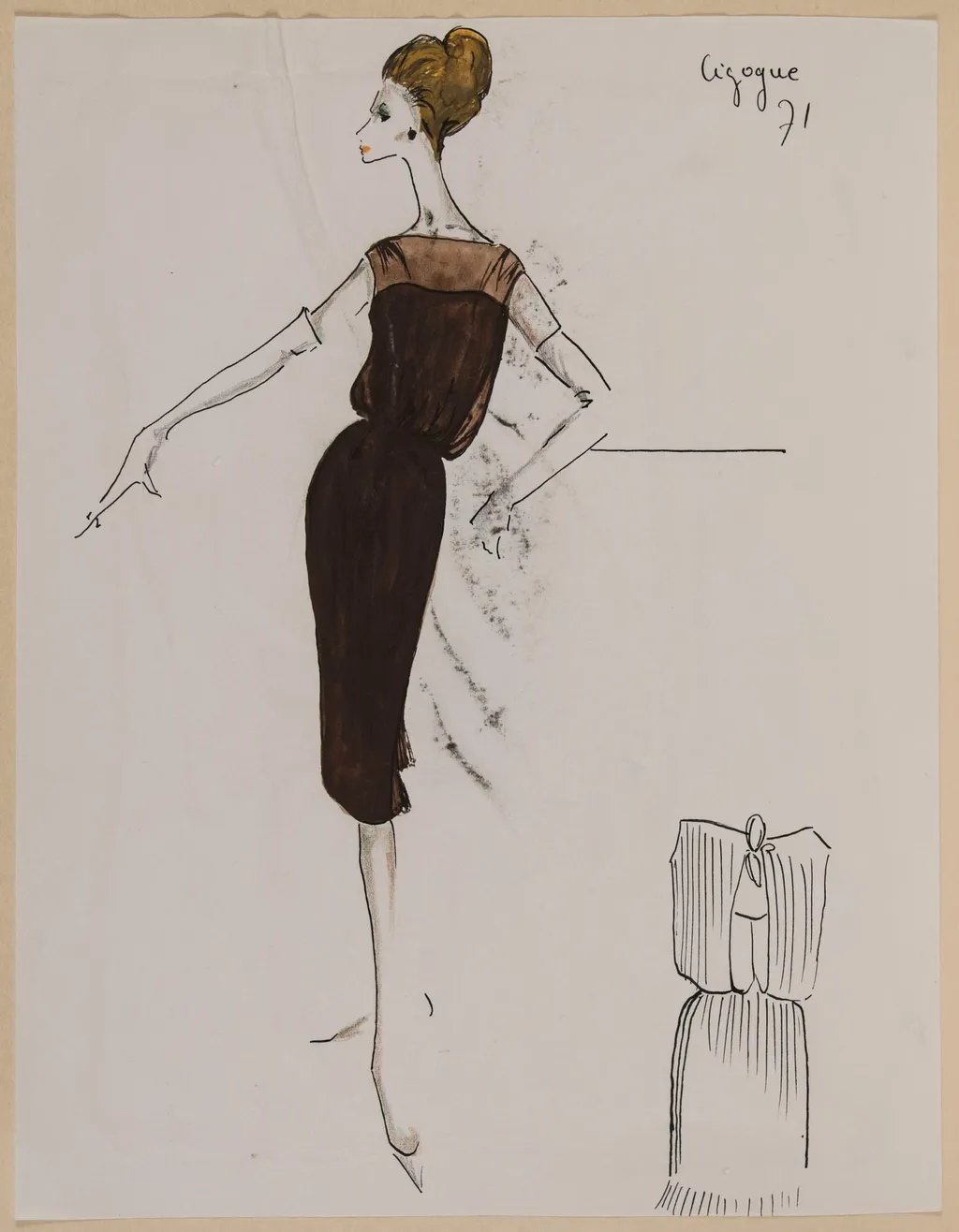
Cigogne is a drawing by Marie-Louise Carven. It dates from 1960 and is held in the collection of the Palais Galliera - Musée de la Mode de la Ville de Paris.
About this work
Overview
Created around 1960 by French designer Marie-Louise Carven, *Cigogne* is a pencil sketch that captures the silhouette of a dress designed for petite figures.
Created around 1960 by French designer Marie-Louise Carven, *Cigogne* is a pencil sketch that captures the silhouette of a dress designed for petite figures. Executed in loose, rapid strokes, the drawing functions as a working study rather than a finished illustration. It resides in the collection of the Museum of Ethnography, reflecting its role in documenting the practical side of mid-century fashion design rather than serving as a display object.
Subject & Meaning
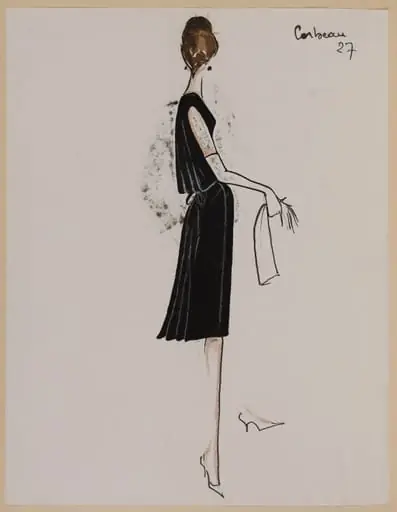
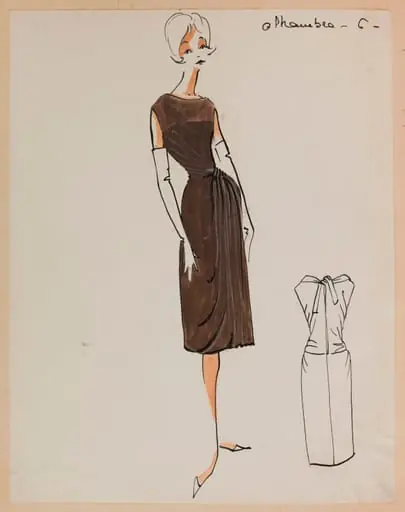
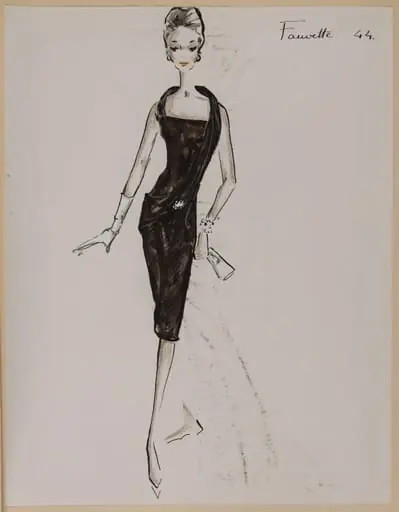
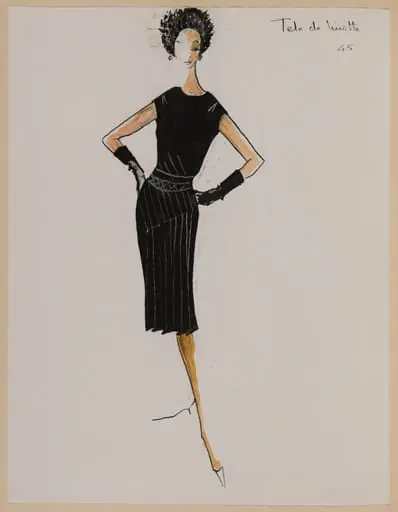
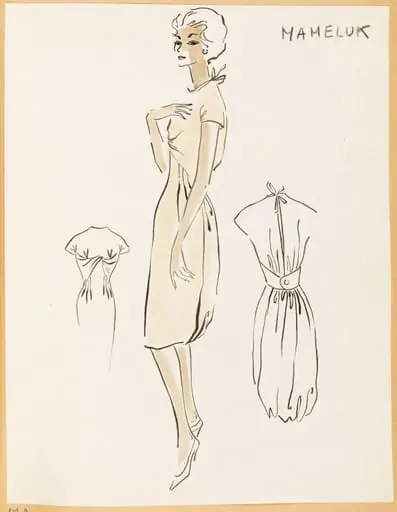
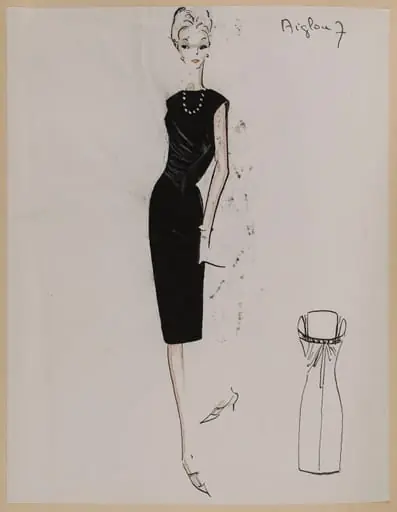
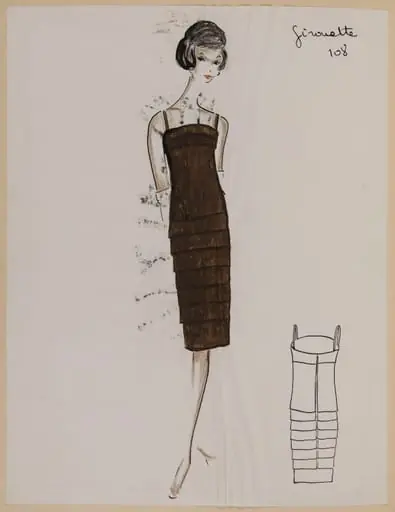
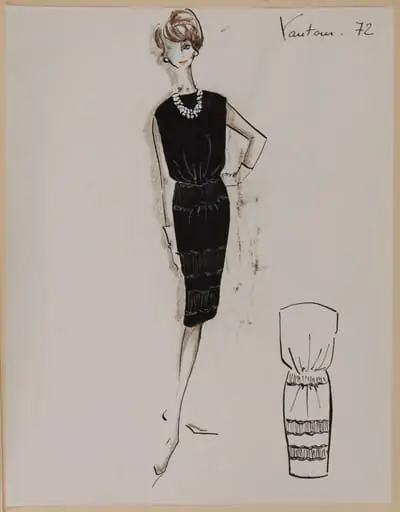
The sketch depicts a woman in a simple black dress with a draped neckline, viewed from the side. A secondary, simplified front view of the same garment appears beside her, emphasizing structural details like the waistline. The figure’s restrained posture and minimal features suggest the drawing’s purpose was functional: to communicate cut and drape, not personality or narrative. The title, meaning 'stork,' may reference the dress’s slender, elongated form.
Technique & Style
Carven used quick, unrefined pencil lines to convey the movement and flow of fabric. The absence of shading or fine detail indicates a focus on form over finish. The adjacent front-view sketch, rendered with near-abstract stick-figure economy, reveals her method of testing garment geometry through rapid comparison. The sketch’s spontaneity aligns with the immediacy required in fashion drafting, prioritizing clarity over polish.
History & Provenance
Marie-Louise Carven founded her fashion house in 1945 and became known for accessible, petite-friendly designs in lightweight textiles. *Cigogne* emerged during her peak years of prêt-à-porter innovation in Paris. Its preservation in the Museum of Ethnography suggests institutional recognition of its value as a document of everyday design practice, rather than haute couture spectacle.
Context
In the 1950s and 60s, Parisian fashion was shifting toward ready-to-wear, and designers like Carven adapted their processes to meet growing demand for practical, well-fitted clothing. This sketch reflects that transition: it is not a luxury item but a tool, part of a workflow that prioritized fit and wearability. Its informal nature mirrors the broader democratization of fashion during this period.
Legacy
Though not widely exhibited, *Cigogne* endures as a quiet testament to the iterative, hands-on nature of mid-century fashion design. It preserves the unpolished thinking behind garments that helped redefine women’s wardrobes. Its presence in an ethnographic collection underscores how functional drawings like this contribute to understanding cultural practices beyond the runway.
Artist & collection
Artist
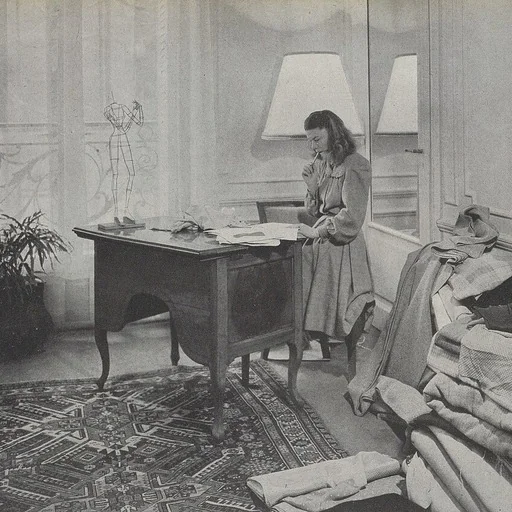
Marie-Louise Carven (31 August 1909 – 8 June 2015), born Carmen de Tommaso, was a French fashion designer who founded the house of Carven in 1945.
Museum
Palais Galliera - Musée de la Mode de la Ville de Paris
Continue through works from the same source collection.
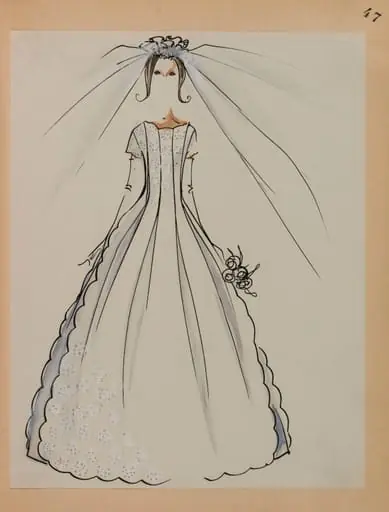 Robe de mariée festonnée et son voile
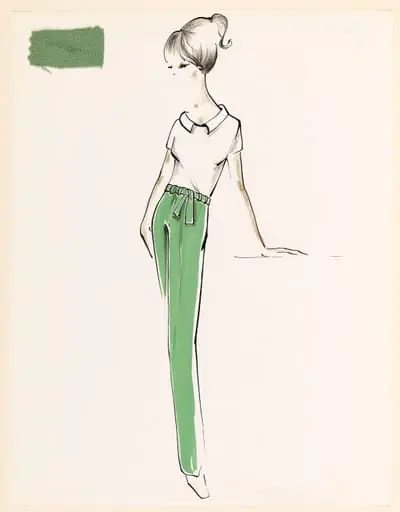 Haut blanc à manches courtes et pantalon vert à ceinture nouée
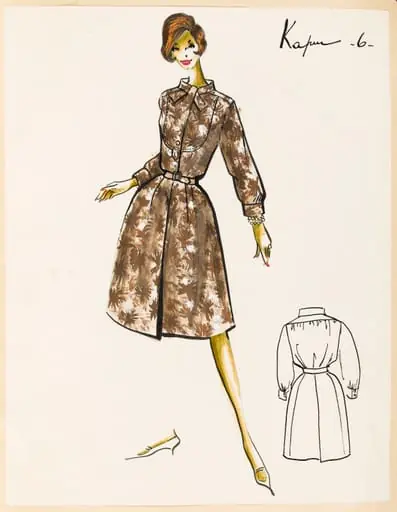 Kapur
Kapur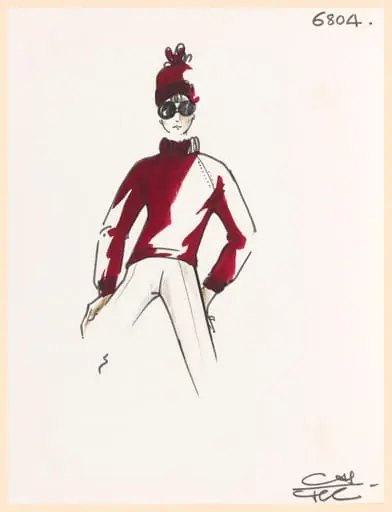 Pull-over à manches longues pourpre, bonnet assorti, pantalon et lunettes de soleil
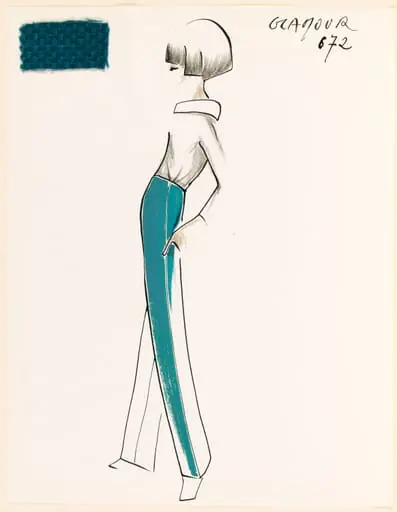 GLAMOUR
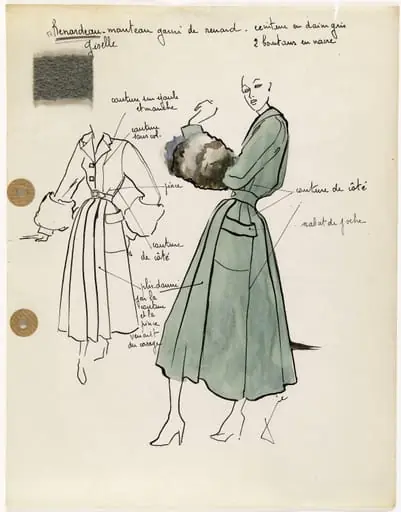 'Renardeau'
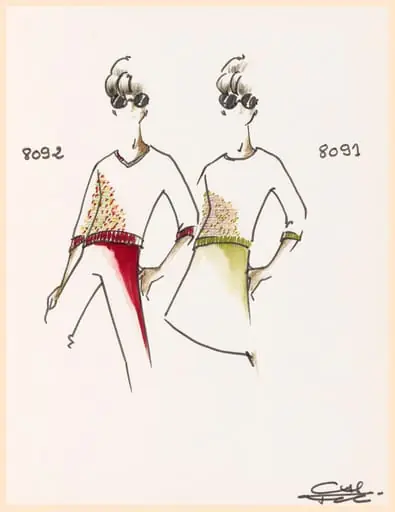 Pull-over à manches trois quarts et à encolure V à motifs multicolores, pantalon cerise et lunettes de soleil
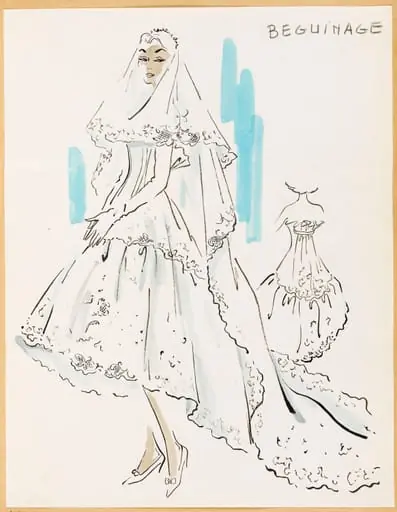 Béguinage