Artwork
Champ de mars
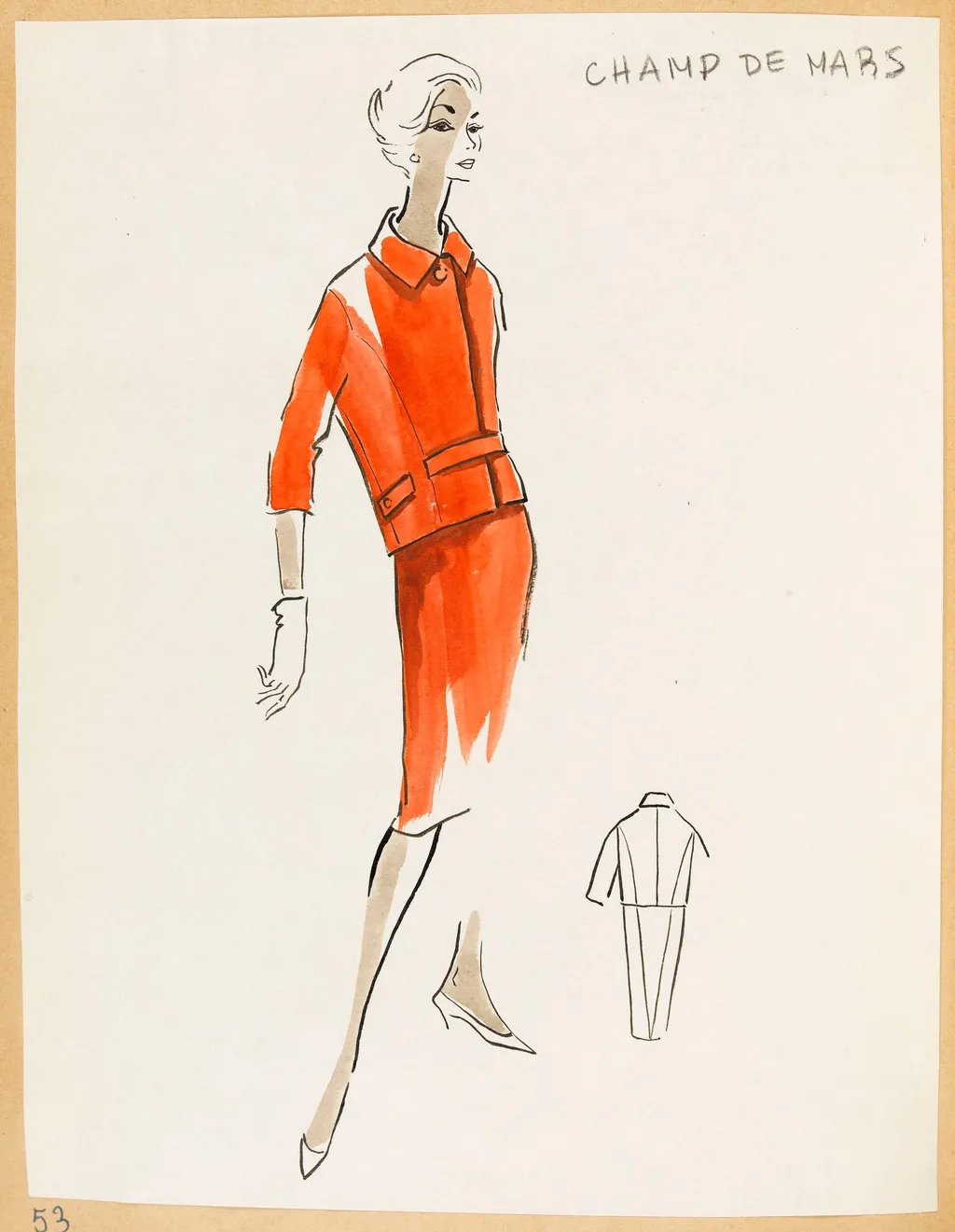
Champ de mars is a drawing by Carven. It dates from 1957 and is held in the collection of the Palais Galliera - Musée de la Mode de la Ville de Paris.
About this work
Overview
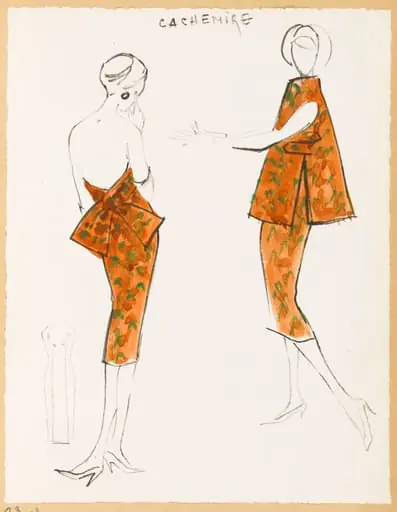
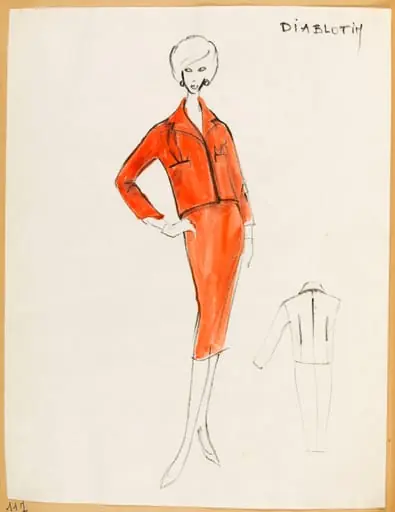
Champ de mars is a pencil drawing from around 1957 by the French fashion designer Carven. It is part of the collection at the Museum of Ethnography. The work presents a stylized female figure in motion, rendered with clean lines and minimal detail. The drawing’s simplicity and focus on attire suggest its function as a fashion study rather than a finished artwork.
Subject & Meaning
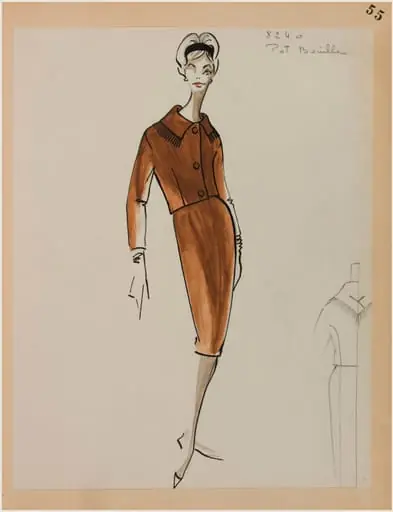
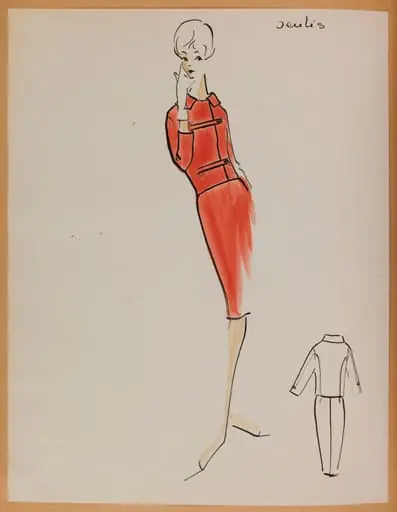
The figure depicts a woman dressed in a coordinated orange ensemble—jacket, belt, skirt, and heels—suggesting mid-century urban elegance. Her pose, with torso turned one way and head another, conveys a sense of quiet movement or contemplation. The lack of facial detail and the emphasis on clothing imply the illustration prioritizes garment design over individual identity.
Technique & Style
A secondary sketch of the garment’s back appears beneath the main image, indicating the artist’s process of exploring cut and structure.
Executed in pencil on plain paper, the drawing uses precise, flowing lines to define form and fabric. The background is left untouched, directing attention to the figure. A secondary sketch of the garment’s back appears beneath the main image, indicating the artist’s process of exploring cut and structure. The label 'CHAMP DE MARS' is handwritten in the upper right, anchoring the work to a specific context.
History & Provenance
The drawing entered the Museum of Ethnography’s collection as part of a broader archive of mid-century fashion materials. Its origin lies within Carven’s design studio, where such sketches served as working documents for garment production. The piece was likely preserved for its representation of postwar French fashion aesthetics rather than as a standalone artwork.
Context
Created during a period when Paris remained a global fashion capital, the drawing reflects the era’s emphasis on tailored, feminine silhouettes. The Champ de Mars, a Parisian landmark, may reference the location of Carven’s atelier or symbolize the urban woman’s environment. Such illustrations were essential tools in couture houses, bridging design concept and craftsmanship.
Legacy
As a preserved design study, Champ de mars offers insight into the practical side of mid-century fashion creation. It contributes to scholarly understanding of how designers like Carven translated aesthetic ideas into wearable forms. The drawing remains a quiet testament to the labor behind fashion’s public face.
Artist & collection
Artist
These delicate ink-on-paper drawings capture the quiet poetry of everyday things: pinecones, reeds, apples.
Museum
Palais Galliera - Musée de la Mode de la Ville de Paris
Continue through works from the same source collection.