Artwork
Champs-Elysées
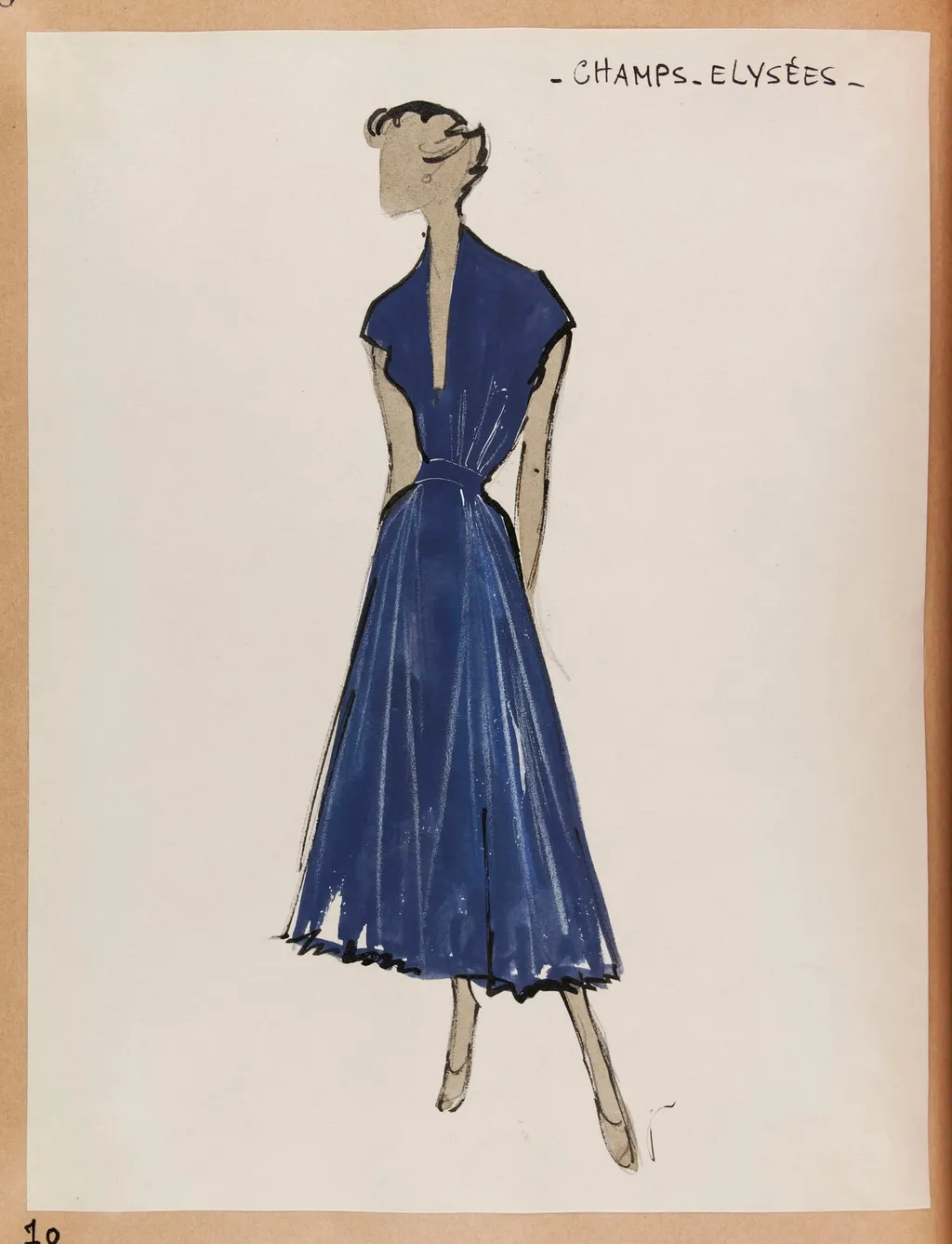
Champs-Elysées is a drawing by Carven. It dates from 1951 and is held in the collection of the Palais Galliera - Musée de la Mode de la Ville de Paris.
About this work
Overview
Created around 1951, this image is attributed to the French fashion house Carven. Though labeled as a painting, it functions as a fashion illustration, capturing a moment of contemporary style rather than a narrative scene. It resides in the Museum of Ethnography, where it is preserved as an artifact of mid-century French fashion design and visual culture.
Subject & Meaning
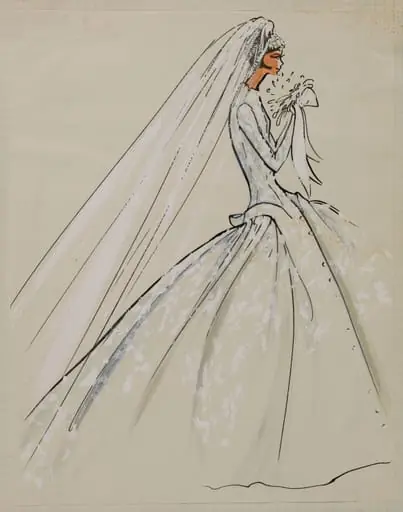
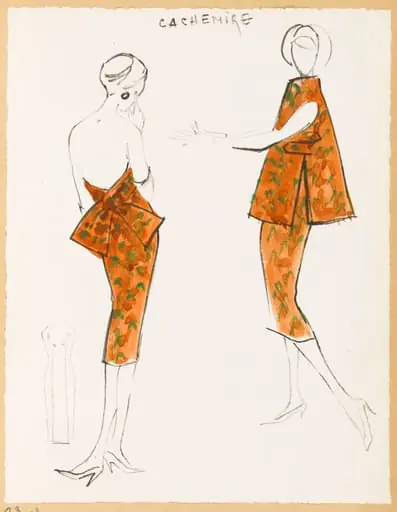
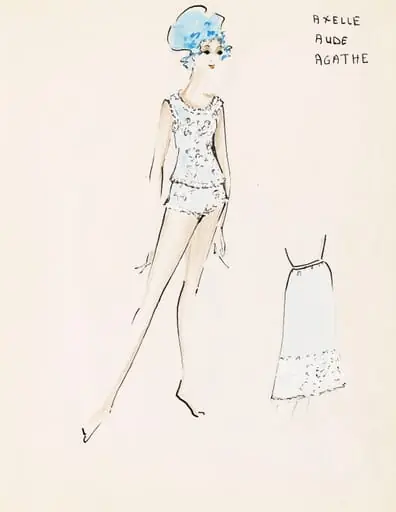
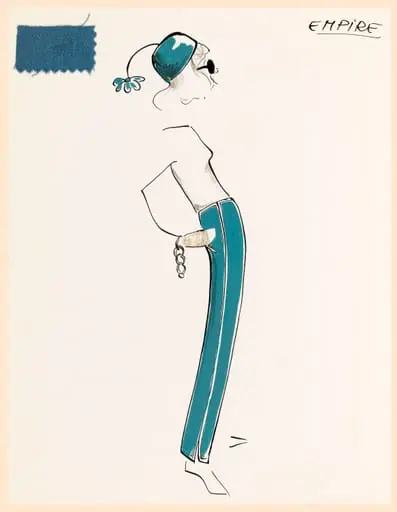
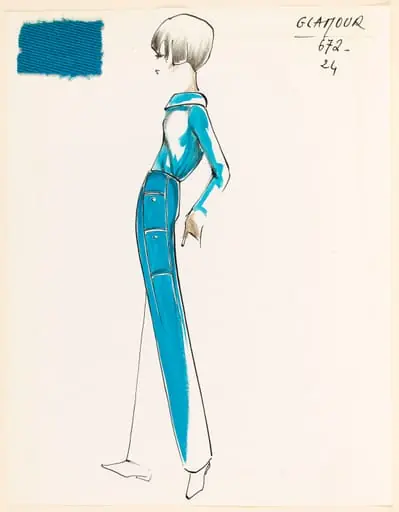
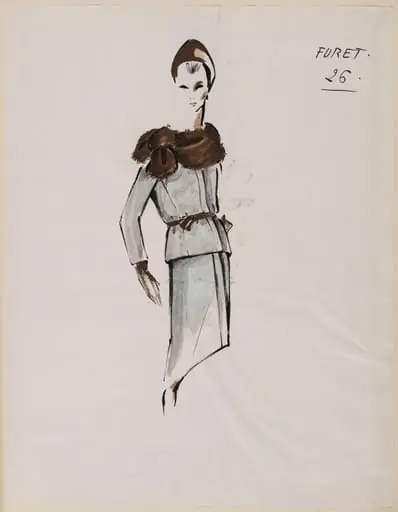
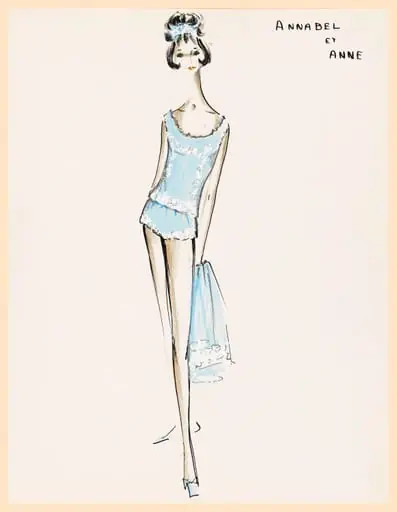
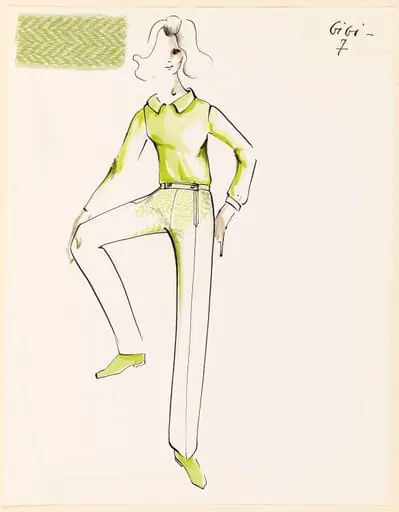
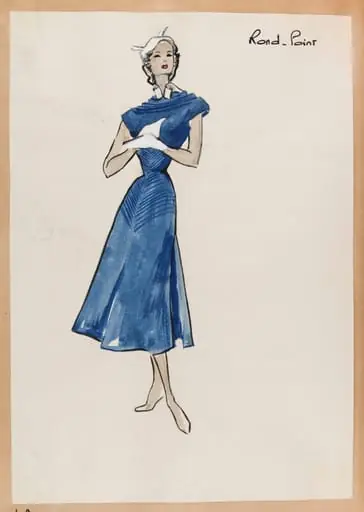
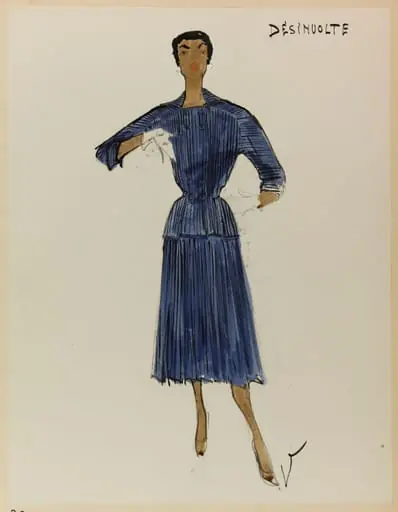
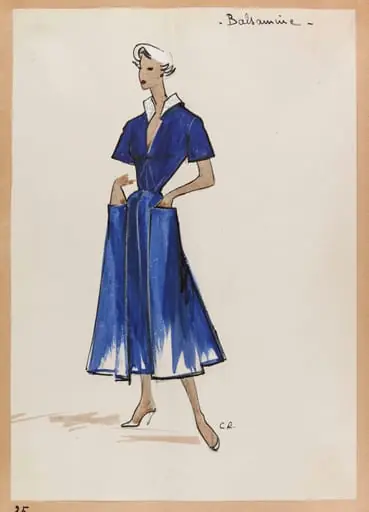
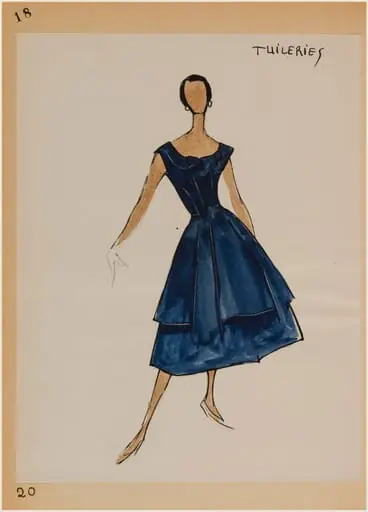
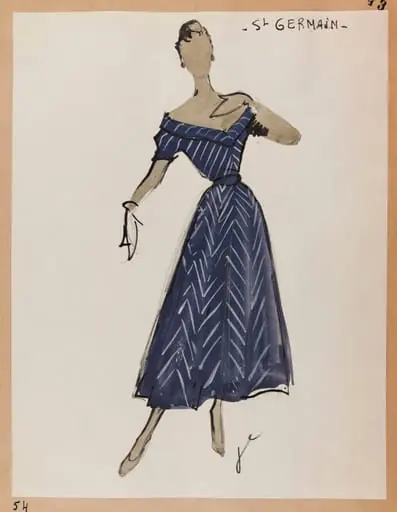
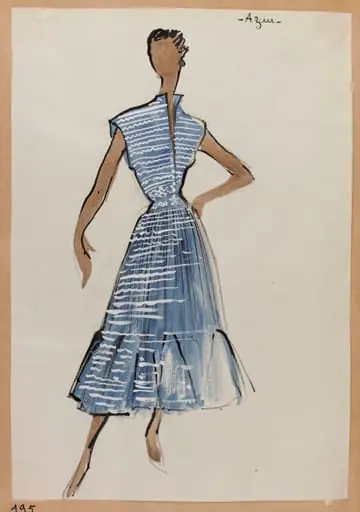
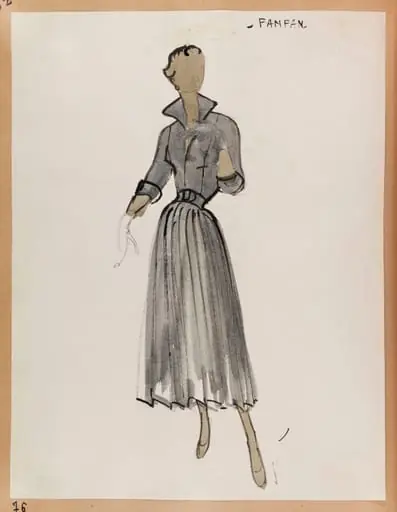
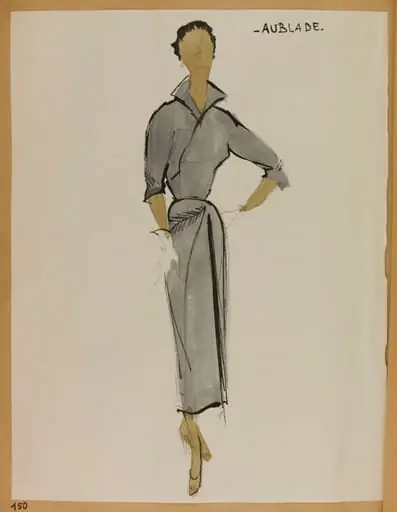
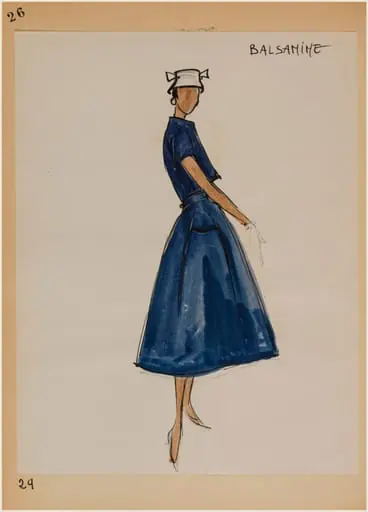
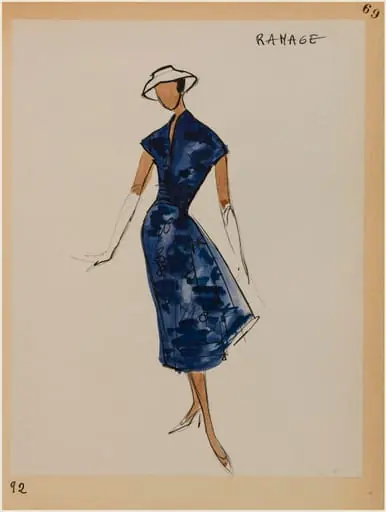
The figure is a woman dressed in a blue, pleated dress with a low neckline and a matching waist belt, cut just below the knee. Her face is omitted, and her posture is turned slightly to the right, emphasizing the garment’s form over individual identity. The absence of facial features shifts focus entirely to the clothing, reflecting the era’s emphasis on design as self-expression.
Technique & Style
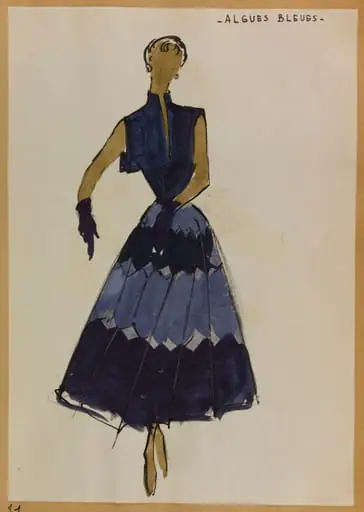
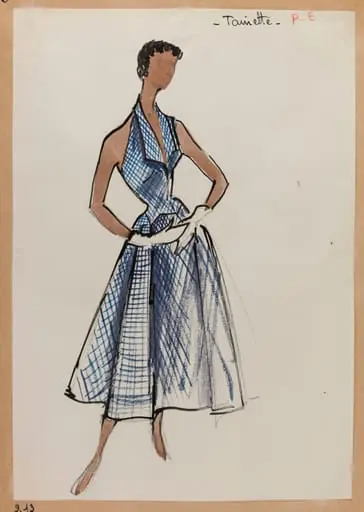
The illustration employs flat, unmodulated color and clean lines, typical of fashion drawings from the period. The solid beige background eliminates contextual detail, isolating the figure to highlight silhouette and fabric structure. Pleats are rendered with precision, suggesting movement and texture without shading or depth, aligning with commercial illustration conventions of the time.
History & Provenance
The work originated as part of Carven’s promotional materials, likely used in fashion magazines or client presentations during the early 1950s. It entered the Museum of Ethnography’s collection as an example of postwar French textile and dress design, valued for its representation of civilian fashion rather than haute couture spectacle.
Context
In postwar Paris, fashion houses like Carven emphasized wearable elegance over extravagance. This illustration reflects a broader trend toward simplified silhouettes and restrained color palettes, responding to both economic pragmatism and a cultural shift toward modernity. Such images helped define the aesthetic of everyday French women during the decade.
Legacy
Though not signed or individually celebrated, the image endures as a representative artifact of mid-century French fashion illustration. It contributes to scholarly understanding of how clothing was visually marketed and perceived, offering insight into the quiet, everyday sophistication that defined postwar style beyond the runway.
Artist & collection
Artist
These delicate ink-on-paper drawings capture the quiet poetry of everyday things: pinecones, reeds, apples.
Museum
Palais Galliera - Musée de la Mode de la Ville de Paris
Continue through works from the same source collection.