Artwork
Chantilly
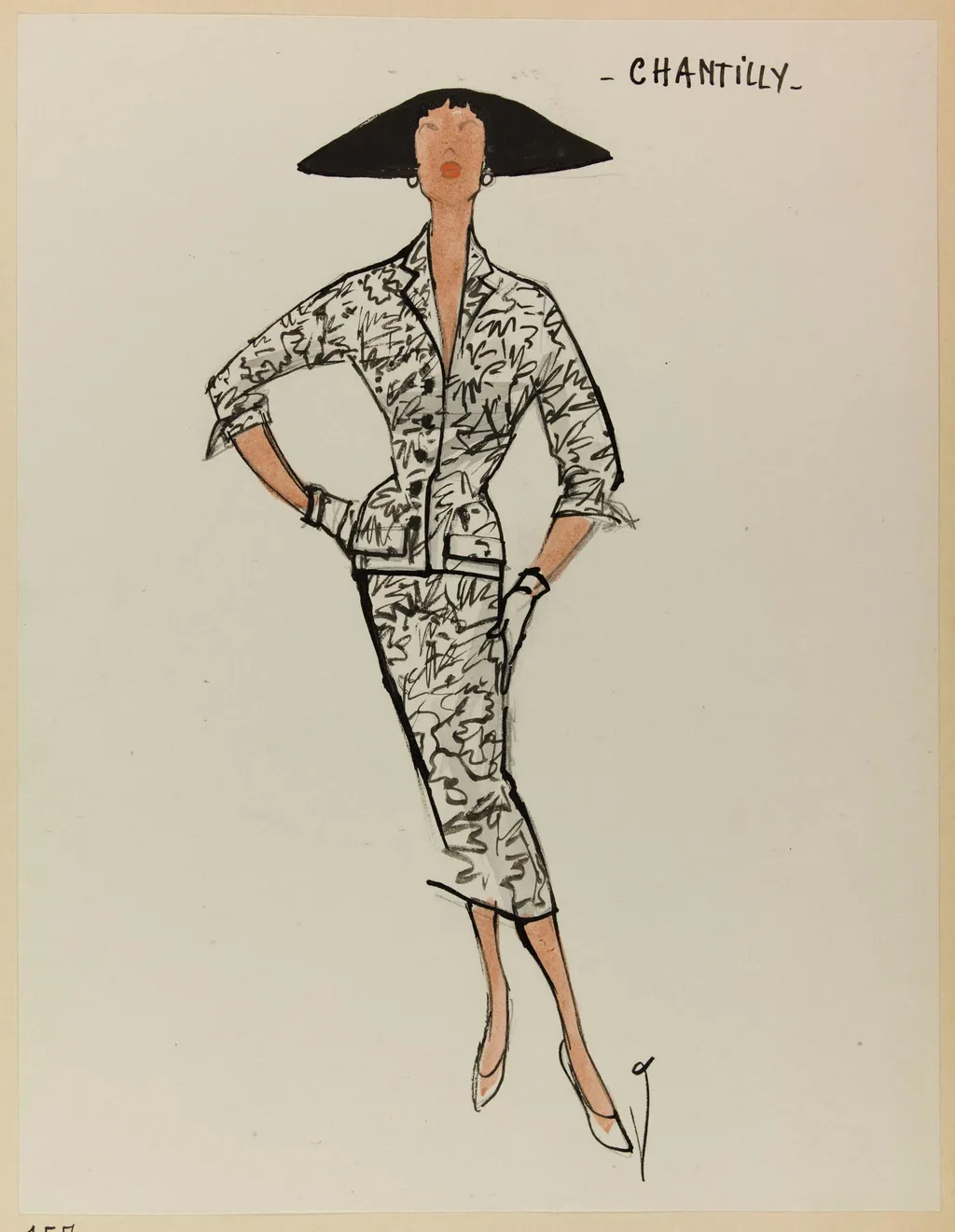
Chantilly is a drawing by Carven. It dates from 1953 and is held in the collection of the Palais Galliera - Musée de la Mode de la Ville de Paris.
About this work
Overview
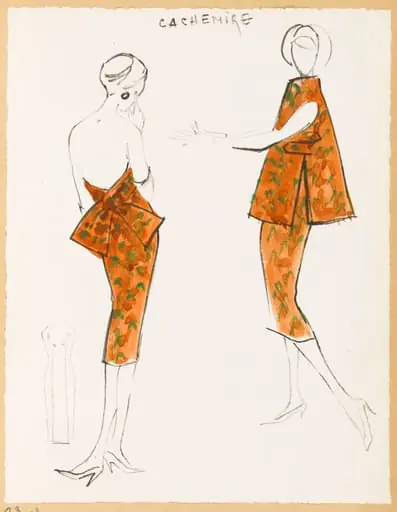
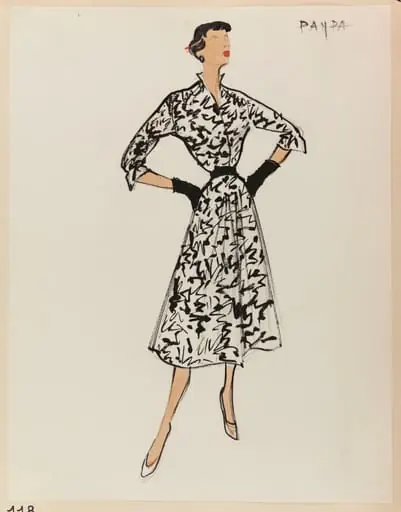
Created around 1953, this ink drawing is attributed to the French fashion designer Carven. It depicts a woman in a simplified, stylized pose, dressed in a knee-length suit adorned with a geometric leaf motif. The work is held in the collection of the Museum of Ethnography, where it is preserved as a record of mid-century fashion design rather than as a fine art object.
Subject & Meaning
The figure stands with one hand on her hip, exuding a quiet poise. Her attire—loose-fitting and patterned—suggests a blend of comfort and deliberate style, characteristic of Carven’s postwar designs. The title 'Chantilly' may reference the French town known for lace, or evoke a sense of delicate elegance, though no direct link to the location or textile is confirmed in the drawing itself.
Technique & Style
Rendered with clean, confident lines, the drawing emphasizes form over detail. Fabric folds are suggested through minimal strokes, and the bold leaf pattern is rendered as repeating shapes rather than naturalistic foliage. The absence of shading and the flatness of the composition reflect a design-oriented approach, prioritizing silhouette and print placement over realism.
History & Provenance
The drawing was likely produced as a design study or presentation piece during Carven’s active years in Paris. It entered the Museum of Ethnography’s collection as part of a broader effort to document fashion as cultural artifact. The signature 'Carven' confirms authorship, aligning it with the designer’s known output from the early 1950s.
Context
The work sits at the intersection of haute couture and ready-to-wear, capturing a moment when fashion began to embrace more relaxed, individualized expression.
In the early 1950s, Carven was known for introducing playful, accessible designs to a postwar clientele. This sketch reflects a trend toward lighter silhouettes and graphic prints, departing from the structured forms of the previous decade. The work sits at the intersection of haute couture and ready-to-wear, capturing a moment when fashion began to embrace more relaxed, individualized expression.
Legacy
As a design artifact, the drawing illustrates how fashion houses documented their creative process before mass production. While not widely exhibited, it contributes to scholarly understanding of Carven’s aesthetic priorities and the role of sketching in mid-century French fashion. Its preservation in an ethnographic context underscores fashion’s place in cultural history.
Artist & collection
Artist
These delicate ink-on-paper drawings capture the quiet poetry of everyday things: pinecones, reeds, apples.
Museum
Palais Galliera - Musée de la Mode de la Ville de Paris
Continue through works from the same source collection.