Artwork
Charmille
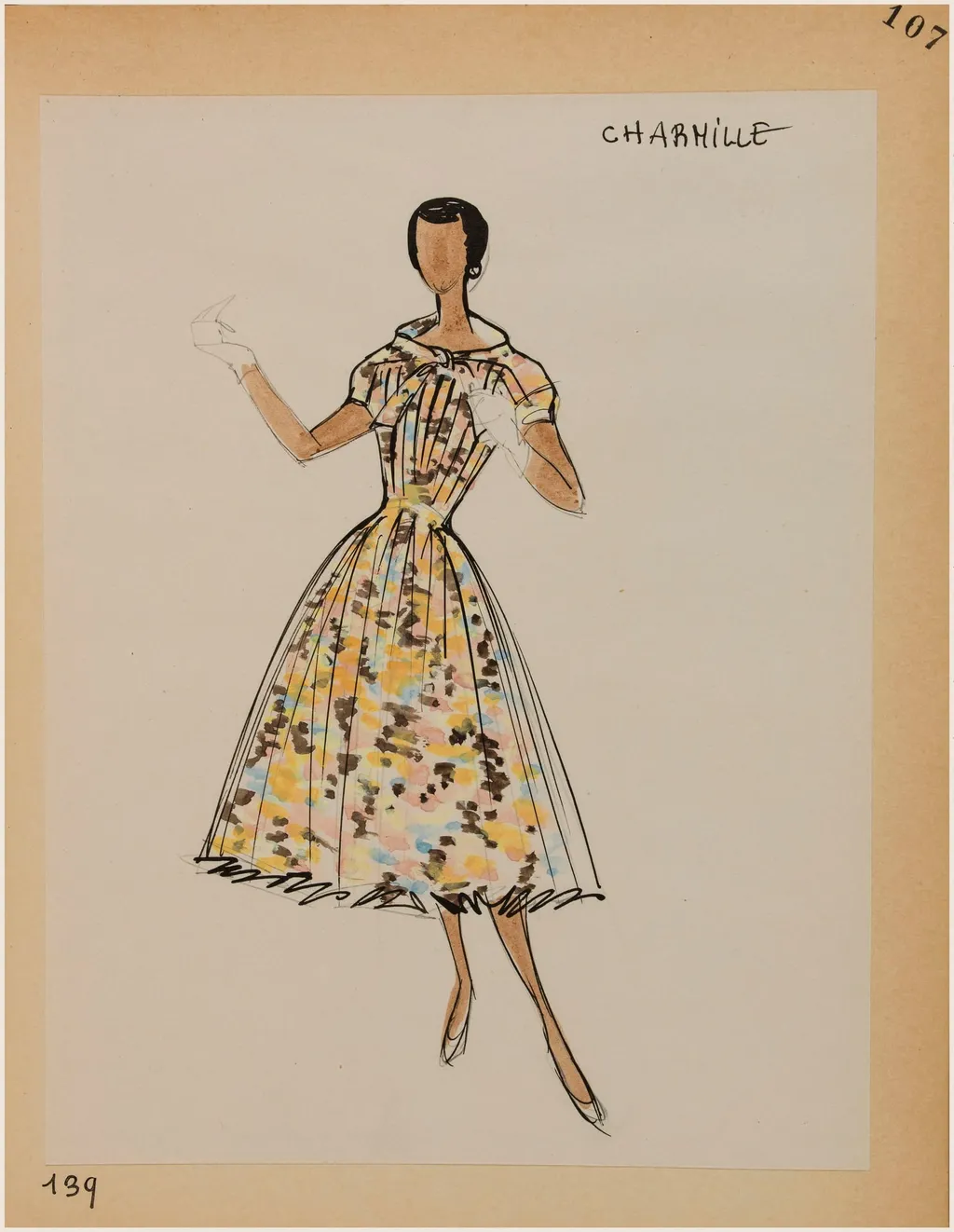
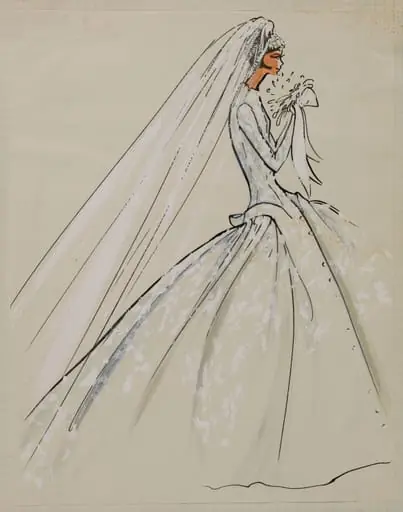
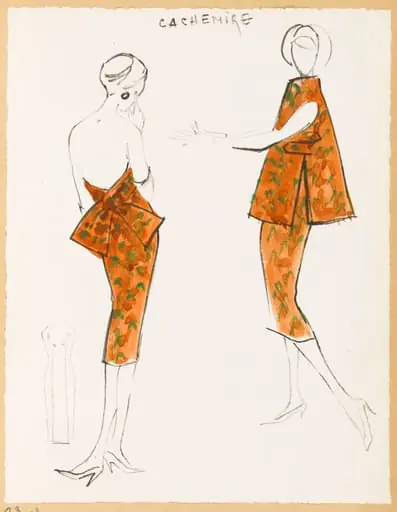
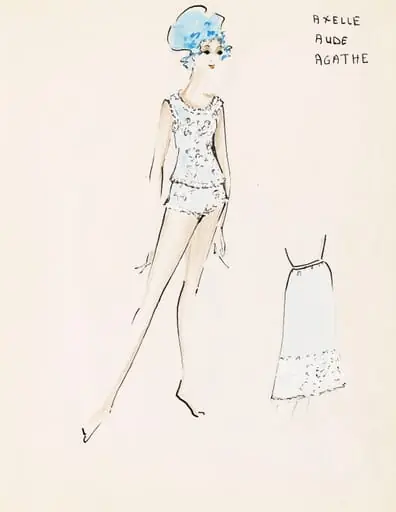
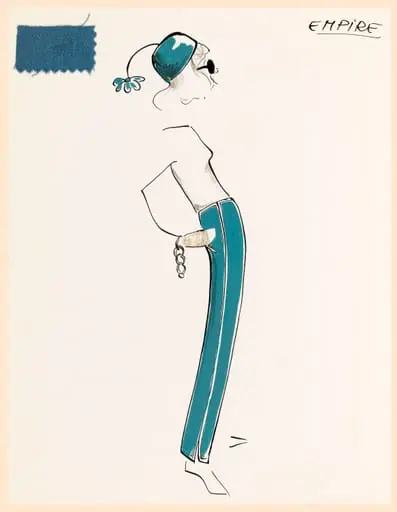
Charmille is a drawing by Carven. It dates from 1956 and is held in the collection of the Palais Galliera - Musée de la Mode de la Ville de Paris.
About this work
Overview
The work is part of the Museum of Ethnography’s collection, where it is preserved as an example of mid-century fashion illustration.
Charmille is a 1956 ink drawing by designer Carven, depicting a woman wearing a patterned dress. Executed with fluid, assured lines, the sketch captures a moment of casual poise. The work is part of the Museum of Ethnography’s collection, where it is preserved as an example of mid-century fashion illustration. Its informal quality suggests it may have served as a design study rather than a finished presentation piece.
Subject & Meaning
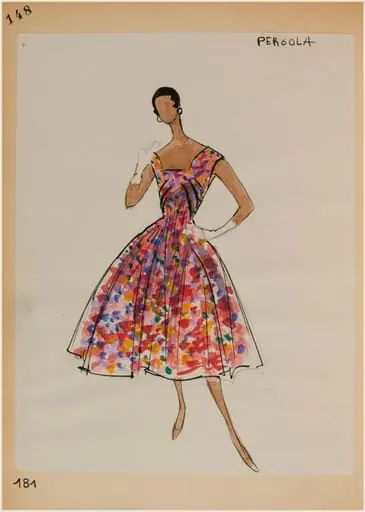
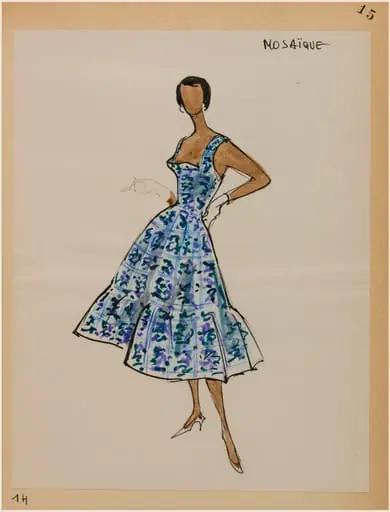
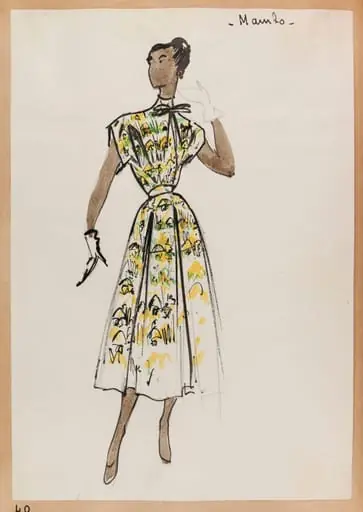
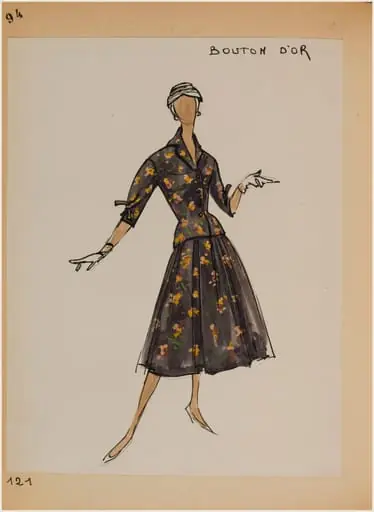
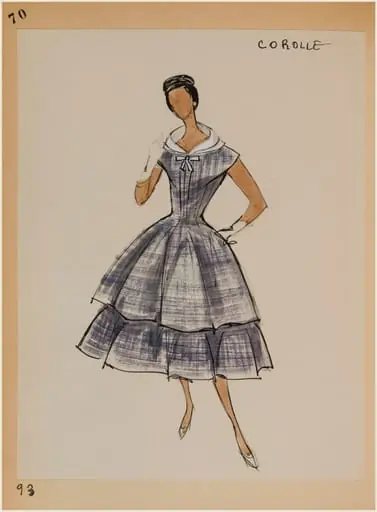
The figure in Charmille is portrayed with relaxed ease, one hand on her hip and the other gently touching her skirt. The dress, named in the top right corner, features a vibrant, irregular pattern of yellow, blue, and brown splotches, suggesting a playful, non-traditional aesthetic. The pose and attire together convey a sense of modern femininity—unposed, comfortable, and self-assured, reflecting postwar shifts in women’s daily attire and self-presentation.
Technique & Style
Carven employed swift, confident ink lines to define the figure and garment, avoiding overrefinement in favor of immediacy. Cross-hatching is used sparingly to suggest volume and shadow, particularly along the skirt’s folds and the bodice’s contours. The technique prioritizes movement and gesture over precision, aligning with fashion sketch traditions that valued expressive speed over polished finish.
History & Provenance
Created in 1956, Charmille entered the collection of the Museum of Ethnography at an unknown date, likely through acquisition or donation tied to Carven’s design archive. The museum’s focus on cultural artifacts of dress supports its inclusion as a document of mid-century French fashion practice. No public records detail its creation context, but its survival suggests recognition of its significance within design history.
Context
In the mid-1950s, French fashion houses like Carven emphasized wearable elegance with a touch of whimsy. Charmille reflects this era’s move toward less rigid silhouettes and bolder, hand-painted patterns in ready-to-wear. The sketch’s informality contrasts with haute couture presentations, instead capturing the everyday appeal of designs meant for a broader, modern clientele.
Legacy
Charmille endures as a quiet testament to the role of sketching in fashion design—not as final product, but as a bridge between imagination and production. Its preservation in a museum of ethnography underscores how fashion drawings are now viewed as cultural records. The work contributes to understanding how designers translated personal style into accessible clothing during a transformative period in women’s fashion.
Artist & collection
Artist
These delicate ink-on-paper drawings capture the quiet poetry of everyday things: pinecones, reeds, apples.
Museum
Palais Galliera - Musée de la Mode de la Ville de Paris
Continue through works from the same source collection.