Artwork
Corolle
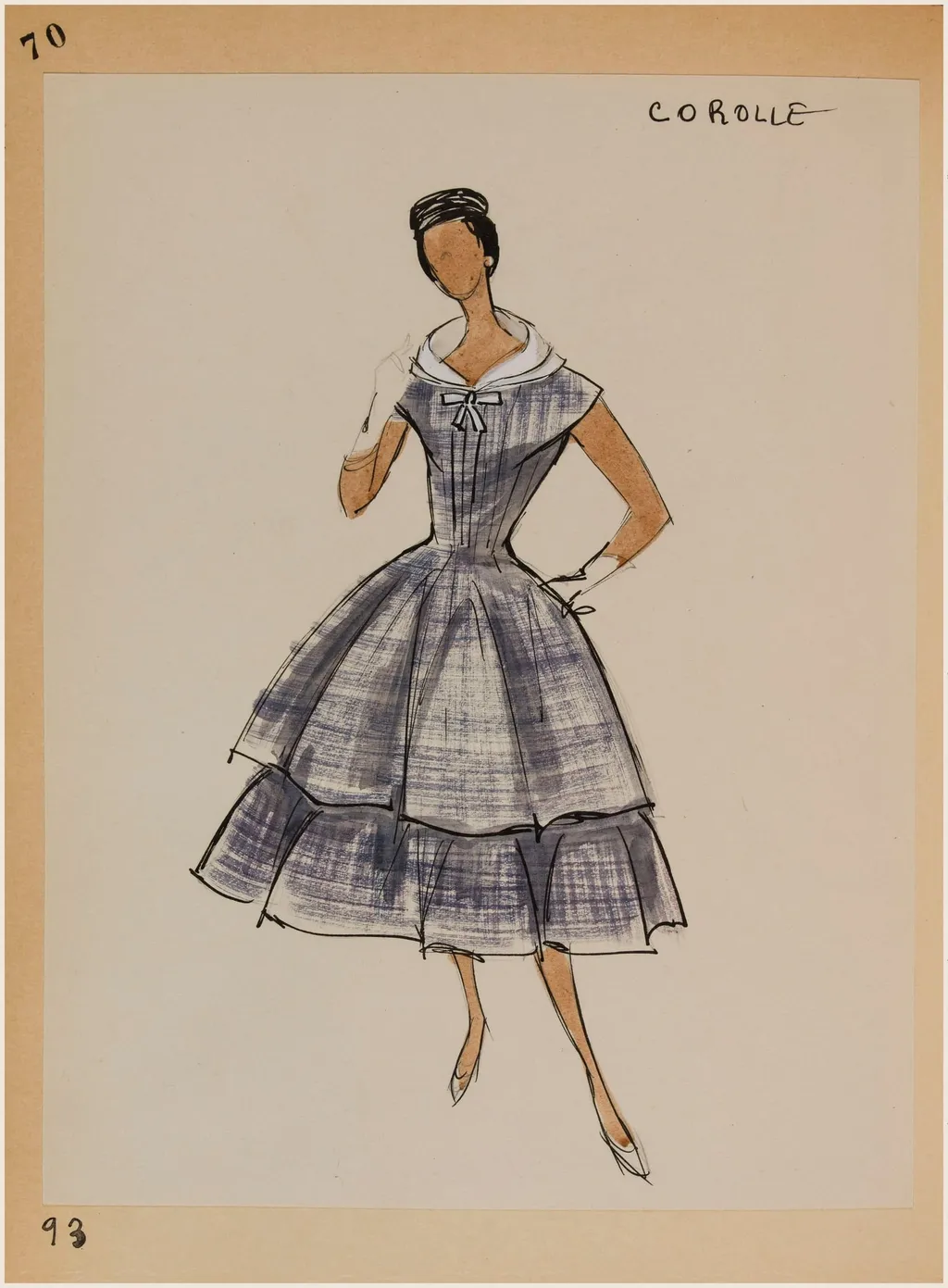
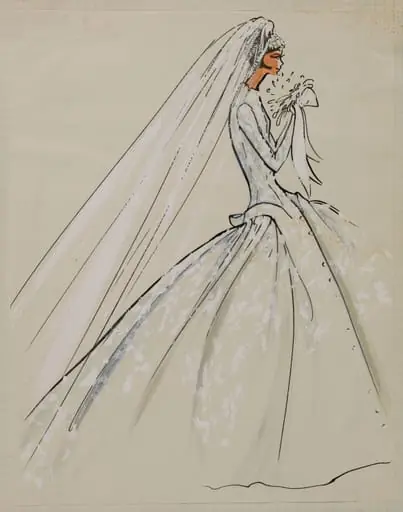
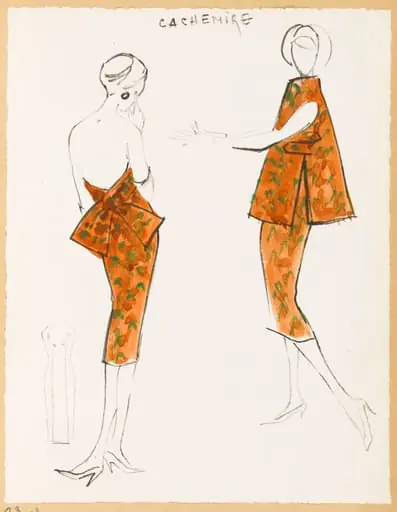
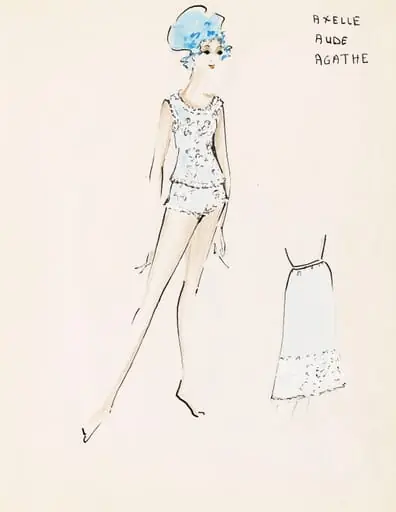
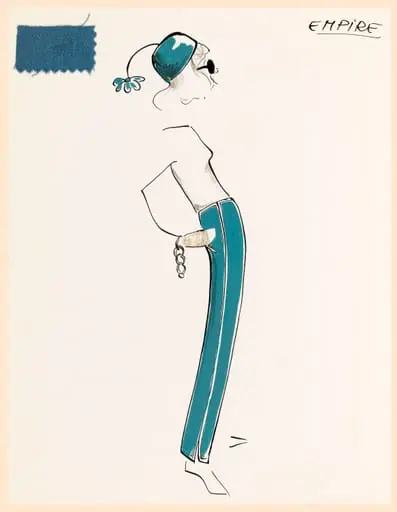
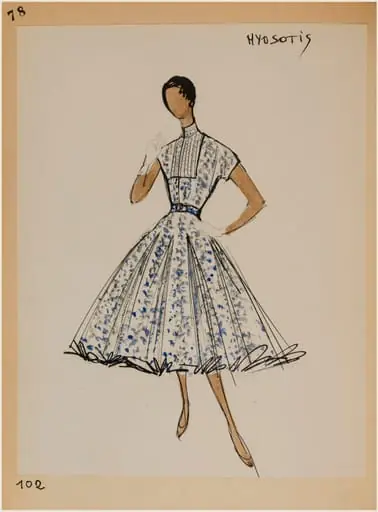
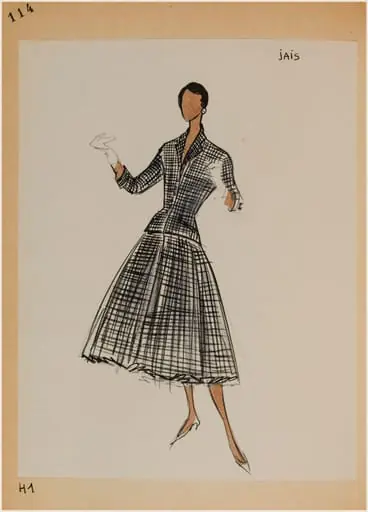
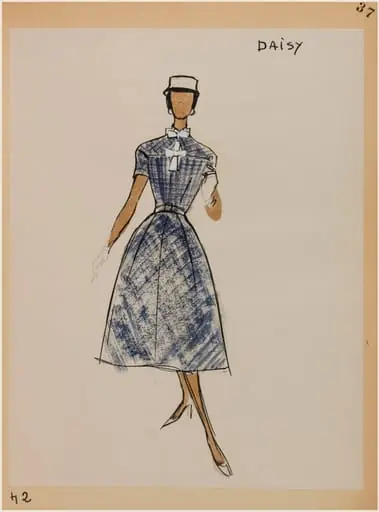
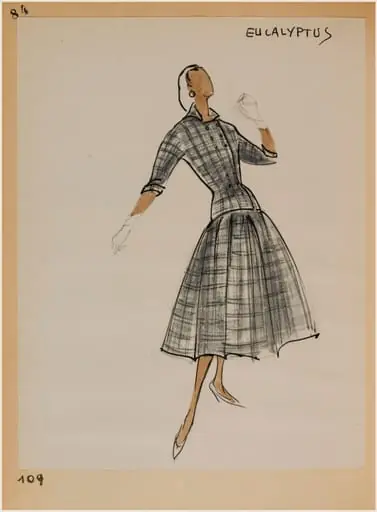
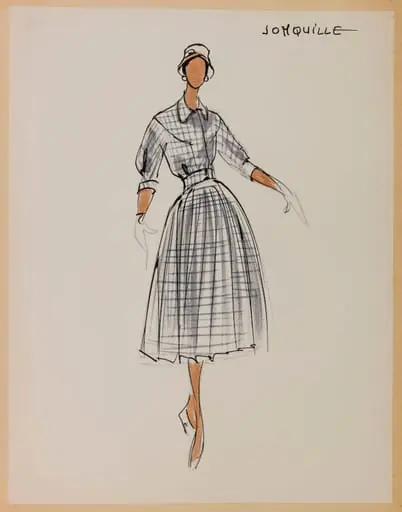
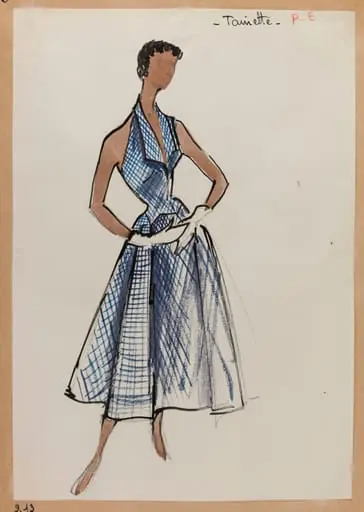
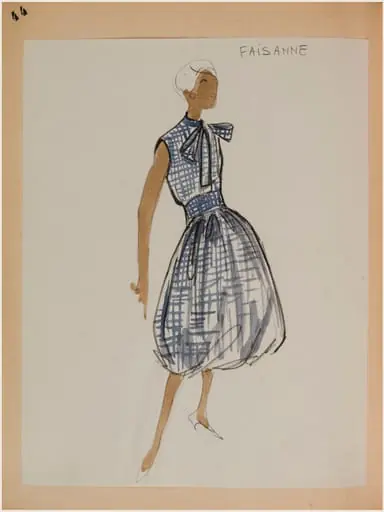
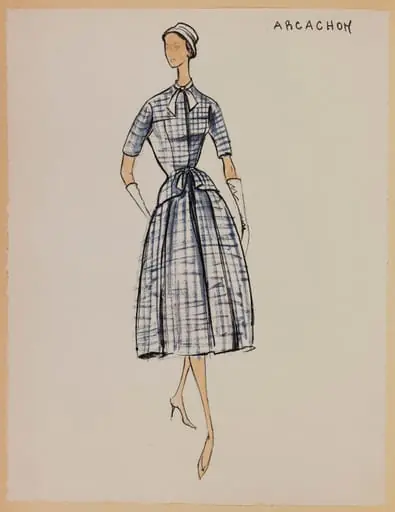
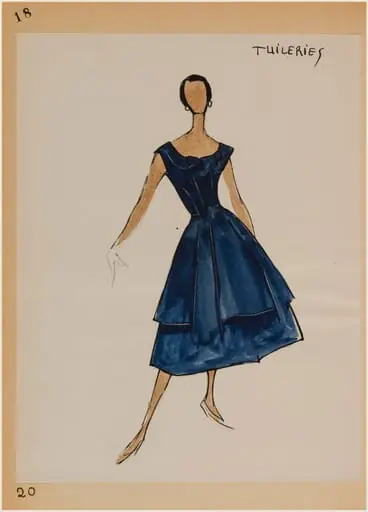
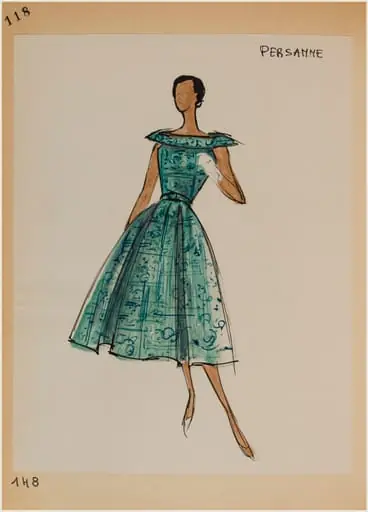
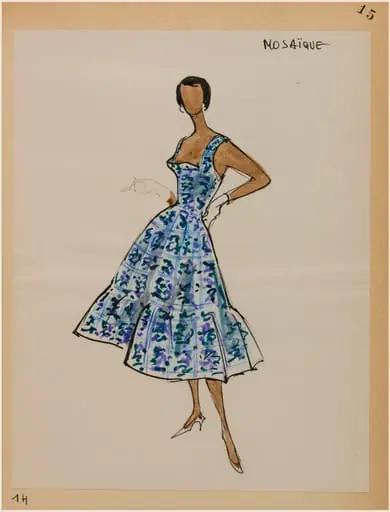
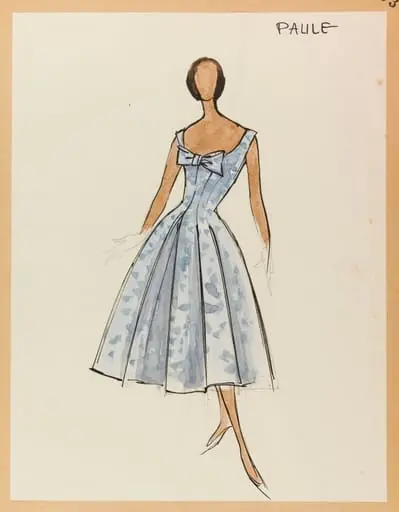
Corolle is a drawing by Carven. It dates from 1956 and is held in the collection of the Palais Galliera - Musée de la Mode de la Ville de Paris.
About this work
Overview
Executed in ink or pencil, it captures a moment of casual elegance, depicting a woman in a dress designed for movement and ease.
Corolle, created in 1956 by the French fashion house Carven, is a fashion sketch preserved in the Museum of Ethnography. Executed in ink or pencil, it captures a moment of casual elegance, depicting a woman in a dress designed for movement and ease. The work reflects mid-century French fashion’s shift toward relaxed silhouettes and everyday sophistication, blending artistic draftsmanship with wearable design.
Subject & Meaning
The figure in Corolle is portrayed with quiet confidence: her neatly pinned hair and poised posture suggest composure, while the cigarette adds a touch of modern informality. The dress, neither formal nor athletic, embodies a postwar ideal of feminine autonomy—graceful yet unencumbered. The bow and shawl collar reference classical tailoring, reinterpreted for a generation embracing subtle individuality over rigid formality.
Technique & Style
Carven’s sketch employs rapid, fluid lines to suggest the drape and weight of lightweight fabric. The flared skirt and fitted bodice are rendered with minimal detail, relying on implied motion rather than precision. The shawl collar is defined by a single continuous curve, and the bow is suggested with a few deliberate strokes. This economy of line prioritizes the dress’s rhythm over literal representation, aligning with fashion illustration traditions of the era.
History & Provenance
Created in 1956 during Carven’s peak influence in Parisian couture, Corolle was likely a design study or presentation piece. It entered the Museum of Ethnography’s collection as part of a broader effort to document fashion as cultural artifact. Its preservation underscores the institution’s interest in everyday dress as a reflection of social norms, rather than solely ceremonial or historical garments.
Context
In the mid-1950s, Parisian fashion moved away from the structured silhouettes of the 1940s toward softer, more fluid forms. Carven’s designs, including this one, catered to women seeking practicality without sacrificing style. The shawl collar, inspired by earlier 19th-century wraps, was revived as a symbol of understated refinement. The cigarette, a common motif in fashion imagery of the time, signaled modernity and urban life.
Legacy
Corolle remains a quiet testament to the role of fashion sketches in translating design intent. While not a finished garment, it captures the ethos of its moment: a blend of tradition and ease, femininity and independence. Its presence in an ethnographic museum signals a broader recognition of fashion as a cultural practice, worthy of study alongside other material expressions of identity.
Artist & collection
Artist
These delicate ink-on-paper drawings capture the quiet poetry of everyday things: pinecones, reeds, apples.
Museum
Palais Galliera - Musée de la Mode de la Ville de Paris
Continue through works from the same source collection.