Artwork
Chat siamois
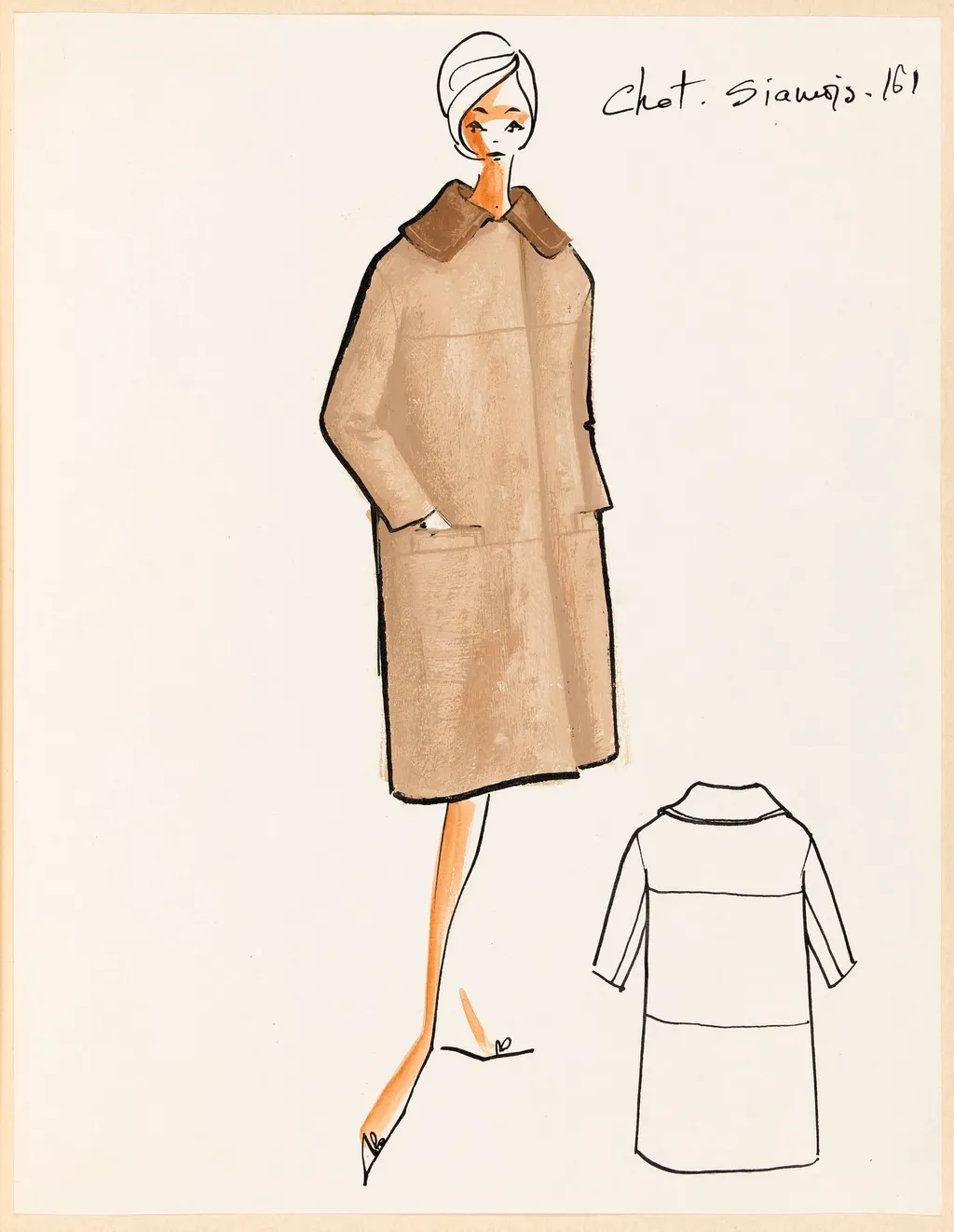
Chat siamois is a drawing by Carven. It dates from 1959 and is held in the collection of the Palais Galliera - Musée de la Mode de la Ville de Paris.
About this work
Overview
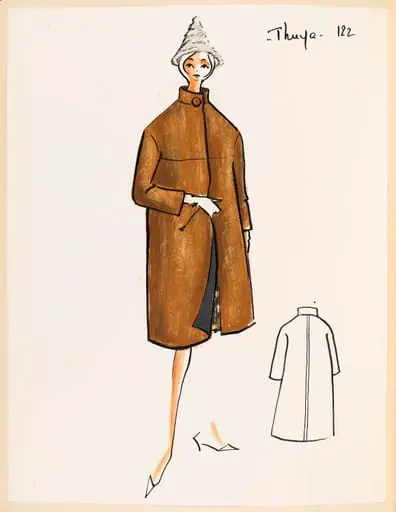
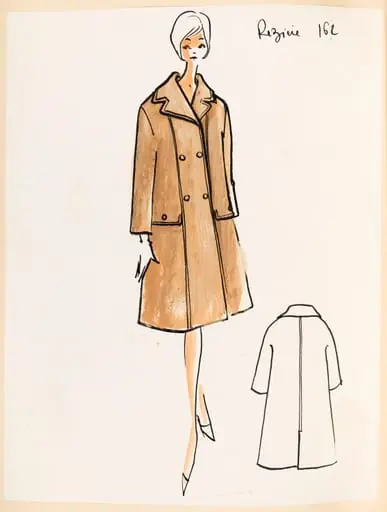
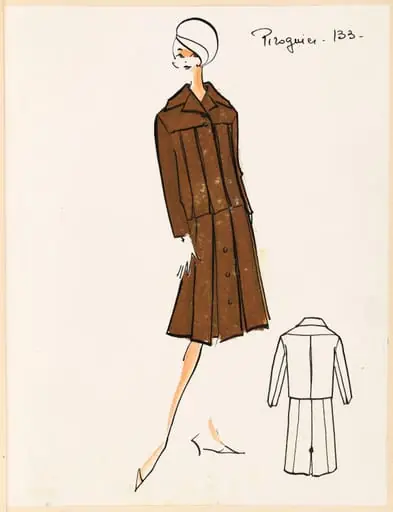
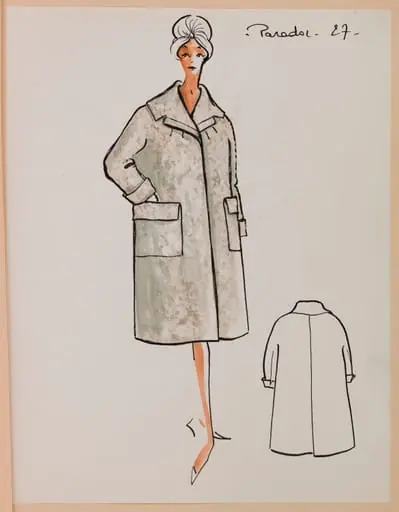
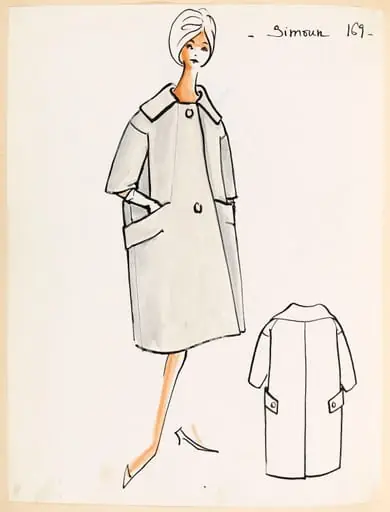
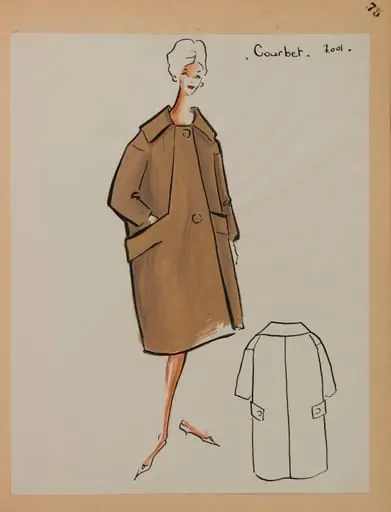
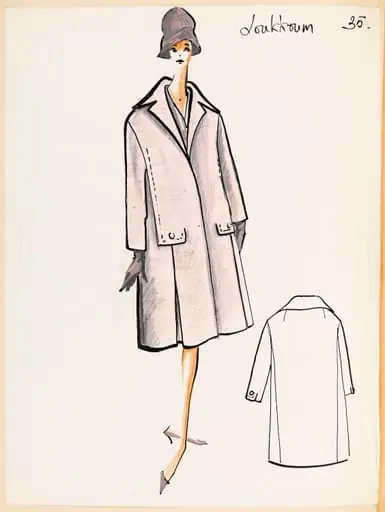
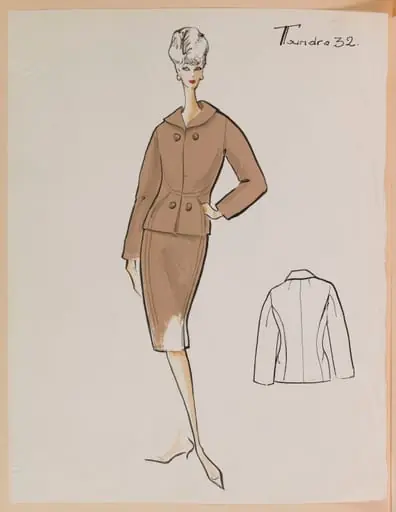
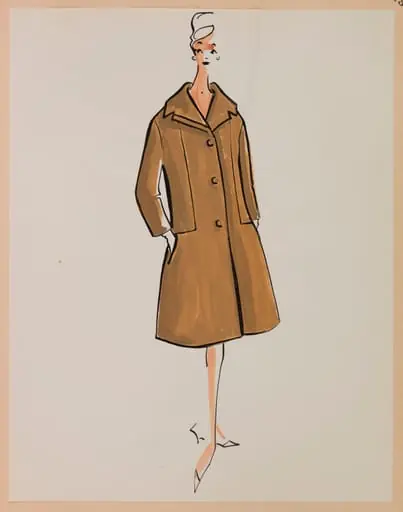
Created around 1959 by the French designer Carven, this sketch depicts a woman in a tailored beige coat with a high collar and two pockets.
Created around 1959 by the French designer Carven, this sketch depicts a woman in a tailored beige coat with a high collar and two pockets. Her posture is upright, hands resting in the pockets, and she wears a minimal headband. Adjacent to the figure is a flat rendering of a matching dress, emphasizing clean silhouettes and short sleeves. The work is held in the collection of the Museum of Ethnography, reflecting its role in documenting mid-century fashion design.
Subject & Meaning
The figure represents an idealized yet understated woman of late 1950s Parisian style—elegant without ornamentation. The focus on practical details like pocket placement and fabric drape suggests an emphasis on wearable, functional design. The absence of facial features shifts attention entirely to the clothing, reinforcing the designer’s interest in form over personal identity.
Technique & Style
Carven employed swift, fluid pencil lines to suggest volume and movement in fabric, avoiding heavy shading. The palette is restrained: beige, brown, and a touch of orange for footwear. The dress is rendered as a flat pattern, contrasting with the three-quarter view of the figure. This dual approach highlights both the garment’s structure and its intended wear on the body.
History & Provenance
The sketch entered the Museum of Ethnography’s collection as part of a broader effort to preserve fashion as cultural artifact. Its origin lies within Carven’s personal design archive, likely used during the production of a seasonal line. The work’s preservation reflects institutional recognition of fashion design as a legitimate field of material culture study.
Context
In the late 1950s, Parisian fashion emphasized refined simplicity after the austerity of wartime. Carven’s designs catered to a clientele seeking elegance without excess. This sketch aligns with broader trends in postwar European fashion, where tailoring and quiet sophistication replaced overt decoration, mirroring societal shifts toward practicality and modernity.
Legacy
Though not widely exhibited, this sketch remains a representative example of Carven’s design philosophy—clarity of line, restraint in color, and attention to functional detail. It contributes to scholarly understanding of how fashion houses documented their creative process, offering insight into the transition from sketch to garment in mid-century couture practice.
Artist & collection
Artist
These delicate ink-on-paper drawings capture the quiet poetry of everyday things: pinecones, reeds, apples.
Museum
Palais Galliera - Musée de la Mode de la Ville de Paris
Continue through works from the same source collection.