Artwork
'Claude'
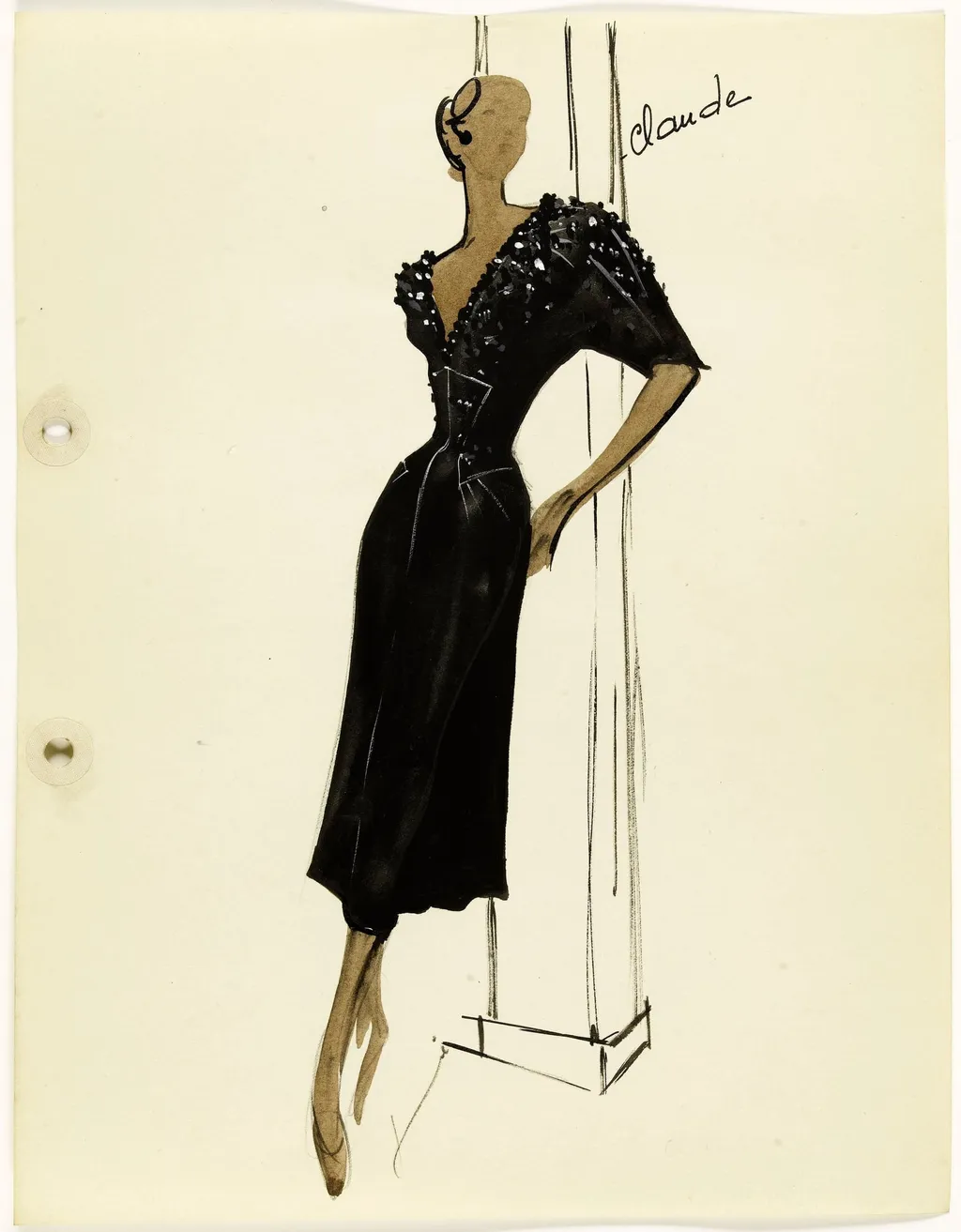
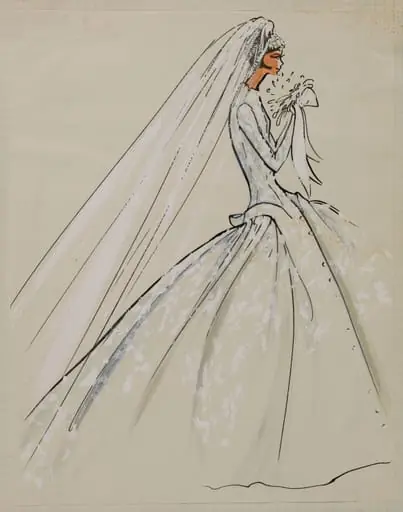
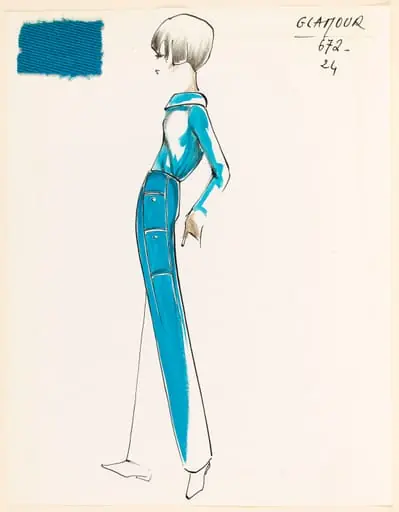
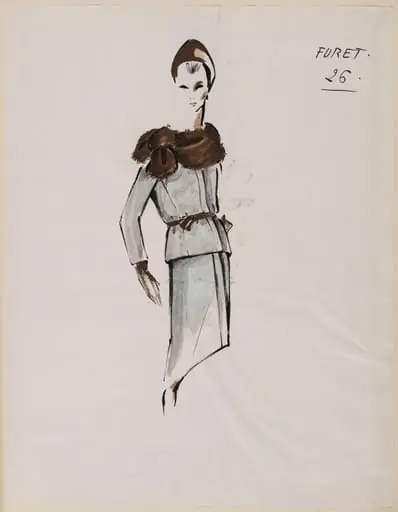
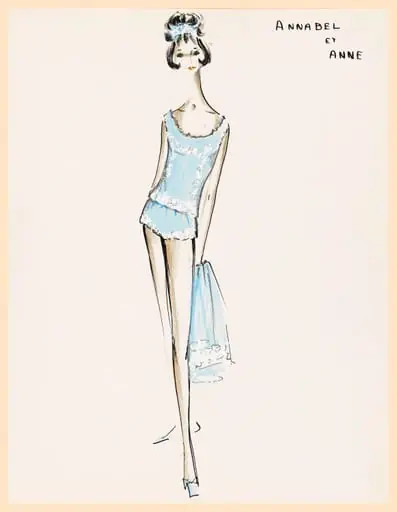
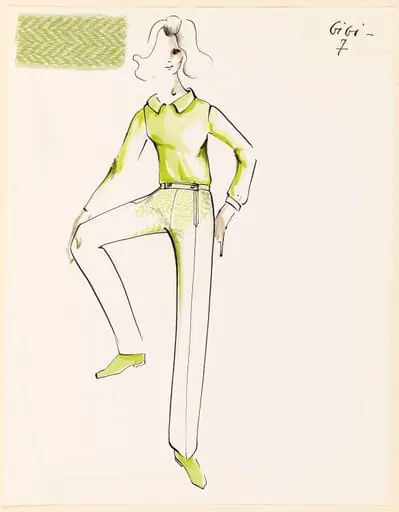
'Claude' is a drawing by Carven. It dates from 1951 and is held in the collection of the Palais Galliera - Musée de la Mode de la Ville de Paris.
About this work
Overview
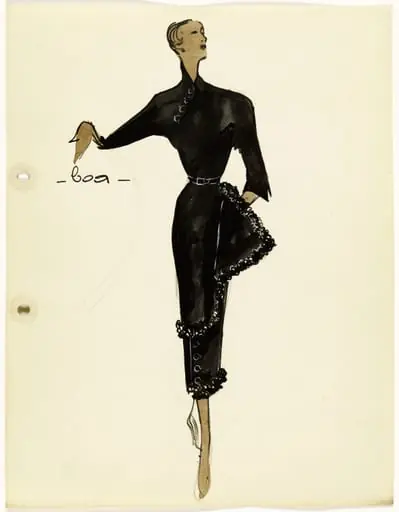
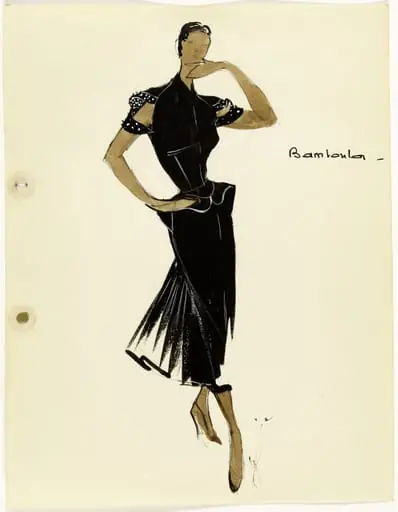
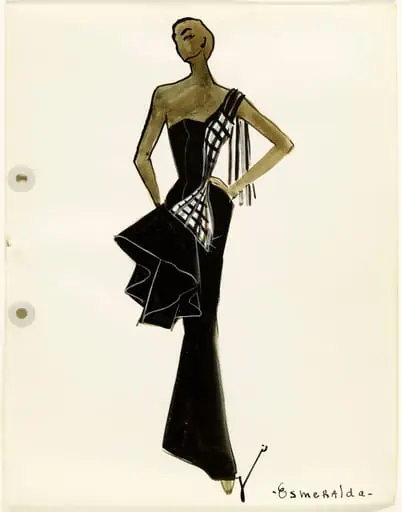
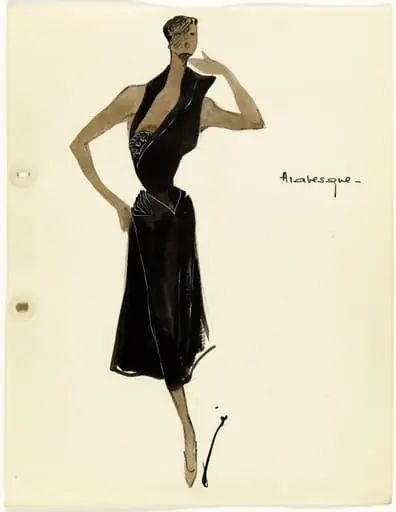
The drawing captures the garment’s silhouette with swift, assured lines, suggesting it was made as a design study rather than a finished illustration.
Created around 1951 by the designer Carven, this ink sketch is part of the Museum of Ethnography’s collection. It depicts a dress named 'Claude,' not a portrait of a woman. The drawing captures the garment’s silhouette with swift, assured lines, suggesting it was made as a design study rather than a finished illustration. The plain background and minimal detail focus attention on the clothing’s form.
Subject & Meaning
The subject is a women’s dress, not a person. The garment features a deep V-neck, puffed sleeves, and a narrow, straight skirt—characteristic of early 1950s haute couture. The label 'Claude' refers to the dress’s name, reflecting Carven’s practice of assigning personal titles to designs. The relaxed pose of the figure suggests ease and natural movement, aligning with the dress’s intended wearability.
Technique & Style
Executed in ink with loose, confident strokes, the sketch prioritizes fluidity over precision. Limbs are suggested with minimal lines, and shading is absent, emphasizing contour and structure. The artist’s hand is evident in the bold, unhesitating marks, indicating rapid execution. This approach reflects the functional nature of fashion drawings: to convey form and detail quickly for production.
History & Provenance
The drawing entered the Museum of Ethnography’s holdings as part of a collection documenting mid-century fashion design. Carven, a French couturier, produced such sketches during her active years in Paris. While the exact date of creation is approximate, the style aligns with her work from the early 1950s. The piece remains in the museum’s archive, preserved as a record of design practice rather than fine art.
Context
In the postwar era, fashion houses like Carven’s emphasized tailored elegance and feminine silhouettes. This sketch reflects trends from the early 1950s, when structured shoulders and narrow skirts contrasted with wartime austerity. Designers often used quick sketches to communicate ideas to ateliers; this piece exemplifies that working method, bridging creative vision and textile craftsmanship.
Legacy
The sketch endures as a document of mid-century French fashion design methodology. It illustrates how couturiers translated aesthetic ideas into wearable forms through economical draftsmanship. While not widely exhibited, it contributes to scholarly understanding of how design decisions were made behind the scenes, preserving the quiet labor of fashion creation.
Artist & collection
Artist
These delicate ink-on-paper drawings capture the quiet poetry of everyday things: pinecones, reeds, apples.

Museum
Palais Galliera - Musée de la Mode de la Ville de Paris
Continue through works from the same source collection.