Artwork
'Arabesque'
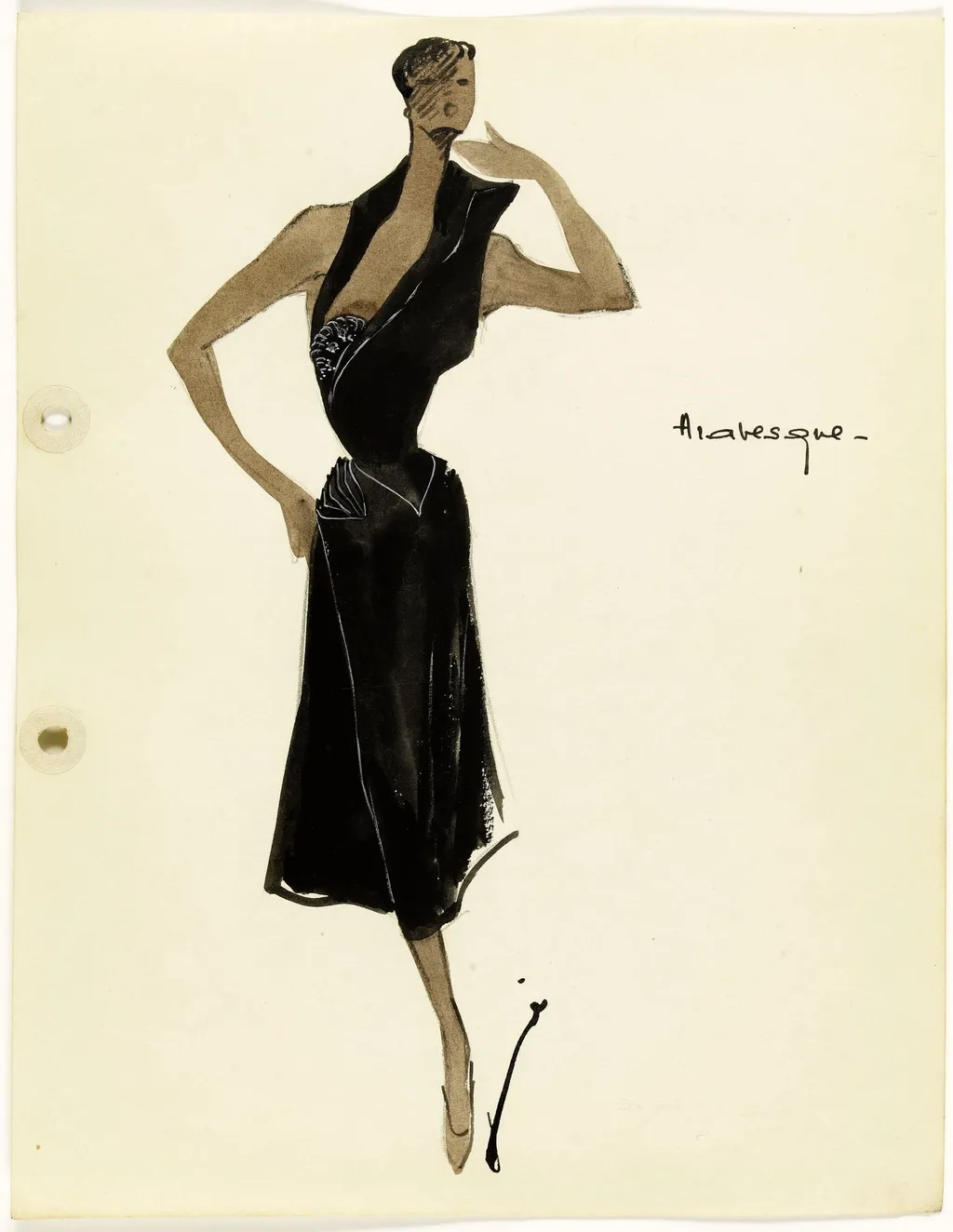
'Arabesque' is a drawing by Marie-Louise Carven. It dates from 1951 and is held in the collection of the Palais Galliera - Musée de la Mode de la Ville de Paris.
About this work
Overview
Created around 1951, *Arabesque* is a pencil drawing by French designer Marie-Louise Carven, reflecting her approach to fashion as both art and wearable form.
Created around 1951, *Arabesque* is a pencil drawing by French designer Marie-Louise Carven, reflecting her approach to fashion as both art and wearable form. Though produced as a design study, it was later acquired by the Museum of Ethnography, signaling its cultural resonance beyond the atelier. The piece captures a singular figure in poised stillness, embodying the quiet elegance Carven cultivated in her work during the postwar years.
Subject & Meaning
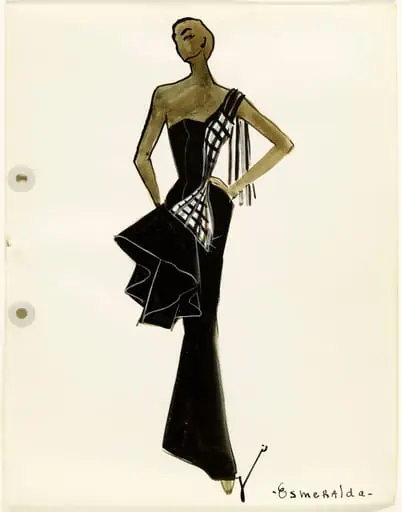
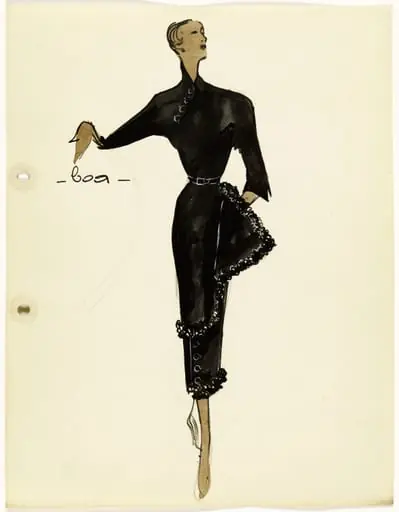
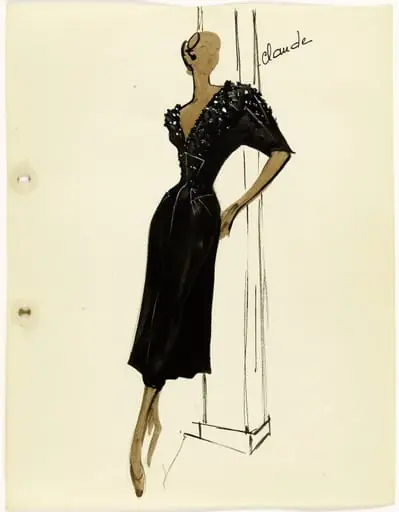
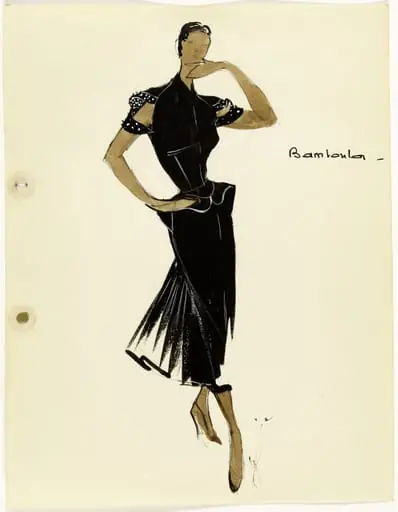
The figure in *Arabesque* stands with one hand resting on her hip and the other near her face, suggesting introspection or adjustment. Her sleeveless black dress, low-cut and adorned with a subtle motif on the bodice, emphasizes streamlined form over ornament. The short, sleek hairstyle and composed posture reflect mid-century ideals of modern femininity — refined, self-possessed, and deliberately understated.
Technique & Style
Rendered in clean, uncluttered lines with minimal shading, the drawing avoids theatricality in favor of restraint. Carven’s hand favors precision over flourish, using contour to define silhouette rather than texture or depth. The absence of background or contextual elements focuses attention entirely on the garment and its wearer, aligning with her design philosophy of clarity and proportion.
History & Provenance
Marie-Louise Carven founded her fashion house in 1945 and was among the earliest French couturiers to develop a ready-to-wear line, democratizing access to her designs. *Arabesque* emerged during this period of transition in fashion. Its inclusion in the Museum of Ethnography suggests recognition of its role in documenting everyday aesthetic values of the time, rather than as a singular haute couture artifact.
Context
In early 1950s Paris, fashion was redefining postwar identity. Carven’s work stood apart by prioritizing practicality and fit for smaller frames, countering the voluminous silhouettes of larger houses. *Arabesque* reflects this ethos — a garment designed for movement and daily life, not spectacle. The drawing’s simplicity mirrors broader cultural shifts toward modernism in both dress and visual language.
Legacy
Though not widely exhibited, *Arabesque* endures as a quiet testament to Carven’s influence on accessible, tailored femininity. Her integration of couture sensibility into ready-to-wear paved the way for later designers who blurred the line between luxury and everyday wear. The drawing remains a document of how fashion, at its most thoughtful, can express identity through restraint.
Artist & collection
Artist
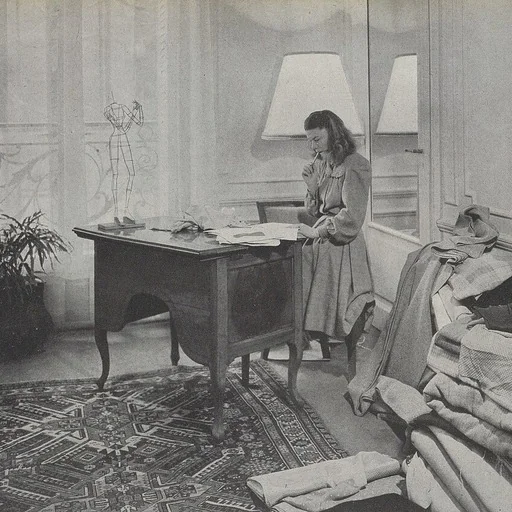
Marie-Louise Carven (31 August 1909 – 8 June 2015), born Carmen de Tommaso, was a French fashion designer who founded the house of Carven in 1945.
Museum
Palais Galliera - Musée de la Mode de la Ville de Paris
Continue through works from the same source collection.
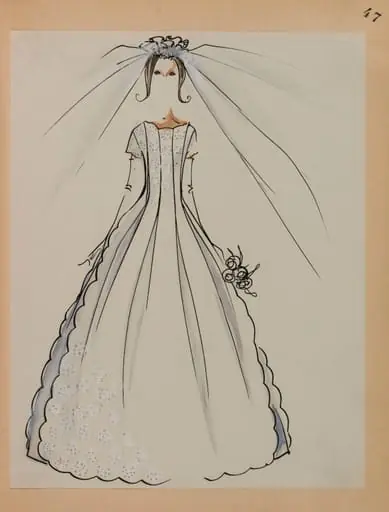 Robe de mariée festonnée et son voile
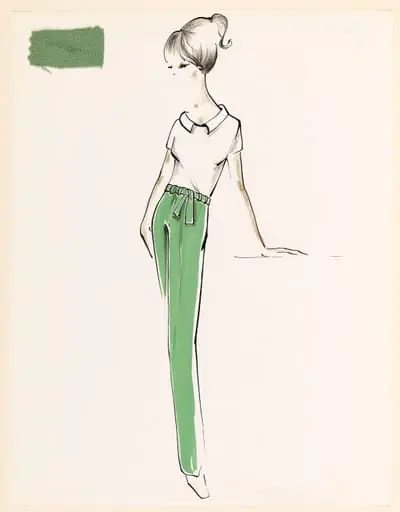 Haut blanc à manches courtes et pantalon vert à ceinture nouée
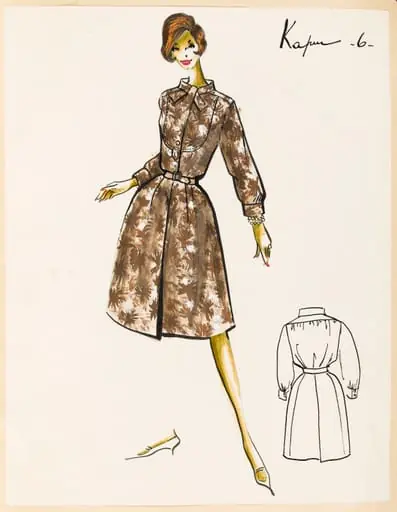 Kapur
Kapur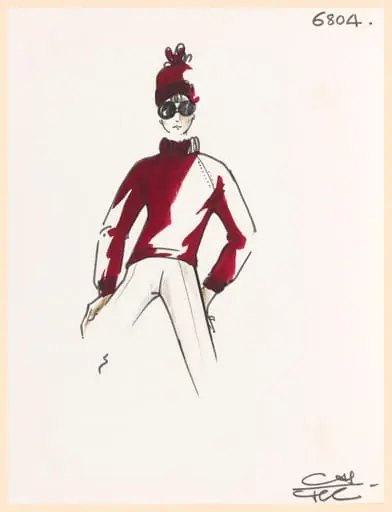 Pull-over à manches longues pourpre, bonnet assorti, pantalon et lunettes de soleil
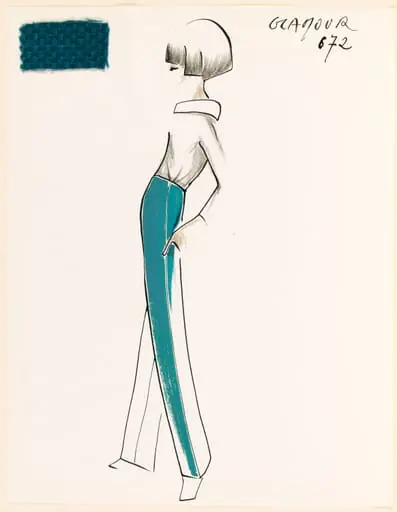 GLAMOUR
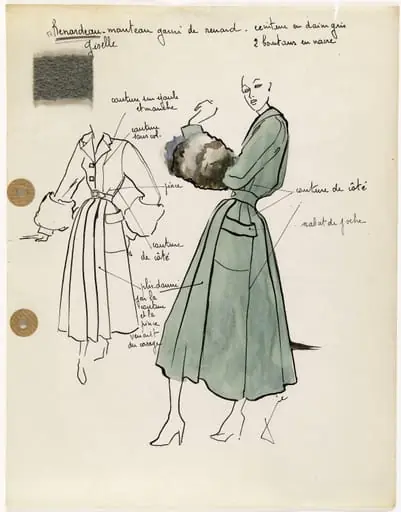 'Renardeau'
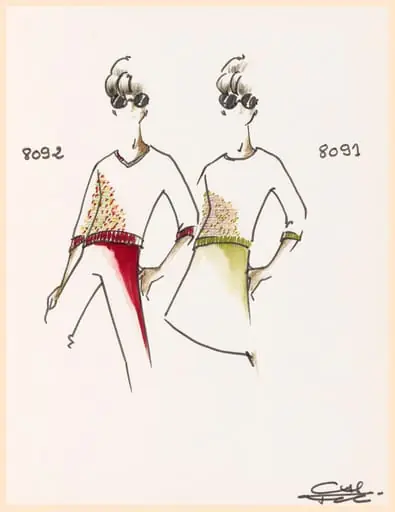 Pull-over à manches trois quarts et à encolure V à motifs multicolores, pantalon cerise et lunettes de soleil
 Béguinage